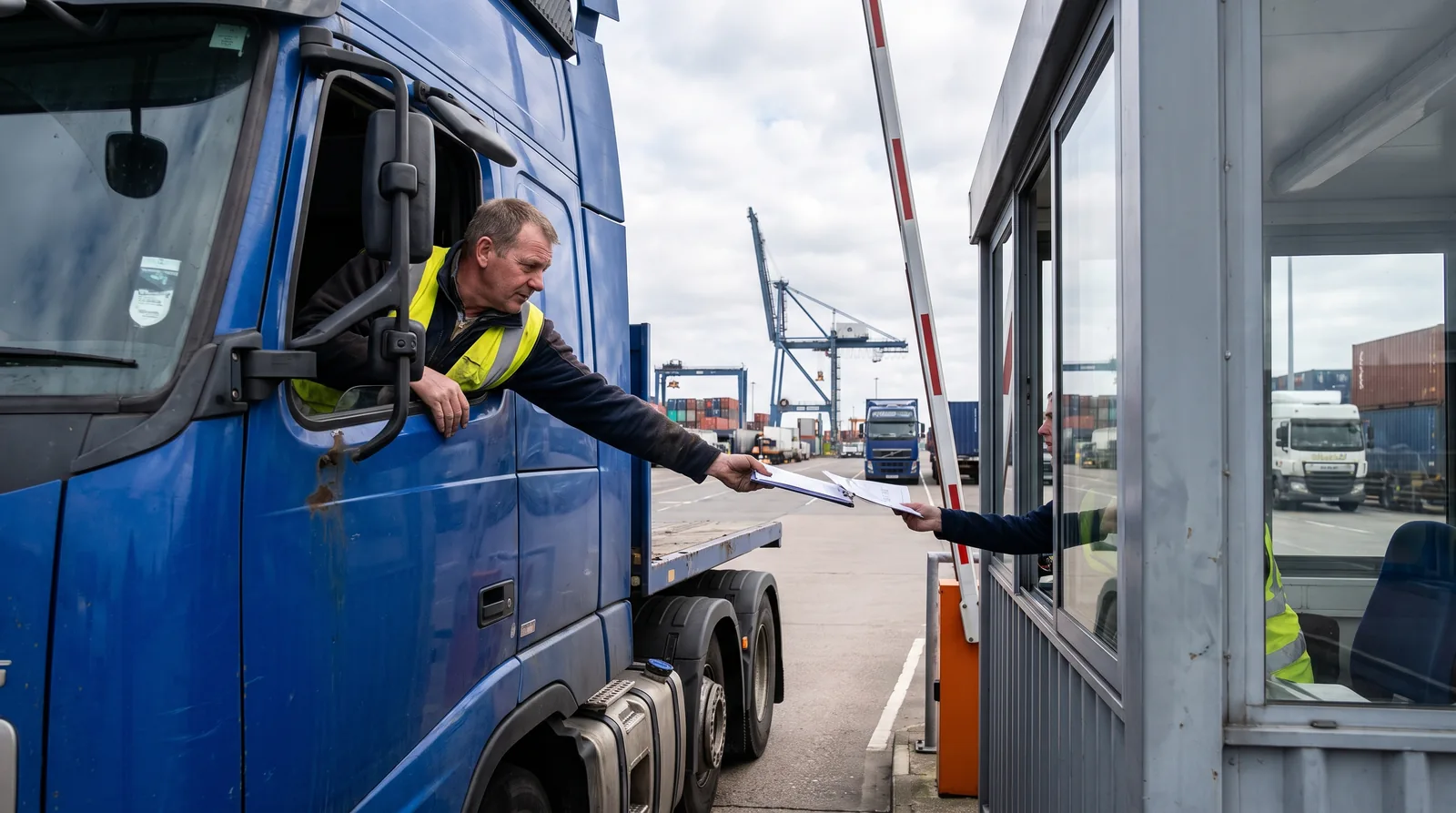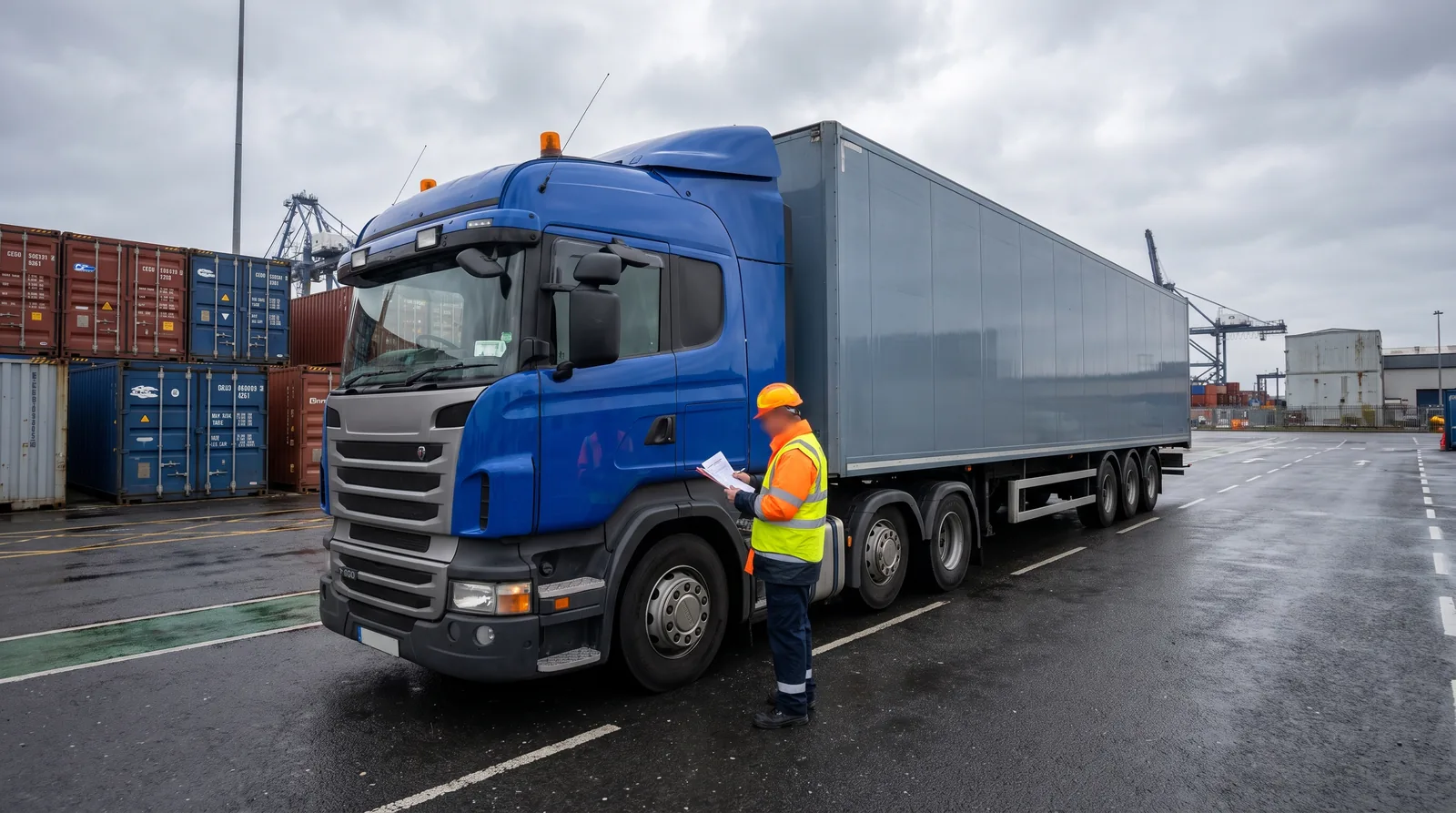
Without a valid PBN and a status allowing the vehicle to proceed, a truck will not board a ferry to Ireland and will not leave the terminal on arrival. The result is a lost sailing, driver and equipment standing time, terminal charges and a real risk to sensitive cargo waiting for the paperwork to be resolved.
Why a missing filing stops the vehicle
The filing works like a key: without it the terminal has nothing to link the vehicle to. The carrier supplies the number before boarding and the operator checks that it is complete. On arrival the system assigns a control channel, and the vehicle can leave the terminal only once the status is resolved. That is why gaps cannot be fixed on the far side: the vehicle is physically inside a port, not on a car park it can drive out of and return to.
Where the gaps come from
- Vehicle data mismatch: a different trailer number in the filing than at ferry check-in.
- A missing declaration for one consignment in a groupage load, which is the most common failure of all.
- An out-of-date importer identification number or a missing mandate for the agent.
- A change of vehicle or driver after filing, without updating the data.
- A filing lodged too late, after check-in for that sailing has closed.
The lost sailing and the cost meter
Ferries run to sailing windows and the slot has to be hit. If the filing is not ready in time the vehicle stays ashore and waits for the next departure, which can mean many hours and, on thinner routes, a full day. Driver and equipment standing time runs throughout, terminal and port charges accrue, and with a chilled load the risk to the goods themselves grows. On the Irish side an unresolved status blocks the exit from the terminal and starts storage charges.
Who pays
The bill for waiting time generally falls on whoever ordered the transport, regardless of whose data was wrong, unless the contract says otherwise. So on Irish work it pays to settle explicitly who supplies the filing data and by when, and how standing time is charged. We describe the mechanism in waiting time charges and who covers them. Arguing after the event costs more than one phone call before loading.
The filing, the sailing list and the route
The filing does not work in isolation. The number has to match the vehicle data on the sailing list and manifest, because a mismatch between the trailer number in the system and the one at check-in can undo the boarding. The route itself is a separate decision: a direct sailing from the continent or a run across Great Britain, which we set out in transport to Ireland via the land bridge and in a comparison of both options. Each carries a different set of formalities, described on our border procedures page.
How we manage it before every sailing
Filings and declarations are ready before the vehicle joins the check-in queue. We lodge the data in advance, verify the status and make sure the filing, the sailing list and the ferry booking form one consistent set. We handle the crossing bookings ourselves, so slot and paperwork are planned together rather than separately. If something happens at a terminal you have one operational contact rather than a chain of subcontractors. The lane is described on our transport to Ireland page, and return loads in returns from Ireland to Poland.
Why groupage is the most exposed
A full load has one consignor, one consignee and one set of documents. A groupage vehicle carries a dozen or more consignments from different companies, and the filing has to cover every one of them. It takes just one consignor supplying data late, or one agent failing to close an entry in time, for the whole vehicle to be held along with everybody else freight. That is the real reason we track deadlines for each consignor separately on Irish work and do not accept consignments whose paperwork is not closed before the planned departure. From a customer point of view it means one thing: the earlier the data reaches us, the smaller the risk that somebody else delay holds up your pallet. The rules on combining consignments and paperwork are set out in consolidation and how many consignment notes.
Sources
Planning a movement to Ireland and want the formalities closed before the sailing? Describe the load and the timing in our quote form and we will arrange route, booking and documents under one job.