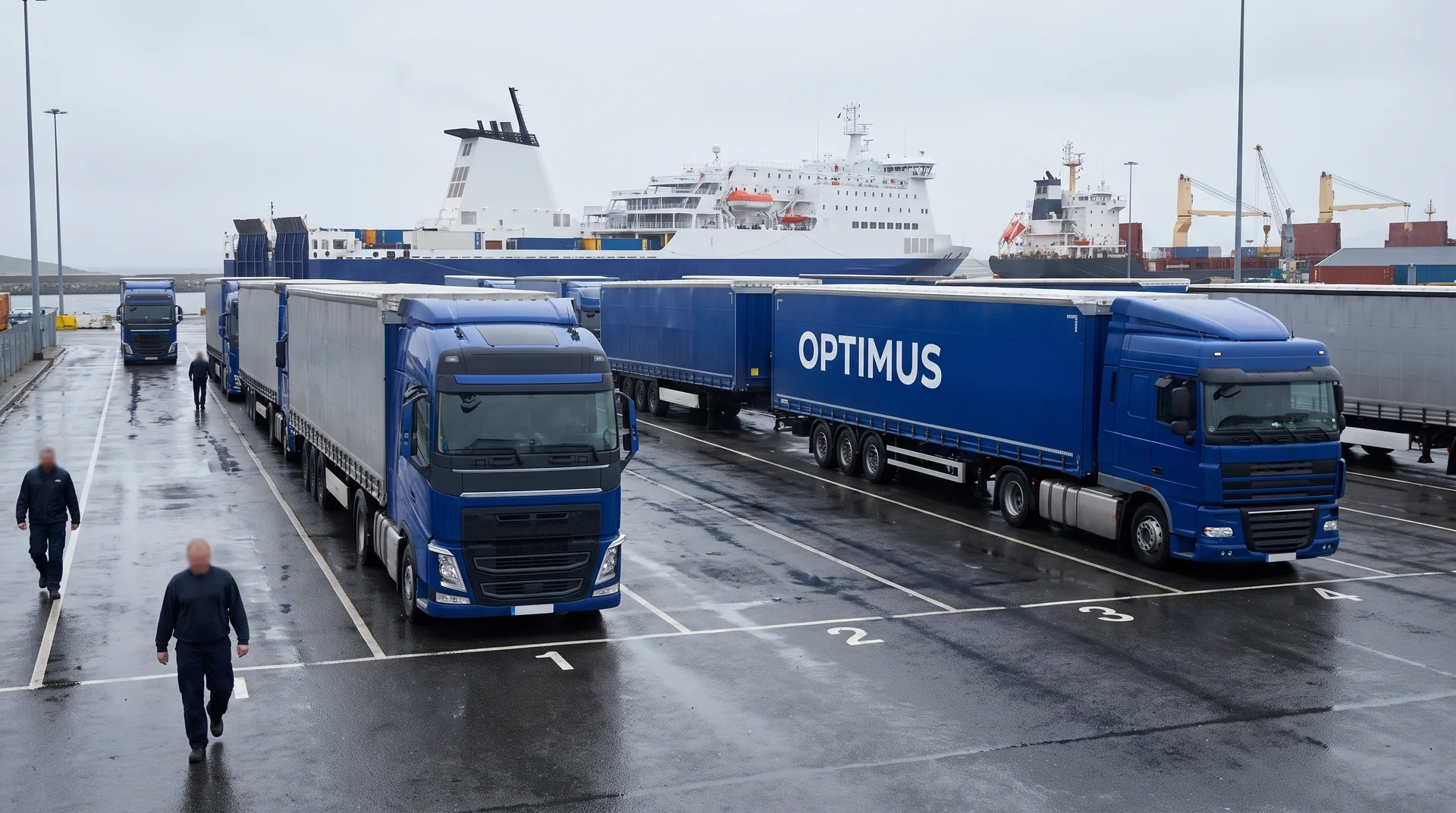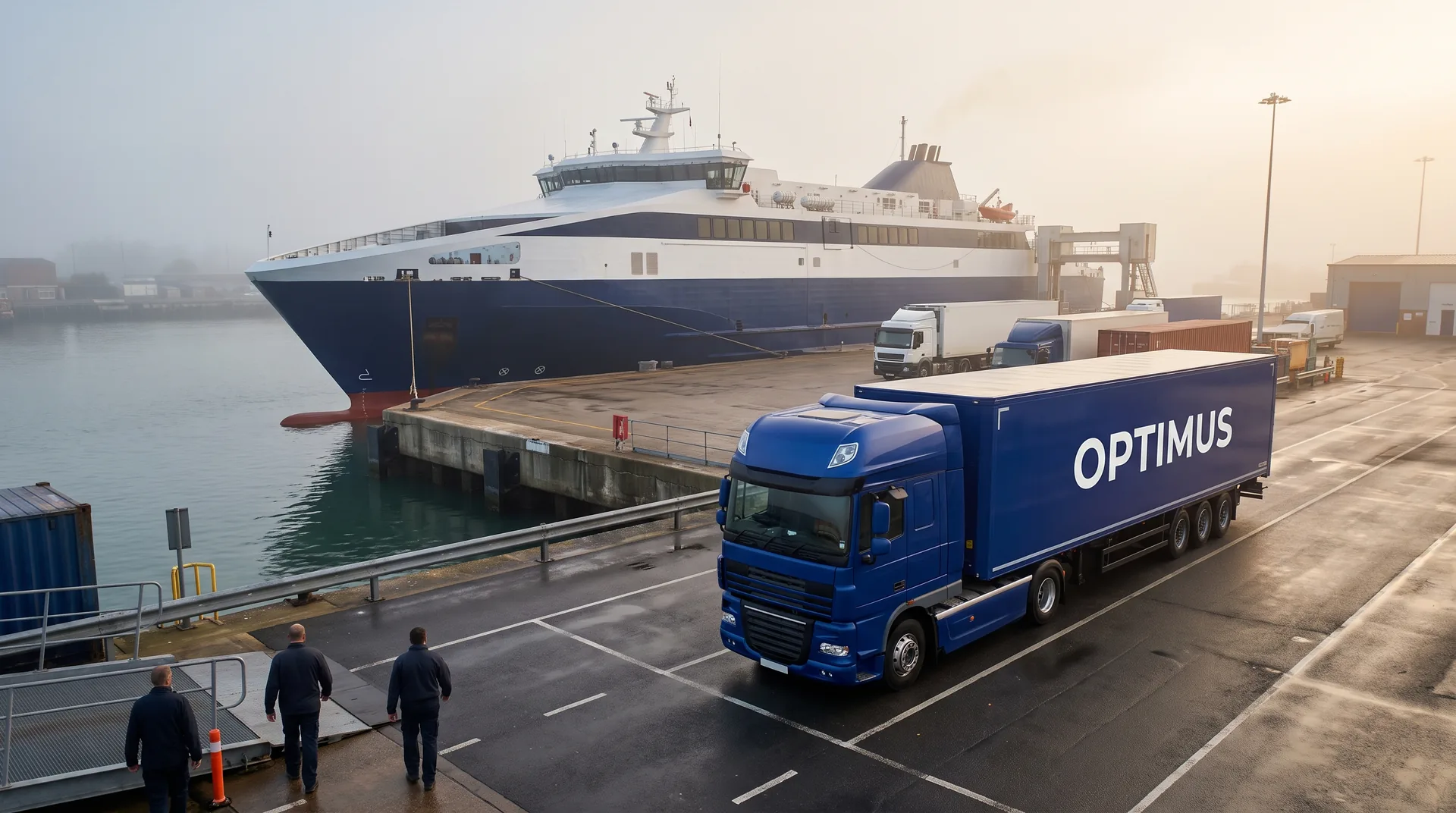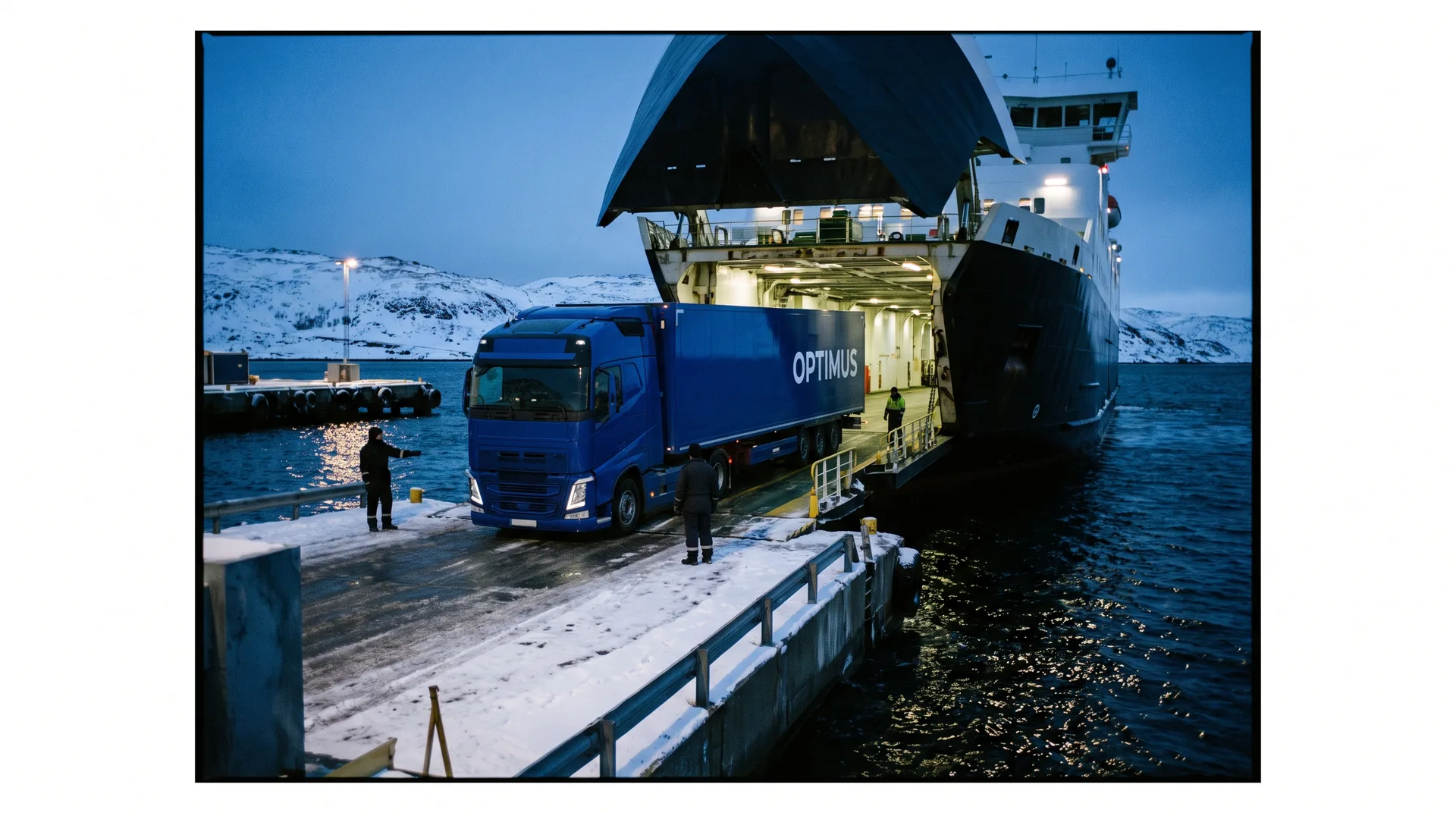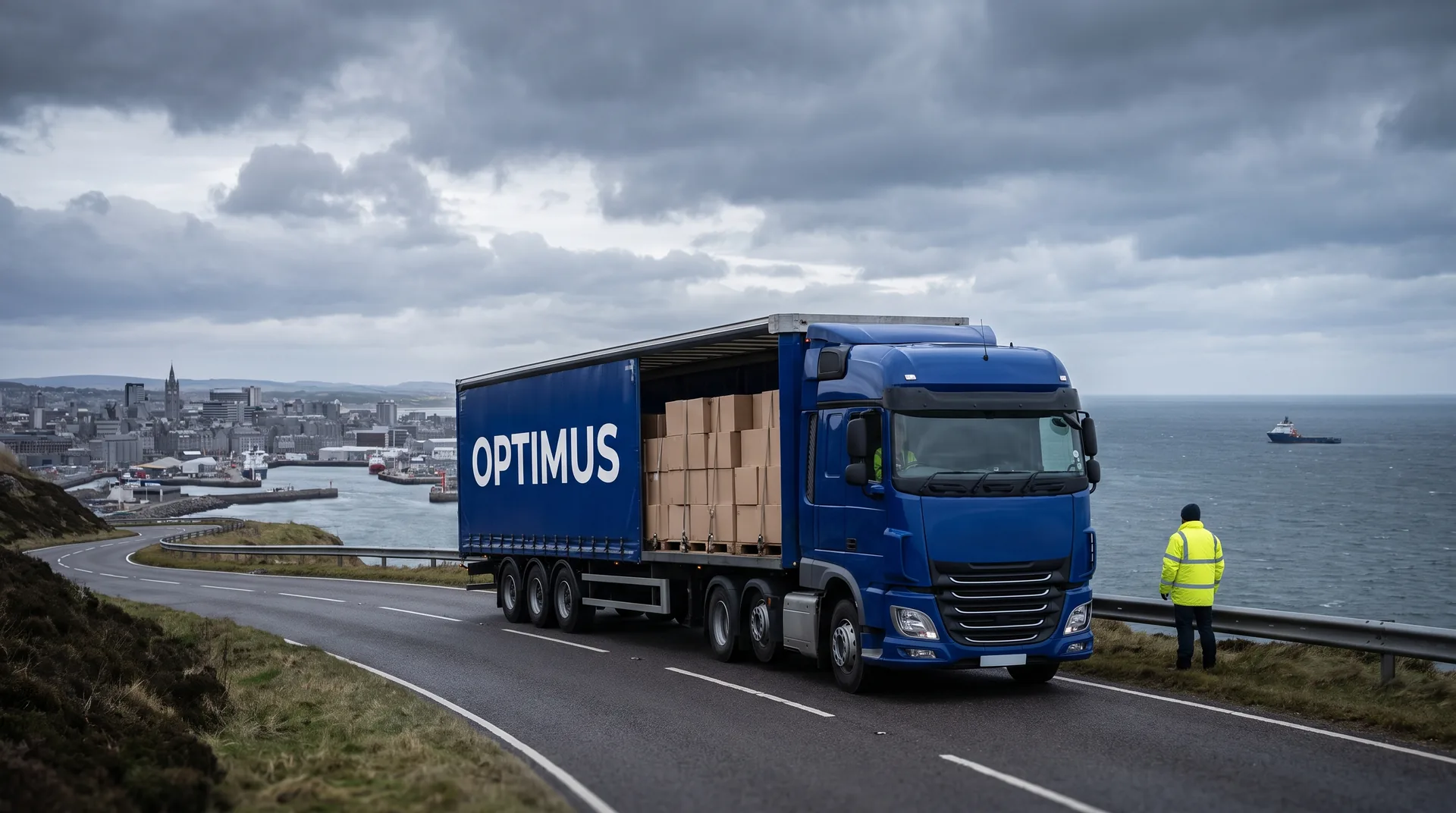
We carry groupage and full loads to Aberdeen and northern Scotland exactly as to the rest of Great Britain: clearance happens on entry into the UK and the vehicle then runs without formalities. The last leg follows the A90 from Dundee to Aberdeen and on to Peterhead or Inverness. The run is longer than to England, so we plan it with margin.
The route: from the south to the north-east
The standard run is a Channel crossing, a drive north through England on the M1 and M6 or the A1, then in Scotland the M90 and A90 up the east coast through Dundee to Aberdeen. On hard-deadline deliveries the alternative is the eastern corridor: an overnight sailing from a Benelux port to Hull or Immingham, after which the vehicle starts its working day already in northern England. Both options are compared in choosing the crossing corridor.
What travels to Aberdeen
Aberdeen has served the North Sea energy industry for decades: installation servicing, offshore wind, manufacture and refurbishment of components. In practice that means frequent movements of machine parts, valves and fittings, service tooling and crated equipment, alongside ordinary groupage for distribution and retail. The second pillar is fish and food processing in Peterhead and Fraserburgh, which generates both inbound packaging and materials and return loads. Heavier and awkward items need a conversation about unloading first, because not every service base has a dock and handling gear.
Delivery practice in the north
- Unloading hours: service bases work around sailings offshore, so the delivery window is worth confirming a day ahead.
- Groupage to Aberdeen is combined with drops on the way, for example in Edinburgh and Dundee, which lowers the cost per pallet.
- Returns and empty packaging travel back with us, so the vehicle does not run home empty.
- Where receivers accept goods only on set days, we buffer the cargo at our Milton Keynes warehouse.
- In winter we add time in hand; on the east coast wind can close road sections to high-sided vehicles.
The city low emission zone
Aberdeen, like other large Scottish cities, has a low emission zone covering the centre. It is not a daily charge but a requirement that the vehicle meets the emission standard. Our fleet meets it, so city drops run without restriction. The rules across the country are compared in UK clean air zones.
Further north: the islands
Aberdeen is also the gateway to Shetland: ferries to Lerwick leave from the harbour in the city centre. No clearance is added, because the islands are part of the UK, but timetables and space bookings are. How that works in practice is described in transport to Shetland and Orkney. An overview of the whole country is in transport to Scotland, and the capital region in transport to Edinburgh.
Return loads from the region
North-east Scotland is not only a delivery destination. We come back with refurbished components, service equipment, fish processing output and whisky from the distilleries and warehouses of the Speyside region. The vehicle that brought cargo from Poland returns loaded, which lowers the cost of both legs. Whisky as excise cargo needs documents prepared before collection, as covered in alcohol transport and excise.
What to include in your enquiry
- The delivery postcode and the type of site: service base, distribution warehouse or production plant.
- Pallet or piece count, dimensions and the weight of the heaviest item.
- Whether a dock and handling equipment are available.
- The date and whether it is fixed.
- Whether you have a return load in mind.
Sources
- NorthLink Ferries: Aberdeen to Lerwick services
- Low Emission Zones Scotland: zones, rules and penalties
Shipping to northern Scotland? Describe the cargo through the quote form and we will cost the run to Aberdeen, Peterhead or Inverness. Single pallets travel on groupage LTL.