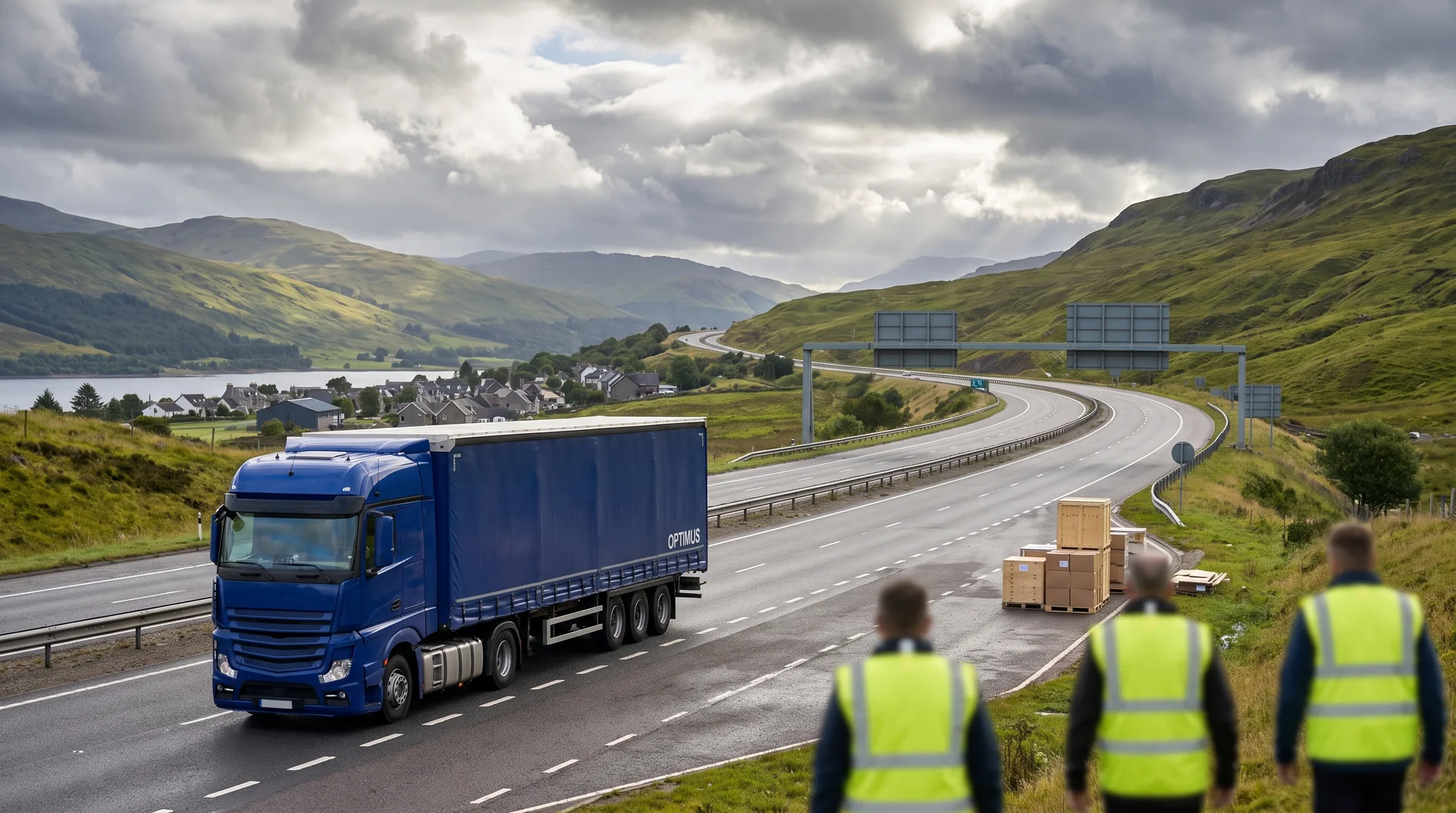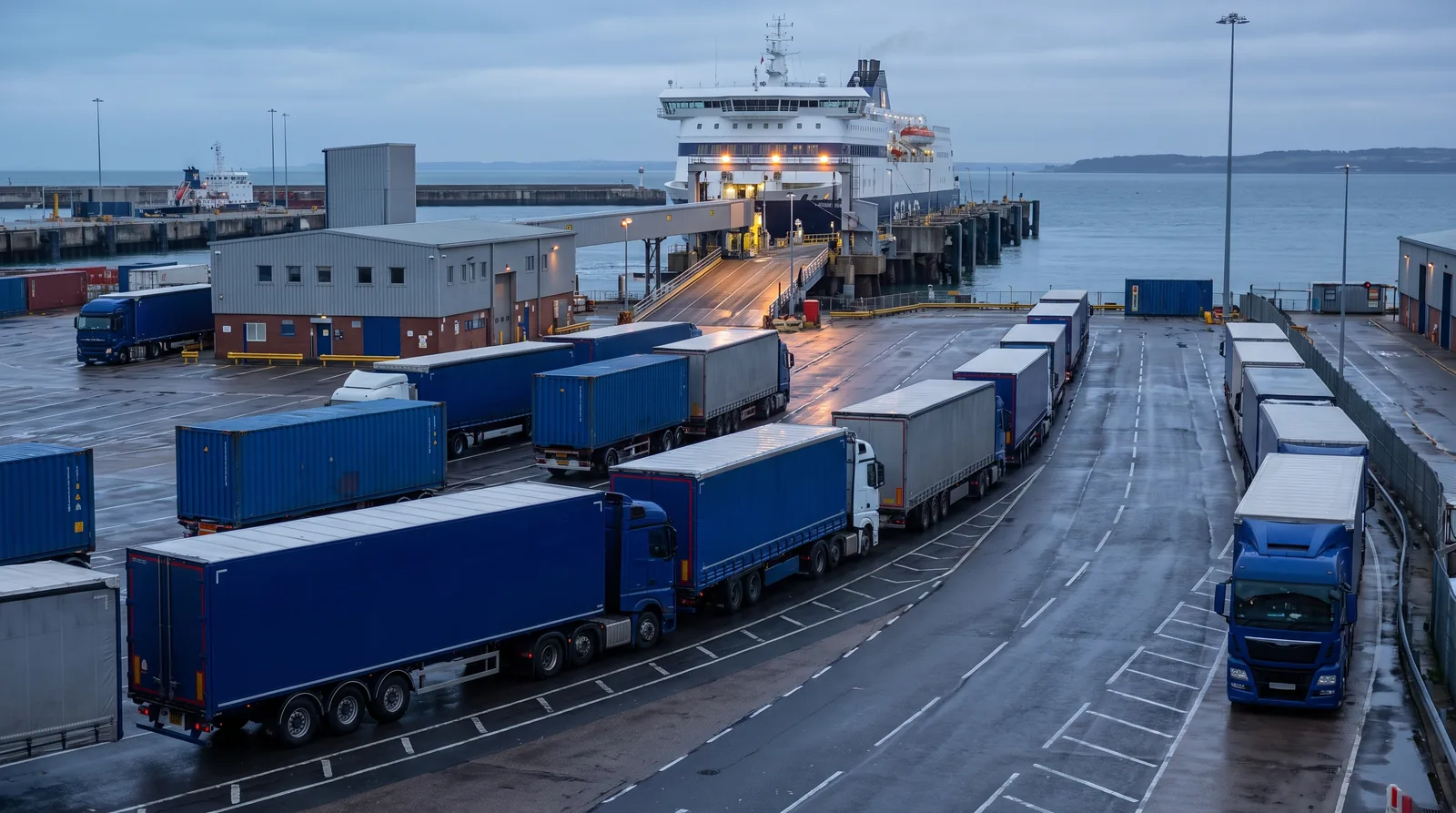
The crossing corridor is chosen to suit the delivery point, not habit. The short Channel crossing and the shuttle win on frequency, so they serve London and the south. Sailings from Benelux ports to Hull, Immingham and Harwich put the vehicle closer to the Midlands, the north and Scotland, trading hundreds of kilometres on English roads for a night at sea.
What we are really comparing
The question is not which sailing is shorter but the ramp-to-ramp time and the predictability. A vehicle entering England at Dover still has the busiest stretch of the British road network ahead of it. A vehicle rolling off at Hull is already in the region where it unloads. Only adding both components together, the crossing and the drive, gives a sensible answer.
The short crossing: when it wins
- Deliveries in London, Kent, the south and the south-west of England.
- Urgent consignments where every hour counts and moving to an earlier departure has value.
- Routes with several drops on the way north, where the vehicle crosses the middle of the country anyway.
The corridor's weakness shows on peak and control days: queues in Kent can consume the whole frequency advantage, and storms stop the ferries. What happens to the cargo and the deadline then is described in a cancelled crossing. The ferry-versus-shuttle choice is covered in ferry or Eurotunnel.
East coast ports: when they win
North Sea sailings take longer, usually overnight, but they land the vehicle at Hull, Immingham or Harwich, close to the Midlands, Yorkshire and the road north. The driver rests on board rather than in a truck stop and starts the working day right by the port. That translates directly into drivers hours: the day that the short crossing spends on the drive is here available in full. These routes also suit unaccompanied trailers, collected on the far side by a local tractor unit. The destination region is described in transport to Hull and Immingham.
Three questions that settle the choice
- Where is the delivery? London and the south point to the short crossing, the Midlands and the north to the east coast.
- How firm is the receiver's slot? With a booking to the hour, an overnight sailing into the delivery region removes traffic risk.
- What is on the vehicle? Dangerous goods face restrictions that vary by crossing, covered in ADR by ferry and shuttle.
Cost: more than the ticket
A North Sea sailing costs more than the short crossing, but the sum has to be closed in full: fuel and time to drive across England, road charges, the risk of losing the receiver's slot, the driver's overnight cost. On northern deliveries the balance often favours the eastern corridor despite the higher crossing price. On London deliveries the opposite holds. That is why we have no default route and calculate it for each job.
What a booking includes
A freight booking is not only deck space: it also covers cargo declarations, vehicle and driver data, and the terms for changing sailing. The components are set out in what a freight ferry booking includes. Entry into Great Britain adds the GMR, described in the GMR article.
How we run this
We use both corridors, so the choice is an operational decision rather than a constraint. For companies shipping to Britain regularly, corridor selection becomes part of a standing service: we know the receiver's region, their goods-in windows and which route brings the fewest surprises. Kent and the south are covered separately in transport to Kent.
Sources
Not sure which corridor suits your cargo? Send the delivery postcode and date through the quote form and we will cost both options ramp to ramp. The route is described on transport to the United Kingdom.