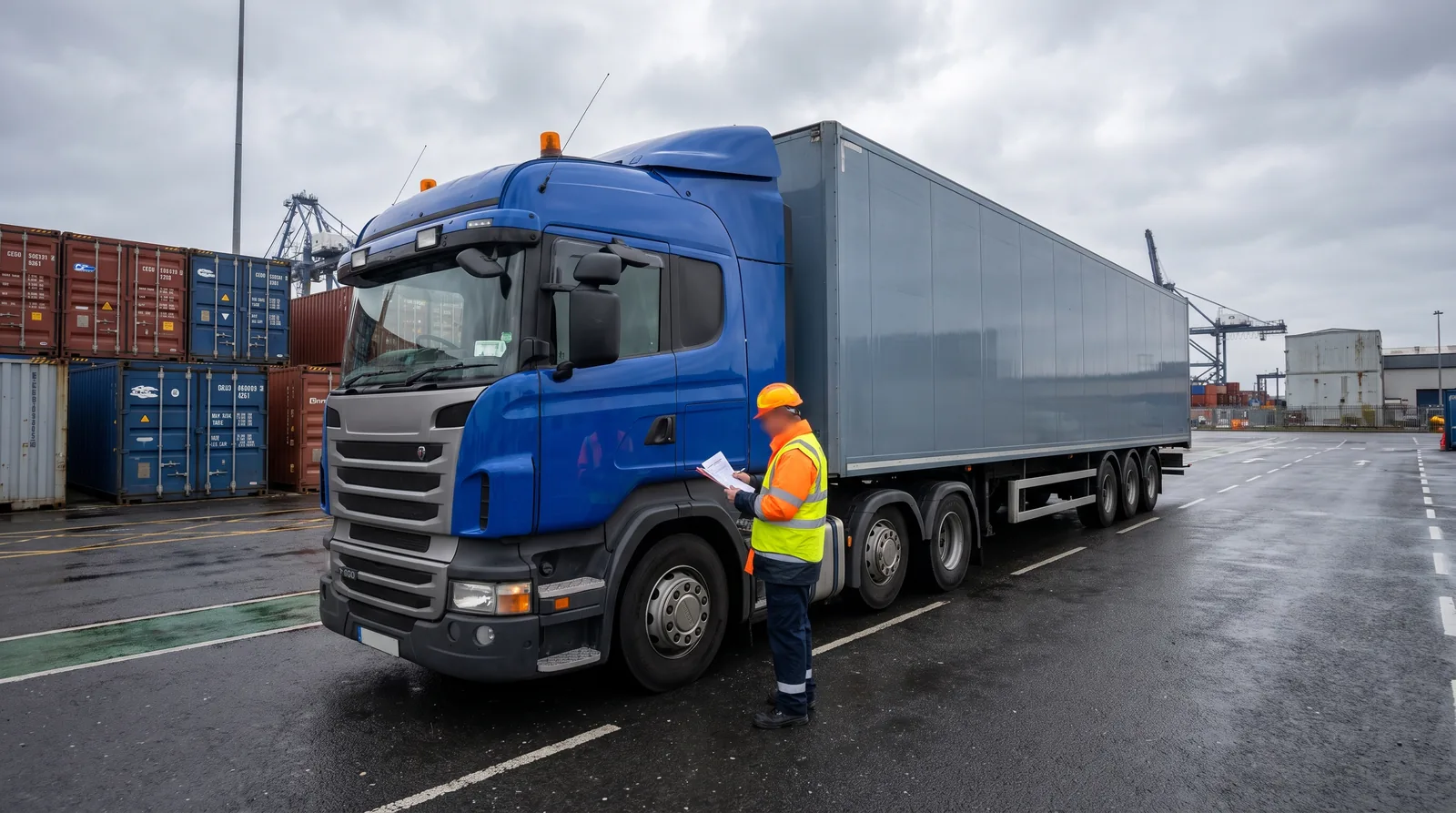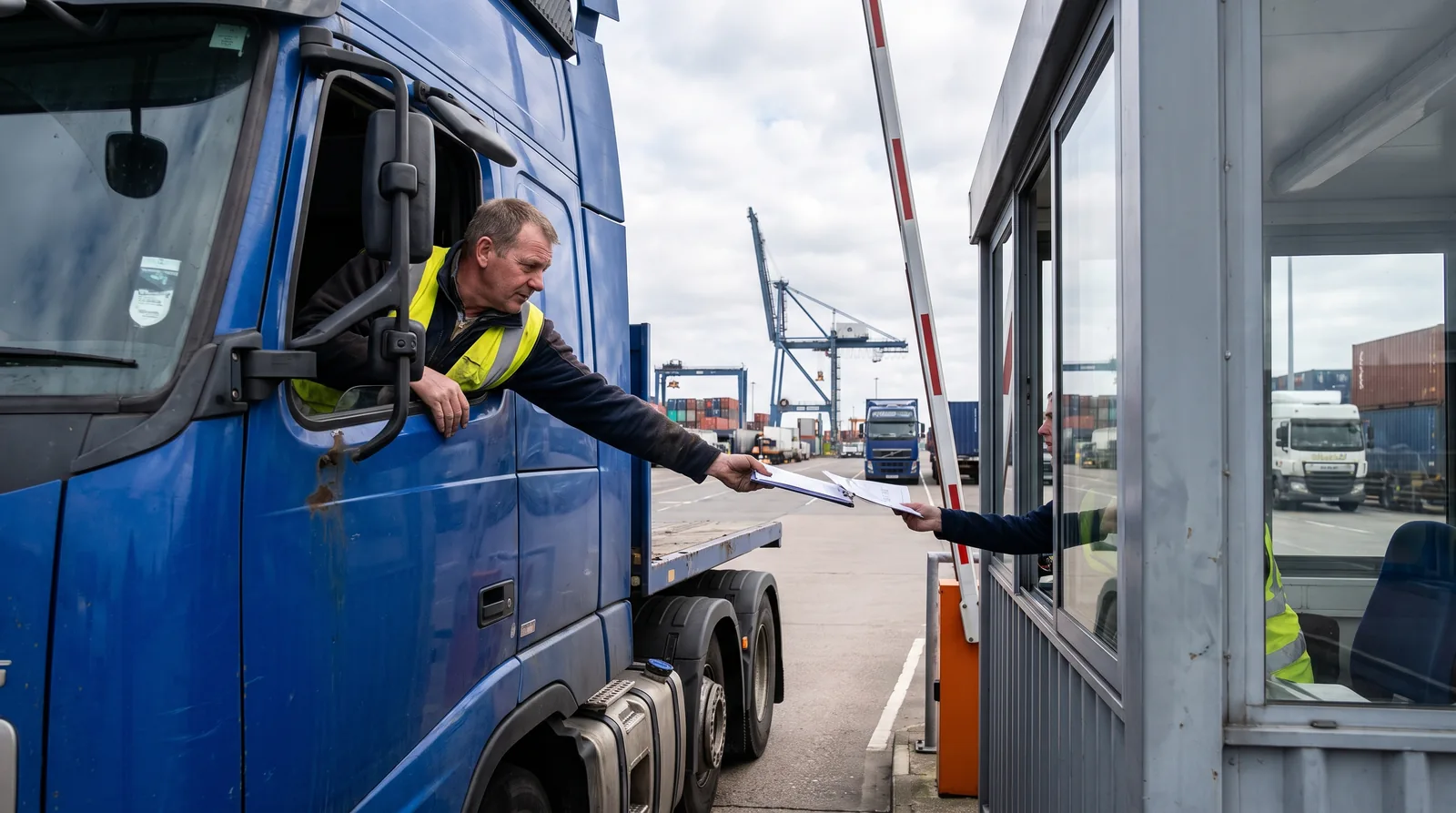
A vehicle list and a sailing manifest set out the vehicles and loads a ferry operator needs before terminal check-in. On routes to Great Britain and Ireland the list holds the tractor and trailer registration, driver details, rig dimensions and a description of the load. Without a complete vehicle list the truck fails check-in and loses its sailing.
What the vehicle list and manifest contain
The vehicle list is the data for a single vehicle; the sailing manifest is the set of them for the whole boat. In practice the operator asks for the tractor and trailer registration, driver details, rig dimensions (length and height), weight and a description of the load. Dangerous goods add an ADR declaration; a reefer adds its power requirement. From this the terminal builds the loading sequence and checks the rig fits on deck.
How the vehicle list links to booking, GMR and PBN
The vehicle list does not replace the freight reservation; it completes it. The booking holds a place on the sailing, the vehicle list describes the vehicle that will take it. What the reservation itself contains we cover in the article on ferry booking and more broadly in the piece on customs clearance. On the crossing to Great Britain the border numbers join in: the GMR from the GVMS system links the customs declarations of the whole load to a specific vehicle. How that works in practice we set out in the article GVMS in practice. On the Irish leg the equivalent is the PBN (pre-boarding notification), generated before entry to the terminal.
Timing: when to submit the data
Operators close the vehicle list before check-in, not during it. The deadline depends on the operator and the port, so we do not quote one fixed hour. The rule is simple: the data must be complete and consistent with the reservation before the truck joins the queue. A last-minute change, swapping a trailer or a driver, can break check-in because the numbers no longer match what the operator holds in the system.
What you lose if you skip it
An incomplete or wrong vehicle list usually means refused boarding. The truck stays on the terminal, loses its paid slot and waits for the next sailing, which on full boats can be hours away or the next day. Add the queue, driver downtime and the risk the load misses its booked unloading window on the far side. On the British leg any mismatch with the GMR blocks entry, no matter that the booking was paid. The stake is not the sailing fee alone but the whole delivery chain behind it.
Where the average forwarder lets go
The average forwarder treats the vehicle list as a formality typed in just before check-in, often by the driver in a hurry. We collect the vehicle, driver and load data together with the booking and verify that registrations, dimensions and description match the reservation and the border numbers before the rig moves to the terminal. We keep the vehicle list consistent with the GMR on the British leg and with the PBN on the Irish one, because a single stale number is enough to lose a sailing. That is the difference between transport that boards first time and transport that returns for another slot.
OPTIMUS TRANSPORT runs vehicle lists, manifests and border numbers alongside the freight reservation so your rig boards the ferry on the first attempt. Contact us and send the details of your route to GB or Ireland.