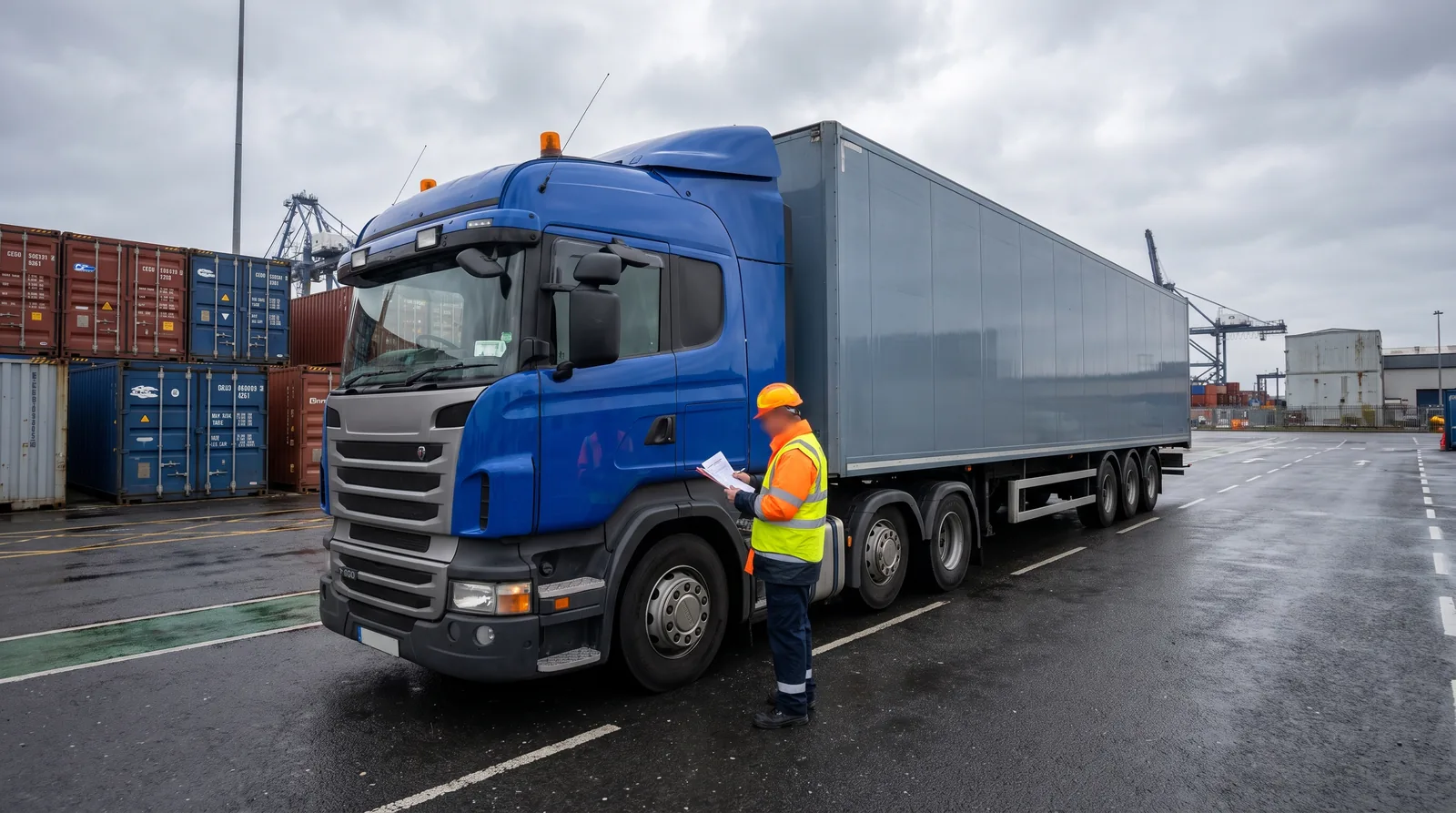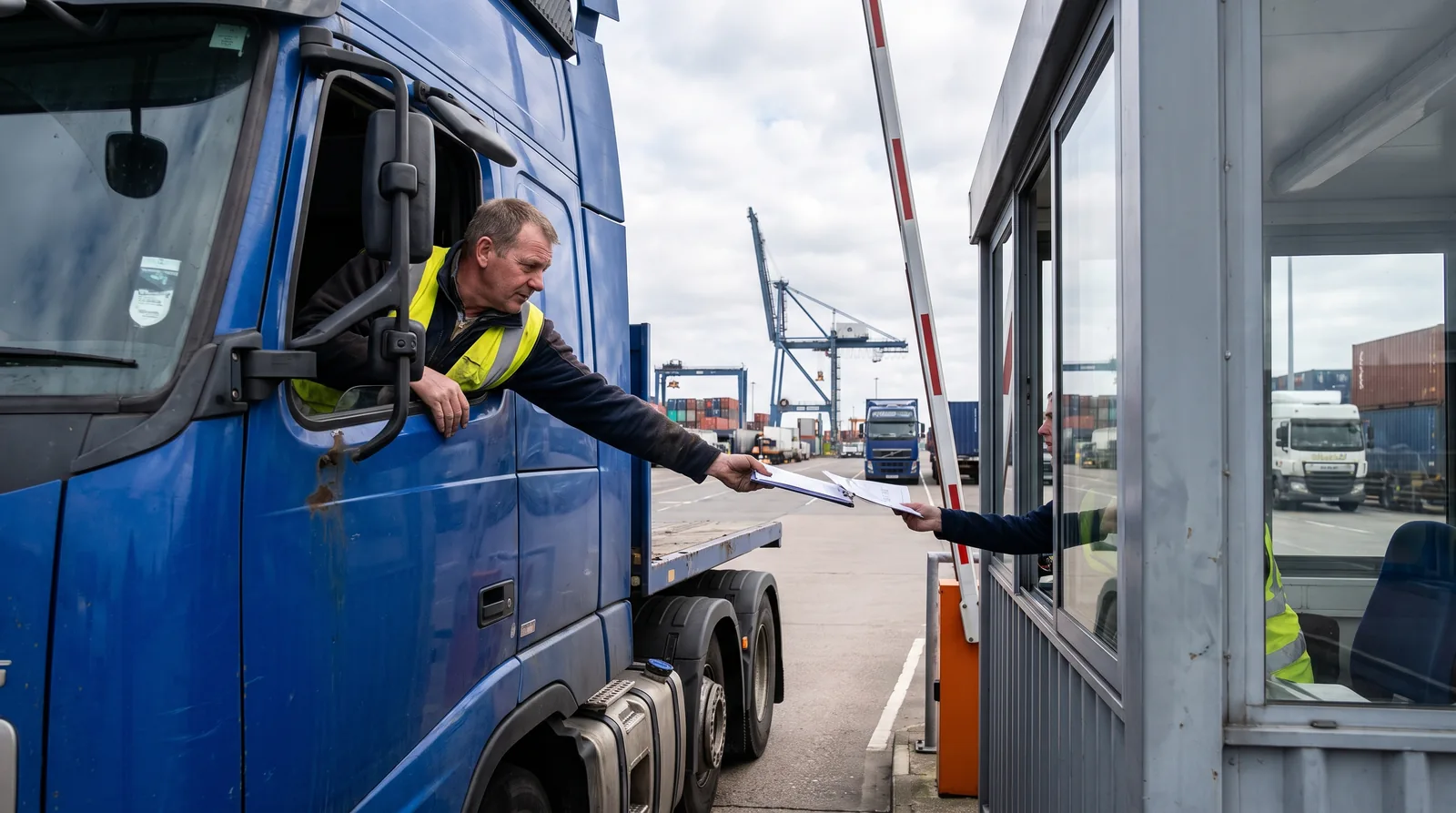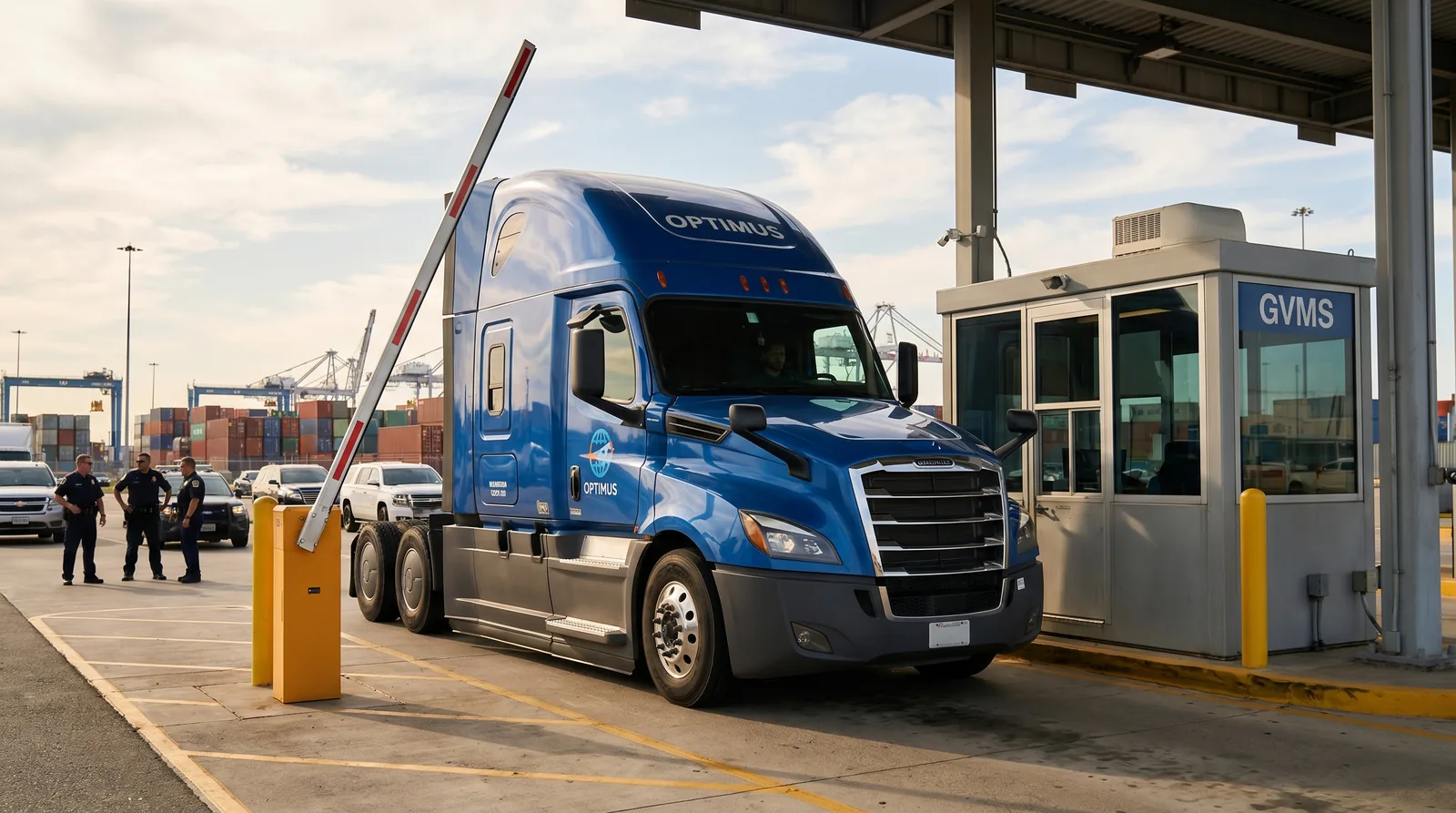
GVMS is the British goods movement control system built on pre-lodgement: customs declarations are filed before the vehicle reaches the border, and the system ties them into a single GMR attached to one specific crossing. The driver presents that reference at the terminal, and without it the vehicle boards neither ferry nor shuttle.
Why GVMS exists
The Channel crossings handle an enormous stream of vehicles in short time windows. If every truck had to settle formalities at the terminal, traffic would stop within hours. GVMS moves the paperwork to the stage before arrival: by the time a vehicle reaches the gate the system already knows what it carries, against which declarations, and whether it may proceed. The check comes down to reading a GMR and a number plate.
What the carrier actually does
The carrier's role in GVMS is precisely defined and cannot be pushed onto the shipper. The carrier holds the account, creates the movement record and answers for its accuracy. In practice it works like this: we collect from the customs agents the declaration references attached to the loads on board, enter them into one movement record, add vehicle and crossing booking details, and the system returns a GMR. That reference reaches the driver before he arrives at the port.
- Collecting the complete set of declaration references for every consignment on board.
- Creating the movement record with tractor and trailer details.
- Linking it to the booking for a specific sailing or departure.
- Passing the GMR to the driver and checking its status before terminal arrival.
We take the reference itself apart in what a GMR is and who prepares it.
Which declarations go into a GMR
The document set depends on direction and cargo. On export from the Union to the United Kingdom it is usually the EU export declaration reference plus the references needed on the British side. Transit adds a transit document, described in T1 and T2 transit documents. Separately there is the entry summary declaration for safety and security, covered in the ENS declaration. Declaration systems and the meaning of the MRN are explained in the glossary CDS, CHIEF and MRN.
What happens when a GMR fails
A refusal at the terminal is not an extraordinary event but the predictable result of specific errors. The most common are: a customs declaration submitted but not accepted, a registration number different from the one in the movement record, a crossing booking not linked to the GMR, or a missing document on a groupage load. The outcome is always the same: the vehicle does not board, and the fix has to be made remotely because the driver has no access to it. So we check statuses before the vehicle reaches the port rather than when it is already queuing.
GVMS and physical inspections
Two things are worth separating. GVMS decides whether a vehicle may board; whether the goods are examined is decided by separate mechanisms: customs risk analysis and sanitary or veterinary controls on certain categories of goods. A vehicle with a valid GMR can still be routed for a check on arrival, and food cargo follows an additional path described in border procedures. The import clearance process in the United Kingdom is covered in GB import clearance.
Practice on the Poland to United Kingdom lane
On our regular flows the GMR is created before the vehicle reaches the departure port, usually while it is still crossing the continent. The driver receives the reference in a form he can show at the terminal without hunting for signal in a queue. On groupage loads we additionally chase every shipper for data on time: one missing declaration stops the whole vehicle, not just one pallet. The choice of crossing and its consequences are described in the Dunkirk-Dover crossing.
Sources
Would rather not deal with GVMS yourself? We run movement records as part of the transport. Describe the route and cargo through the quote form and we will map out the formalities. The customs scope is on the customs clearance page. This text is informational and does not constitute legal advice.