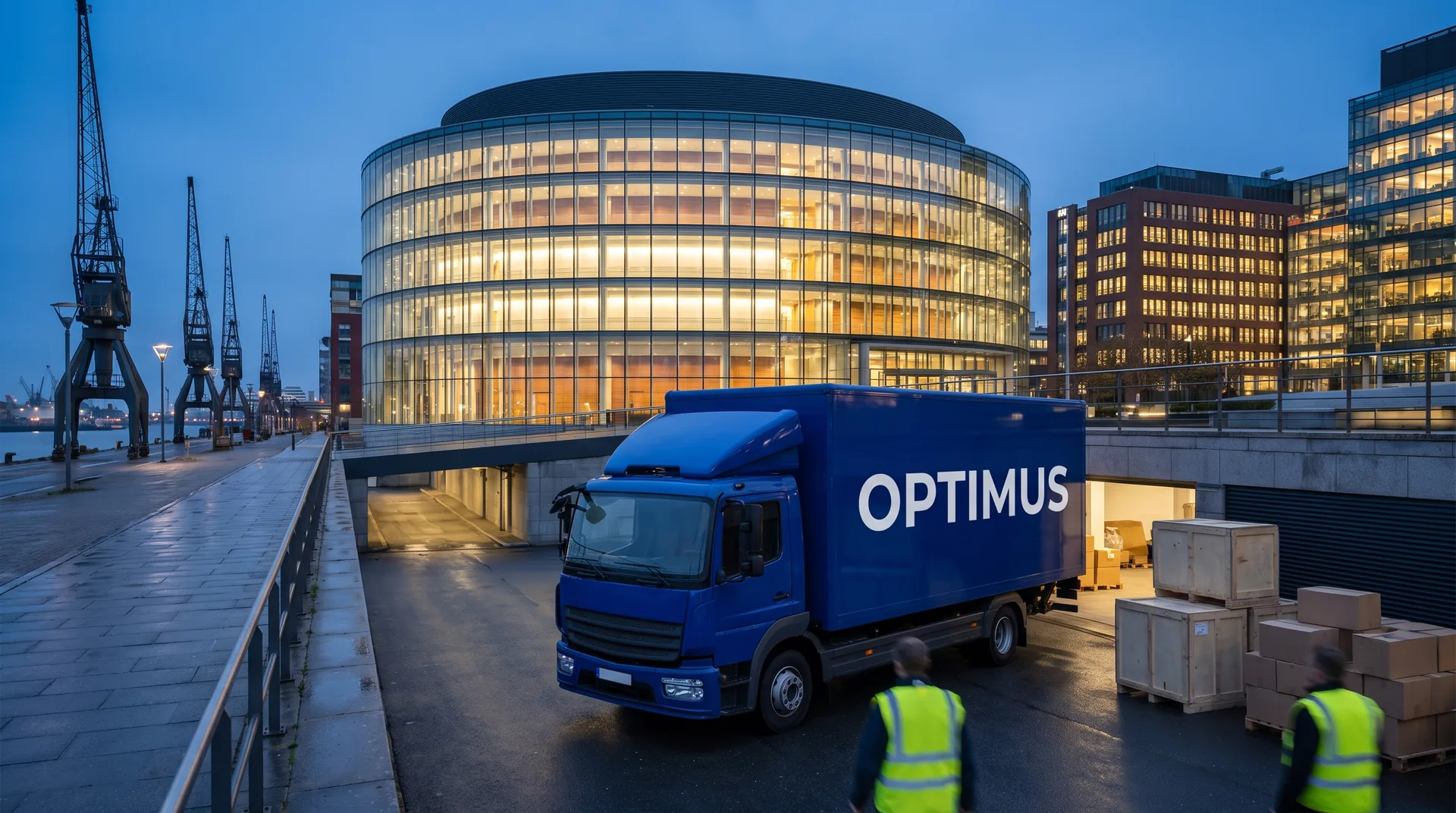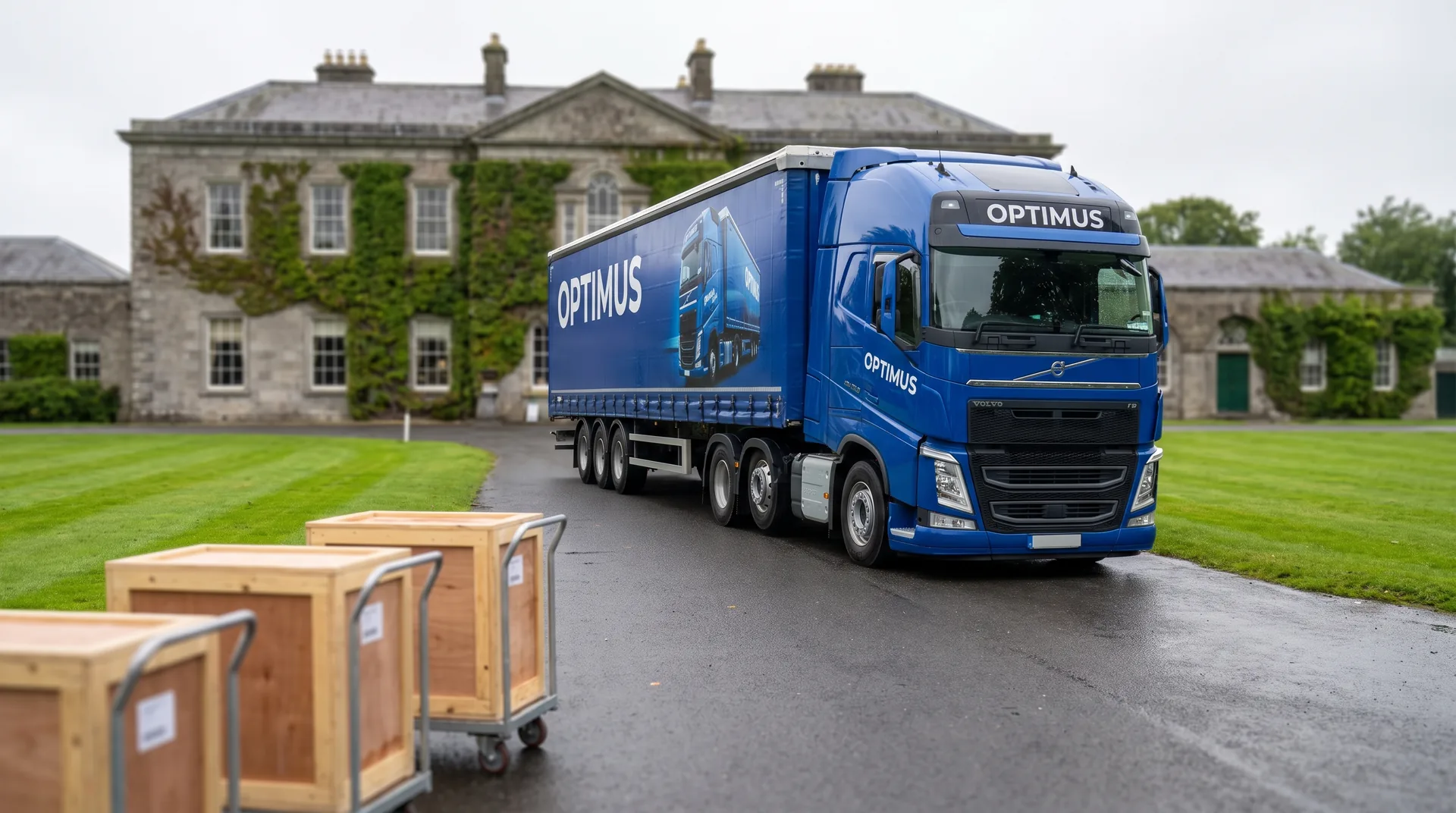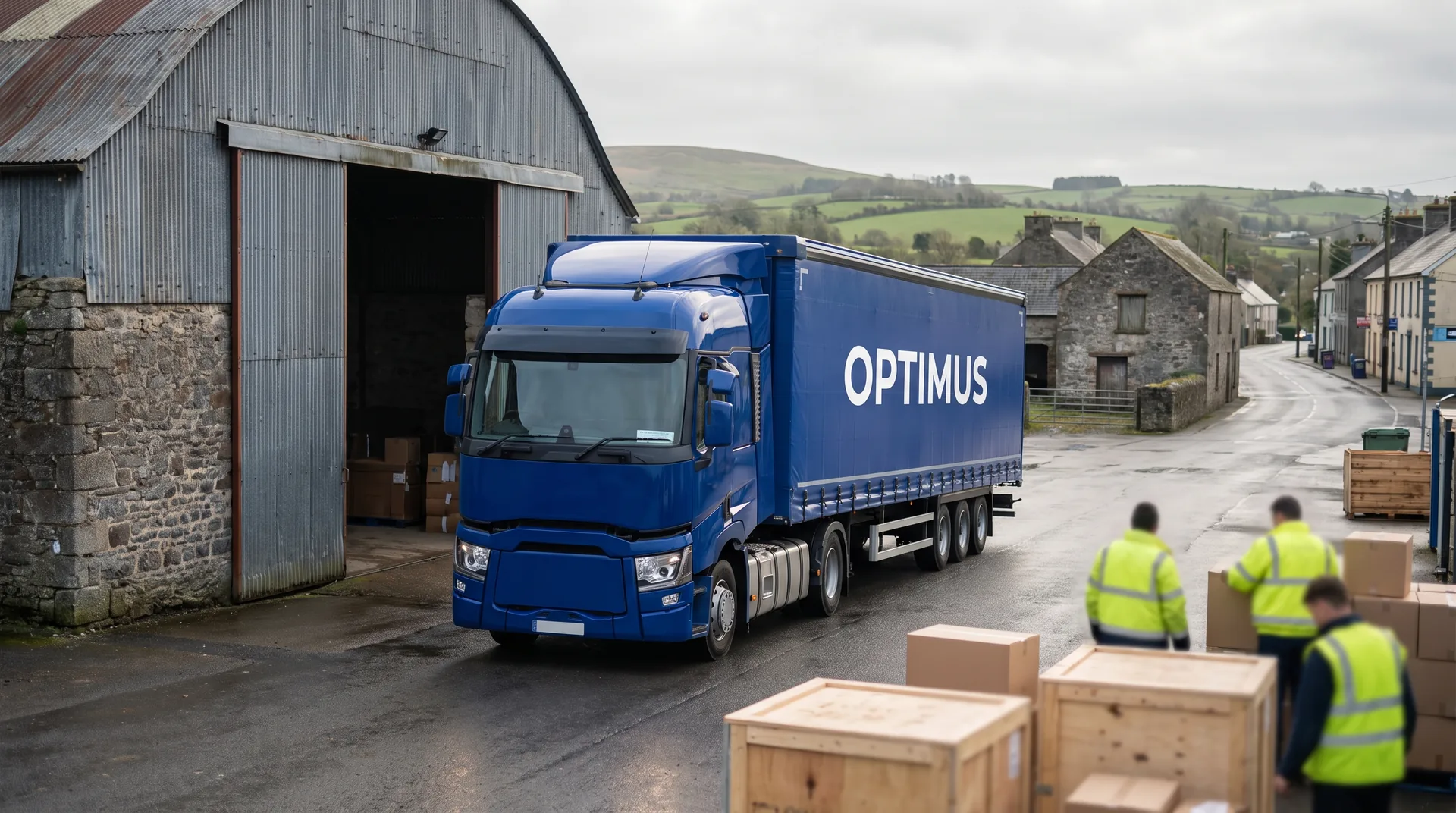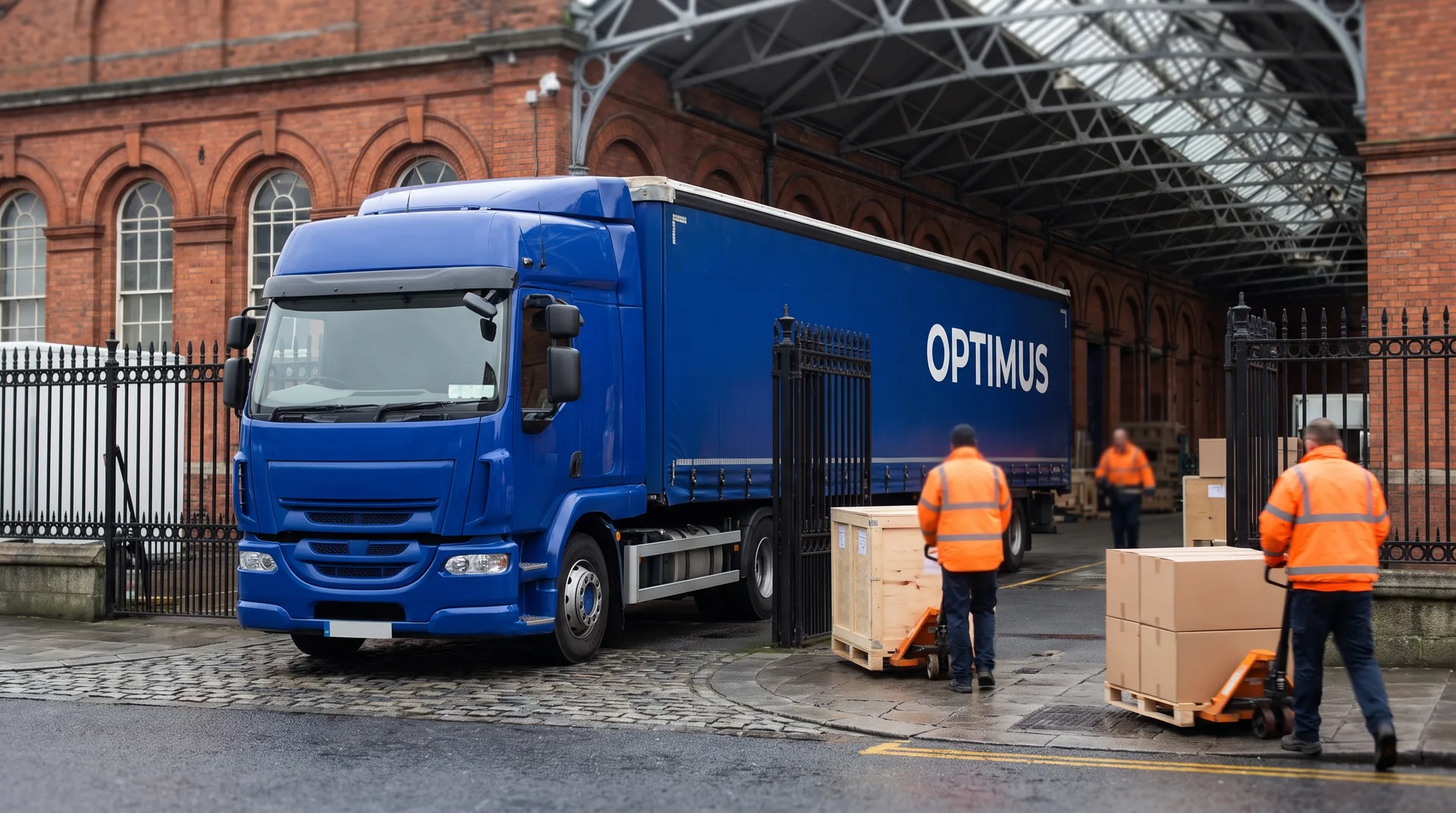
The RDS sits on Merrion Road in Ballsbridge, Dublin 4, postcode D04 AK83. It is not a single hall but a set of interconnecting spaces totalling over 22,000 sqm on a forty-three acre site, divided into complexes: Main Hall, Simmonscourt, Concert Hall and the arena. For a delivery you have to know which complex is taking the load, because the address alone does not lead to the right gate.
Paperwork: Ireland is the EU, so the carnet drops out
The most important difference from Great Britain is not about the venue but about the border. The Republic of Ireland is a member state, so exhibits travelling from Poland stay in free circulation throughout. There is no import clearance, no duty and no import VAT, and no need for an ATA carnet. That changes how you can work on the stand: goods can be sold, given away or left with an Irish partner without counting items for discharge. We develop the point in the article on transport to trade fairs in Ireland without an ATA carnet.
That does not mean there is no paperwork at all. Formalities come back through the route rather than the destination. Crossing Great Britain, the land bridge, means entering and leaving the customs territory of a third country, so EU goods need transit or proof of Union status. A direct ferry from the continent avoids the problem entirely but sails less often. We compare both in the piece on the direct ferry and the land bridge. Either way, entering an Irish port requires a pre-boarding notification; the consequences of missing one are in the article on cargo stuck in Ireland without a PBN.
A residential quarter instead of a motorway junction
Ballsbridge is a quiet residential and diplomatic part of Dublin, not an industrial estate by the ring road. For an artic that means an approach through city streets, traffic, few places to wait and neighbours who will not tolerate night work the way an industrial area does. On top of that Dublin city centre restricts five-axle and heavier vehicles; the rules and the area covered are checked with the roads authority before the route is set, because they decide the vehicle.
The practical conclusion is the same as at other venues embedded in city fabric: you do not send the largest vehicle the load will fit into, but one that will make the approach and fit at the complex gate. Sometimes that means two smaller vehicles instead of one large one. Outside the city the constraints run the other way: the venues at Saggart and in County Kildare give more room to manoeuvre but have no docks and no lifts, so unloading happens at ground level; we cover them in Citywest and Punchestown outside Dublin.
What to settle before arrival
- The complex name and hall number, not just the stand number.
- The entry gate nominated by the organiser for that complex.
- The build-up window and entry regime: a specific hour or a shared window for everyone.
- The permitted vehicle size on the approach and on site.
- Whether the vehicle may stay at the stand or has to move off after unloading.
- Who takes the load and on what number they can be reached on delivery day.
We do not quote build-up hours for a particular edition, because the organiser sets them and they move from year to year. The method for counting a schedule backwards from the build-up window is in the article on the build-up and breakdown calendar, and the division of roles in the piece on responsibility on a fairground.
Groupage or a dedicated vehicle
A typical trade stand at the RDS is a handful of units: the build, furniture, literature, the display. That travels as groupage and waits for the next scheduled line departure. A dedicated vehicle makes sense above roughly twelve pallets, about a third of a trailer, and when the date is fixed and there is no room for handling steps. Ireland adds a third reason: on a direct ferry route, missing a sailing costs more than on the Channel, because there are fewer of them.
What we do on a delivery to the RDS
We collect from the exhibitor in Poland or the surrounding countries, consolidate at our Kielce base, choose the route and deliver to the handover point at the nominated complex at an agreed hour. We commit to an hour at the gate, not an hour of unloading, because the order of entry is set by venue staff. After the event we collect the set and arrange the return; the options are gathered in the article on post-show logistics. The wider destination view is in the piece on transport to Dublin and Cork.
Sources
- RDS: venue and spaces
- RDS: venue hire and floor plans
- Revenue: pre-boarding notification for entry to Ireland
Exhibiting at the RDS? Send the complex name, stand number and build-up window through the quotation form and we will match the route and the vehicle. See also exhibition logistics and the Ireland destination.