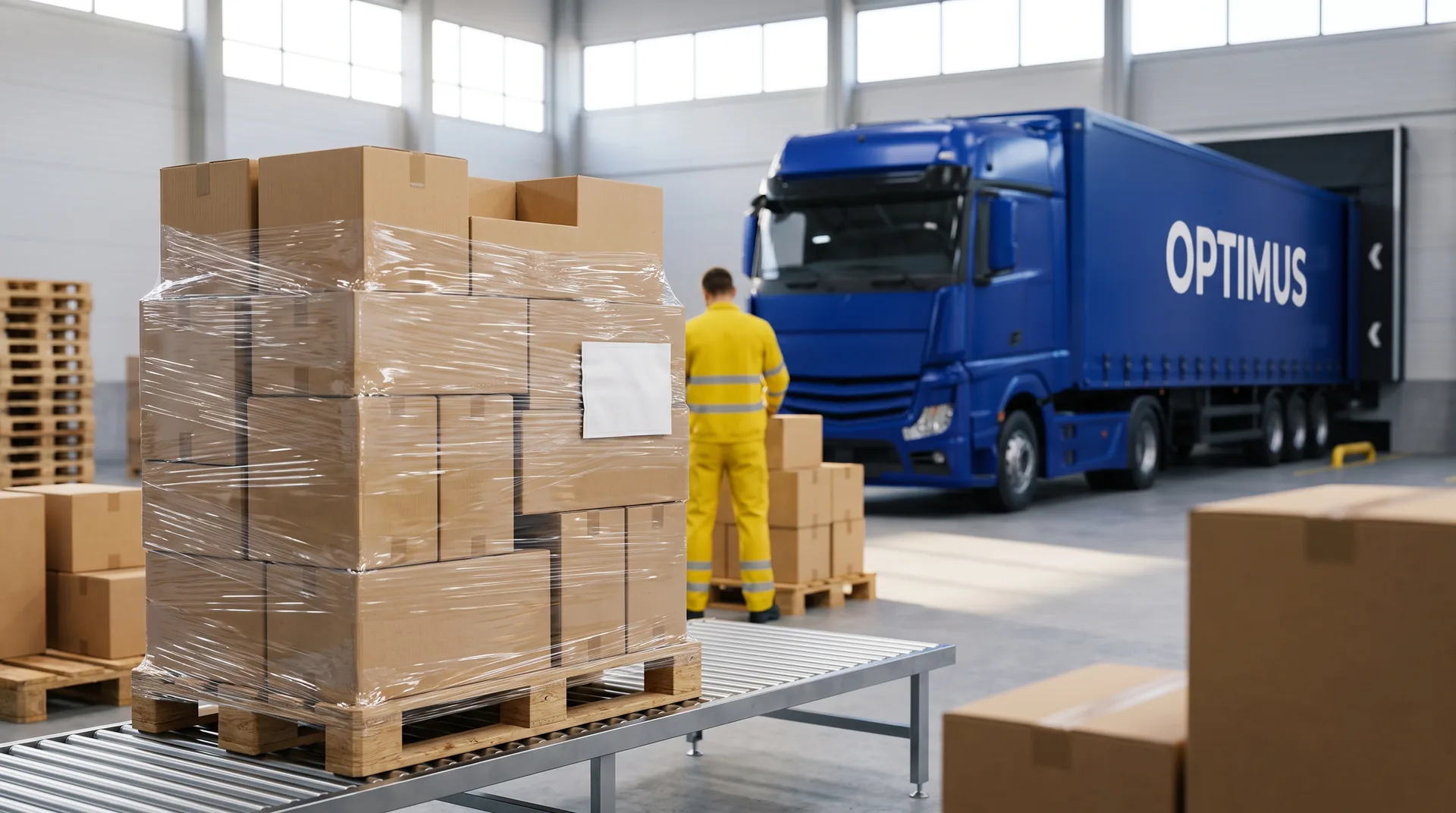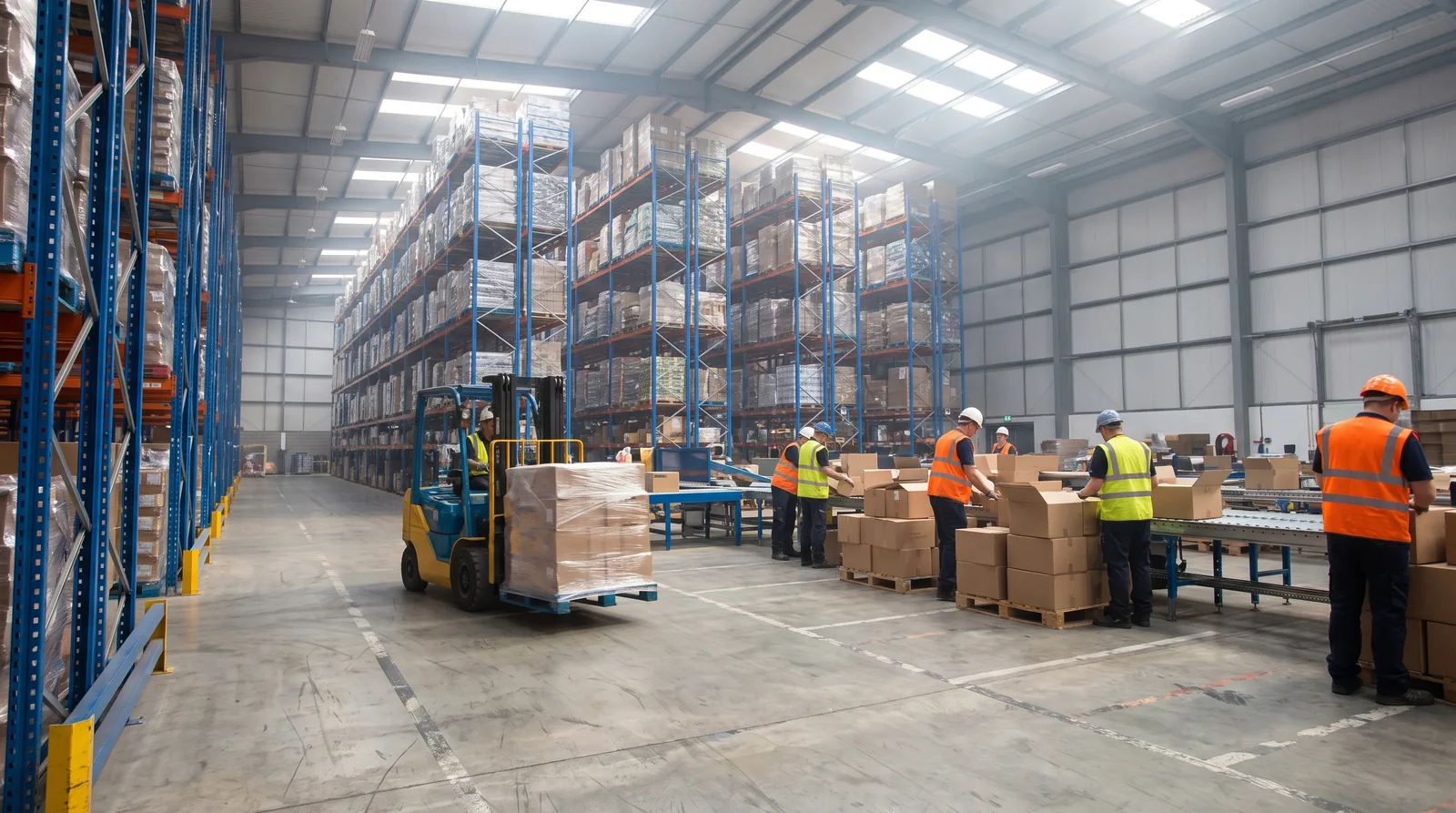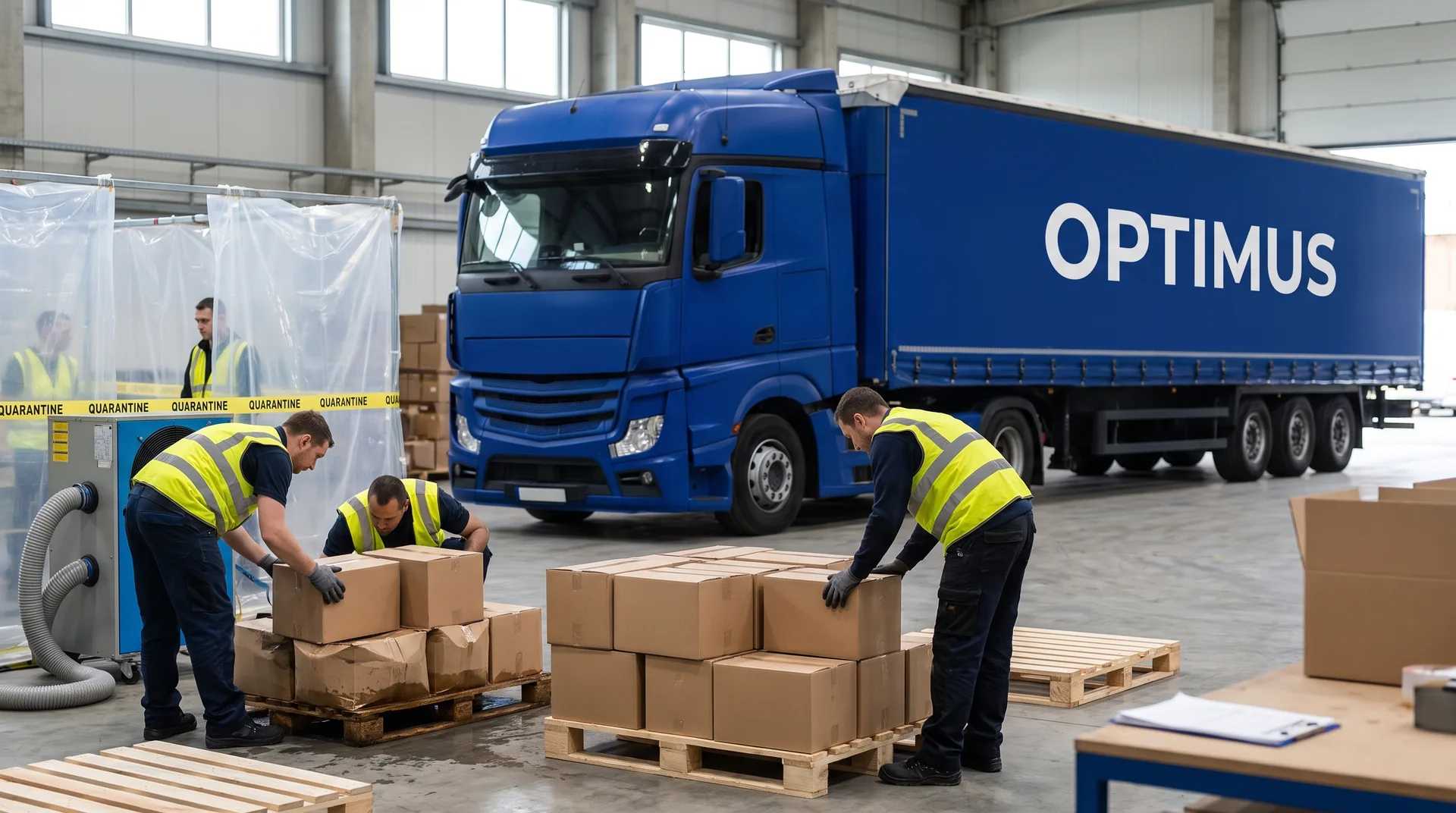
Damaged cargo comes off the road into our Milton Keynes warehouse, where it goes through photographic inspection, sorting and rebuilding. Saleable units return onto fresh pallets, damaged ones are documented for the claim, and the receiver gets a report instead of a wholly rejected delivery. Our recovery rate, counted in units of goods actually put through filtering after an incident, exceeds 92 per cent.
Typical scenarios
- Water ingress: a leaking curtain or roof, condensation, or rain during transhipment. Cartons lose rigidity even where the product inside is untouched.
- A toppled or crushed pallet: after heavy braking or bad stacking. Some packaging needs replacing, some units writing off.
- Rejection at the bay: the receiver refuses a delivery with visible damage, and the goods need space and a decision before they return to the chain.
- A collapsed load: split film and shifted layers, where the goods are intact but the logistics unit has ceased to exist.
Step one: inspection and photographs
Before anyone decides anything, the goods are unpacked and documented: photographs of whole pallets, outer cases and individual units, a count of saleable and unsaleable pieces, and a description of the damage. That report goes to the cargo owner and the insurer. Order matters: photographs taken before unloading are stronger evidence than photographs taken after the pallets have been moved. How hold and release works step by step is described in quarantine, hold and release, and the construction of the document itself in the inspection report for the insurer.
Step two: sorting and rebuilding
Dry, intact units go back onto fresh pallets with new film and labels. Soaked cartons are replaced where the product inside is in commercial condition. Broken pallets are rebuilt to the receiver's requirements, including retail chain standards. For temperature-sensitive cargo the work takes place in a chilled or frozen zone, without breaking the cold chain. Where surface decontamination is needed, we use UV inspection and treatment. The detail of rebuilding units is in pallet repair and rebuilding.
Step three: decisions and paperwork
The cargo owner receives a report with counts and photographs, on which they decide: what goes on to the receiver, what returns to Poland and what goes for disposal. The inspection file is ready-made material for a claim. Documented destruction with certification is covered in certified disposal, and rescuing batches rejected by receivers in loads rejected by retail chains.
Why it pays
The alternative is sending the whole consignment back to Poland or destroying it without assessment. Recovering even part of the pallets on the British market is normally cheaper than return freight plus a fresh shipment, and the receiver gets goods days late rather than weeks late. There is also an argument that counts on a claim: a documented attempt to mitigate the loss looks very different to an insurer from a blanket return of the whole delivery.
What to do in the first hours
- Do not unload at the receiver if damage is visible; photograph it inside the vehicle.
- Clause the consignment note at delivery, not the following day.
- Contact the cargo owner before any decision about distribution is taken.
- Route the vehicle to inspection rather than hunting for ad hoc storage.
The liability rules, and when a carrier policy alone is not enough, are discussed in the scope of carrier liability and cargo cover. The full warehouse service is on the Milton Keynes warehouse page, and the inspection services on the cargo inspection page.
Sources
Have a damaged delivery in the United Kingdom and need a fast decision? Write through the quote form and the Milton Keynes warehouse will take the goods in and produce a report with counts and photographs.