Since the United Kingdom left the customs union, stock held in British Amazon warehouses and stock held in EU warehouses are two independent pools. Every movement between them is an export and an import with a full set of entries. The practical consequence is straightforward: forecasting, replenishment and paperwork are planned per market, and shipments to Britain are smaller and more frequent than they were before 2021.
What exactly came apart
The Amazon programmes that spread stock across several countries operate inside the EU. For orders between Britain and the EU, Amazon runs a separate mechanism in which the parcel crosses the border to the customer and the end customer is the importer of record. That is a sales arrangement, not a logistics one: it does not replace local stock and it does not take away your decision about how much goods should sit on which side of the Channel. The wider picture of what has settled since 2021 is in the article on Brexit five years on.
Two forecasts instead of one
Before 2021 many sellers ran a single forecast and let the system distribute stock across Europe. Today British demand has to be forecast separately, because it is supplied separately. That changes the arithmetic in three places. First, a forecasting error is more expensive: a surplus in Britain does not rescue a shortage in Germany, or the other way round. Second, the number of shipments goes up: instead of one large delivery into the EU network there are two smaller ones, each with its own paperwork. Third, the average consignment to Britain gets smaller, which is why pallet groupage became the norm in this channel rather than the exception.
That last point has a direct effect on carriage. Consignments of a few pallets belong on groupage services with scheduled departures, not on a full vehicle ordered for a single delivery. Which option pays off when is set out in the article on a dedicated vehicle or groupage.
Paperwork: two markets, two sets
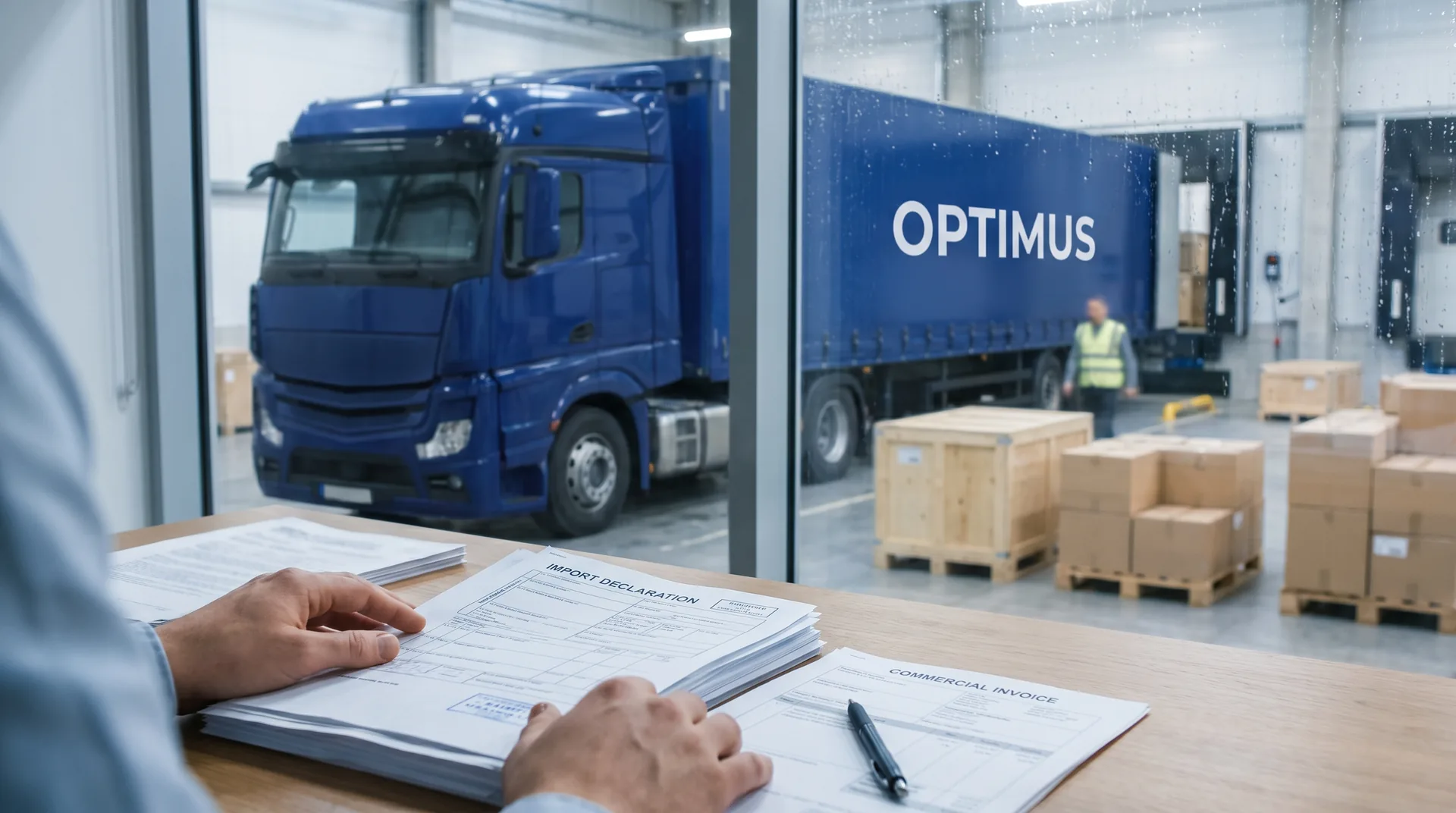
Replenishing British stock needs an export set on the EU side and an import set on the British side, tied together by clearance and a movement reference at the crossing. Replenishing EU stock from Poland needs nothing beyond a consignment note. That asymmetry is the source of the simplest mistakes, especially for sellers who run both channels out of one warehouse with one packing process.
Worth remembering separately: a preferential rate of duty on import into Britain does not rest on a movement certificate. It is supported by a statement on origin made out by the exporter, or by the importer’s knowledge, and only where the goods actually meet the rules of origin. Who counts as the importer in this arrangement is covered in the article on the importer on a delivery to an Amazon warehouse.
How much stock to keep on the British side
We do not quote figures, because they depend on turnover, margin and what a stock-out costs you. What we do offer is the three questions that genuinely move this decision. How long your full replenishment cycle takes, counted from the decision to the goods being live in the warehouse system, not to the vehicle leaving. What a day without stock costs compared with a day of storage. And what happens when the forecast was too high and part of the stock has to come back out of Britain. The third answer is usually the worst, because taking goods out means clearing them again in the other direction.
What a warehouse on the British side is for
Between the two models, shipping straight from Poland into an Amazon warehouse and holding all stock inside the Amazon network, sits a middle option. The goods cross the border once, in a larger batch, and stand in our Milton Keynes warehouse. Replenishments then go out at whatever size and rhythm makes sense, with no border in the middle of the process. The gain is that customs is decoupled from the receiving calendar; the cost is one more link in the chain. When it pays off is covered in the article on the buffer before the delivery window, and the comparison of sales models in the article on FBA or FBM from Poland.
Sources
- Amazon: FBA in the UK, pan-European programmes and cross-market order fulfilment
- GOV.UK: claiming preferential rates of duty between the UK and the EU
Selling on both markets and want to tidy up British replenishment? Describe volume and frequency in the quote form and we will propose a carriage plan with customs included. The full lane is described on the United Kingdom transport page.