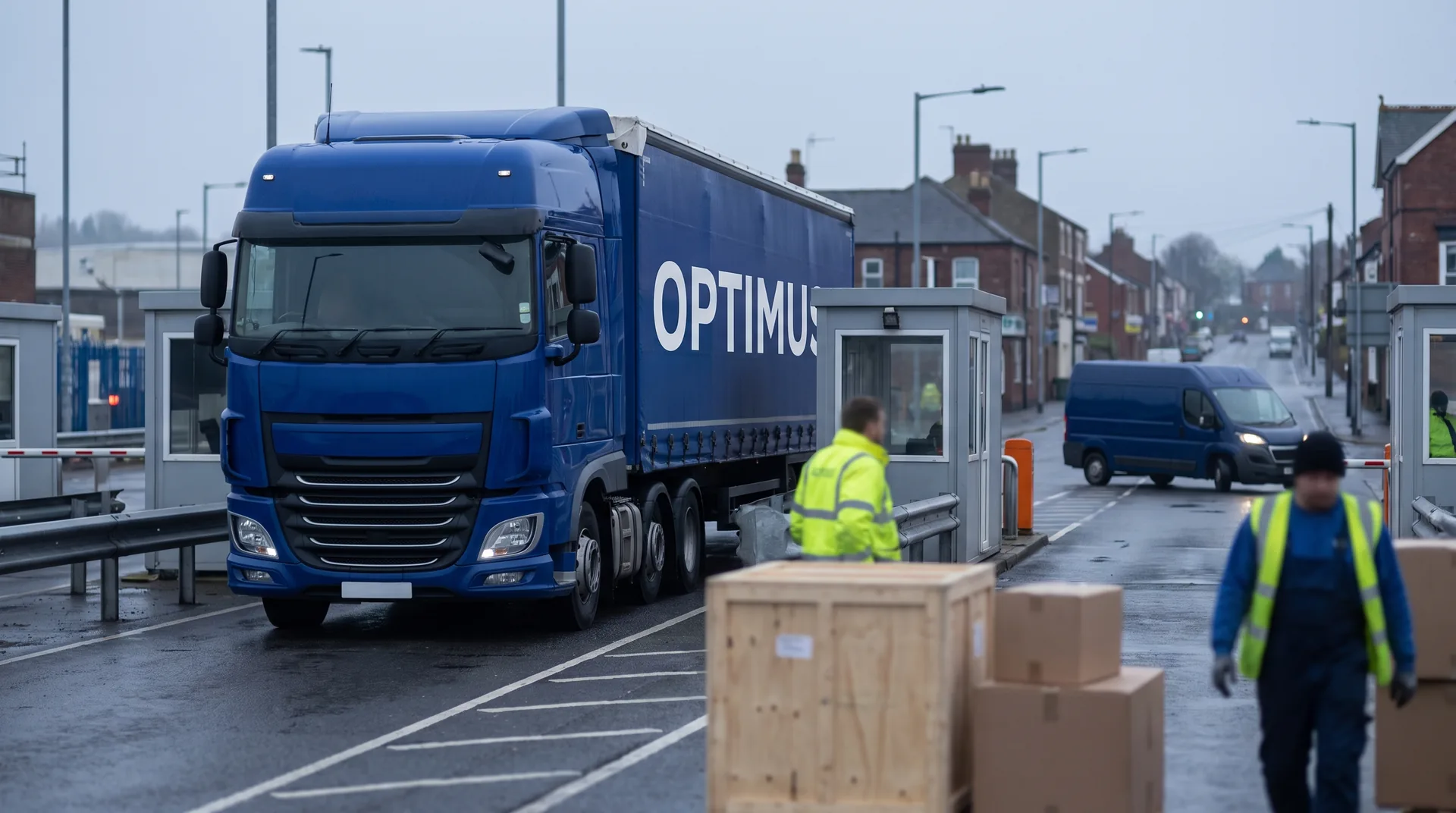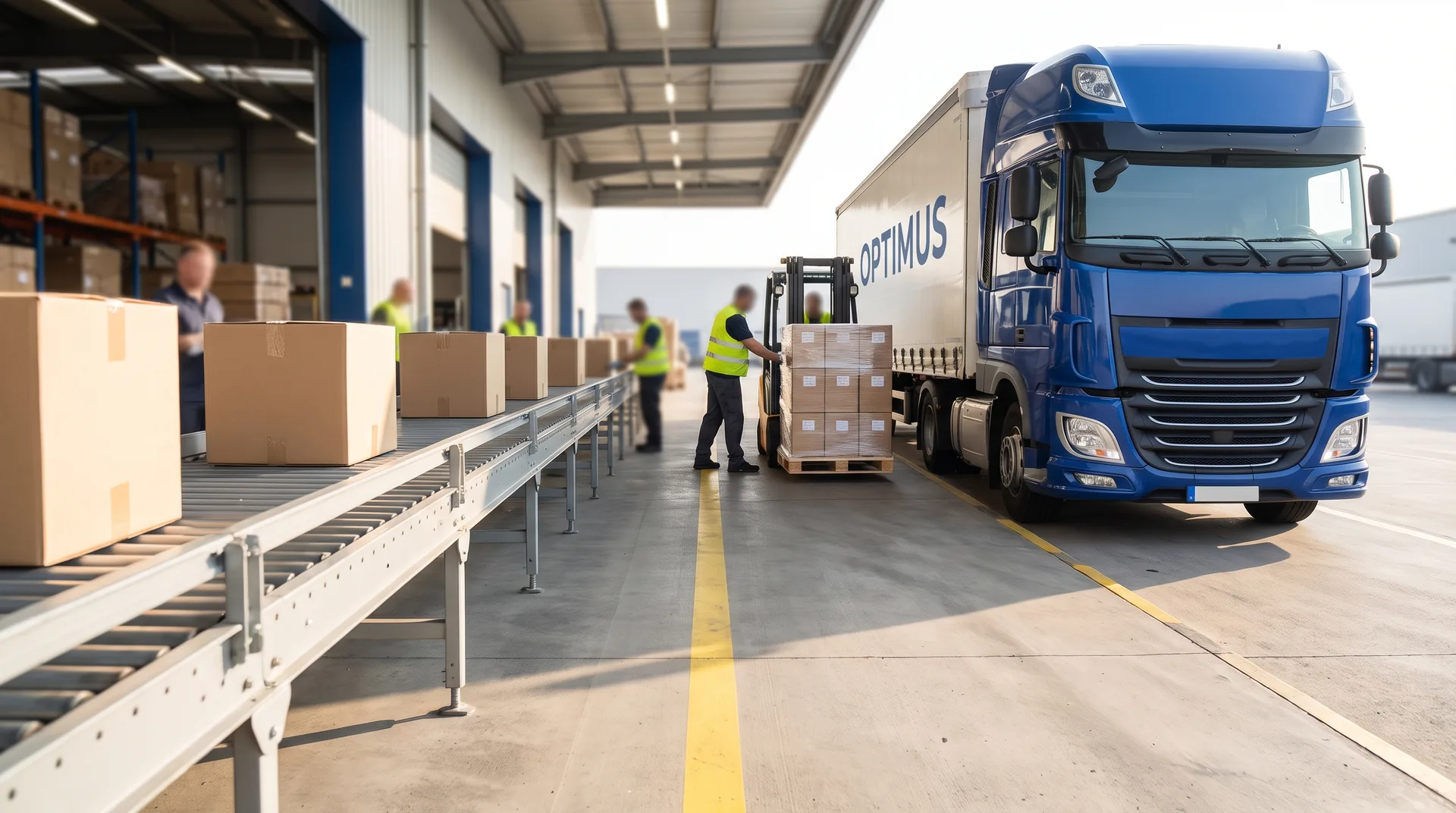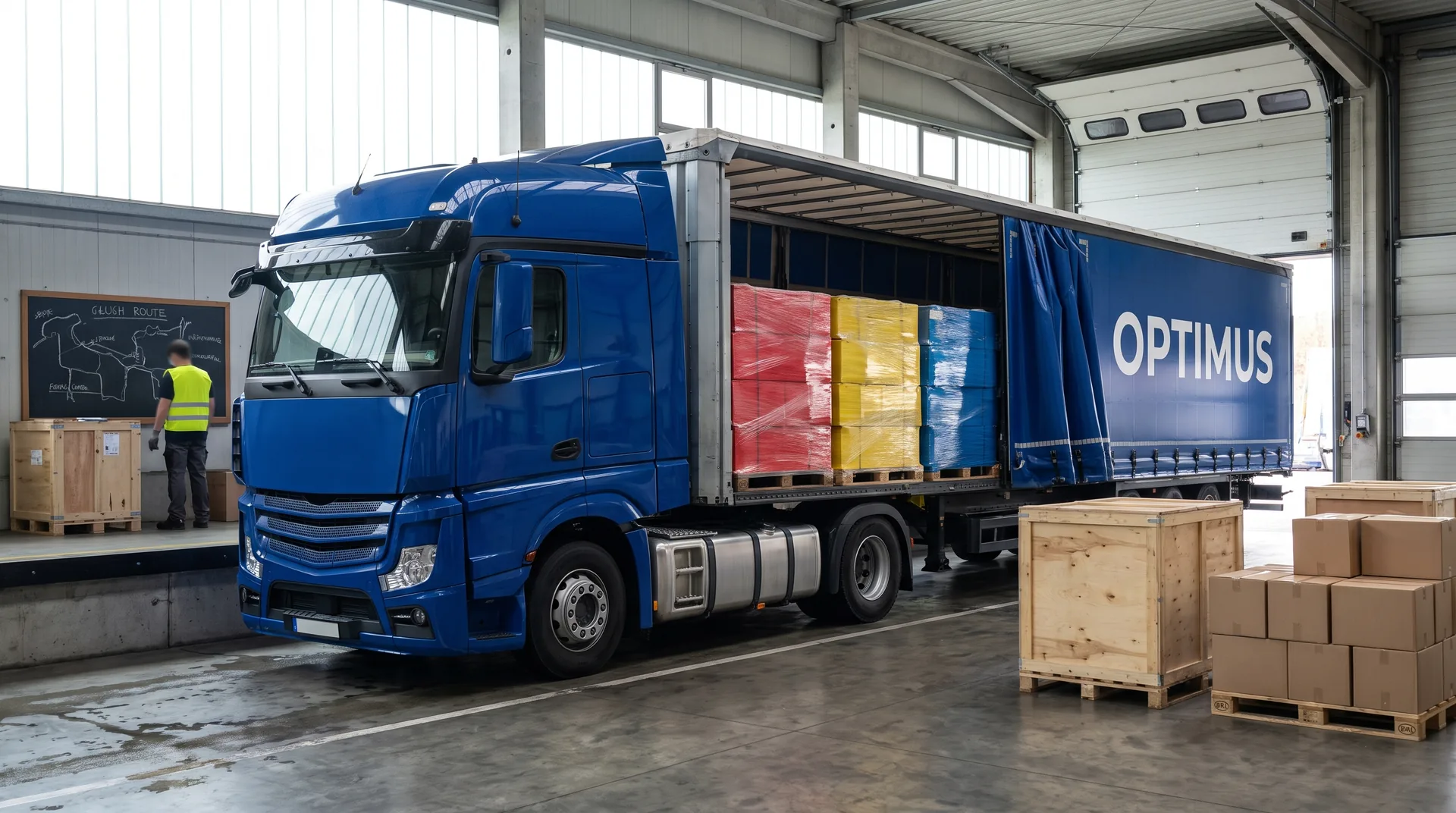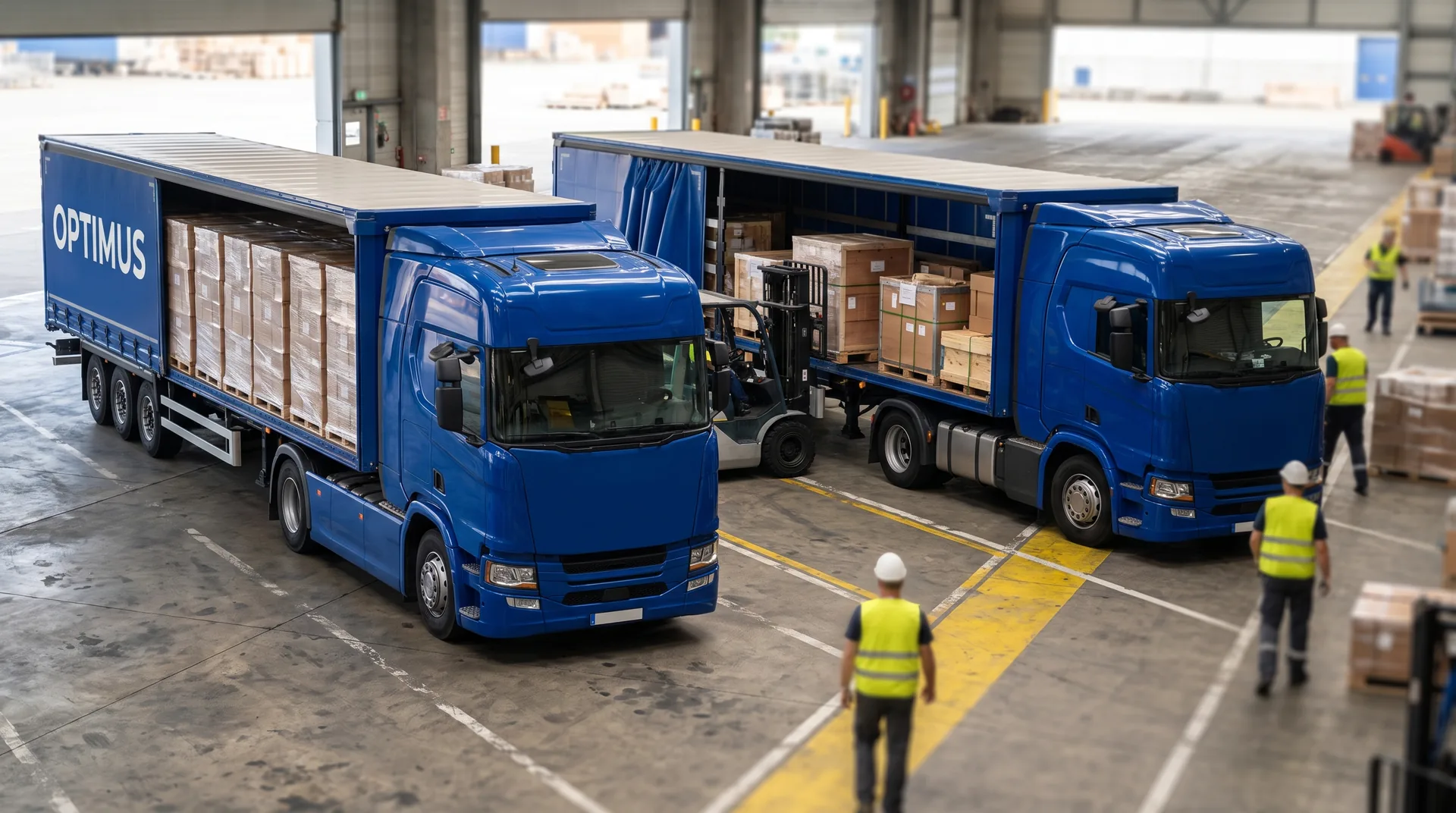
Groupage is cheaper until the batch approaches roughly twelve pallets, about a third of a trailer. On Amazon deliveries, though, the sum picks up a variable ordinary deliveries do not have: a fixed receiving appointment. Where hitting one particular window decides the value of the whole shipment, a dedicated vehicle can win at a volume where it would normally stand no chance.
The volume threshold
It starts with arithmetic everybody knows. Groupage spreads the cost of the run across several shippers, so at one or two pallets it is unbeatable. The share of cost rises broadly in line with the pallet count until, at around twelve units, a full vehicle becomes comparable. The threshold itself and what a trailer really holds are unpacked in the articles on choosing between FTL and LTL and on the price of FTL to England.
The variable ordinary deliveries do not have
A consolidated vehicle runs to the line schedule, not to your calendar. That usually does not matter, because most consignees accept goods within a reasonable range of days. A fulfilment centre accepts within a window, not a range. When the appointment is narrow and cannot be moved, certainty about the hour becomes valuable, and the only way to buy it is a vehicle carrying nothing but your load. This does not mean groupage misses windows; it means that on groupage hitting the window depends on the line schedule and on how much slack you left, while on a dedicated vehicle it depends on a dispatcher’s decision.
Several warehouses in one run
This is the argument most often left out, and it is sometimes decisive. Where goods from one collection point are destined for several different warehouses, a dedicated vehicle serves them in one run, with appointments set one after another. On groupage each part of the batch enters a separate stream, so the deliveries drift apart in time and the shipment stops being one whole. With two or three delivery points the sum often tips towards a full vehicle earlier than volume alone would suggest. How such batches are built is described in the article on one shipment from several collection points.
What enters the sum besides the rate
- The number of transhipments. Groupage means at least two, and each one is a risk of damage and a moment at which marking can disappear.
- The spread on arrival time. The wider the expected arrival window, the more slack has to sit in front of the appointment.
- The cost of a lost window. Not only waiting and a second attempt, but the wait for the next free appointment, which in peak can be long, as covered in the article on fourth-quarter delivery slots.
- The value of the goods in the batch. On high unit-value loads the difference in rate is often smaller than the cost of a single damage event.
When groupage is the obvious choice
On routine replenishment, in batches of a few pallets, with no hard sales deadline and with goods that tolerate transhipment. That is in fact the most common case in this channel since the changes described in the article on separate stock for the British market: shipments are smaller and more frequent, so a dedicated vehicle would simply travel half empty. What rides next to your pallet on a consolidated vehicle is described in the article on LTL groupage, and the scheduled departures in the article on groupage to the UK with regular departures.
How to work it out for your own case
We do not quote rates, because they depend on the lane, the date, the season and the type of goods. What we offer is a comparison that produces a sensible answer. Take the groupage cost plus the expected cost of risk, meaning the probability of slippage multiplied by the cost of a lost window, and set it against the cost of a dedicated vehicle. On routine replenishment the second term is close to zero and groupage wins easily. On a delivery that determines whether goods are available in peak, that same term can exceed the entire difference in rate. The third option, carriage with a buffer on the British side, is described in the article on the buffer before the delivery window.
More on this: One collection, several Amazon warehouses in a single run.
Sources
- Amazon Carrier Central: receiving appointments, pallet counts and delivery types
- Amazon Seller Central UK: options for dispatching a palletised shipment
Not sure which option to cost? Give us the pallet count, delivery points and dates in the quote form and we will send both worked through. Pallet batches travel on our groupage service.