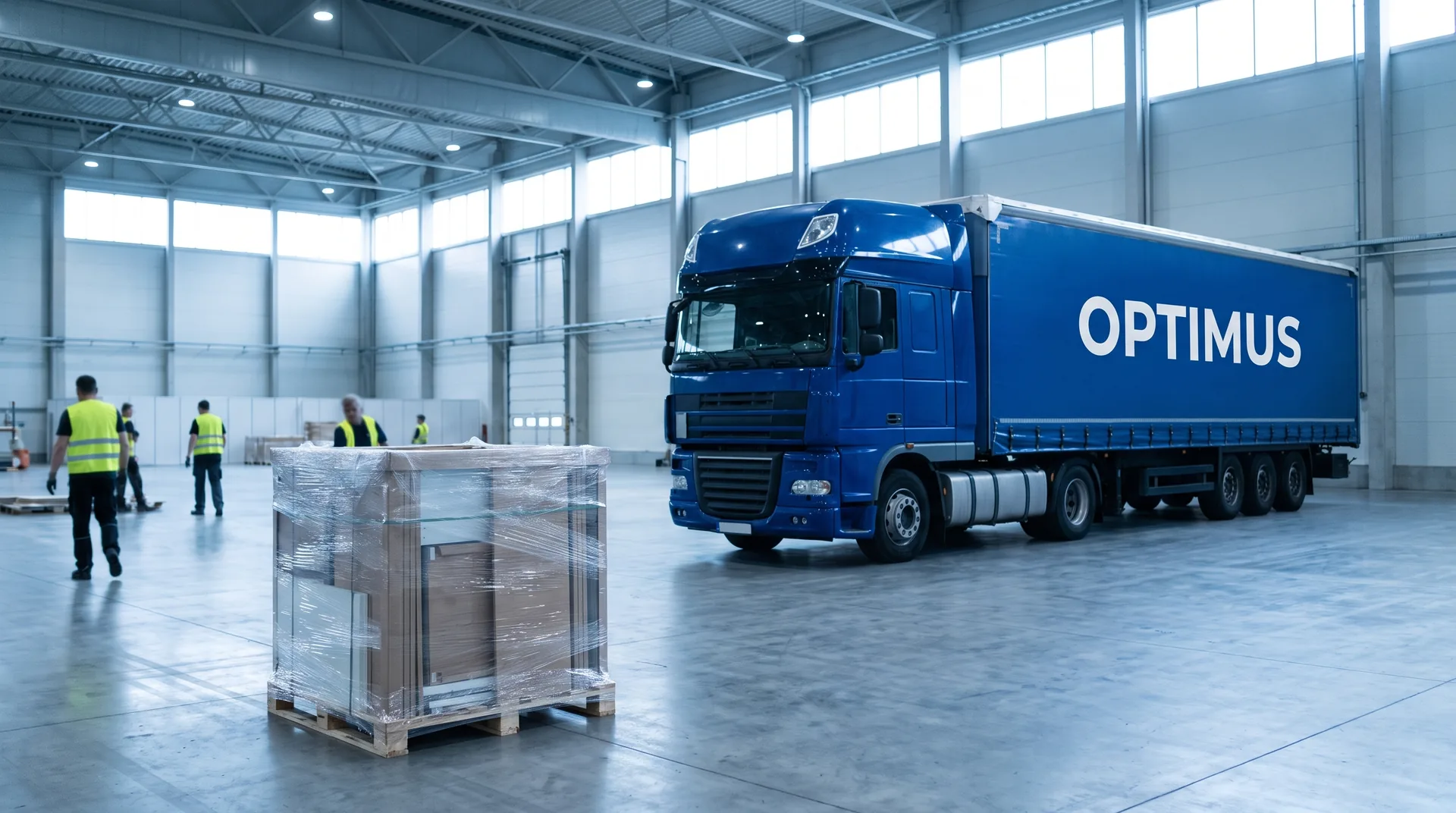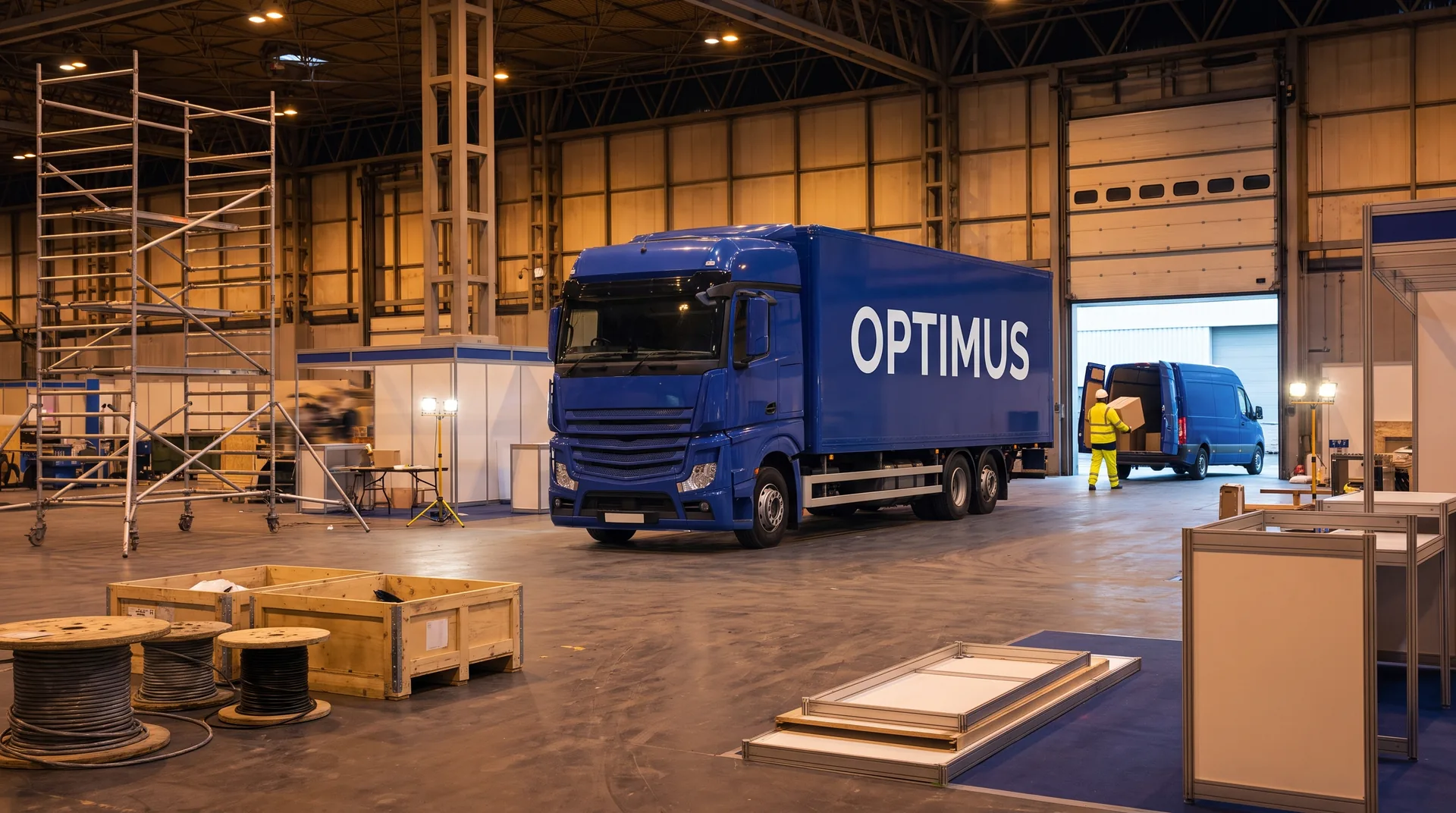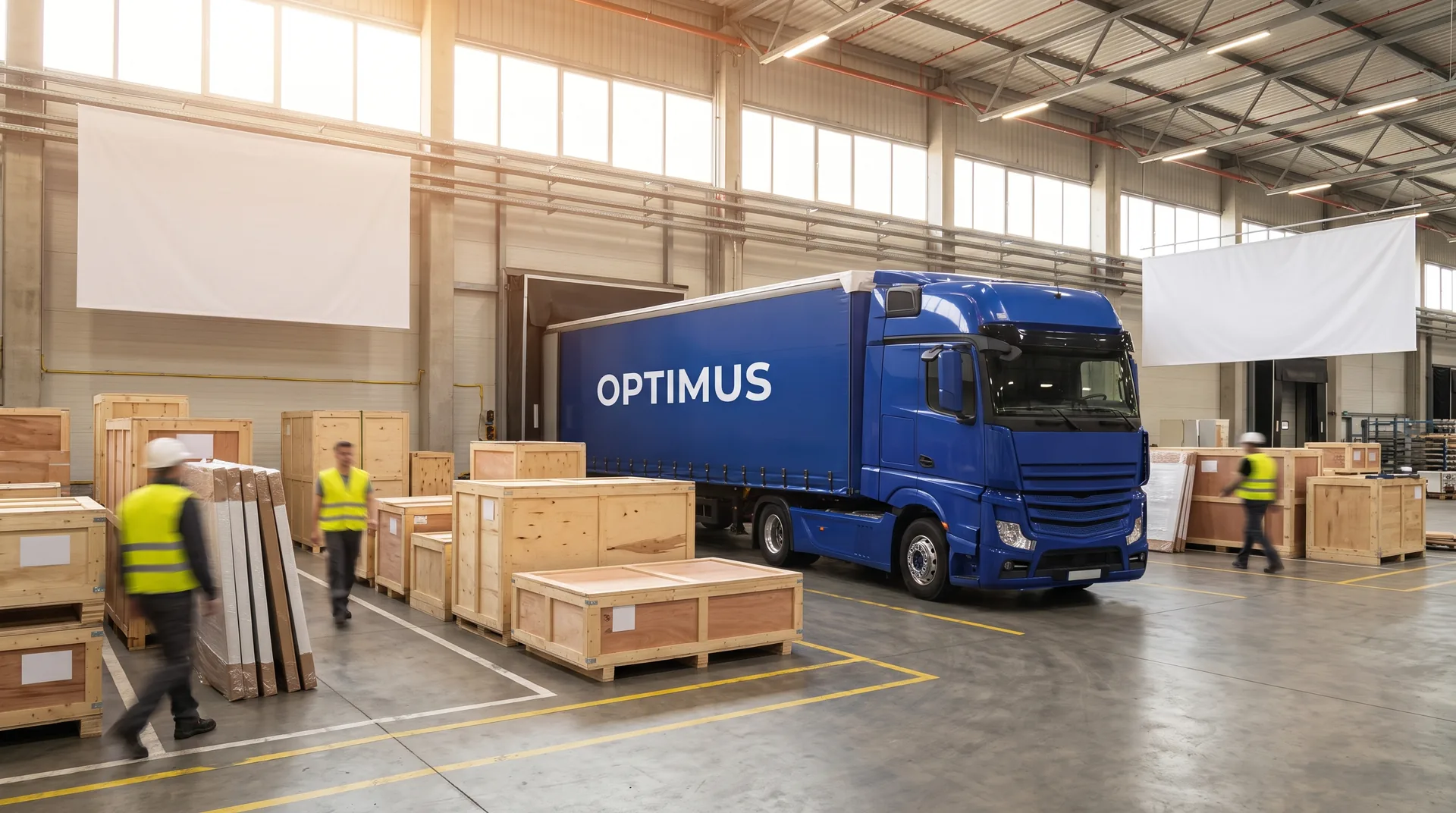
A buffer is a planned stop for freight near the venue, between arrival in town and entry to the fairground. It is not a luxury but a way of separating route variance from a fixed build-up window. Our Kielce base sits about 4 km from the fairground, a few minutes away, so a load can arrive a day early and enter exactly at the agreed hour.
The problem a buffer solves
The build-up window has a start and an end set by the organiser and is shared by every exhibitor in a hall. A vehicle coming from the other end of the country or from Britain, by contrast, has a variable schedule: traffic, checks, a queue at the crossing, weather. If those two schedules meet head on, the only reserve is leaving earlier, which means a driver waiting at the gate for half a day or, worse, freight standing in the yard.
A buffer separates the two worlds. Route variance ends at the base, and from the base to the venue is a matter of minutes, so travel time stops being a variable and becomes a constant. Only then can you commit to an hour at the gate rather than a range; the unloading sequence inside the grounds still follows the venue rules. The method for scheduling the whole cycle is in the article on the build-up and breakdown calendar.
What happens to the freight in the buffer
It is received, checked for unit count and visible condition, and set aside for the waiting period. This is also the moment for work that is impossible in an exhibition hall: restoring wrapping disturbed in transit, replacing a damaged pallet, moving the load onto a carrier that is easier to bring onto a stand, or consolidating shipments that arrived separately. In the hall, inside the build-up window, there is neither space nor time for that. A heavy exhibit adds equipment to the list: a ramp, a lorry-mounted crane and forklifts of adequate capacity, which we cover in a heavy exhibit waiting for a Kielce fair.
With temperature-sensitive freight the buffer has an extra function: it shortens the period during which goods are outside controlled conditions. We cover it in the article on winter fairs and frost-sensitive freight.
Why it beats a missed slot
We do not quote rates, because every case is priced separately, but the cost structure is predictable. On one side you have a few days of standing freight and a short final run. On the other: a driver and vehicle tied up waiting, the risk of needing out-of-window entry, the cost of a fitting crew waiting for materials and, at worst, a stand that is not ready at opening. The first item is known in advance, the second is a risk of unknown size. That difference, rather than the price itself, is what decides.
The buffer after breakdown
The second, less often described function works after the show closes. The breakdown window is short and return vehicles are hardest to get then, because everyone is looking at once. The stand and equipment can leave the hall for the base and travel home when a vehicle is available on a sensible route, for example with a return load. That cuts out the most expensive moment on the transport market. The options after closing are gathered in the article on what to do with a stand after breakdown.
When a buffer makes no sense
When the load comes from nearby on a predictable route, an extra stop only lengthens the chain. When the exhibit needs commissioning and calibration immediately after delivery, an extra handling step is a risk in itself. And when the show allows direct entry at a convenient hour and the exhibitor has a crew on site, a buffer improves nothing. The honest answer: a buffer buys certainty of timing and is only worth it when that certainty is worth something.
The Kielce base and the UK route
Kielce is our transhipment base and a consolidation point for westbound freight, so the fair buffer uses the same facility as ordinary groupage flows. In practice that means a stand serving a show in Kielce and then a fair in Britain does not have to return to its owner in between; we cover it in the article on one stand, several shows. On the British side the same function is served by our Milton Keynes warehouse.
What to settle before using a buffer
Three things. How many units arrive and of what size, because that decides space and equipment. When the build-up window falls, because we count backwards from it. And whether the freight needs anything beyond standing still: restacking, additional fitting, a condition check. The rest is ordinary work. The general picture of deliveries to the Kielce fairground is in the article on delivery to Targi Kielce.
Sources
Want the load in place early and on site at the agreed hour? Send the show name and build-up window through the quotation form and we will set up the final run from the buffer. See also the exhibition logistics page and our warehousing.