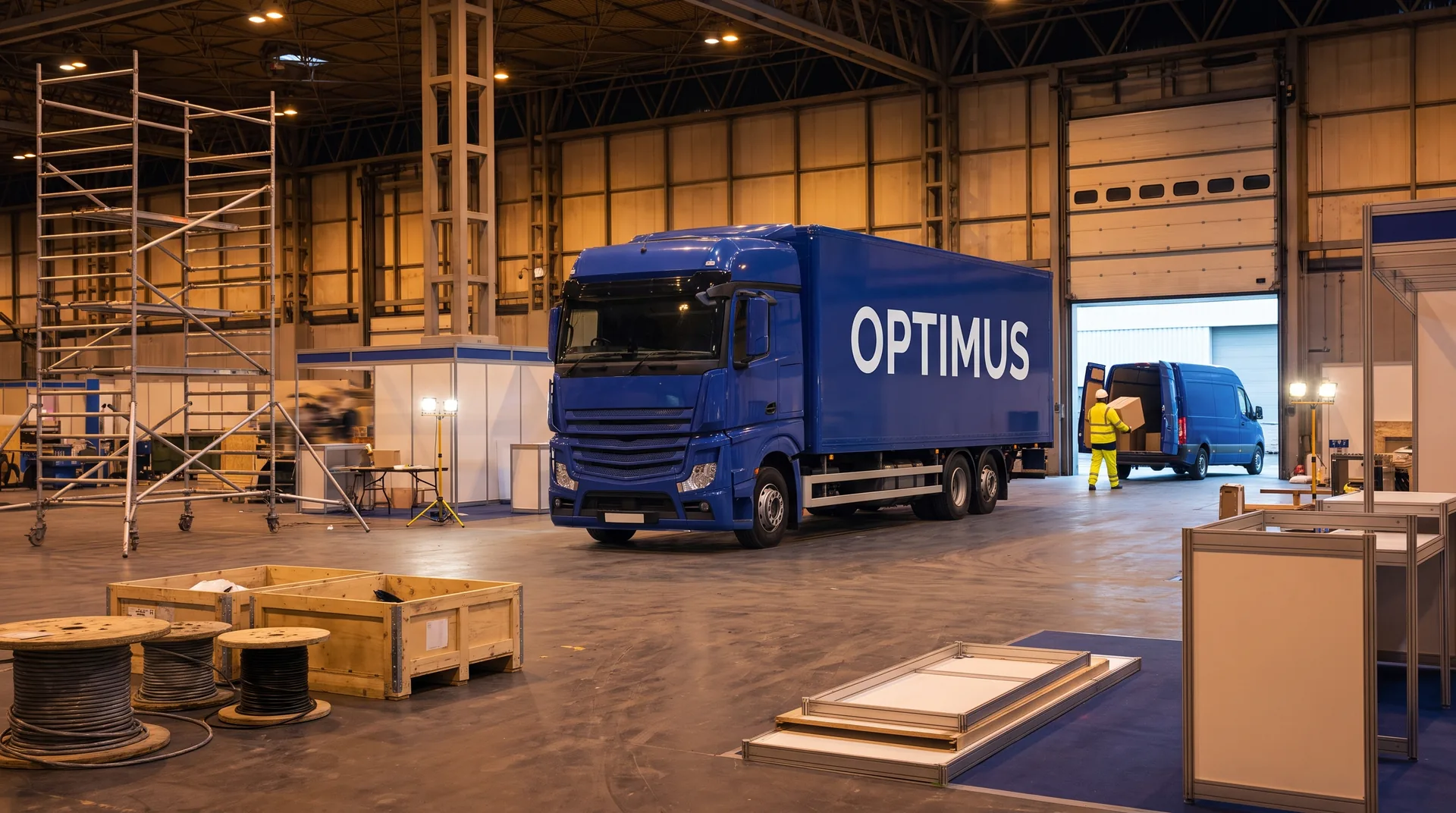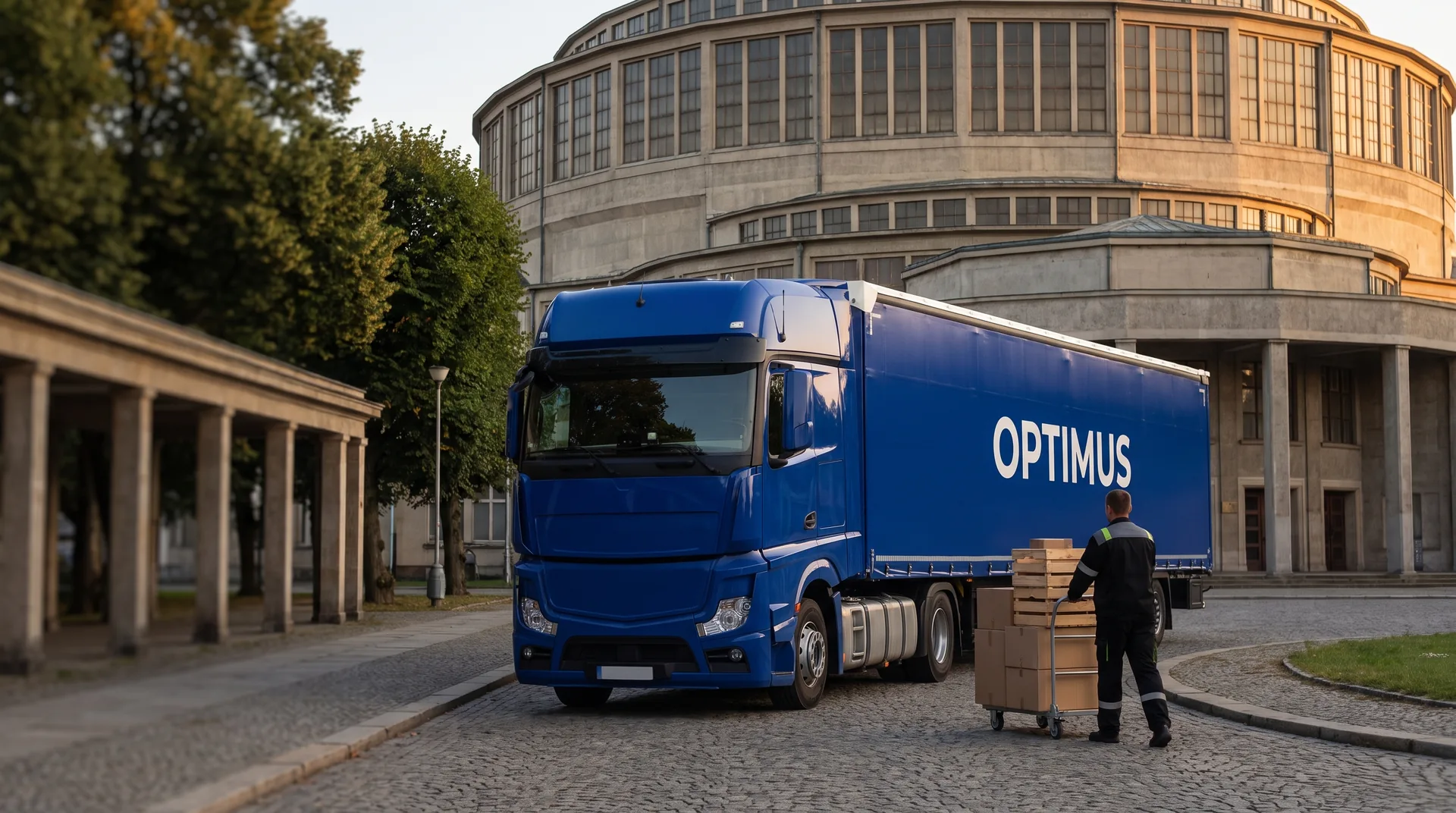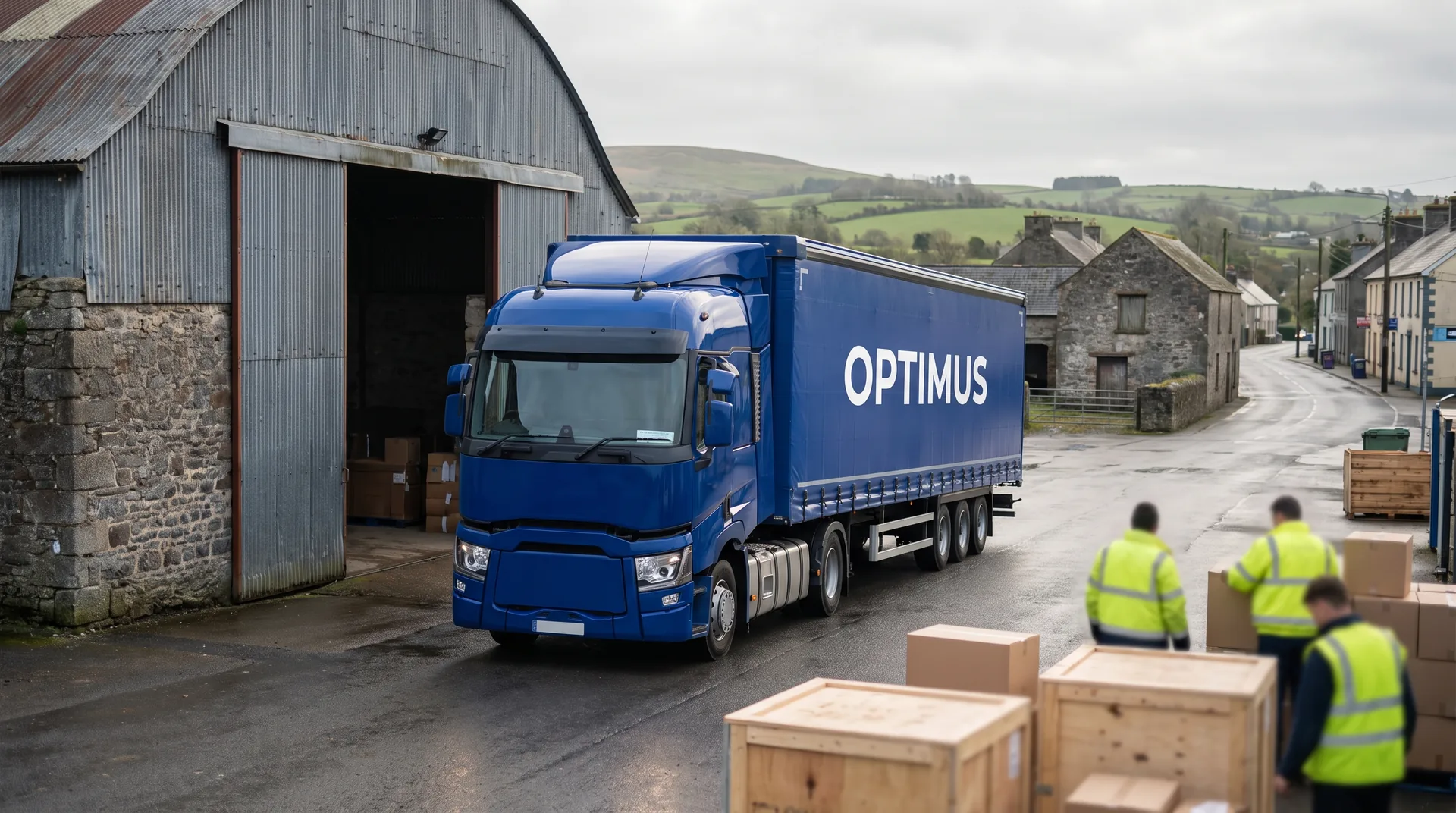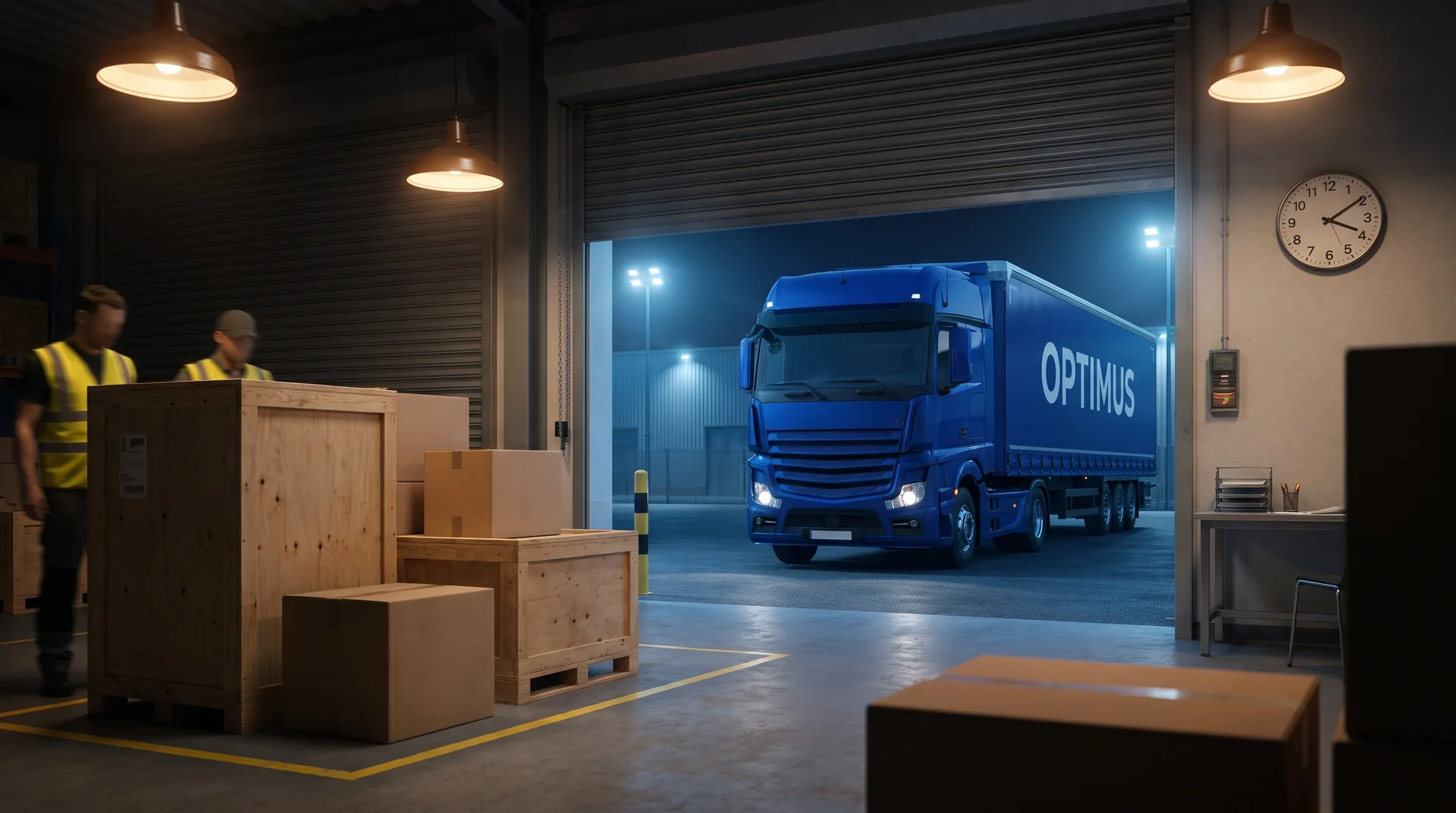
Our transhipment base in Kielce sits roughly 4 km from the fairgrounds, a few minutes of driving, and works around the clock. It has a ramp, an HDS lorry crane and forklifts rated up to 5 tonnes, so a heavy exhibit can come off the trailer at night, be inspected, re-secured and then brought to the venue gate at the appointed hour. The limit is the lifting capacity, which is why weights and lifting points are agreed before arrival rather than on the yard.
What round-the-clock intake changes for heavy freight
A vehicle carrying an exhibit rarely arrives at a convenient hour. A unit coming from the British Isles or from southern Europe reaches Kielce when driving hours and road conditions allow, and that is often two or three in the morning. A warehouse that opens at seven turns this into several hours of standing with the load still on the trailer, and with a heavy exhibit it also means a unit that cannot be used for anything else in the meantime.
Night intake reverses that. The load comes off immediately, the driver starts a rest period without cargo hanging over him, and the trailer is free for the next run. For the exhibitor one more thing changes: the exhibit is already in place, minutes from the venue gate, before anyone starts worrying about morning traffic on the approach road. The economics of buffering are covered separately in our piece on the buffer warehouse next to Targi Kielce.
The equipment and its real limit
The Kielce base has a ramp for unloading trailers, an HDS lorry crane, forklifts rated up to 5 tonnes and space for side unloading when an item will not pass through the rear of a trailer. That set handles the large majority of trade fair exhibits: machines on transport frames, crates, stand components and pallets of display material.
The limit, though, is hard, and it pays to know it early. A machine heavier than the forklift rating needs something other than forks, and an item with unusual support points needs a spreader beam or slings chosen for that specific object. These are decisions made before loading at the consignor, because that is the last moment at which the way the load sits on the trailer can still be changed. Made instead on a yard in Kielce, they cost a day. Door dimensions and floor loading on the venue side are a separate subject, covered in our article on unloading an oversized exhibit inside a hall.
Three figures that decide the equipment
- Gross weight of the unit including its frame or crate, not the catalogue weight of the bare machine.
- External dimensions in transport condition, that is after protruding parts have been removed.
- Lifting points specified by the manufacturer, plus the position of the centre of gravity where it is offset.
Without those three items any statement about unloading is guesswork. With them it is possible to say plainly whether the load comes off on forks or on a crane, how long it will take and how many people are needed.
Why a condition record exists
An exhibit changes hands several times on its way to a show: consignor, carrier, warehouse, venue staff, build crew. If damage is first noticed on the stand, establishing when it happened is in practice impossible, and every party in the chain has a good reason to point at the one before. A condition record at warehouse intake cuts that argument at one point: it is known how the item looked when it came off the trailer.
This matters for insurance too, because carrier liability in transit and cover for goods in storage are two different regimes with different limits. We set out the distinction in our piece on insuring an exhibit at a trade fair, and the division of roles between organiser, venue, exhibitor and carrier in the article on who is responsible for what at a trade fair.
What we do not do in the buffer
We do not start machines, we do not commission or calibrate them and we do not interfere with the structure of an exhibit. Those are service tasks belonging to the manufacturer or to the exhibitor technical crew, and performed by anyone else they move liability to a place where it does not belong. What we do is cargo handling: repairing wrapping disturbed in transit, replacing a damaged carrier, moving goods onto a pallet that is easier to bring onto a stand, and consolidating consignments that arrived separately.
How long an exhibit can wait
We set no rigid limit, because the length of a stay is decided by the show calendar rather than by the warehouse. What is sensible is to count backwards from the build-up window: a few days of buffer gives real reserve against delay on the road, while two weeks usually means transport left too early and you are paying for storage instead of flexibility. The method of working the whole schedule backwards is described in our article on the build-up and breakdown calendar.
When going straight to the venue is better
Where an exhibit has to be positioned and connected immediately on delivery and the technical crew is already waiting, every extra handling operation is risk without benefit. The same applies to a machine travelling a short distance that exceeds the lifting capacity at the base: it makes more sense to drive directly and unload with equipment chosen for that single job. Put honestly, a buffer buys certainty about the hour, and that certainty is not always worth an additional lift.
What to send with an enquiry
The name of the show and the hall number, a list of units with weights and dimensions, information on lifting points, the planned arrival date in Kielce and the build-up window from the organiser regulations. On that basis we answer which equipment will take the load off, how much space it will occupy and at what hour the vehicle will stand at the gate. The general picture of deliveries to the Kielce venue is in our article on delivery to the Kielce fair, and the site itself on the page of our Kielce base.
Sources
- Targi Kielce: event calendar and exhibitor information
- Targi Kielce: site entry regulations (PDF, Polish)
Have a heavy exhibit that must wait for its build-up slot? Send the list of units with weights through the quote form and we will tell you how it will be handled. See also our trade fair logistics page.