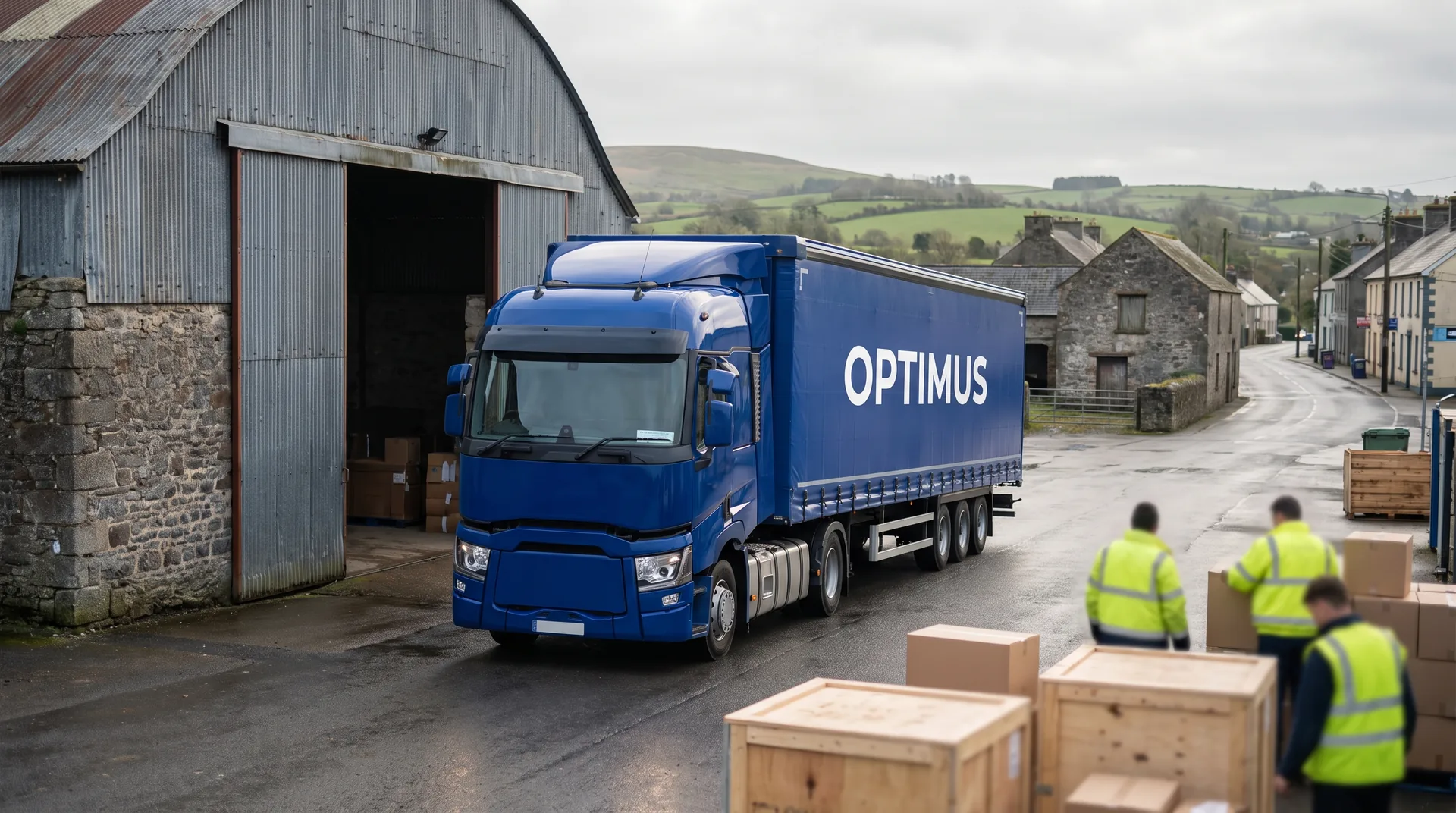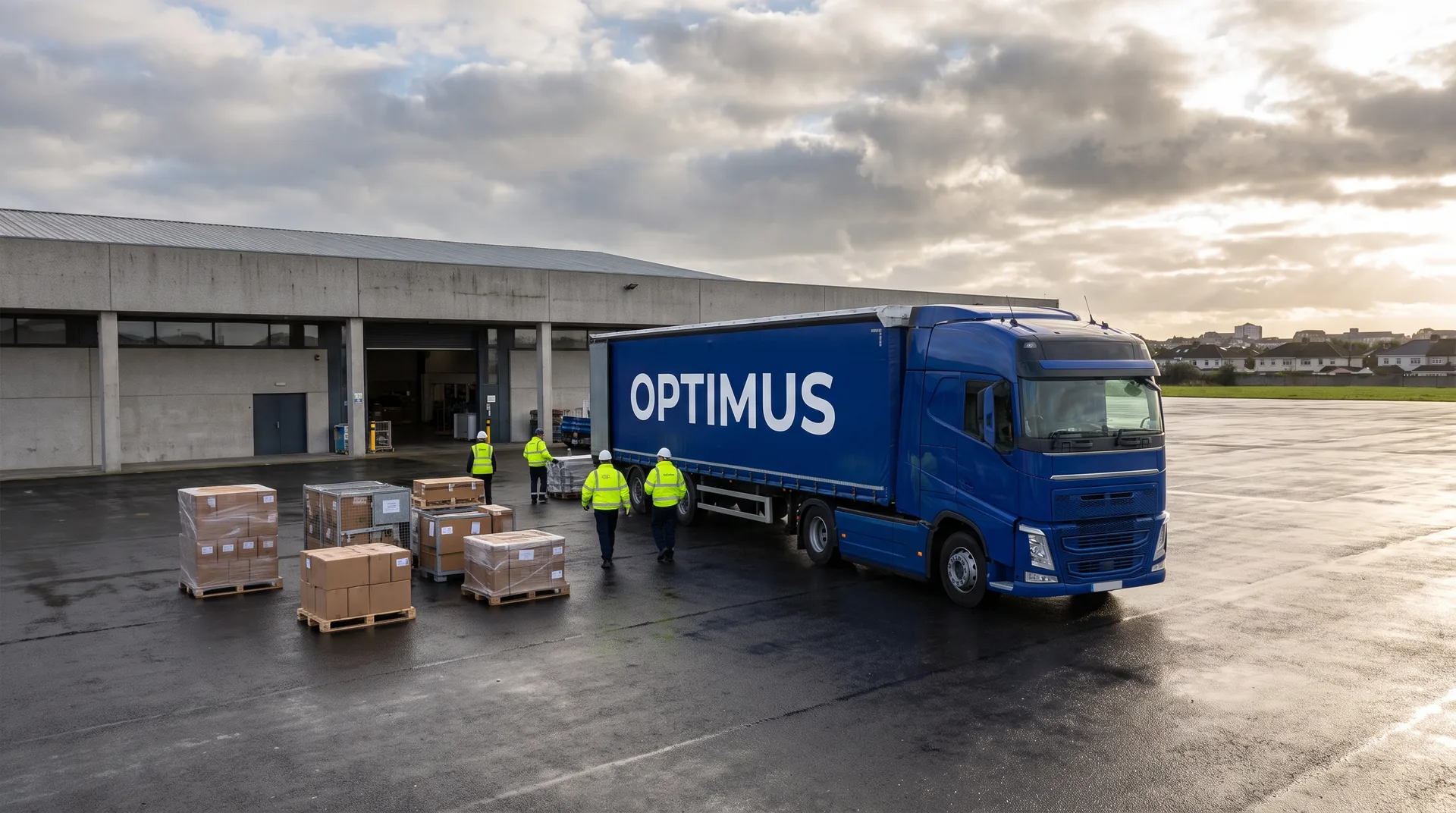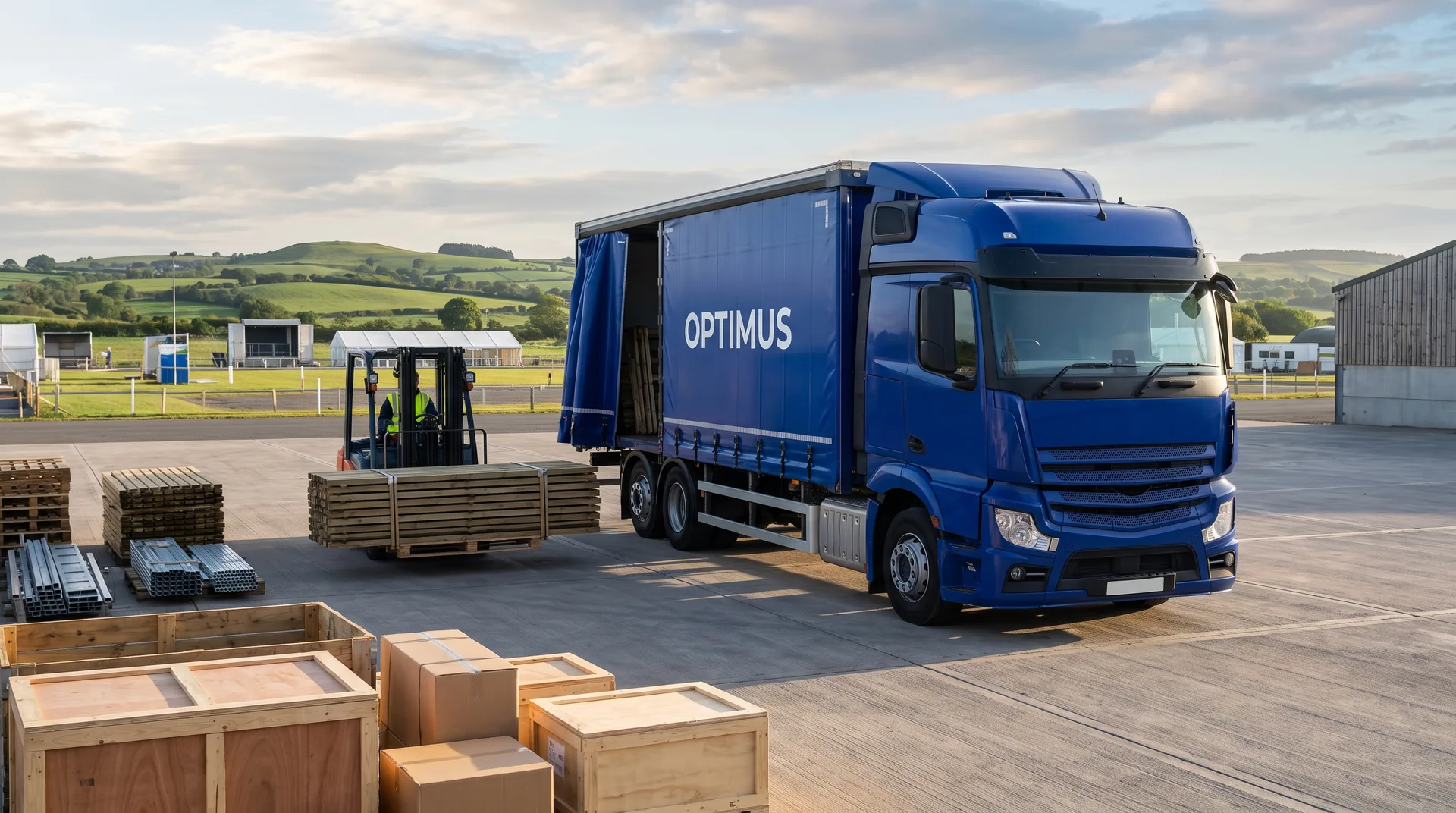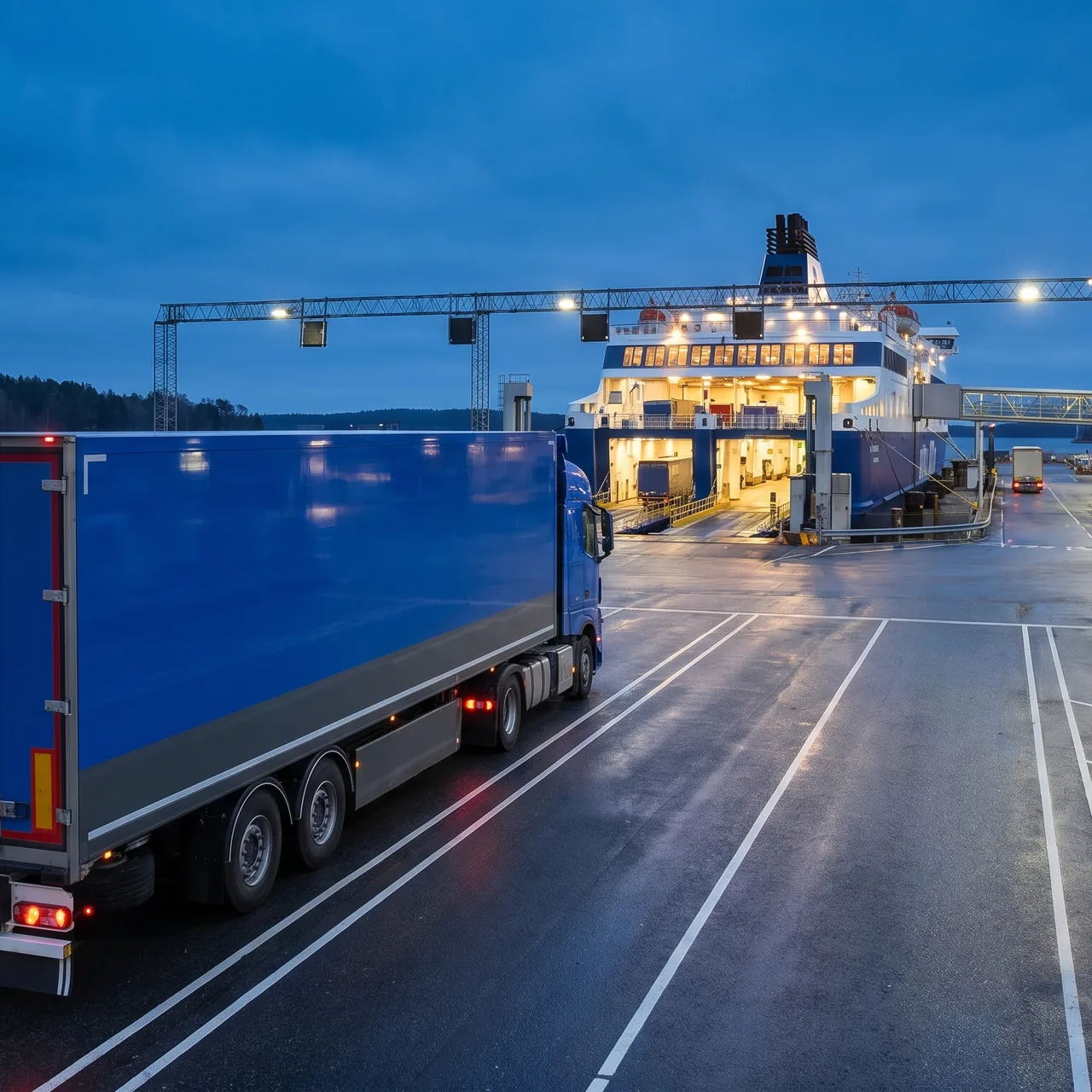
Two routes lead to Ireland. The land bridge crosses Great Britain, a third country, so Union goods need transit or proof of Union status. A direct ferry from the continent bypasses Britain and that whole procedure. The choice depends on urgency, the nature of the cargo and how much border risk you can absorb.
Where the problem came from
Before Brexit the land bridge was obvious: two short crossings and a quick run across Britain. Since the UK left the Union, the same route means entering and leaving the customs territory of a third country, so extra formalities and extra points where a vehicle can be stopped. The market responded by expanding direct sailings from French, Belgian and Dutch ports to Rosslare and Dublin. Today a shipper has a genuine choice that barely existed before.
The land bridge: when it still wins
- When time matters, because Channel sailings are frequent and short, so the vehicle keeps moving instead of waiting for one departure a day.
- When the consignment is part of a load already heading to Britain, with Ireland as the next stop.
- When flexibility counts: missing one sailing does not cost a full day.
The price is procedure: Union goods crossing GB need T2 transit or a document evidencing Union status, so they are not treated as an import on arrival. The mechanism is described in the land bridge and the T2 procedure and in T1 and T2 transit documents.
The direct ferry: when it is better
- For cargo with no connection to the British market, which should not cross a customs border twice.
- For control-sensitive goods, where every extra border point adds delay risk.
- For unaccompanied trailers collected on the far side by a local tractor unit.
- When the receiver sits in southern or western Ireland, nearer Rosslare than Dublin.
The drawback is sailing length and lower frequency: being late can cost a whole day. So on this option we plan back from the sailing time, not from the loading time.
Formalities on the Irish side
On a ferry from Great Britain, including the land bridge, entering Ireland requires a pre-boarding notification (PBN) in the Irish system before the ferry sails; on a direct ferry from the continent, an intra-EU movement, no PBN is needed. Without it the vehicle is held at the port, with consequences described in cargo stuck in Ireland without a PBN. On the land bridge, British declarations sit on top, including the GMR for entry into GB.
How we pick the option in practice
We ask four things: exactly where the delivery point is, how firm the deadline is, whether the cargo attracts extra controls, and whether the consignment is part of a larger UK flow. A Dublin delivery on a hard deadline usually goes by land bridge. A Cork or Limerick delivery without time pressure more often takes a direct sailing. Irish destinations are covered in more depth in transport to Dublin and Cork and transport to Limerick, and the return direction in returns from Ireland.
Northern Ireland is a separate subject
A delivery to Belfast follows different rules from a delivery to Dublin, even though the two sit less than two hours apart. The differences come from the arrangements covering Northern Ireland and are described in shipments to Northern Ireland and the Republic.
Sources
Have cargo for Ireland and cannot decide on the route? Send the delivery address and date through the quote form and we will compare both options for your consignment. The route is described on the transport to Ireland page.