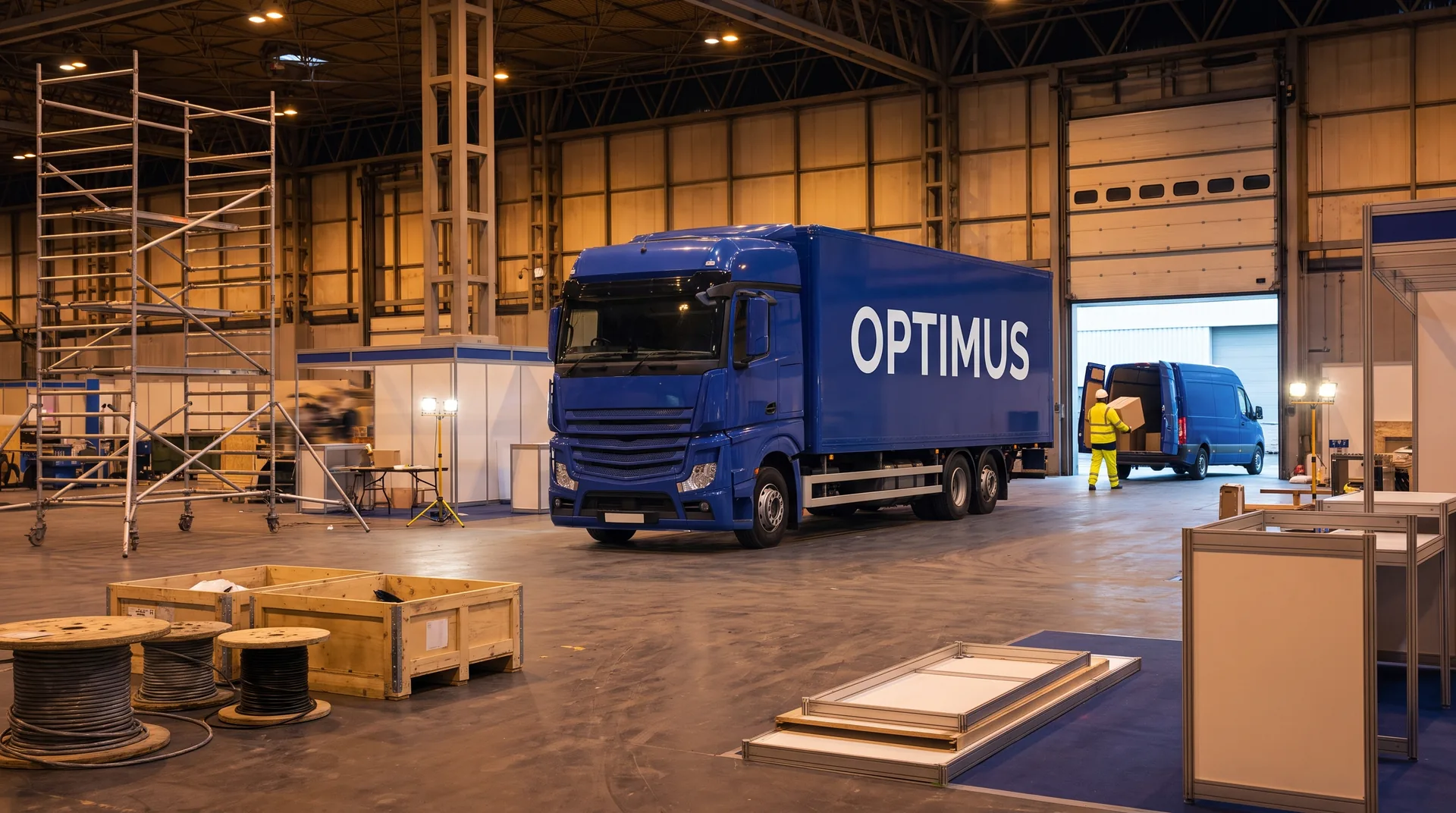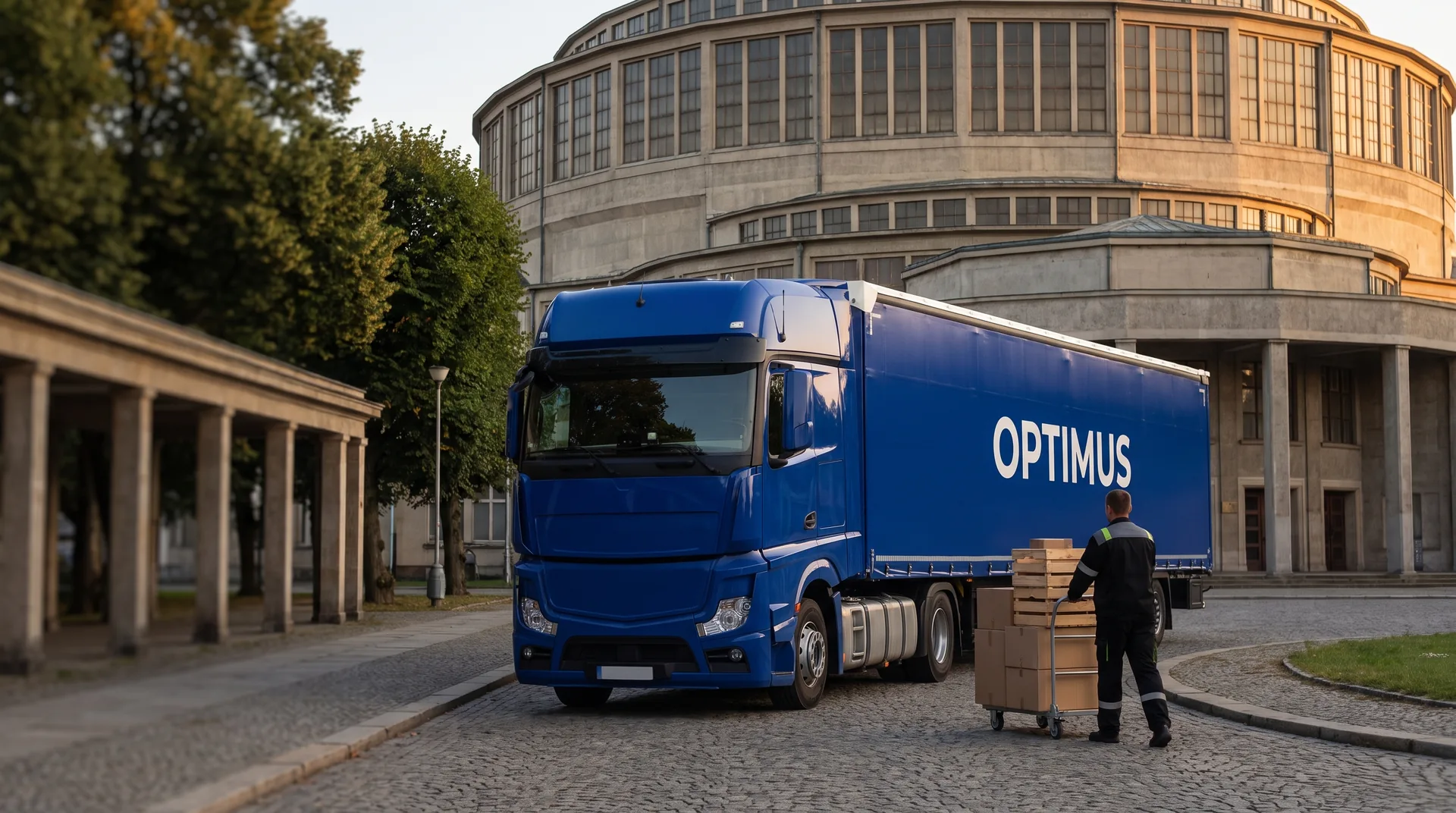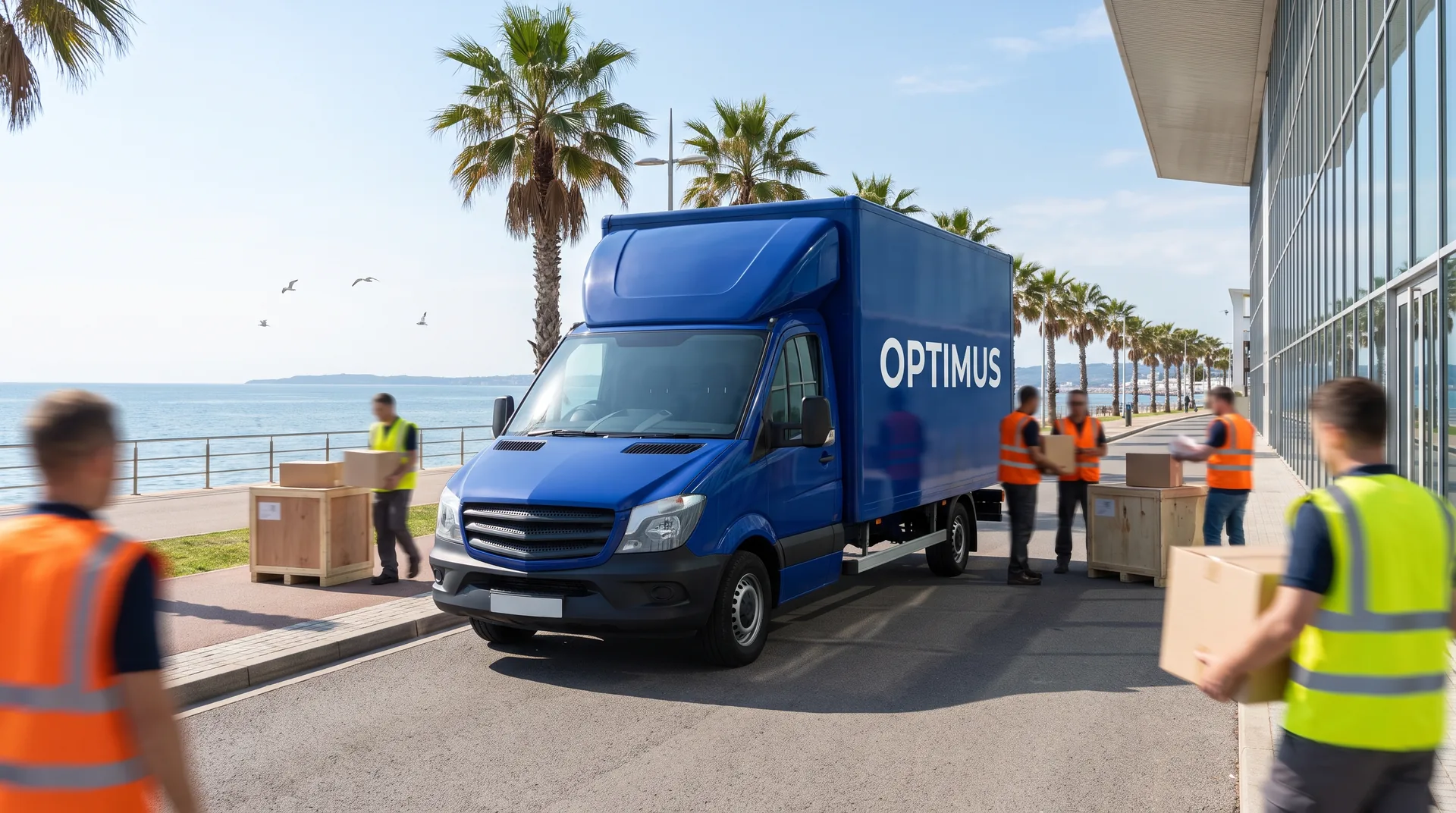
The Bournemouth International Centre stands on Exeter Road in the centre of seaside Bournemouth and is a multi-level building with a multi-storey car park capped at two metres. The public car park is therefore useless for any delivery vehicle. Purbeck Hall is a separate matter: the venue publishes two roller doors on its north and south sides, entry from ground level, and a private access road for contractor vehicles. We carry stands and exhibits here from Poland.
Owner and operator
The venue is owned by the Bournemouth, Christchurch and Poole council and run by BH Live, which operates as a social enterprise and registered charity. That split matters in practice when agreeing arrangements: site entry rules and use of the doors are set by the venue operator, not by the council. The building has been through a refurbishment in recent years, co-funded by the council and the operator, so materials from a few seasons back may describe a layout that no longer applies.
Getting there: the A31, the A338 and a roundabout before town
The venue publishes one approach route and it is worth sticking to it. From the north and west you drive to the A31 and A338 junction at Ashley Heath near Ringwood, then take the A338, Wessex Way, towards Bournemouth. At the Bournemouth West roundabout you take the first exit and follow brown directional signs to the venue. The venue publishes separate arrival points for the front doors, for the car park and, most importantly for us, for the Purbeck doors, which are the goods entrance. It is that third location the driver is given, because it leads somewhere other than the guest entrance.
What makes this venue different from a hall beside a motorway
Three things at once. First, it sits in the centre of a resort town in dense built-up streets overlooking the bay, so the surrounding roads are not designed for freight and carry local waiting restrictions. Second, it is multi-level: the foyer has ramps and steps, escalators and lifts run between levels, and the individual halls sit on different levels. Third, the venue multi-storey car park has a fixed two metre height barrier, so not even a tall panel van fits, let alone a lorry.
Against that background Purbeck Hall is the exception, and it usually decides whether a delivery is simple or complicated. The venue describes it as a circular, pillar-free hall with a high wooden domed ceiling, level access, two roller doors on opposite sides and a private access road for contractor vehicles. It also publishes a floor loading figure for it, which is rare among comparable venues. The venue itself notes that buses, boats and aircraft have been brought inside, which says more about the possible scale of an exhibit than any description. The other halls, including the largest auditorium and a hall arranged over two levels, have no published loading data, so for those the method of bringing a load in is agreed with the operator before departure.
Clean air zones and the route
Bournemouth has no charging clean air zone and no air quality management area in the national register. The caution concerns the route instead: Portsmouth appears on the British list of charging zones and sits on the coastal approach from the east. If a run is to touch Portsmouth we check that separately before fixing the route, rather than assuming that because the venue is outside a zone the whole route is too. We gather the rules in the article on UK clean air zones, and describe the region in the piece on transport to Southampton and Portsmouth.
What to settle before arrival
To the show organiser: which hall, because everything else follows from that, how vehicles are booked in and passes collected, whether the stand is served from ground level or by lift, who supplies the forklift, and where the vehicle waits before entry and goes after unloading. We do not quote hours or dates, because the organiser sets them separately for each edition. Waiting restrictions on the surrounding streets are confirmed before arrival, because in a resort centre they can tighten seasonally. The backwards planning method is in the article on the build-up and breakdown calendar, and the split of roles in the piece on the official fair forwarder and your own carrier.
What we do at our end
We collect the load in Poland, and from exhibitors in Czechia, Slovakia, Austria and Hungary we gather it through our hub. The Kielce base sits about 4 km from the fairground, a few minutes away, and works around the clock. A groupage vehicle waits for the next scheduled line departure. On the British side the load usually passes through a cross-dock in Milton Keynes, which gives two transhipments across the route and lets us bring goods to the coast in a vehicle matched to the entry rather than the one that came from the continent. At the venue we deliver to the handover point and the venue equipment takes over. We commit to an hour at the gate rather than an hour of unloading.
Groupage or a dedicated vehicle
The threshold runs at roughly a third of a trailer, about twelve pallets. At Bournemouth, though, matching the vehicle to the place often matters more than volume. If the stand is served from ground level at Purbeck Hall, a larger vehicle can be brought in. If it is served by lift, a smaller vehicle and a run from the buffer win, even when volume alone would point to a full load. We break that arithmetic down in the article on choosing between FTL and groupage.
Sources
- Bournemouth International Centre: halls, directions, parking and the Purbeck Hall data
- GOV.UK: list of British charging clean air zones
Exhibiting in Bournemouth? Send the hall name and item list through the quotation form and we will match the vehicle to the entry and set up the run from the buffer. See also the exhibition logistics page.