An exhibitor can usually bring freight with their own carrier, but how far that carrier gets and whether it may use equipment inside the hall depends on the rules of the specific show and venue. At some events in-hall handling is reserved for the operator appointed by the organiser. You check that in the regulations, before signing the space contract.
Where the line actually runs
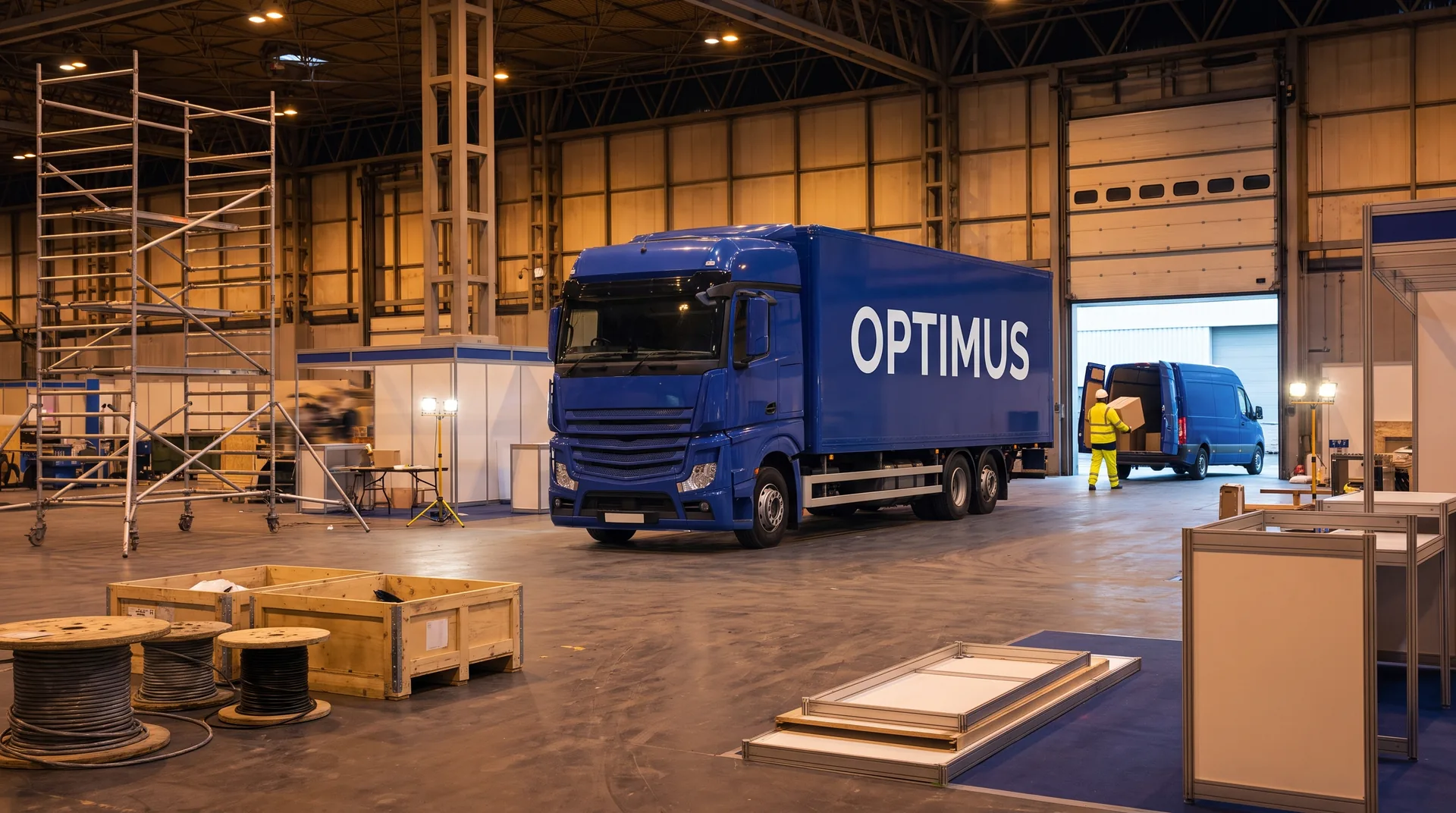
In most arrangements it looks like this: carriage from the loading point to the venue gate is an open market and the exhibitor picks the carrier. Activities on site, meaning forklift and crane work, unloading inside the hall and storage of empty packaging, may fall under operator exclusivity. The carrier then reaches a designated point, hands the freight over and leaves, and from there the fair crew takes it on.
The opposite is also common: at many shows an exhibitor may unload themselves, with their own equipment or crew, provided they fit the build-up window and hold passes. That is exactly why the question only makes sense when asked about a specific show rather than about trade fairs in general.
Where to find the answer
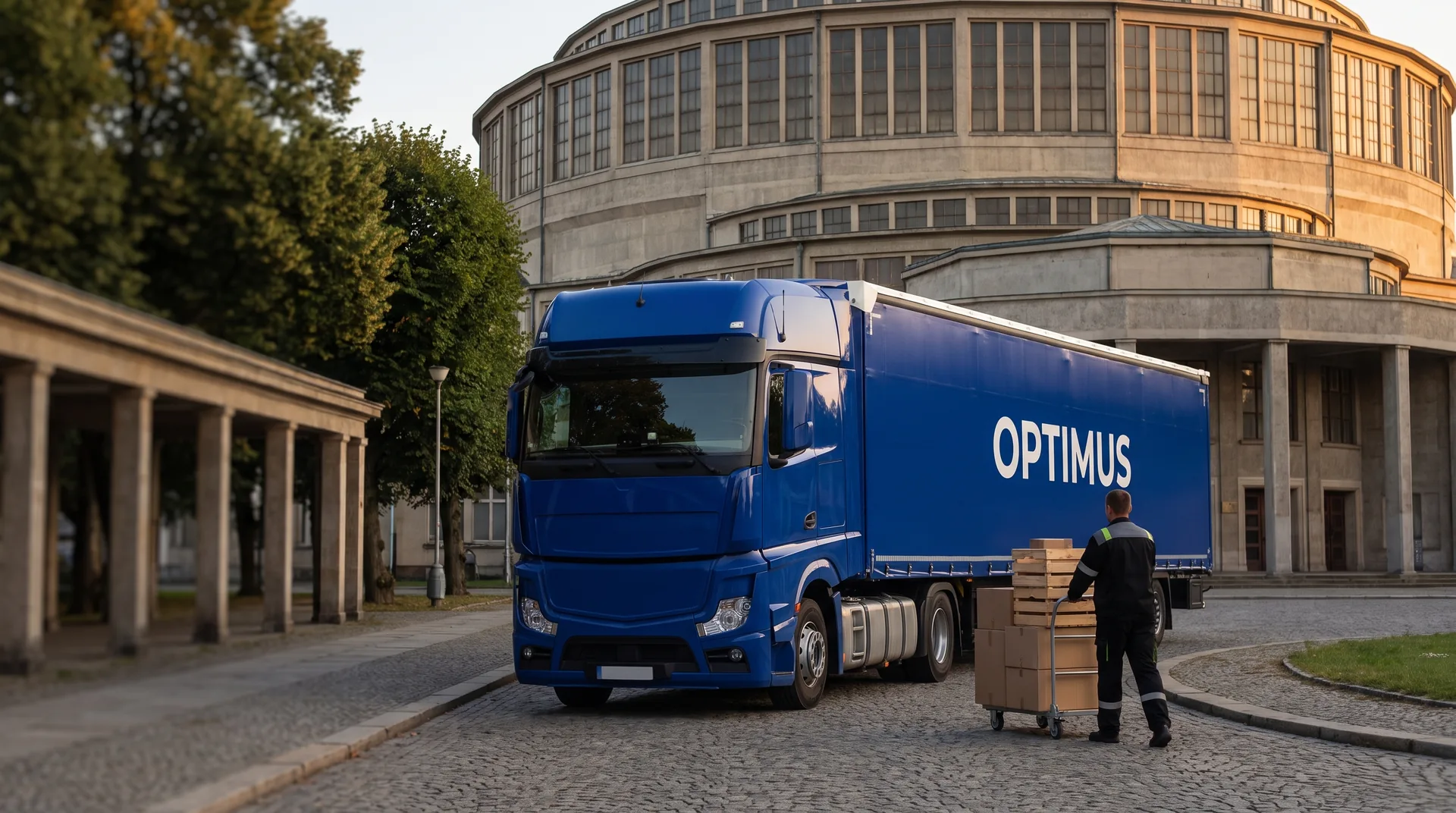
In three documents, in this order. First, the participation regulations for the show, published by the organiser with the entry form; that is where assembly, dismantling and freight handling rules sit. Second, the venue entry regulations, covering vehicle access, passes and zones. Third, the additional services order form, which shows what the organiser or its operator sells and what is not available any other way. Targi Kielce publishes its site entry regulations and the participation regulations for individual shows on its website, and those are what we read before every delivery.
A practical hint: if the services form lists forklift unloading with a price, that service exists and somebody provides it. It does not yet mean it is compulsory. Whether it is compulsory is answered by the regulations, not the price list.
What it changes in the transport order
Three things. First, scope: if the carrier finishes at the gate, write that into the order so nobody counts on delivery to the stand. Second, timing: handing over to the operator needs an agreed time and place, not just site access. Third, liability: the handover is the moment the carrier custody of the goods ends, so it should be documented with a signature and a photograph. We describe the same mechanism in the article on responsibilities at a trade fair and in the piece on forwarder, carrier and broker roles.
Can freight be handed over at the gate?
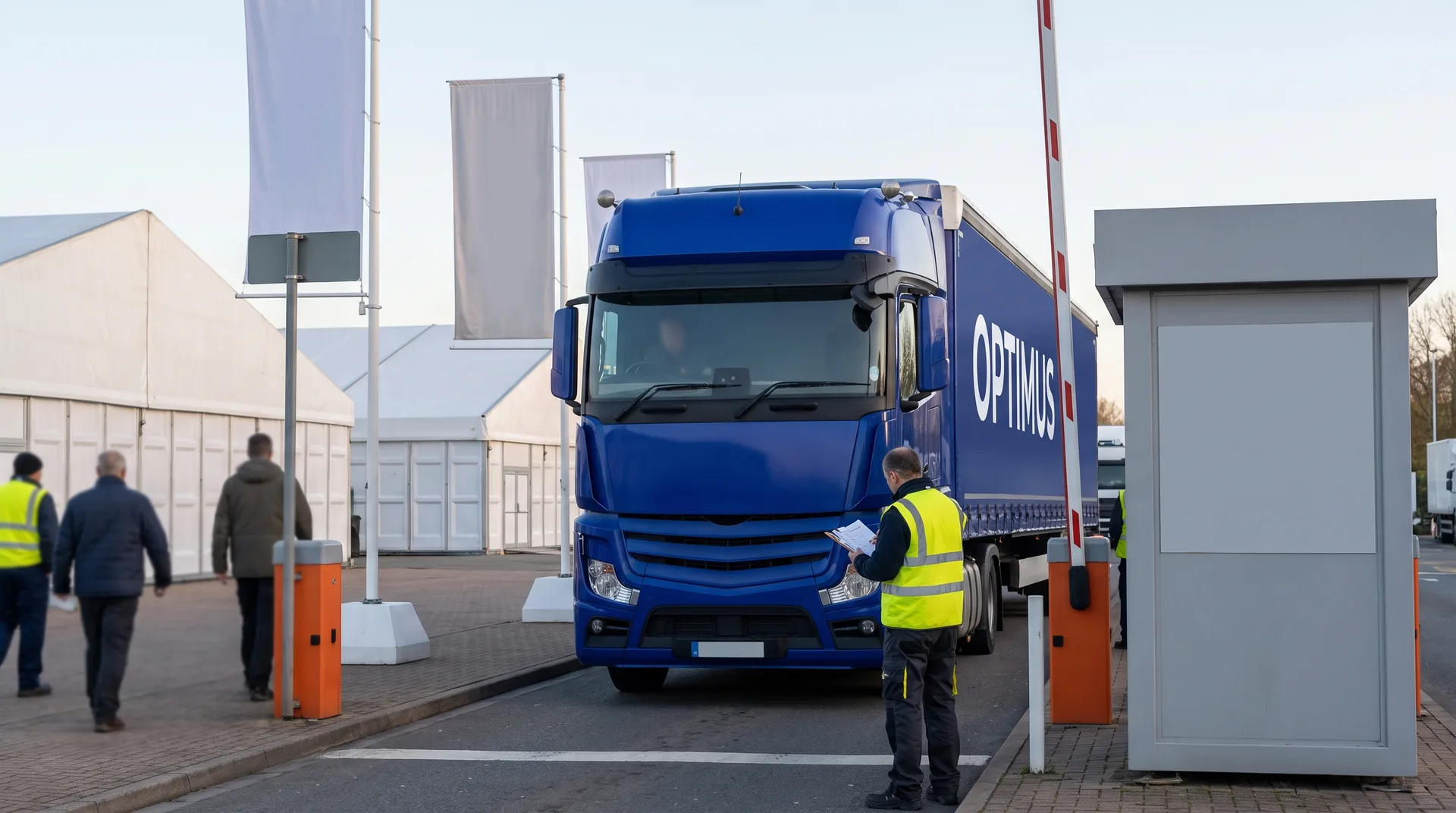
Yes, and it is the most common scenario where exclusivity applies. The carrier presents the vehicle at the agreed place and time, the fair crew unloads, and the freight travels to the stand on venue equipment. For the exhibitor that means two invoices instead of one, but also no risk of a vehicle being refused entry between halls. Success depends on booking, because without a declaration the vehicle joins the back of the queue; we cover it in the article on vehicle booking and site passes at Targi Kielce.
When your own carrier is clearly better
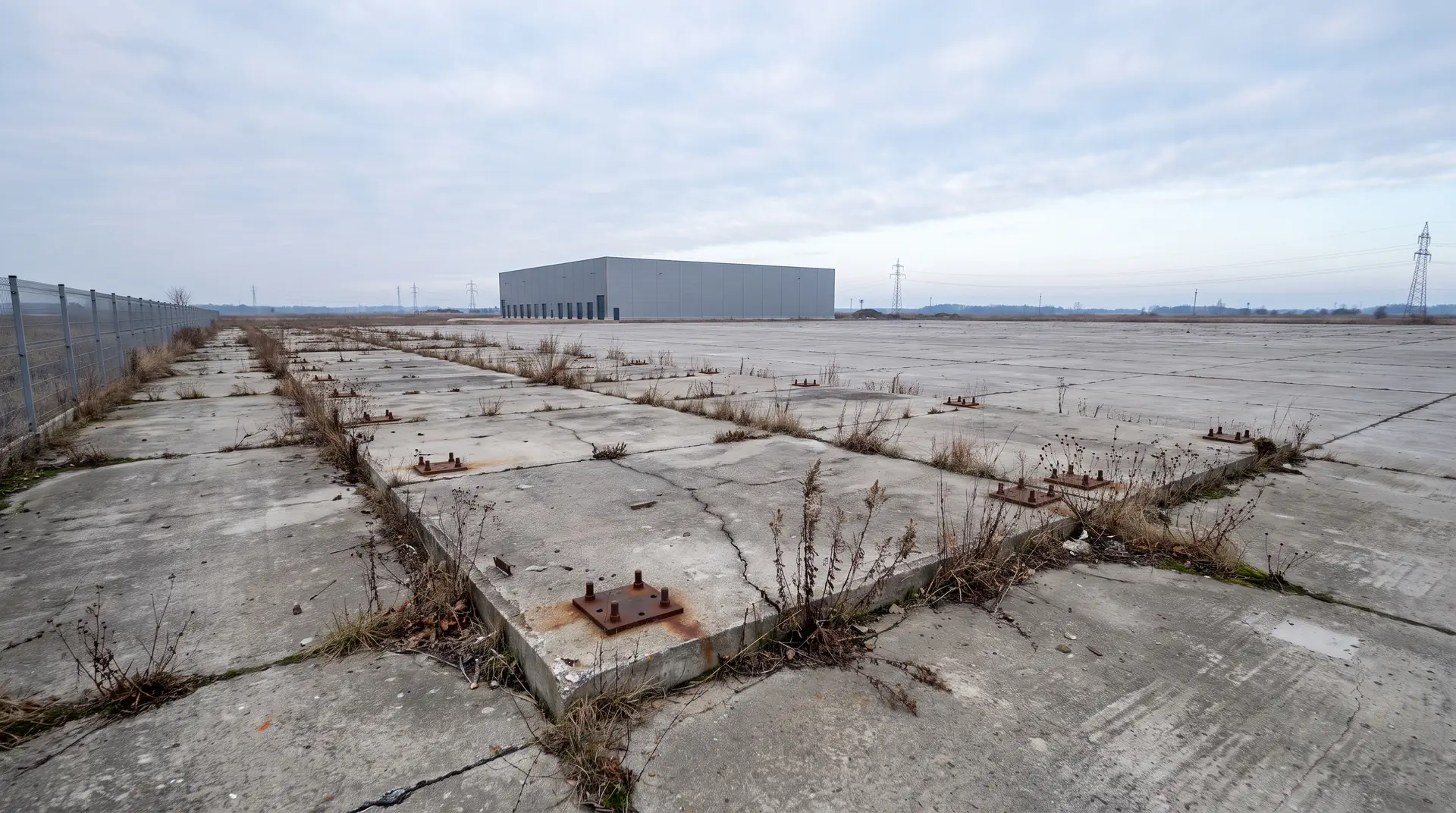
In three situations. When the freight is sensitive or unique and you want one party responsible door to door. When the show is one of several stops, say a stand travelling from Kielce to a British fair, and it makes sense for one carrier to run the whole chain; we cover it in the article on one stand, several shows. And when you need a buffer close to the venue because the load must arrive before the build-up window; that mechanism is described in the article on the buffer warehouse next to Targi Kielce.
Common misunderstandings
First: the organiser has banned outside carriers. Usually that is not what is going on. The restriction concerns equipment and crew inside the hall, not whose vehicle brought the freight. Second: the carrier will carry the pallet onto the stand. The driver takes part in unloading, but moving goods deep into a hall happens with venue equipment under show rules. Third: we will sort it out on the day. On build-up day there are hundreds of people on site and nobody has time to negotiate; everything not settled beforehand costs hours then.
How to check the rules before signing a space contract
Put four questions to the organiser in writing. May the exhibitor unload with their own carrier and equipment. Who operates forklifts and cranes inside the hall. Where is the handover point if the carrier does not enter the hall. Is there storage for packaging during the show. Four written answers are enough to build a realistic schedule, as described in the article on the build-up and breakdown calendar. The general picture of exhibitor support in Kielce is in the article on exhibitor logistics at Targi Kielce.
Sources
- Targi Kielce: site entry regulations (PDF, Polish)
- Targi Kielce: organiser website, regulations and exhibitor materials
Not sure how far your vehicle will get at a particular show? Send the fair name and hall number through the quotation form and we will build a delivery plan that matches that event. See also the exhibition logistics page.