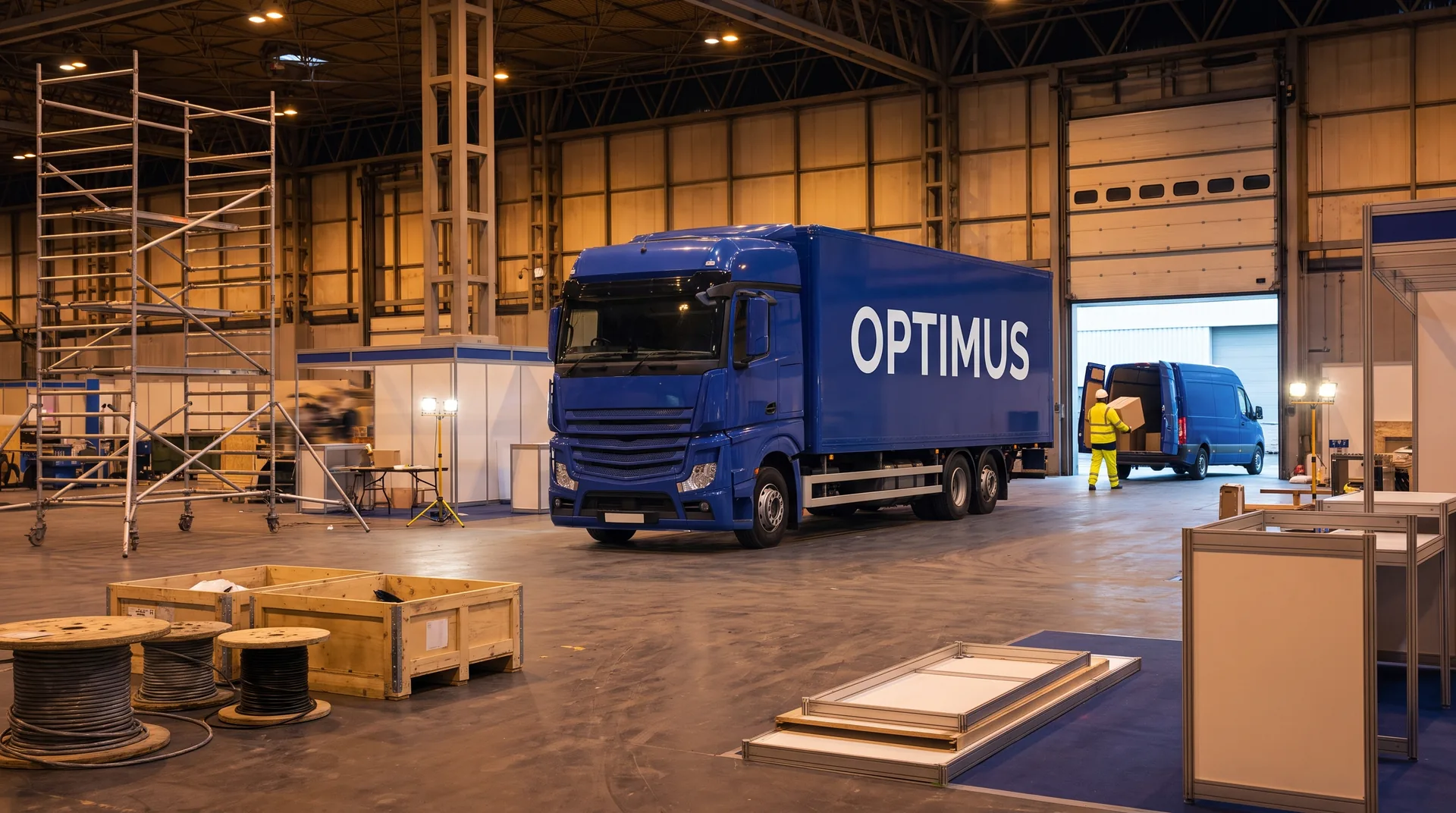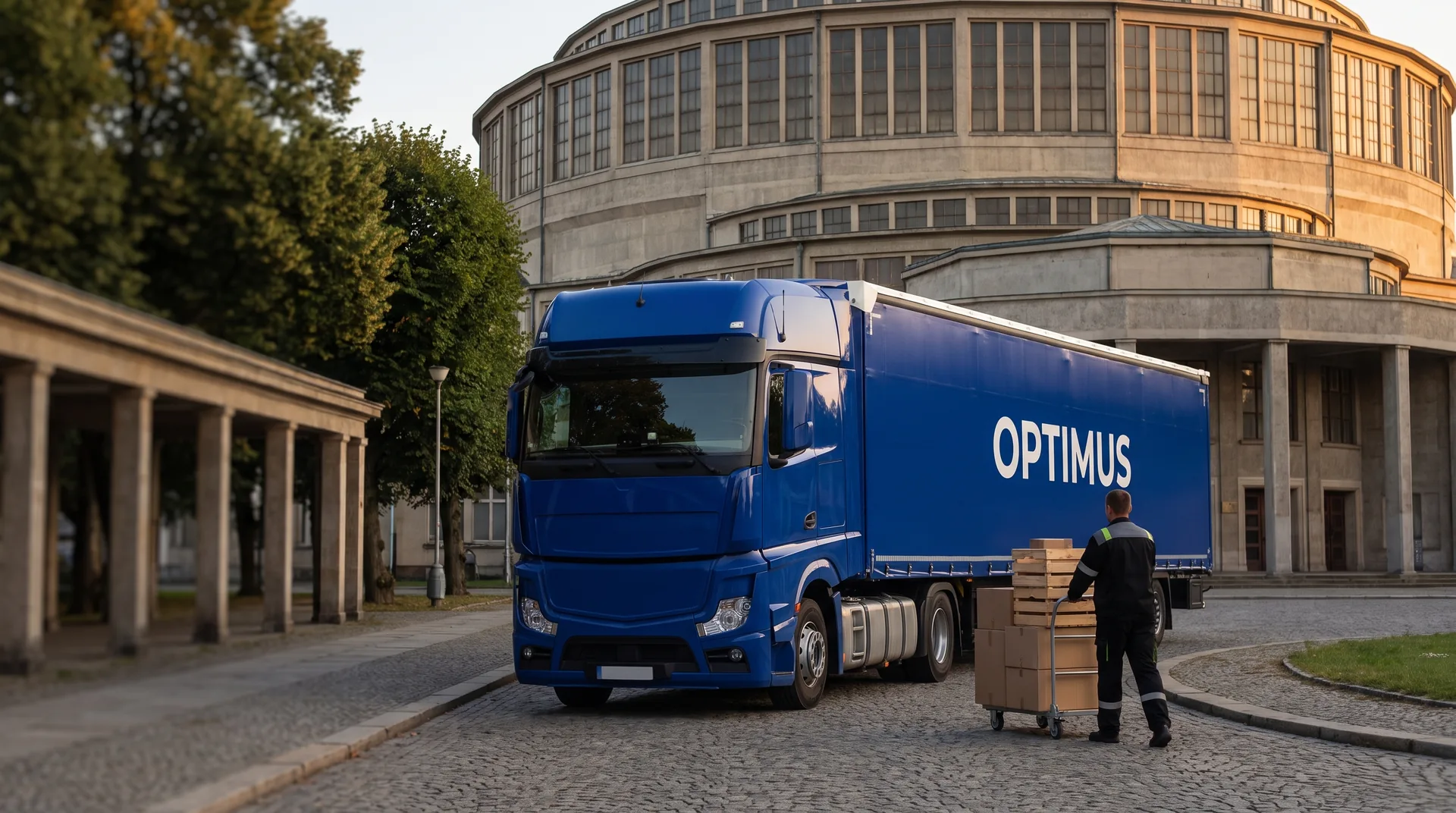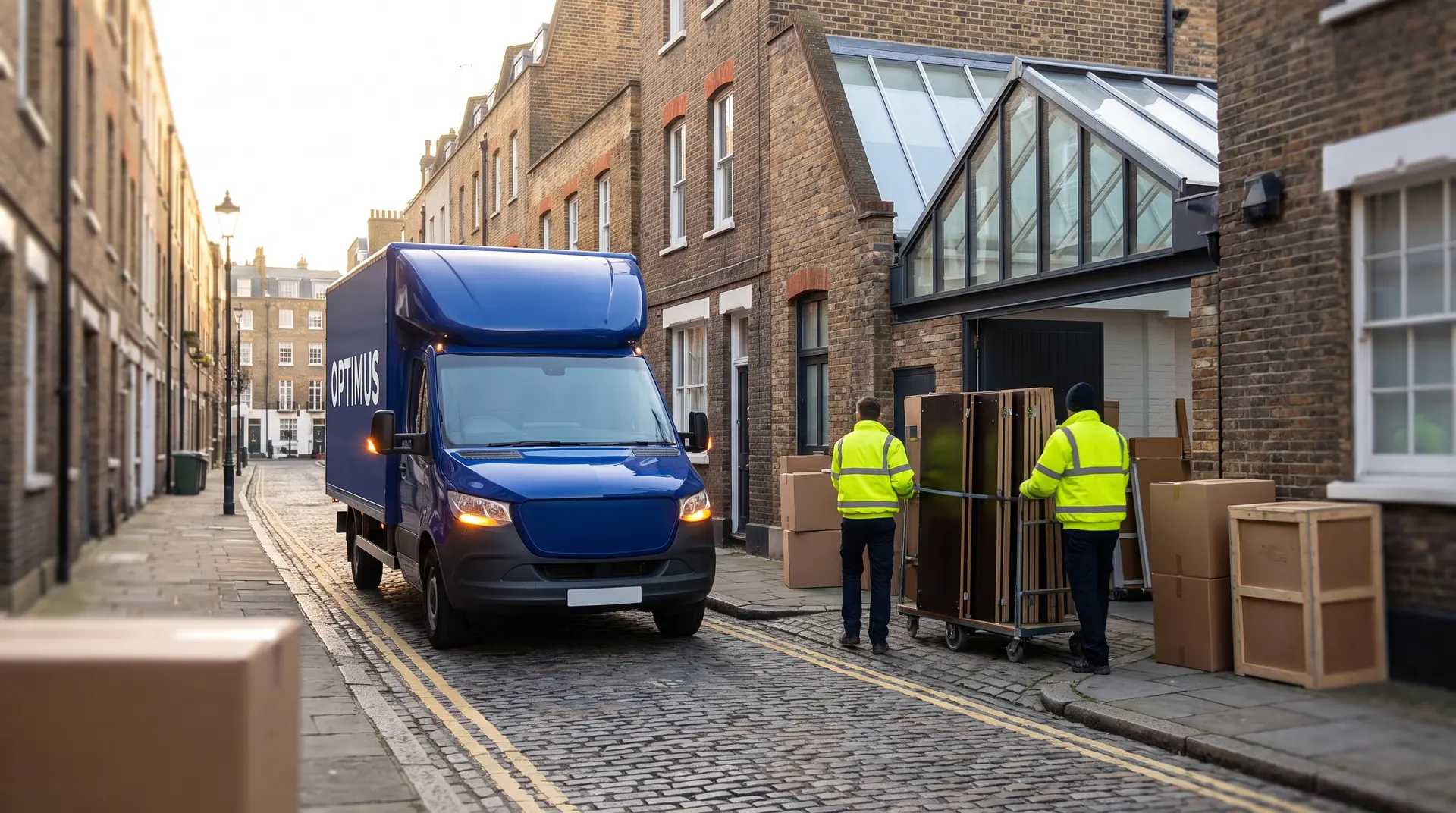
The Business Design Centre stands on Upper Street in Islington, London, in a former exhibition hall from the second half of the nineteenth century. Goods traffic enters from Liverpool Road and leaves via Barford Street, so movement through the bay is one-way. The venue has two loading bays with markedly different permitted heights and publishes those figures, which makes it one of the best documented venues in London. We carry stands and exhibits here from Poland.
Who owns it and why that matters
The venue opened in 1986 in a building that was an agricultural hall from 1861, and besides exhibition space it houses permanent showrooms of around a hundred companies. Since 2024 the group running it has belonged to the ADNEC Group, following acquisition by the operator of ExCeL London. That is not trivia: the venue has permanent tenants inside the building whose access must not be blocked during a build, so the unloading plan has to allow for traffic that has nothing to do with the show.
Entry, exit and four different heights
The bay is entered from Liverpool Road, at the goods entrance marking between Bromfield Street and Barford Street, and exited via Barford Street. The venue publishes four different height restrictions, and this is the key information for a carrier: the Liverpool Road entrance takes the tallest vehicles, the Barford Street exit is lower, the upper bay has a lower limit again, and the lower bay is the lowest and takes only small vehicles. The venue front car park has a barrier below two metres, so it is no use for unloading.
The conclusion is simple and expensive if missed: the vehicle must fit not only the entrance but also the exit and the particular bay it is directed to. The upper bay takes larger vehicles, including articulated units and high vans, and holds a dozen or more at a time; the lower bay holds more vehicles but only low ones. So at enquiry stage we ask which bay, not only which hall.
Three rules that surprise carriers from outside Britain
First: the venue does not accept consignments before the organiser tenancy begins, does not sign for packages and does not move goods to stands. A courier shipment sent to the venue address ahead of time will simply not be accepted. For a Polish exhibitor that means materials must travel with the stand or wait in a buffer; we describe this in the article on a buffer warehouse next to a fairground.
Second: the venue requires its own traffic marshals, posted on Liverpool Road, on Barford Street and at the bay entrance, and the organiser must give the venue a detailed vehicle movement schedule in advance of the build. Anyone not on that schedule waits.
Third: the venue closes bay access for the final half hour of build-up and breakdown, and pedestrian movement through the bay is forbidden. Unloading is done in hi-vis, under a speed limit inside the bay.
Neighbours and a listed building
This venue is embedded in a residential block and says so itself: the organiser is obliged to ensure exhibitors and contractors respect local residents, particularly during build-up and breakdown. The building is also listed, which places further requirements on how work is carried out. Parking restrictions apply on the surrounding streets and are enforced by traffic wardens. A driver cannot park beside the venue to wait his turn.
Licensed hours: a hard limit
The venue operates within hours set by a licence issued by Islington Council and states them plainly: Monday to Friday from eight in the morning to ten at night, Saturday from eight to eight, Sunday from nine to six. The venue notes that under no circumstances may it open outside those times. These are not the build-up hours of a particular show but the boundaries of the venue operation, and that is exactly why they matter more: the organiser schedule has to fit inside them, and the transport has to fit inside the organiser schedule.
A warning about archived materials: older editions of the venue manual describe the ULEZ in its pre-2023 shape, whereas the ULEZ now covers every London borough. Vehicles over three and a half tonnes fall instead under the low emission zone for heavy vehicles and, over twelve tonnes, the direct vision requirement, while vehicles over eighteen tonnes also meet London overnight and weekend lorry movement restrictions. We gather the rules in the articles on UK clean air zones and on the direct vision requirement.
What we do, and how we pick the vehicle
We collect the load in Poland, and from exhibitors in Czechia, Slovakia, Austria and Hungary we gather it through our hub. The Kielce base sits about 4 km from the fairground, a few minutes away, and works around the clock. A groupage vehicle waits for the next scheduled line departure. For Islington we split the route into two stages: a large vehicle to our warehouse in Milton Keynes, then a final run in a vehicle matched to the designated bay, within a window agreed with the venue. That gives two transhipments across the route and lets us commit to an hour at the gate. At the venue we deliver to the handover point and the venue equipment takes over. The line between groupage and a dedicated vehicle runs at roughly a third of a trailer, about twelve pallets, but at this venue bay height decides more often than cargo volume. The full picture of deliveries into the capital is in the article on transport from Poland to London.
Sources
- Business Design Centre: loading bays, entry, exit and height restrictions
- Transport for London: the low emission zone for heavy vehicles
- London Councils: the London Lorry Control Scheme
Exhibiting in Islington? Send the designated bay and the item list through the quotation form and we will match the vehicle to the height and set up the run from the buffer. See also the exhibition logistics page.