As of August 2026: every goods vehicle over 12 tonnes entering Greater London must hold a valid HGV Safety Permit under the Direct Vision Standard (DVS). Since 28 October 2024 vehicles rated below three stars must have the Progressive Safe System (PSS) fitted. Operating without a permit brings a penalty charge of up to 550 GBP per trip.
Who the requirement covers
- Vehicles over 12 tonnes gross weight operating in Greater London, around the clock, seven days a week. The zone covers most of the conurbation, not just the centre.
- Foreign vehicles, including Polish ones, are covered too: registration outside the UK does not exempt you from the permit.
- The permit is free and required even for five-star vehicles; good direct vision alone does not help without a permit on file.
What changed in October 2024
Previously one star or the older Safe System package was enough. From 28 October 2024 the minimum is three stars, and vehicles below the threshold must carry the PSS. TfL allowed a grace period for operators with a documented installation booking, but it expired in early May 2025. Today the rule is binary: three stars or PSS, otherwise a penalty.
How to check a vehicle and get the permit
- The star rating of a specific vehicle can be checked in TfL's online tool by registration number, or with the vehicle manufacturer.
- The permit is issued online through TfL, free of charge; for PSS vehicles the fitted equipment has to be declared.
- The penalty charge notice (up to 550 GBP, reduced for prompt payment) goes to the operator; the driver can face separate liability.
What this means for deliveries from Poland
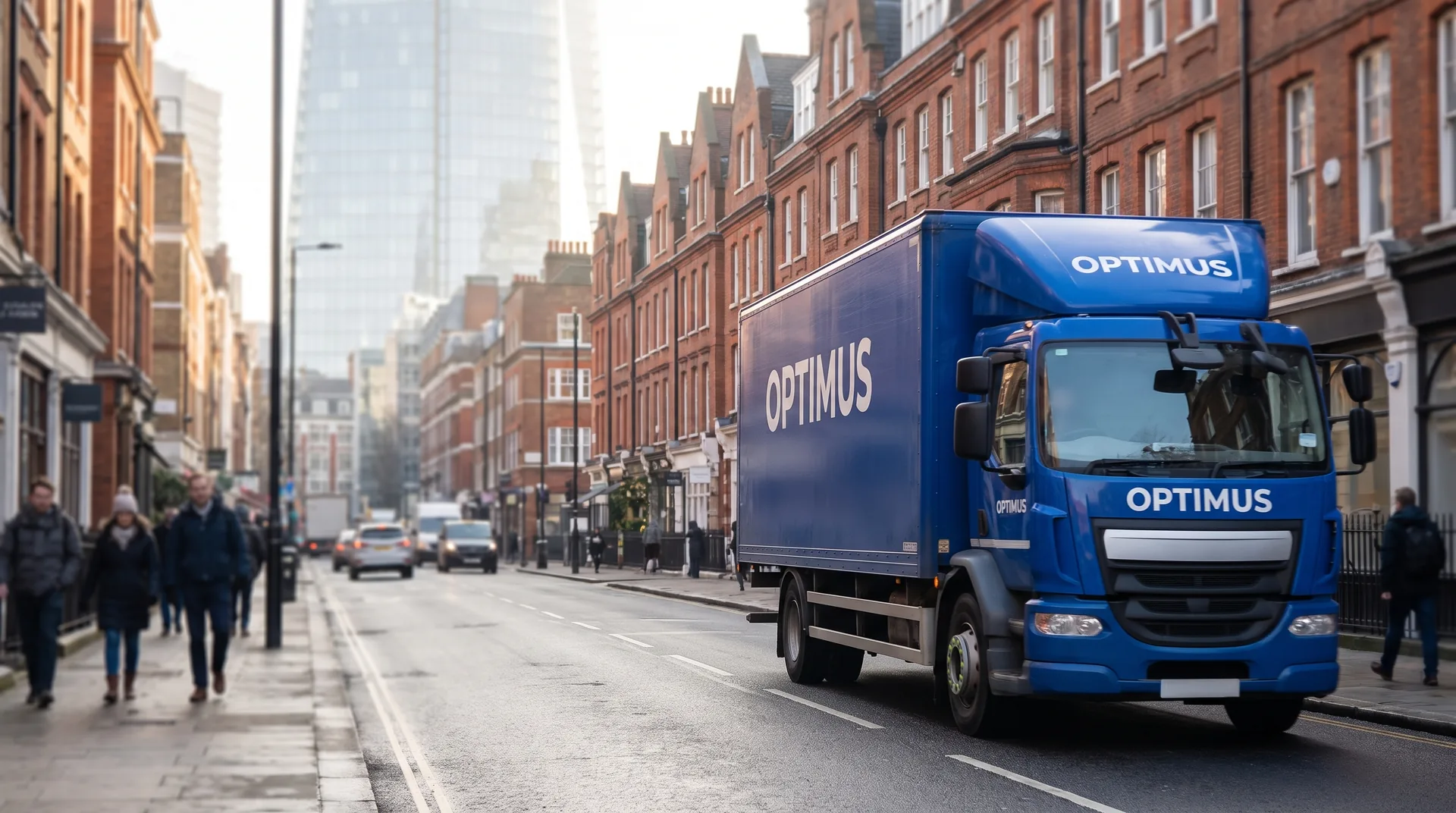
London is a daily destination for our trucks: deliveries to warehouses, stores and exhibition venues, including exhibit deliveries to London trade shows. Vehicles routed to the capital are selected to meet DVS, and for subcontractors we verify the permit before assigning the job. Other vehicle-side requirements come up in our piece on tachographs in vans from July 2026.
DVS and the low emission zones are not the same requirement
On a first delivery into London customers most often confuse DVS with the LEZ and ULEZ. These are two independent regimes to be met in parallel. The low emission zones concern exhaust emissions: what counts is the engine standard, and the settlement is a charge. DVS concerns the driver's direct vision and the safety of pedestrians and cyclists: there is no entry charge here, there is a requirement to hold a permit and, below the star threshold, to fit the additional equipment. A vehicle can meet the emission standard and still have no right to enter because it holds no permit, and the other way round. We check both conditions separately, for a specific registration number.
What to check before a first London delivery
- The vehicle registration and its star rating, and for a rating below the threshold, confirmation of the fitted equipment.
- A valid permit issued for that specific vehicle, not for the fleet "in general".
- Emission standard compliance with the zone requirements, checked separately for the tractor unit.
- Restrictions at the delivery address: receiving hours, permitted combination length, ramp access.
- A fallback if the address turns out to be inaccessible to an articulated vehicle: final delivery on a smaller vehicle from the warehouse.
Sources
- Transport for London: Direct Vision Standard and the HGV Safety Permit
- GOV.UK: roadside checks for HGV, van, bus or coach drivers
Planning regular deliveries into London? See our transport services and write through the contact form: we will assign a DVS-compliant vehicle, with no penalty risk at the boundary.