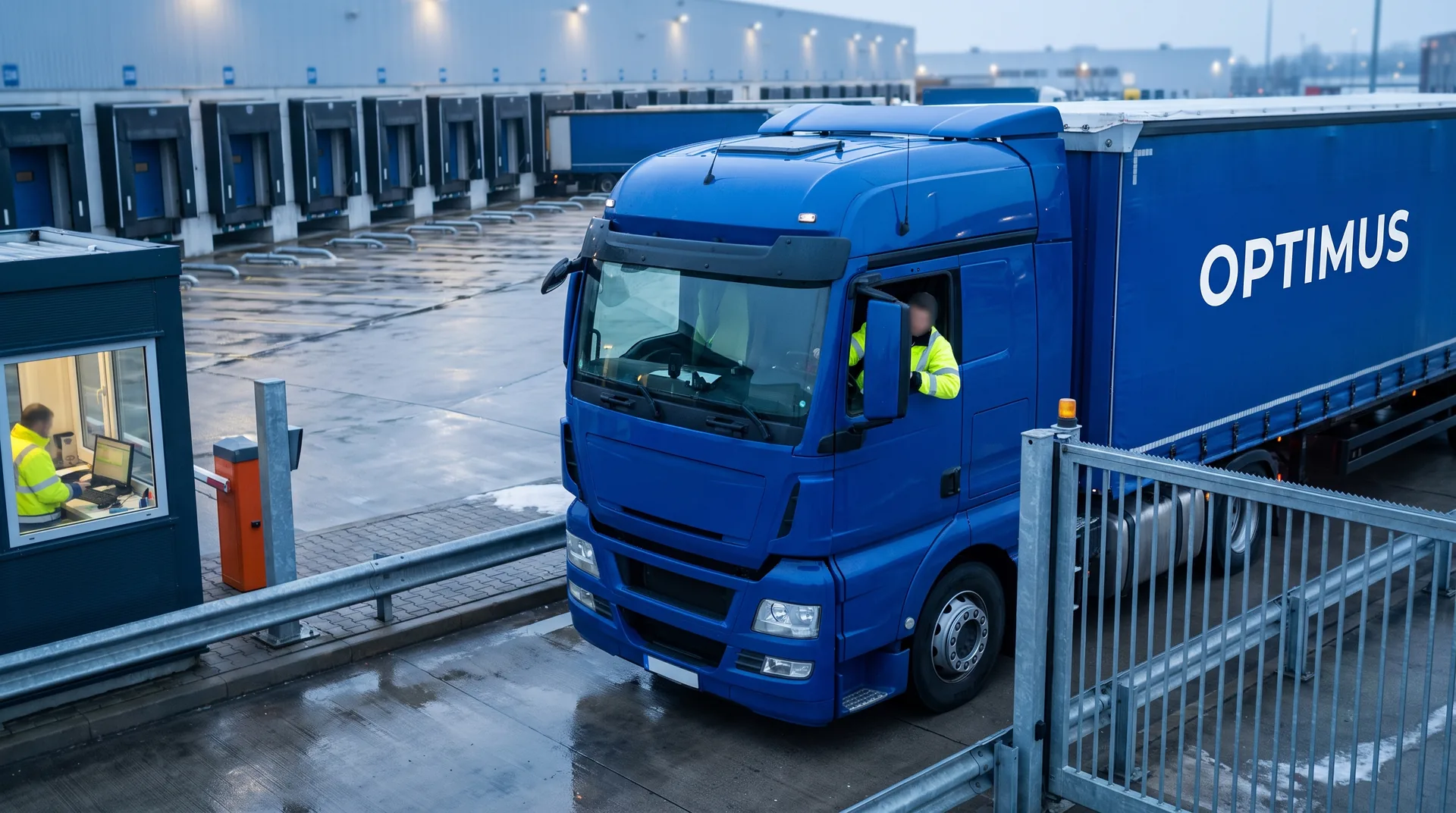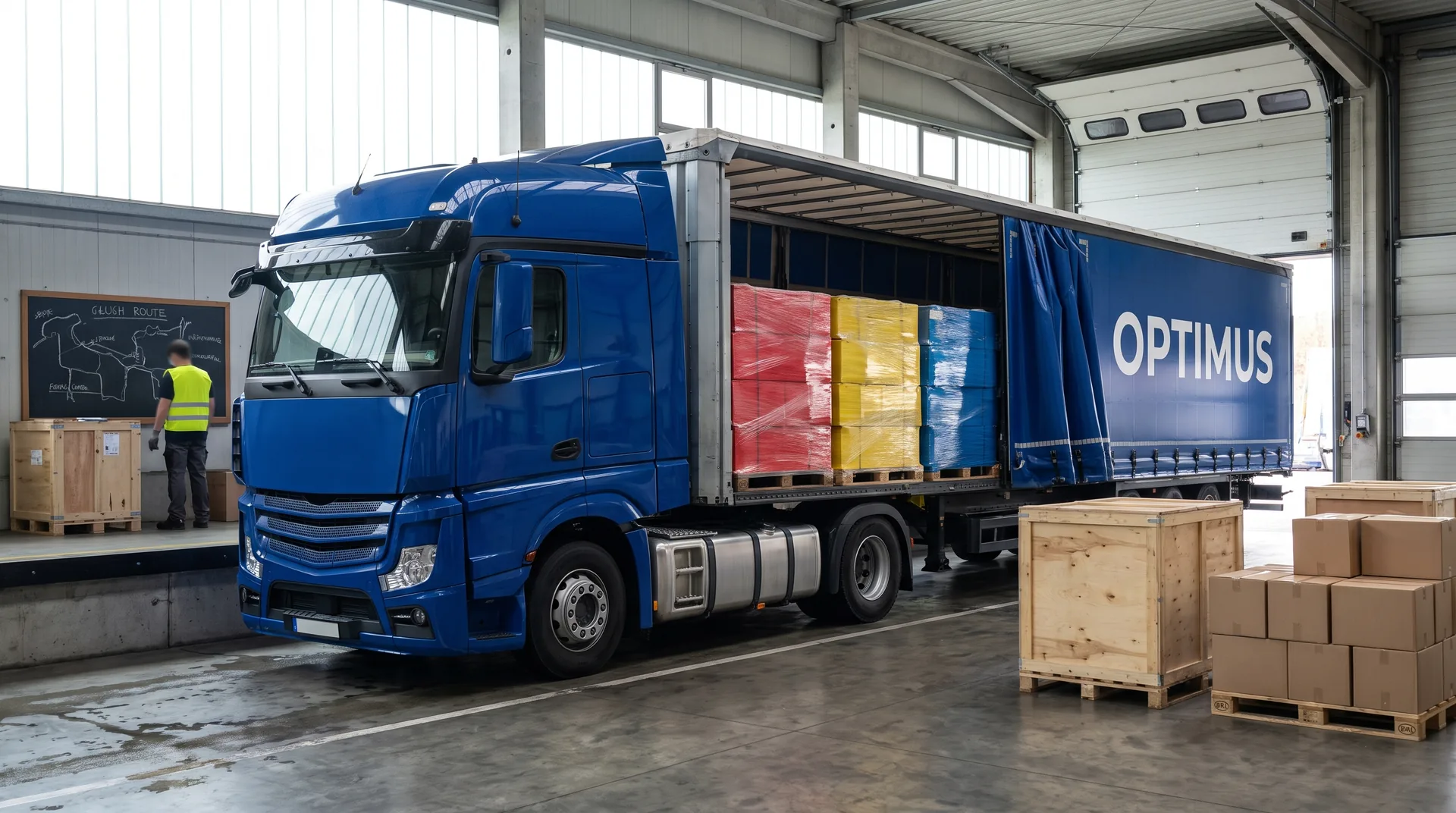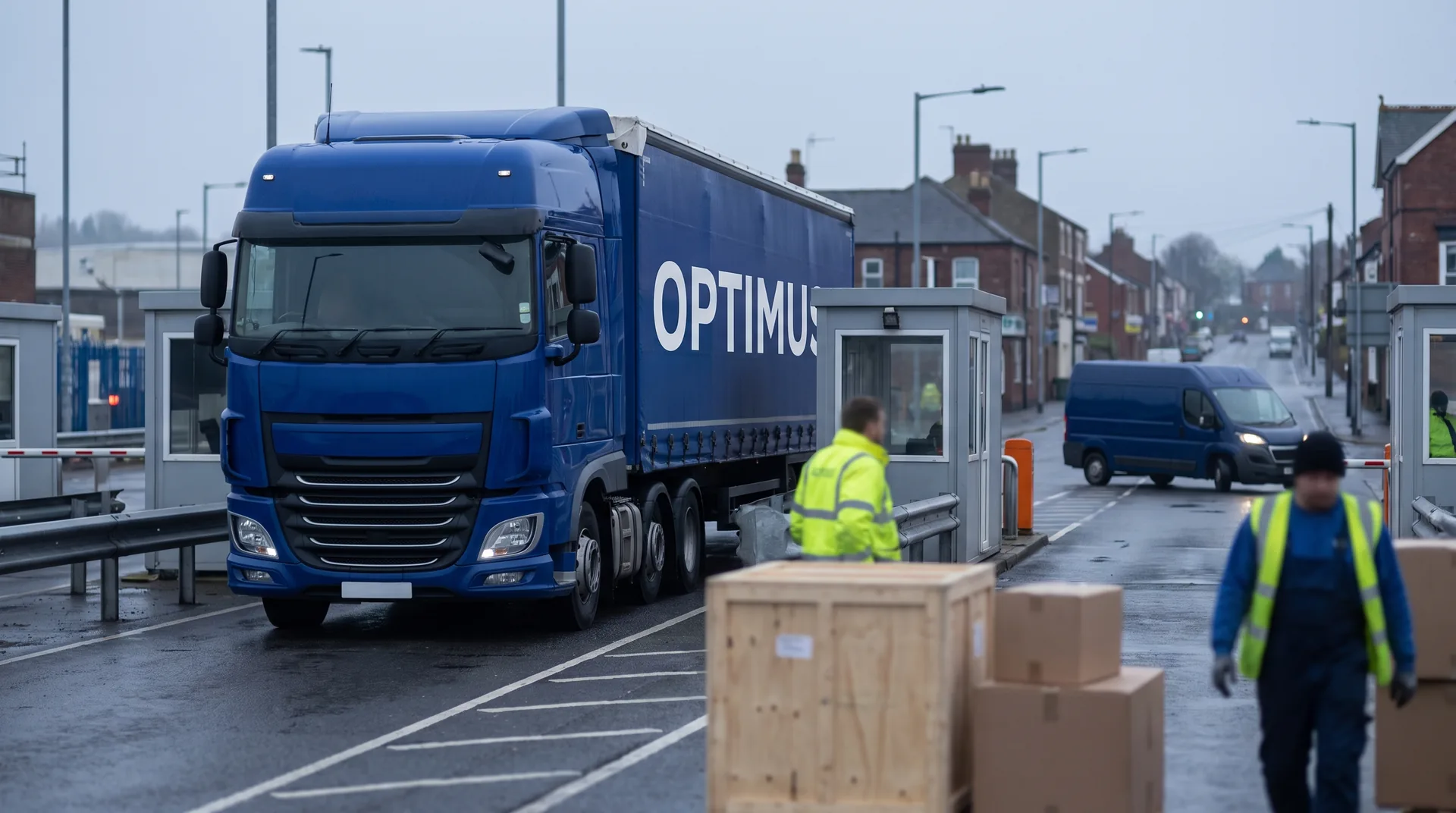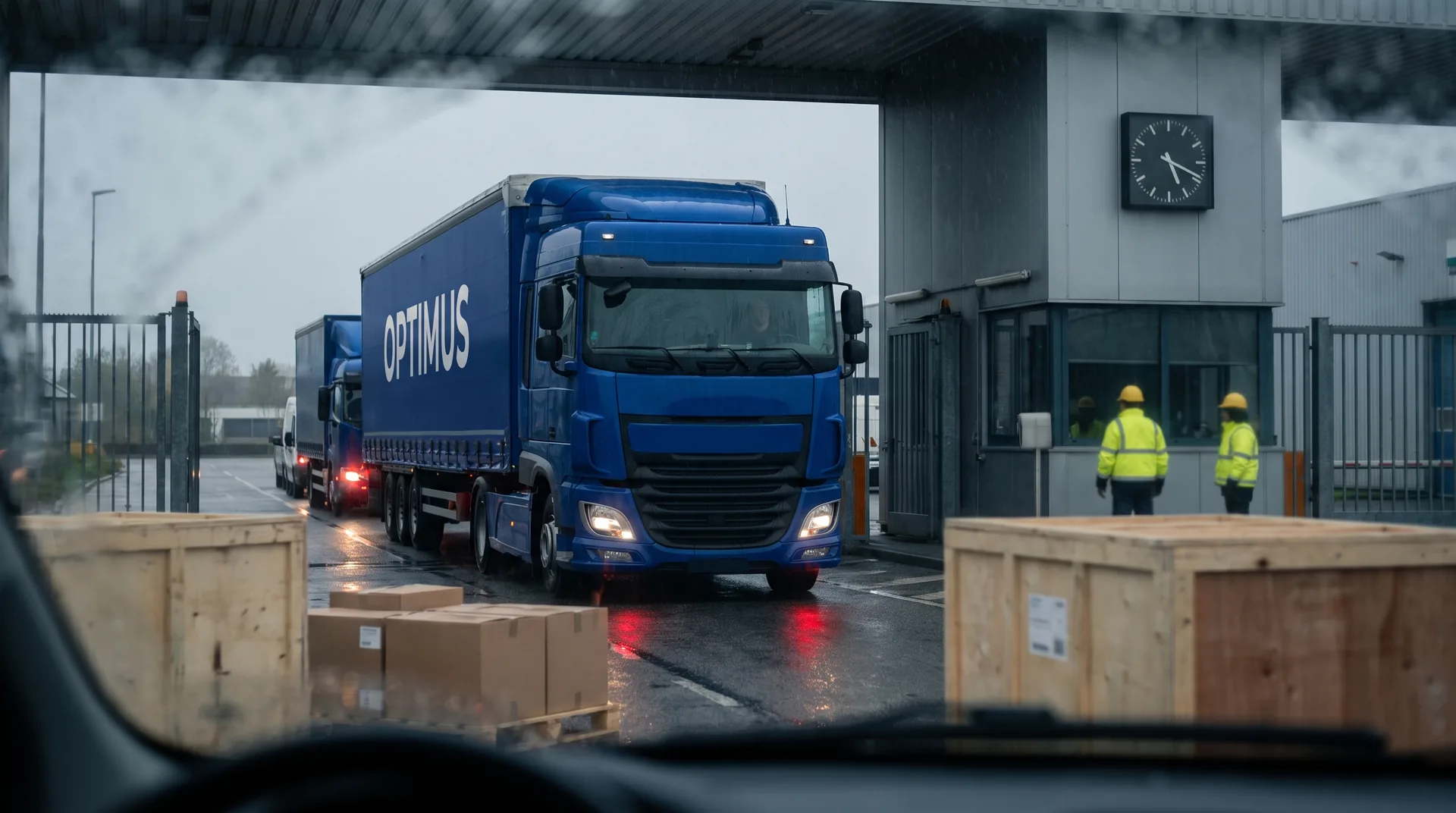
Amazon requires deliveries to arrive on time and sets a specific threshold: an unforeseen delay must be notified, and where the delay runs beyond thirty minutes the appointment is rescheduled in Carrier Central. That means the decision is taken on the road, against a realistic arrival forecast, rather than after the vehicle reaches the gate.
The hour before the window
In practice that hour looks the same on every run from the continent. The driver has an arrival forecast and knows how much time is left before the window opens. The dispatcher holds two more facts: how long the gate queue at that site tends to run, and whether the window is wide or narrow. Putting the three together answers whether the vehicle will make it, and it is that answer, not hope, that goes into the decision.
The order of notifications is fixed. The driver reports the estimated arrival time to the dispatcher, the dispatcher judges whether it crosses the threshold, and either notifies the delay or files a request for a new slot straight away. The customer hears at the same moment rather than afterwards, because their side may decide whether it is worth chasing a slot the next day or holding the goods for longer.
Early is a problem too
This surprises many senders. On the list of rejection reasons Amazon names early and late delivery in the same breath. An appointment is the period for which the site has planned resource to unload a specific vehicle, not the earliest possible time. A truck standing at the gate two hours ahead blocks space and has no guarantee of being taken in sooner.
The practical conclusion for planning a run from Poland is that the time buffer is held before the site rather than in its yard: a stop on the last leg gives flexibility, a gate queue gives none.
What the driver does and does not do
- Reports the arrival forecast the moment the plan starts slipping, not once the time has passed.
- Does not negotiate at the gate — acceptance outside a window is not settled by a conversation at the window but by the system record.
- Does not wait indefinitely — the waiting limit after which the vehicle leaves is agreed in the order.
- Documents the cause — queue, road closure, border check, because the cause drives the later settlement.
How waiting time is settled is unpacked in the article on waiting time charges on UK transport, and events outside either party control in the piece on force majeure under CMR.
A new slot or the warehouse
Once the threshold is crossed there are two routes and the choice is made immediately. The first is rebooking and arriving in the new window, which makes sense when a free slot is close, the driver has hours left and no other jobs are waiting. The second is unloading into our warehouse in Milton Keynes, which makes sense when the next slot is distant. The pallet then stands on a rack, the vehicle goes back to work, and the delivery leaves for its new appointment from a site in the same central England band.
The procedure for changing a date is set out in the article on rescheduling and cancelling a delivery appointment, and what happens to the freight once a slot is definitively lost in the piece on a missed delivery window.
How we make that phone call rare
Three things work and all of them are dull. First: customs closed before boarding the crossing, because the border is what usually eats the margin. Second: appointments placed at times that forgive a slip, rather than at the first available morning slot. Third: on multi-drop runs, a plan in which losing one window does not block the rest, as described in the article on one collection and several Amazon warehouses.
Sources
- Amazon Seller Central: appointments, punctuality and reasons for delivery rejection
- Amazon Carrier Central (United Kingdom)
Want the late-running procedure written into the order rather than improvised on the road? Describe the delivery in our quote form and we will set the thresholds and waiting limits up front.