A standard groupage or full load from Poland to the United Kingdom typically clears in a few working days door to door, but the date that holds for planning is set by the weakest link: driver hours, the ferry or Eurotunnel crossing, customs and GVMS at the border, the booking-in slot at your site and the season. Plan a buffer, not the best case. The fastest quoted option is often the least reliable and the most expensive.
Why the quoted transit time is not your planning date
If you buy from a Polish supplier, the number you are usually given is a driving estimate: so many hours behind the wheel from the loading point to your gate. That figure is real, and we break it down from the carrier side in how long transport from Poland to the UK takes. What it leaves out is everything that sits between the truck and your goods reaching a shelf: the crossing window, the border, and the slot at your own site. For a buyer, the planning date is the quoted transit plus the buffer those steps demand. Skip the buffer and the risk lands on you, as a stopped production line, a missed retail booking window, or an empty stand at a trade fair.
What actually stretches the lead time
- Distance and driver hours. The main run is governed by mandatory rest, not by how fast a truck can drive. EU rules on driving time, breaks and rest periods (Regulation (EC) No 561/2006) cap daily driving and force rest, so a long route does not compress into a single non-stop dash. A tight collection window at the Polish end or a late release of goods pushes the whole chain back by at least a rest cycle.
- The Channel crossing. Short-strait ferries from Calais to Dover and the Eurotunnel shuttle from Coquelles to Folkestone both run to timetables and to capacity. Weather closes or slows the ferry in a way the tunnel largely shrugs off, and storms in the Dover Strait can suspend sailings entirely. Which one we pick, and why it matters for a time-critical load, is set out in ferry or Eurotunnel: how we choose the crossing.
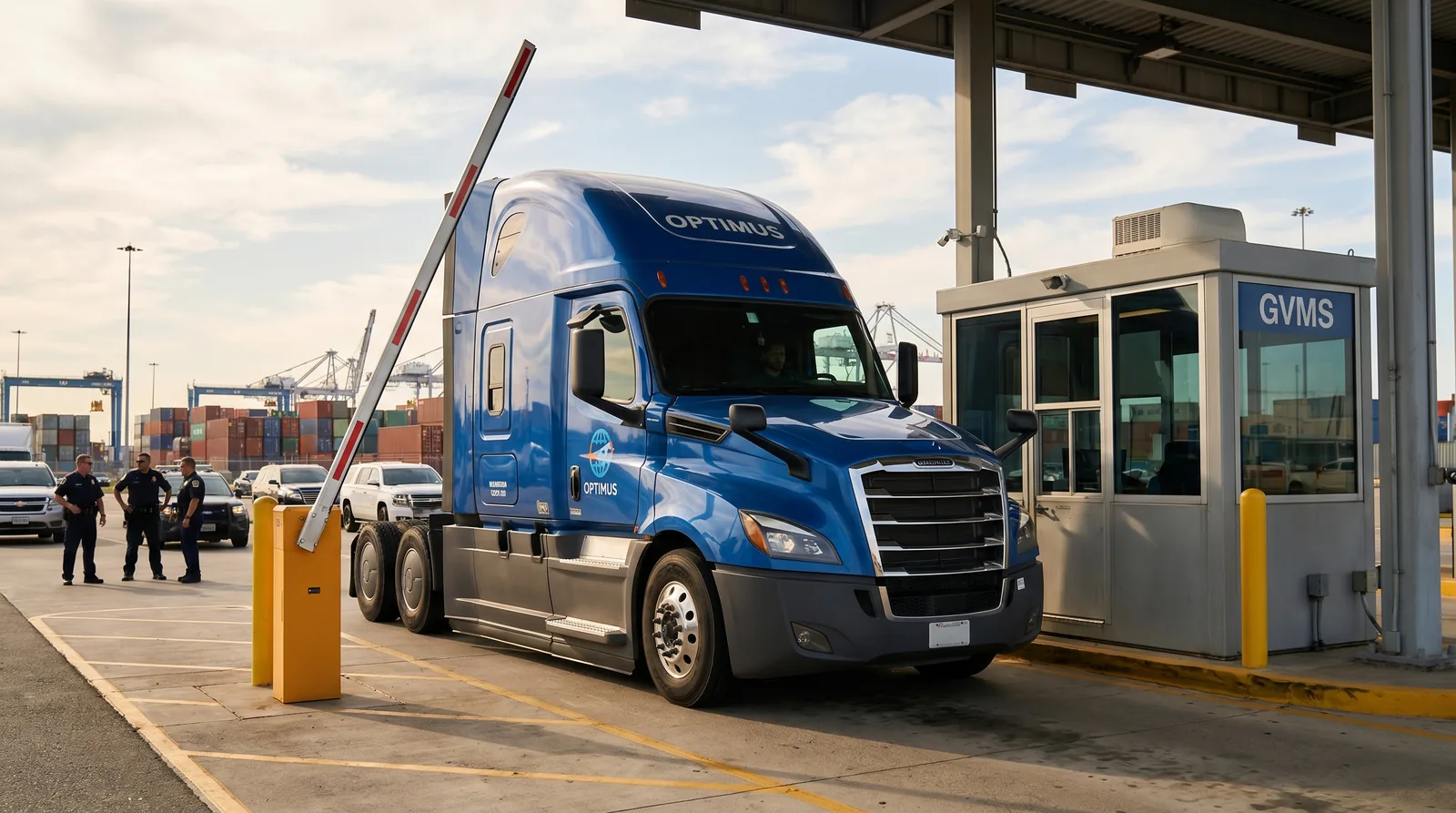
- Customs and GVMS. Since the end of the Brexit transition, every load from Poland to Great Britain is an import that must be declared. GB uses the Goods Vehicle Movement Service (GVMS) at ports operating the pre-lodgement model, so the vehicle needs a valid Goods Movement Reference before it can board. A missing document, an incomplete commodity code or a control referral turns a routine crossing into a wait. Check the official rules for moving goods into the UK on gov.uk.
- Booking-in and delivery slots. Most UK distribution centres, retailers and construction sites unload against a pre-agreed slot. Arrive without one, or miss it by an hour, and the load can be turned away until the next available window, often the following day. How the UK booking-in culture works, and what it costs to get it wrong, is covered in booking-in for UK deliveries.
- Peak season. The run-up to Christmas compresses capacity, lengthens border queues and makes every slot harder to secure. Q4 planning is a discipline of its own, and we set it out in fourth-quarter shipping and peak season planning.
Where the hours actually go
It helps to see the lead time as a chain of stages rather than a single number, because a buffer belongs on the volatile links, not spread evenly across all of them.
| Stage | What drives it | Main volatility |
|---|---|---|
| Collection in Poland | booking, goods ready, loading | late release, wrong pallet configuration |
| Main run to the coast | distance, driver hours (Reg. 561/2006) | mandatory rest, traffic, weather |
| Channel crossing | ferry or Eurotunnel timetable and capacity | storms, port congestion, missed sailing |
| Customs and GVMS | declaration, GMR, any control referral | missing documents, inspection hold |
| Delivery in the UK | booked slot, unloading, ADR or site rules | missed slot, turned away to next window |
How to build a buffer that holds
Reliability is bought at the planning stage, not recovered on the day. A workable approach for a UK buyer looks like this:
- Plan to the OTIF date, not the driving estimate. Add margin for the crossing and the border, and hold your internal deadline earlier than the true drop-dead date.
- Fix the booking-in slot early and share full data. Give the forwarder your DC or site slot, access constraints and any tail-lift or timed-delivery needs before the truck is dispatched, not while it is queuing at your gate.
- Get the customs data right before loading. Correct commodity codes, values, EORI and a complete commercial invoice are what keep a load out of the control lane. Errors surface at the border, when they are most expensive.
- Declare a genuine deadline where one exists. For exhibition, project or promotional cargo tied to a fixed date, say so up front so the routing and the crossing are chosen for reliability, not for the lowest quote.
- Front-load the peak. In Q4, bring collection dates forward and lock capacity early rather than chasing a slot in December.
Why "fastest" is often the most expensive
An express, dedicated, non-stop-feel option can look like the safe choice for a critical delivery, and sometimes it is. But paying for the fastest quote does not remove the crossing, the border or the slot from the chain; it only compresses the driving. If the load still misses its GVMS reference or its booking-in window, the premium buys nothing. Reliability comes from getting the whole chain right, from clean customs data to a confirmed slot, not from buying the shortest headline transit. The most expensive delivery is the one that arrives fast and is then turned away.
How we run this
As a road haulier we plan Poland to UK lead times as a full chain, not a driving estimate: we choose the crossing for the load, prepare the customs declaration and GVMS reference before the truck moves, and hold the booking-in slot so the vehicle is not turned away at your gate. We run traffic between Poland, the United Kingdom and Ireland, with warehouses in Kielce, Legnica and Milton Keynes for consolidation and UK distribution. See our export to the UK page and the wider knowledge base, or discuss a specific inbound flow through the contact form.