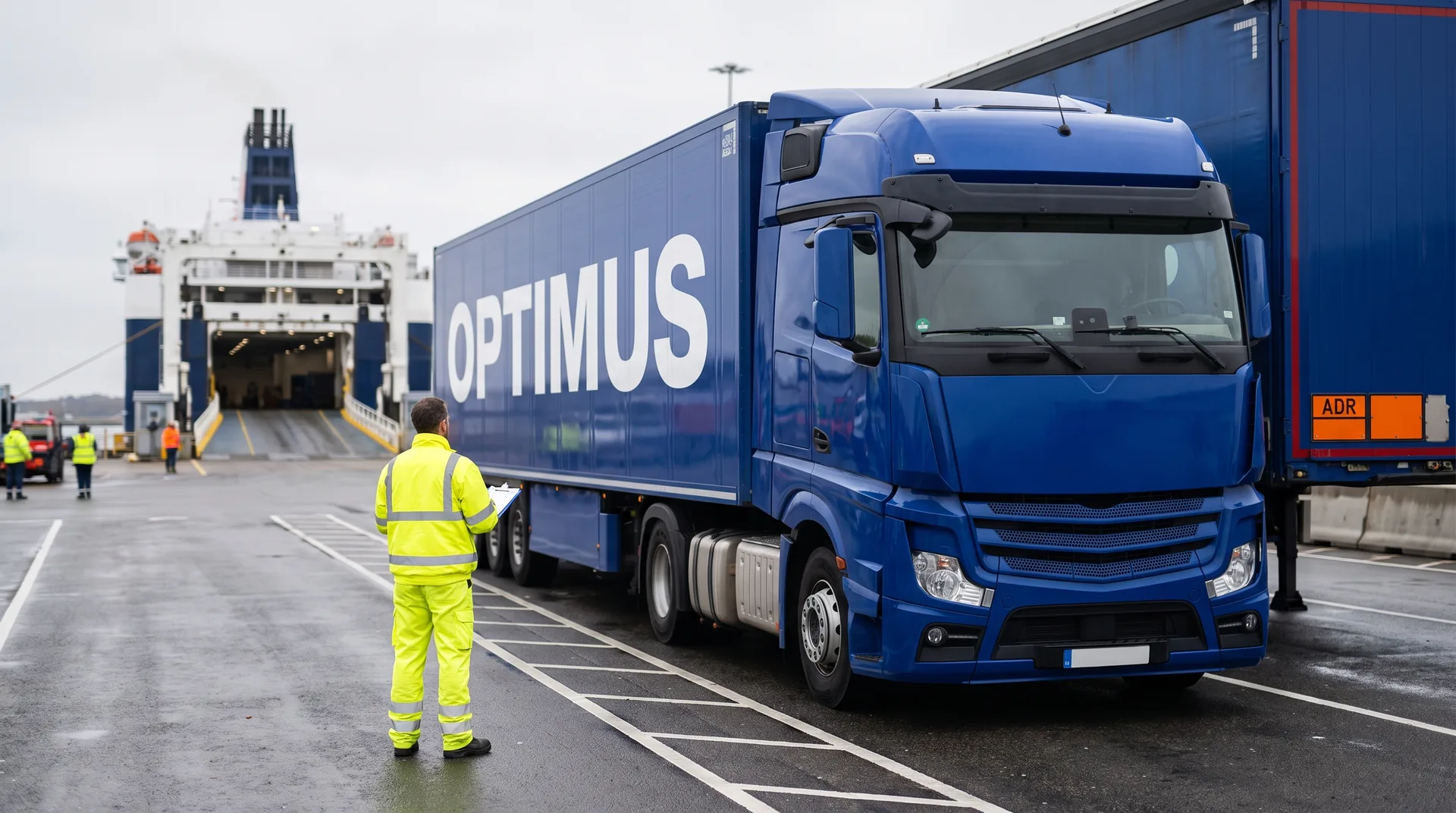
The Dunkirk to Dover route is the ferry crossing over the Channel we use for loads from Poland to the UK. The Dunkirk terminal sits outside the town, has its own marshalling areas and less congestion than Calais. Boarding requires a complete set of customs declarations and a GMR, and for food also a French veterinary check.
Why we choose Dunkirk rather than always Calais
Dunkirk and Calais lead to the same place by roads with different characteristics. The Dunkirk terminal lies outside the town centre with direct motorway access and a large marshalling area where vehicles wait without blocking approaches. Calais can be faster on the water but is far more sensitive to events: protests, intensified checks, peak tourist traffic. For loads with a fixed deadline, stability is often worth more than a quarter of an hour of sailing time. We choose the route per load rather than fixing it, and we compare it with the tunnel, described in our text ferry or Eurotunnel.
What the crossing looks like step by step
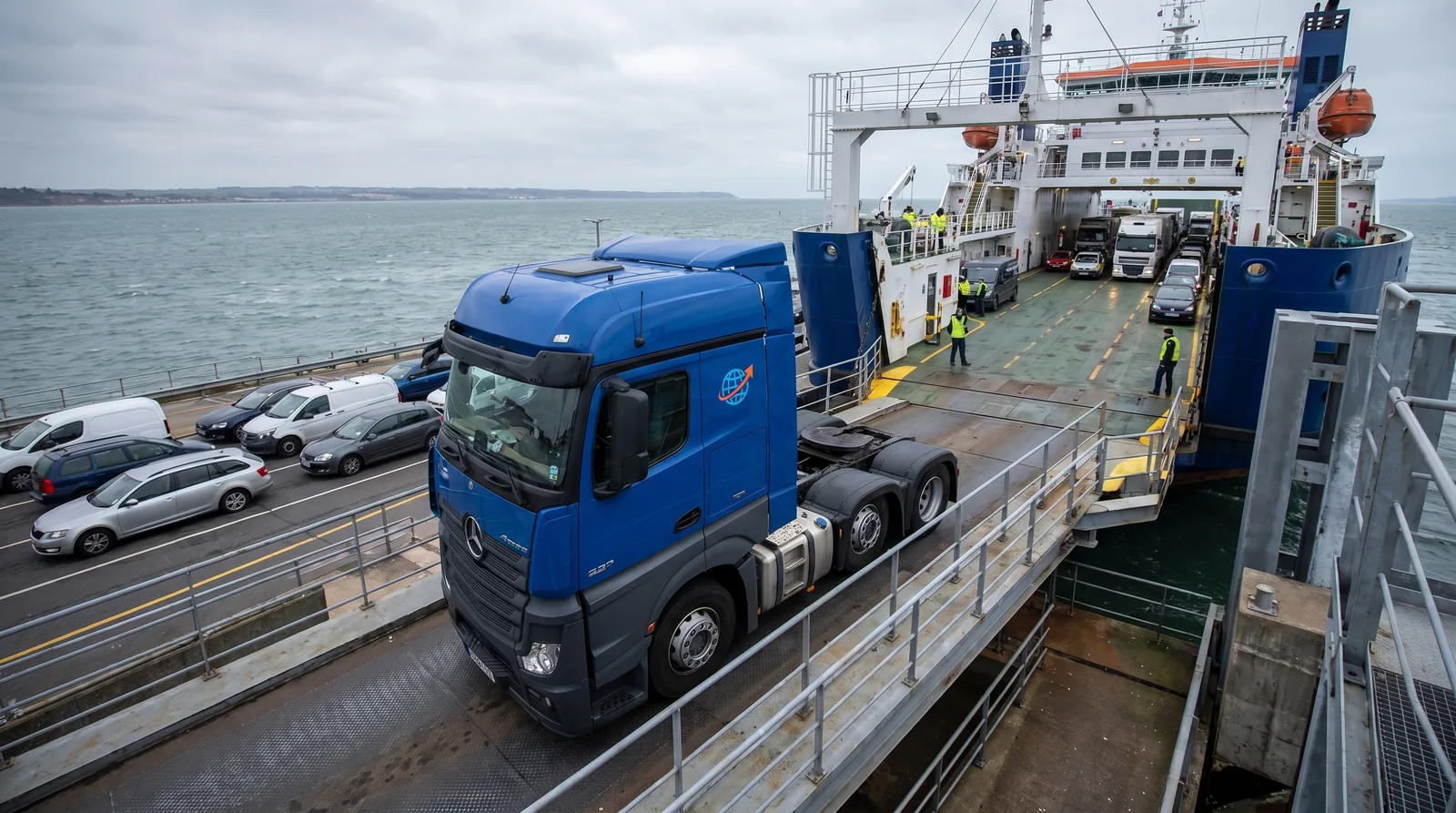
The vehicle reaches the port zone with the GMR already issued and transport documents in hand. At the entry there is a document check and allocation to a sailing, then waiting in the marshalling area, then boarding. During the sailing the driver takes a mandatory break, which matters when planning driving time, because the crossing partly overlaps with rest. After disembarking in Dover the vehicle either drives on or is directed to inspection. Import clearance in this model is prepared in advance, so the port is not where formalities get done but where they get verified. The rules of the system are covered in our text on the GVMS.
What must be ready before entering the port
- An EU export declaration, closed and confirmed.
- A UK import declaration, or an ATA carnet for temporary movements.
- A safety declaration for goods entering the United Kingdom.
- A GMR covering every consignment on board.
- Health documents and a notification where the load is sanitary sensitive.
- A sailing booking matched to the height and mass of the unit.
On groupage this applies to every line separately. One unclosed declaration can hold up a vehicle carrying a dozen or more consignments, which is why we treat data deadlines as fixed. More on the mechanics in our text GMR, what it is and who prepares it.
Food and products of animal origin: an extra stop
Loads subject to veterinary or plant health checks on leaving the EU pass through a border control post on the French side. That is a separate procedure with its own notification and time window, not a formality to be settled in the ferry queue. Failing to prepare this stage ends in a turn-back or hours of standing. We cover it in texts on French border checks and on the consequences of a missing certificate.
Vehicle security before the crossing
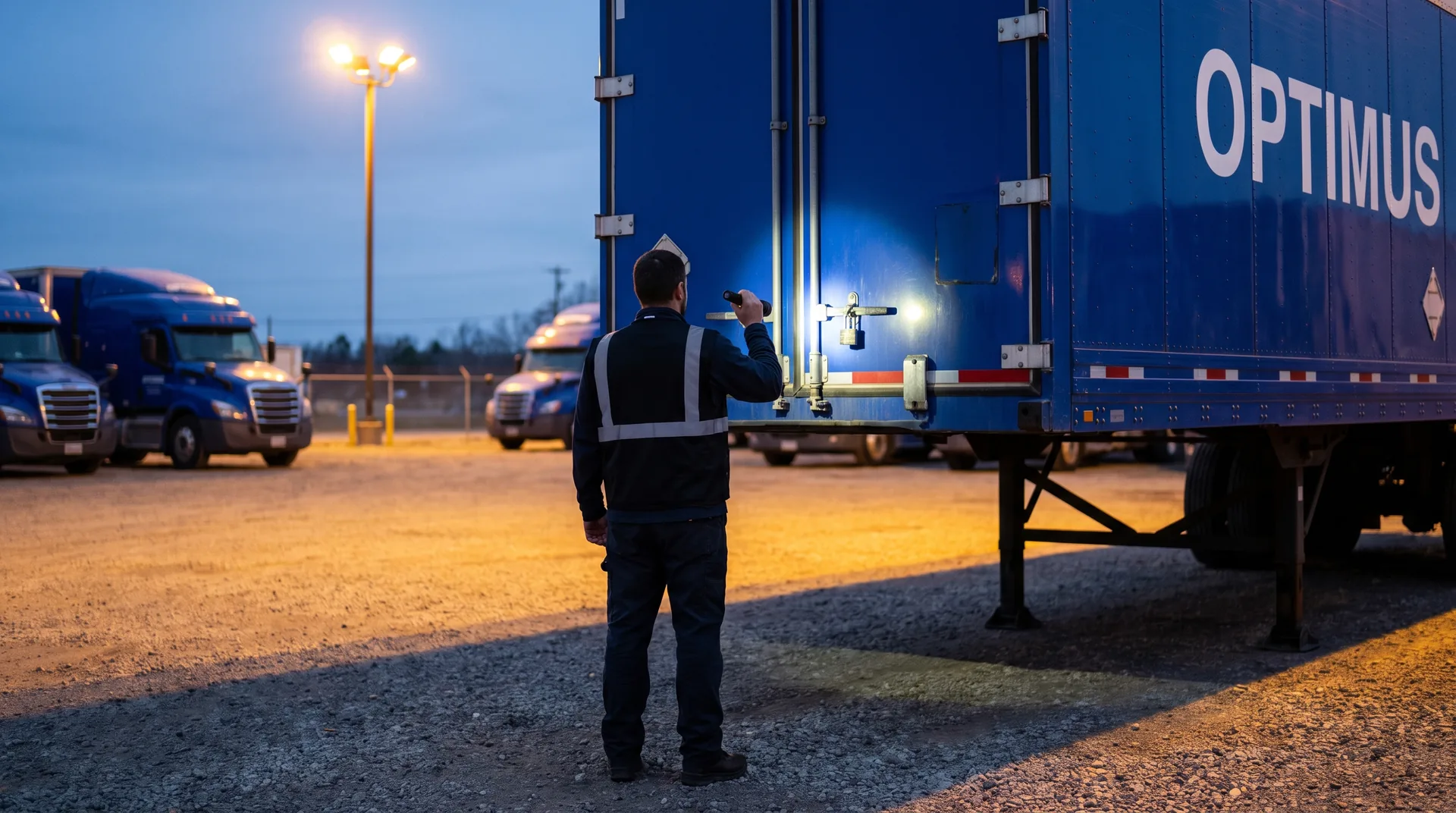
The route to the United Kingdom carries its own discipline around securing the load space. The driver checks seals, bodywork and fastenings after every stop and records those checks, because the British civil penalty scheme for hauliers takes into account whether the carrier operated an effective system of securing. This is procedure, not goodwill. The consequences are described in our articles on stowaways and on civil penalties for hauliers. If tampering does occur, the load goes for inspection, described in our text on inspection after trailer tampering.
When the crossing does not sail
The Channel can close for many hours in a storm, and sailings are also cancelled for technical and operational reasons. For loads with a fixed deadline we plan a buffer, and for slot deliveries to retail chains we warn the receiver early, because moving a booking costs less than a refused delivery. What to do in that situation is covered in our text on a cancelled crossing. East coast ports are the alternative, compared in the article Dover, Calais or east coast ports.
How long it takes in practice
The sailing itself is short, but what counts is the whole block: the run to the port, check-in, marshalling, the crossing and the exit on the British side. So when planning we do not count sailing minutes but the port window. Groupage from Poland reaches UK consignees usually within two to three working days of loading, and urgent shipments travel by express van with no transhipment. Realistic transit times are broken down in our text on how long transport from Poland to the UK takes.
Sources
- GOV.UK: get a goods movement reference
- GOV.UK: register for the Goods Vehicle Movement Service
- GOV.UK: vehicle securing and civil penalties
Planning a shipment to the UK and want the border handled on our side? Send the load details through the quote form and we will pick the crossing and prepare the full set of declarations. The route is described on the transport to the United Kingdom page.