Delivering construction equipment and machinery to a British site differs from a warehouse delivery in three ways: sites rarely have a ramp, access is restricted and their own safety rules apply. So the plan starts with the question of what will take the machine off the vehicle and whether the vehicle can even reach the point given.
Three questions we start with
First: the mass and dimensions of the largest item, because that determines the vehicle. Second: what will take the machine off, that is whether the site has a loader, a crane or a rough terrain forklift of adequate capacity, or whether unloading has to come from our side. Third: whether an articulated unit can reach the address, or whether the access road demands a smaller vehicle. The answers to those three settle half the cost and the whole schedule. The rest, route and customs, is predictable. The same set of questions returns at exhibition grounds, except that there the hall number rather than the venue address decides the vehicle, as delivery to NAEC Stoneleigh shows.
Self-propelled machine or machine on a pallet
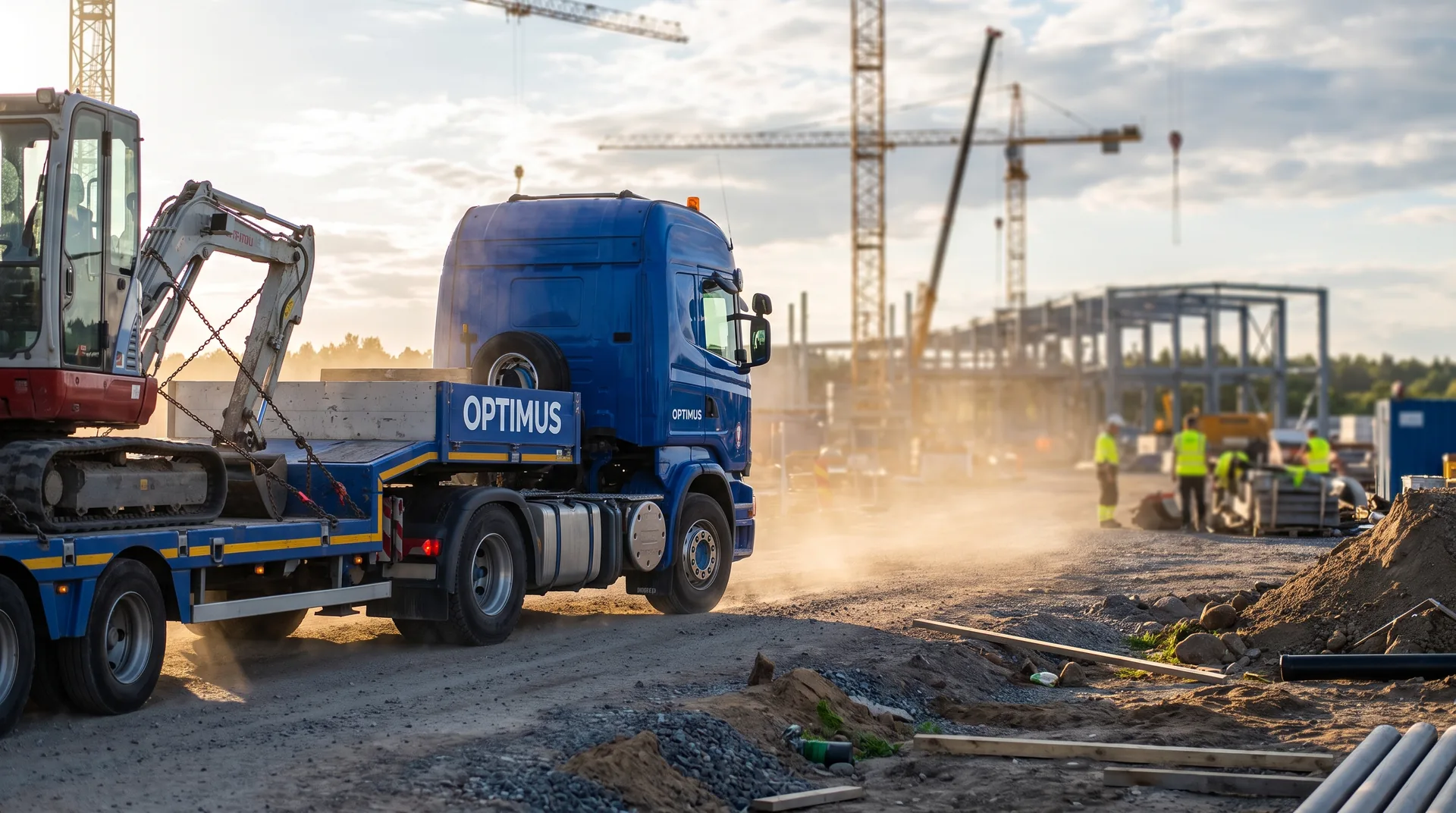
Construction equipment splits into two groups with entirely different logistics. Self-propelled machines, that is mini excavators, loaders, compactors and access platforms, drive onto a low loader under their own power or are winched on, and securing is calculated from mass and the anchorage points in the frame. Static equipment and ancillaries, that is scaffolding, formwork, mixers, generators, tools and moulds, travel on pallets or in crates and can share a vehicle with other freight. For the first group trailer selection and permits are decisive; for the second, securing and preventing movement. Trailer selection is covered in our text on trailer types, and exceeding dimensions in the article on oversized transport.
Securing machines: chains, not straps
High-mass machines are secured with chains and tensioners hooked to the anchorage points specified by the manufacturer, not to whatever part happens to look solid. Movable attachments, that is buckets, arms and booms, are lowered and secured separately, because a loose element can move under braking and change the weight distribution. Wheels and tracks are chocked. On top of that comes something often overlooked: the fuel and fluids in the machine, whose level affects total mass and is sometimes subject to ferry operator requirements. Securing rules are covered in our text on securing under EN 12195.
Getting onto site: rules worth knowing in advance
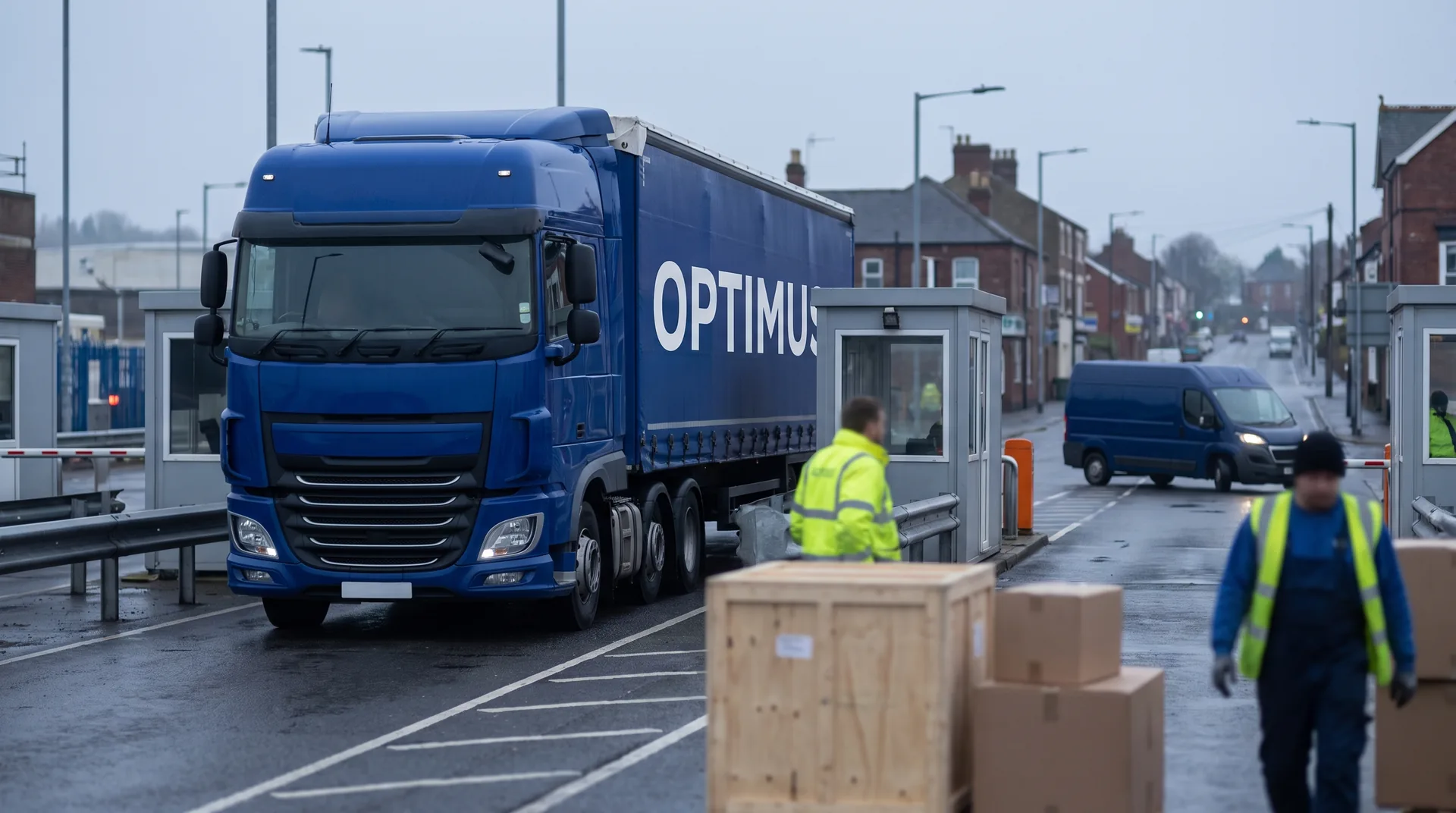
British construction sites run their own access policies: vehicle and driver booked in before arrival, designated delivery windows, protective clothing and a safety induction at the gate, and on larger projects requirements on the vehicle itself. In London there is also the direct vision requirement for lorries over twelve tonnes and the emission zones, covered in our texts on the DVS requirement and on clean air zones. Our vehicles are set up for these, but booking the delivery in usually sits with the receiver and is worth remembering a week ahead rather than on arrival day.
Documents for the machine, not just the consignment
With construction equipment, clearance needs more than an invoice. You need a description of the machine with its serial number, year of manufacture, commodity code and value, and for used equipment documentation allowing the customs value to be established. Technical documents follow, including the declaration of conformity and the manual, because the British receiver will need them regardless of customs. For equipment returning after repair or hire, a temporary procedure often makes more sense than full importation. We cover this in our texts on the ATA carnet and temporary admission, on importing used machinery and on UKCA and CE marking.
Building materials alongside equipment
Equipment rarely travels to a site on its own. Materials usually come with it: construction chemicals, joinery, structural components, insulation. Some carry their own requirements, for example chemical products falling under dangerous goods rules. So when building a load we ask about the whole scope, not just the machine. Chemicals are covered in our text on limited quantities, and larger relocations in the article on machinery and production line relocation. The same equipment sometimes travels to a stand rather than a site, and then build-up windows and hall limits join the list of questions: we set that out in transport of machinery and materials to UK Construction Week.
What to include in your enquiry
Machine type and model, transport mass and dimensions, loading method, unloading equipment available on site, the address with postcode plus access conditions, and the required delivery window. If the equipment is used, add the year of manufacture and what documentation exists. For sets of several machines send a list with masses, because that decides whether they fit on one vehicle. Cargo types are collected on the machinery and relocations page.
Delivering equipment or machinery to a UK site? Send the machine details and site conditions through the quote form and we will match the vehicle and plan the unloading. Non-standard loads are described on the oversized loads page.