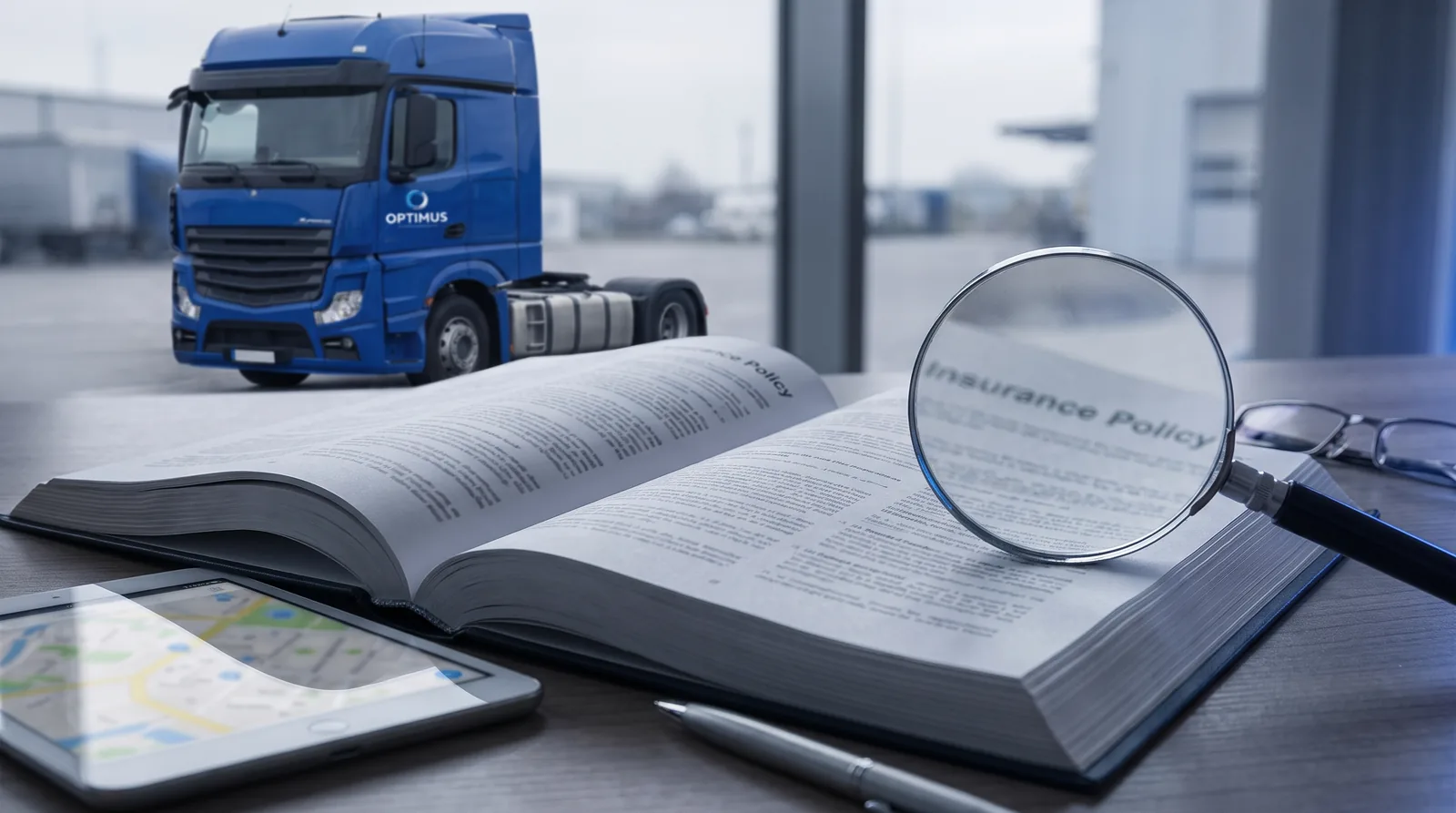
A carrier liability policy does not insure the goods; it insures the carrier's liability, and every policy carries a list of exclusions under which the insurer will refuse to pay: gross negligence, parking outside guarded areas, high-risk goods excluded from cover. For the cargo owner this means one simple rule: a liability certificate says nothing until you know the insured sum, the territorial scope and the exclusions in the policy terms.
Which exclusions appear most often?
- Wilful misconduct and gross negligence: the driver leaves the vehicle open, keys in the ignition, and walks away from a high-value load.
- The parking clause: theft during a stop outside a guarded car park or outside locations named in the policy. On the Calais corridor this exclusion works hardest.
- Alcohol or drugs in the driver's system at the time of the loss.
- Excluded or sub-limited goods: electronics, alcohol, tobacco, medicines, cosmetics; a separate lower limit or extra security requirements are common.
- Subcontractors: the policy may not cover damage caused by a further carrier to whom the job was passed.
- Formal failures: a missed notification deadline, no damage report, no reservations on the CMR at delivery.
What do exclusions not change?
The carrier's own liability. A policy exclusion does not switch off Article 17 CMR: the carrier still answers to the claimant, only from its own assets rather than from the policy. That is why liability exclusions hurt the client indirectly: if the carrier is a small firm with no assets, a judgment without cover is worth the paper it is printed on. The CMR compensation ceilings, including the 8.33 SDR per kilogram limit, are covered in our article on the scope of carrier liability and CARGO.
What should you ask a carrier before booking?
- What is the insured sum, and does it apply per event or per policy year.
- Does the territorial scope include the United Kingdom: after Brexit some policies must state it explicitly.
- What does the parking clause say, and does it match the reality of the route your goods will take.
- Is your type of goods covered without a sub-limit.
- Does the policy cover subcontractors, and if not, does the carrier use them at all.
- What is the deductible, and what notification deadlines apply.
An honest carrier answers these questions within an hour and shows the policy terms. Evasion is information in itself; how to read such signals is described in our article forwarder, carrier, broker.
How does it look with us?
Our carrier liability cover for Poland to United Kingdom routes has a sum of up to EUR 1 million and is arranged through Lutz Assekuranz, a broker specialising in transport, under terms written for international carriers; the scope of cover is described publicly on the broker's website and we share the terms with clients on request. Because we drive our own fleet, the subcontractor exclusion does not touch us. Independently of liability cover we offer CARGO insurance, which protects the goods themselves regardless of carrier fault; when it is worth adding is explained in our article on when to add cargo insurance for UK transport.
What do typical refusal scenarios look like?
Three patterns known from market dispute practice come back most often. First: theft from a trailer during an overnight stop at an unguarded motorway car park; the insurer points to the parking clause and declines, leaving the carrier alone with the cargo owner's claim. Second: a damaged pallet of electronics for which the policy sets a sub-limit far below the headline sum; the payout covers a fraction of the loss, which the client learns only from the decision. Third: a loss reported after the policy deadline, or with no reservation on the CMR at delivery; the claim exists formally and is indefensible practically. The common denominator never changes: nobody read the terms before the booking, and everybody reads them after the loss. The order should be reversed, and that is the whole secret of well insured transport.
Sources
Want to see what protects your goods before they board the trailer? Write via the contact form: we will show the liability certificate and the terms, and work out whether your load needs CARGO.