A shell scheme means the organiser's contractor puts up the walls, the name fascia and the carpet, and the exhibitor brings only the contents of the stand: graphics, product, furniture and print. Space only means bare floor, so the whole structure travels from Poland. That single choice changes three things at once: the volume of the load, the day the vehicle enters the site, and who receives the delivery there.
What actually travels from Poland in each option
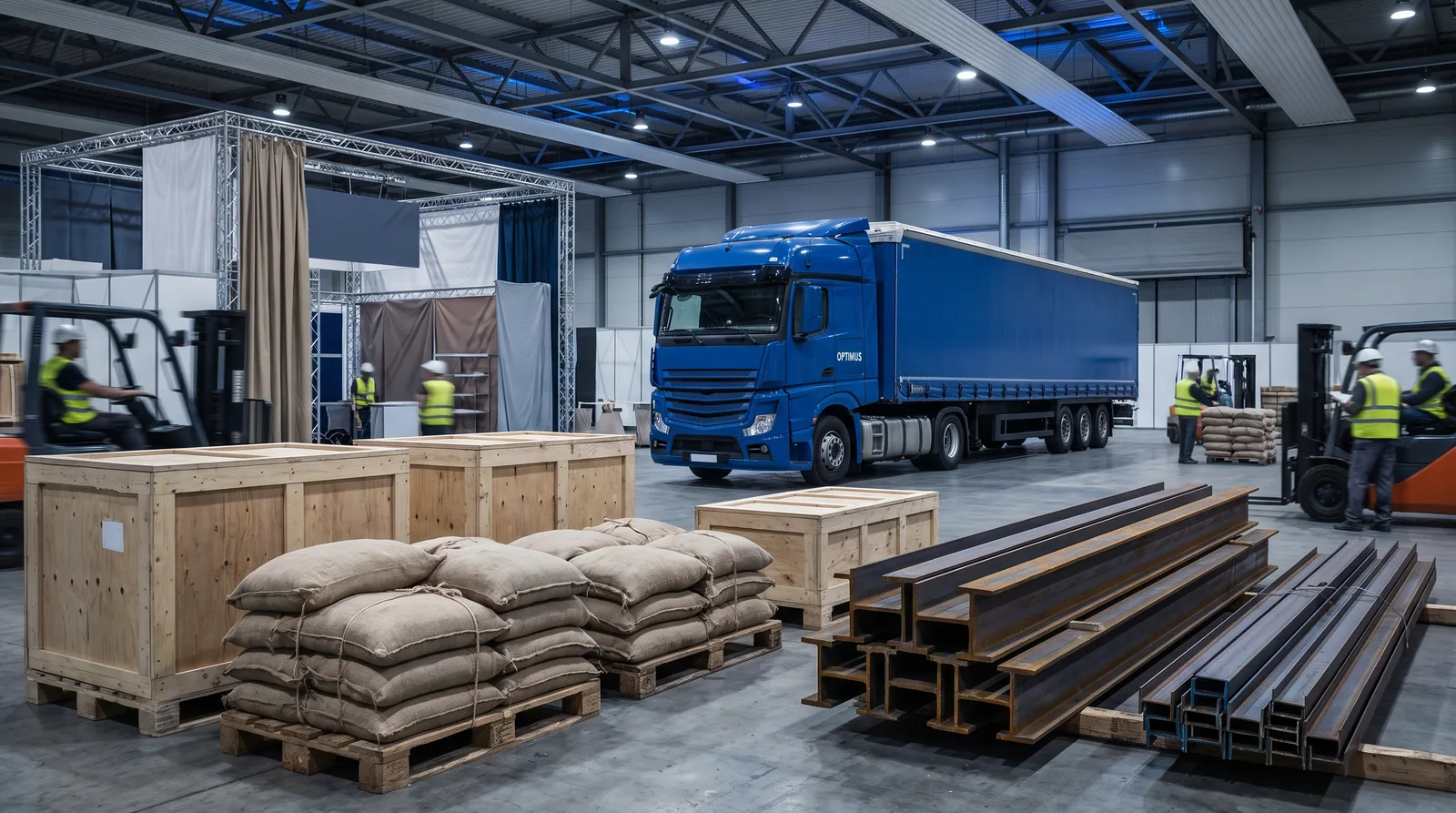
With a shell scheme the load is usually a set of graphics for the panels, roll-ups, the product on show, light furniture, a counter with a display, catalogues and giveaways. It fits on one or two pallets, or in a van. With space only you are moving a raised floor, walls, a ceiling structure or a lighting truss, lighting, large-format graphics, carpet, furniture, plus the tools and materials of the build crew. That is several loading metres, and on larger stands a full trailer.
The difference comes from one fact: inside the organiser's module you do not transport walls. The walls are already there, rented with the space, and they stay in the hall after the show. With space only the walls are yours, they travel both ways, and they dictate the size of the vehicle.
Volume changes the type of transport, not just the price
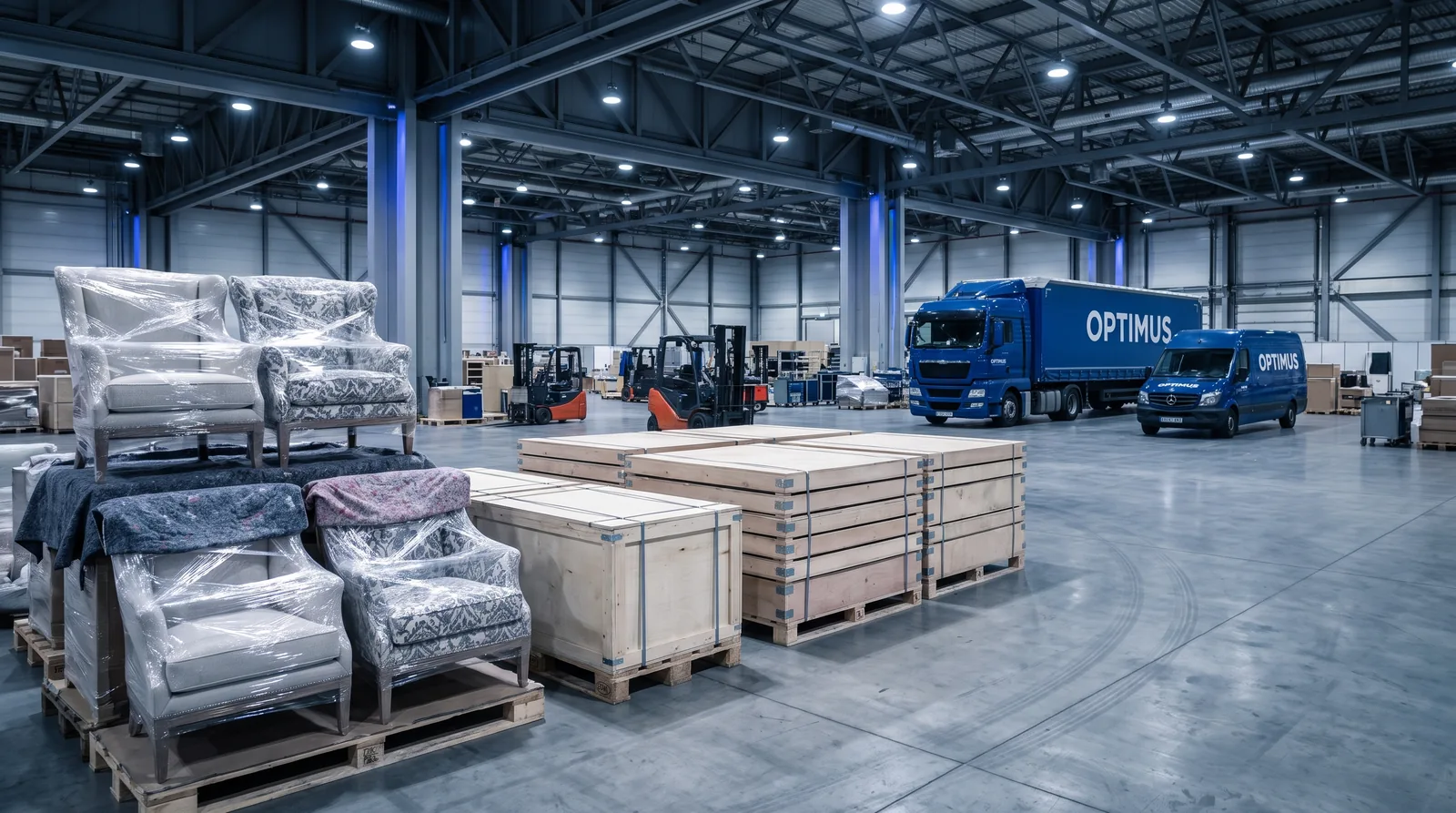
In practice the line between groupage and a dedicated vehicle runs at around twelve pallets, roughly a third of a trailer. The contents of a shell scheme stand rarely cross it, so groupage or a van is the natural option. An own build almost always crosses it, which means a dedicated vehicle.
This is not only about the rate. Consolidated freight waits for the next scheduled line departure, so the departure date is set by the schedule rather than by the exhibitor. A dedicated vehicle leaves when it needs to and can be matched to a specific build-up window. We compare vehicle options in transport to UK fairs from vans to oversized, and the service itself is described on the groupage LTL page.
The entry day falls at a different point in the calendar
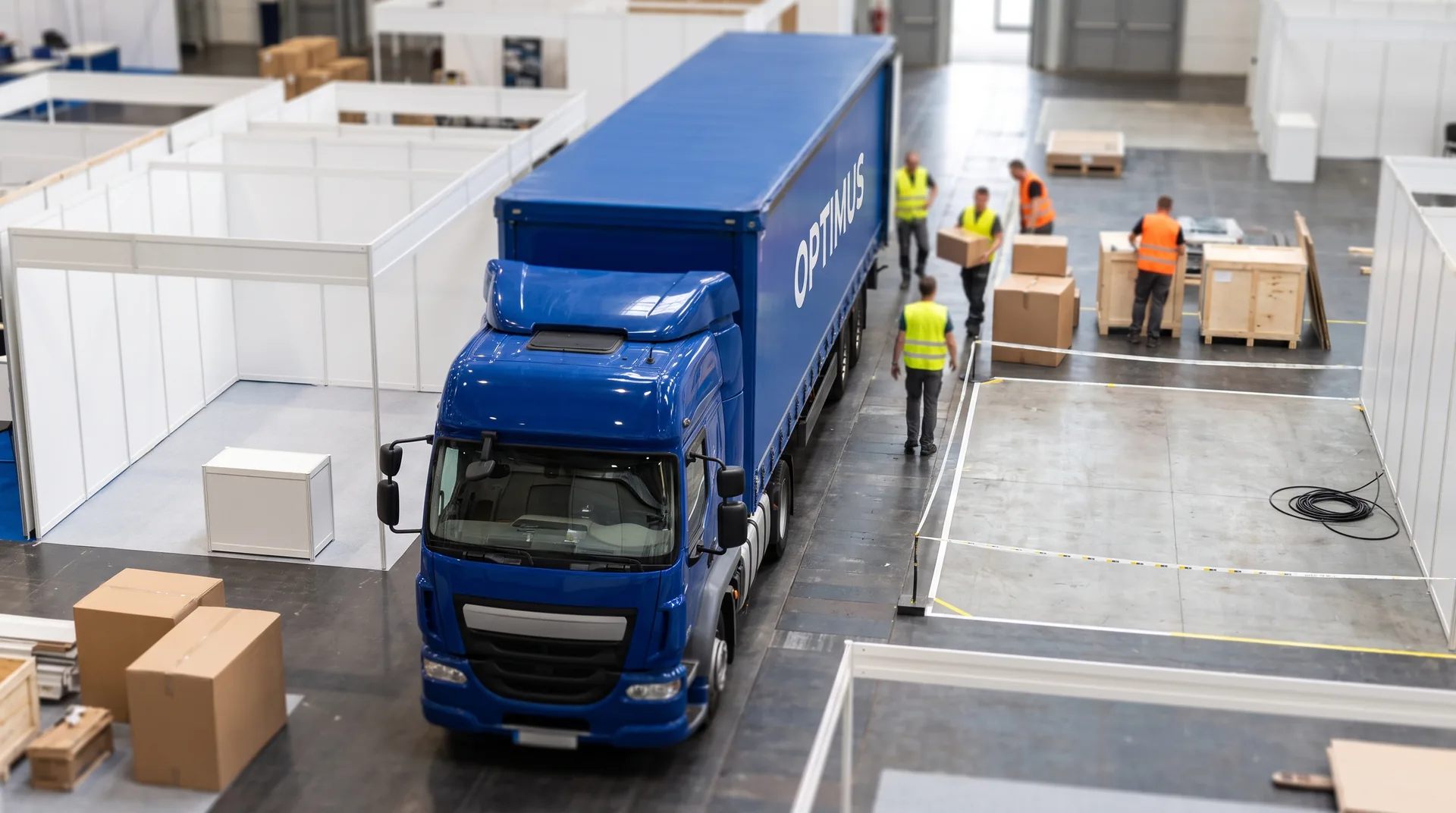
An own build enters at the start of build-up, because the crew needs full days to erect the structure, connect services and pass the technical inspection. Shell scheme contents enter at the end, often on the last day of build-up, because before that the module simply does not exist. A pallet of graphics delivered on day one stands in a hall where your walls are not up yet, and it usually ends up pushed into a corner where it is easy to lose.
The actual times and the order of entry are set by the organiser in the technical regulations for the event, and they differ not only between venues but between events in the same venue. The method of counting deadlines backwards from those windows is described in our article on the build-up and breakdown calendar.
Who receives the delivery on site
With space only the build crew is on the stand and takes the load. The handover point is obvious and there is someone to sign the document. With a shell scheme the situation is different: the exhibitor is often the only person on their side and arrives only the day before opening. If the vehicle turns up earlier, there is nobody to receive the goods, and the hall does not store consignments on the exhibitor's behalf.
That is why with a shell scheme stand it often makes sense to bring the load in together with the exhibitor, or to hold it in a warehouse until the day the module is standing. Who answers for what at that moment is set out in who is responsible for what at a trade fair, and the limits of contractors' rights in official fair forwarder versus your own carrier.
Packing: the module has its own dimensions
Shell scheme panels have dimensions imposed by the organiser's contractor, and the regulations state what may be fixed to them. Graphics therefore have to be made to the module rather than to your own idea, and carried flat, in rigid packaging, with protected edges. A bent panel corner cannot be repaired on site. Packing rules for structures and exhibits are collected in transport of exhibition stands and exhibit transport to trade fairs.
The customs side looks different in each option
A shell scheme module never crosses the border, because it is not your property and it stays in the hall. The list of things that have to come back to Poland is therefore short: product, demonstration equipment, furniture. With an own build the whole structure returns, which normally justifies temporary admission, either on an ATA carnet or under a standard declaration procedure. Consumables, meaning carpet, single-use graphics, print and giveaways, do not return and do not belong on a temporary admission list. We compare the two routes in ATA carnet or temporary admission.
The in-between option worth flagging
More and more exhibitors take the shell scheme module but add their own wall graphics, a raised floor or lighting. The volume grows, the entry day moves towards the start of build-up, and the design starts to require the organiser's approval. From a transport point of view this is already closer to space only and has to be quoted as such. If you do not mention it when asking for a quotation, the vehicle and the time slot will be matched to the wrong scenario.
What to include in your enquiry
Five items are enough: which type of space you have, the venue name and stand number, the build-up and breakdown dates from the event regulations, the dimensions and weight of the largest item, and whether a build crew will be on site. With that set we can select a vehicle and propose an arrival time at the gate without guessing.
Sources
- Association of Event Venues: the UK venue association
- ESSA: health and safety in stand construction
- GOV.UK: importing goods temporarily to the UK
Not sure which option you are in? Send the event name and stand number through the quotation form and we will check the technical regulations and match the vehicle to the real volume. The full scope is described on our exhibition logistics page.