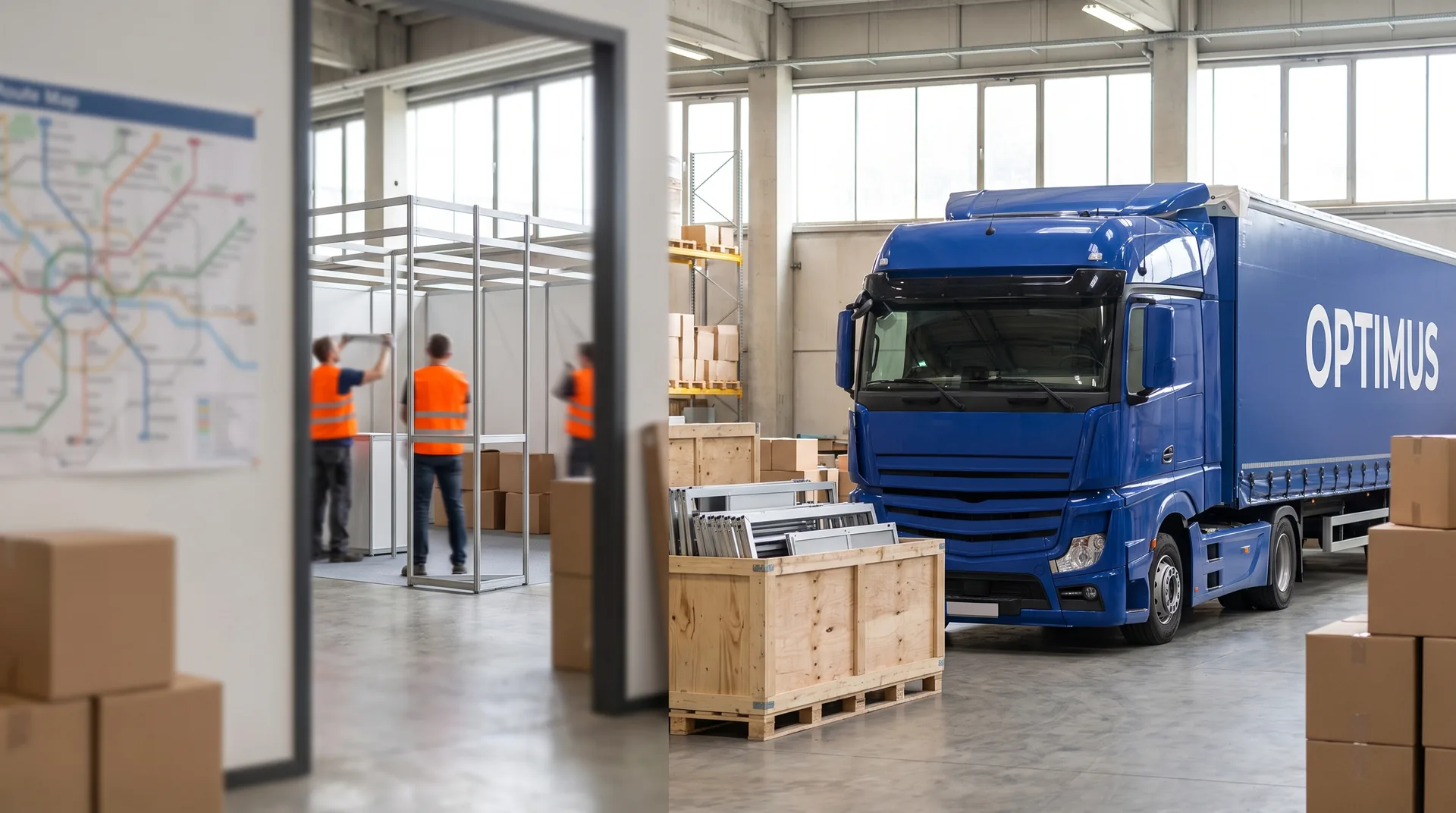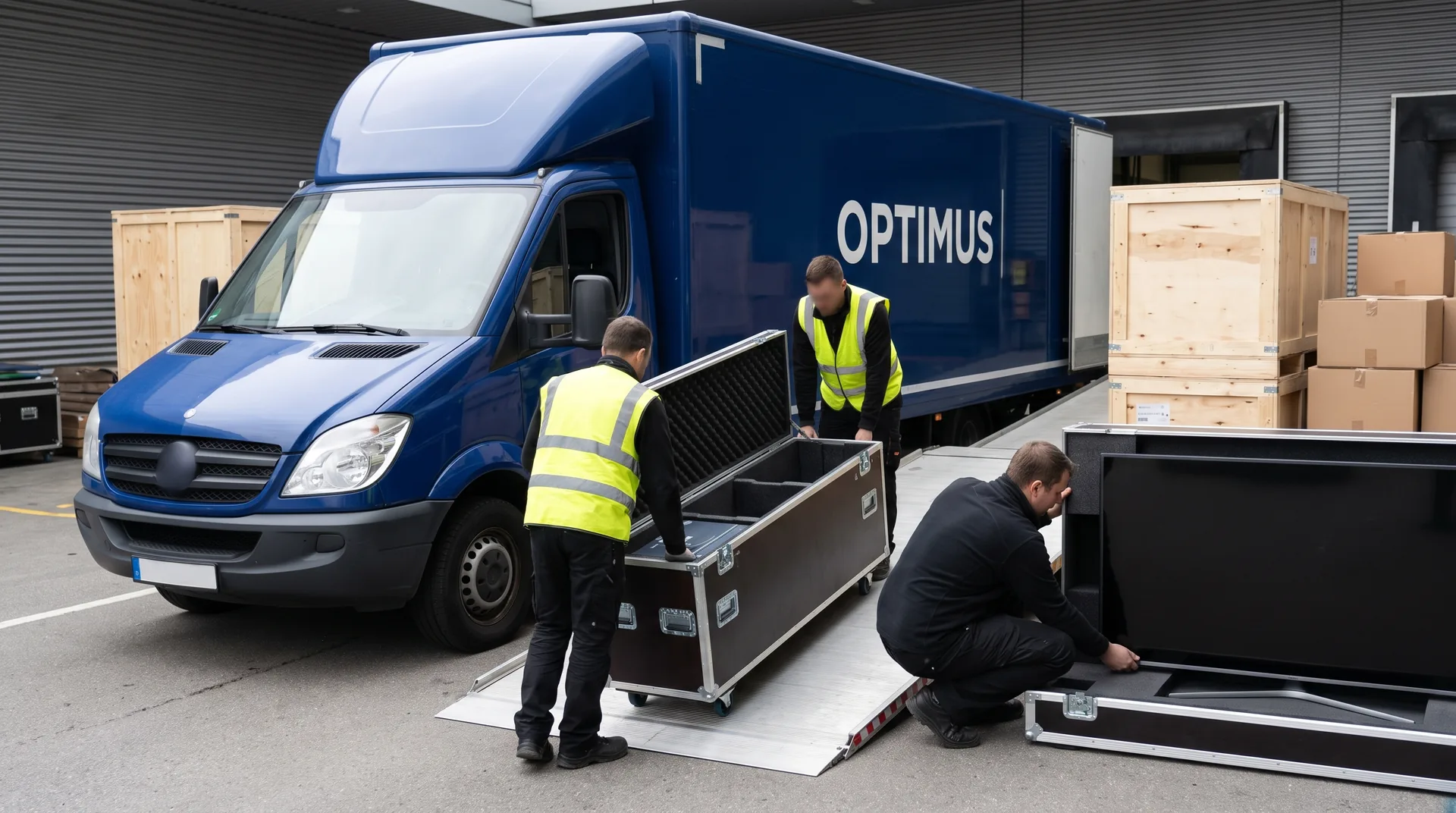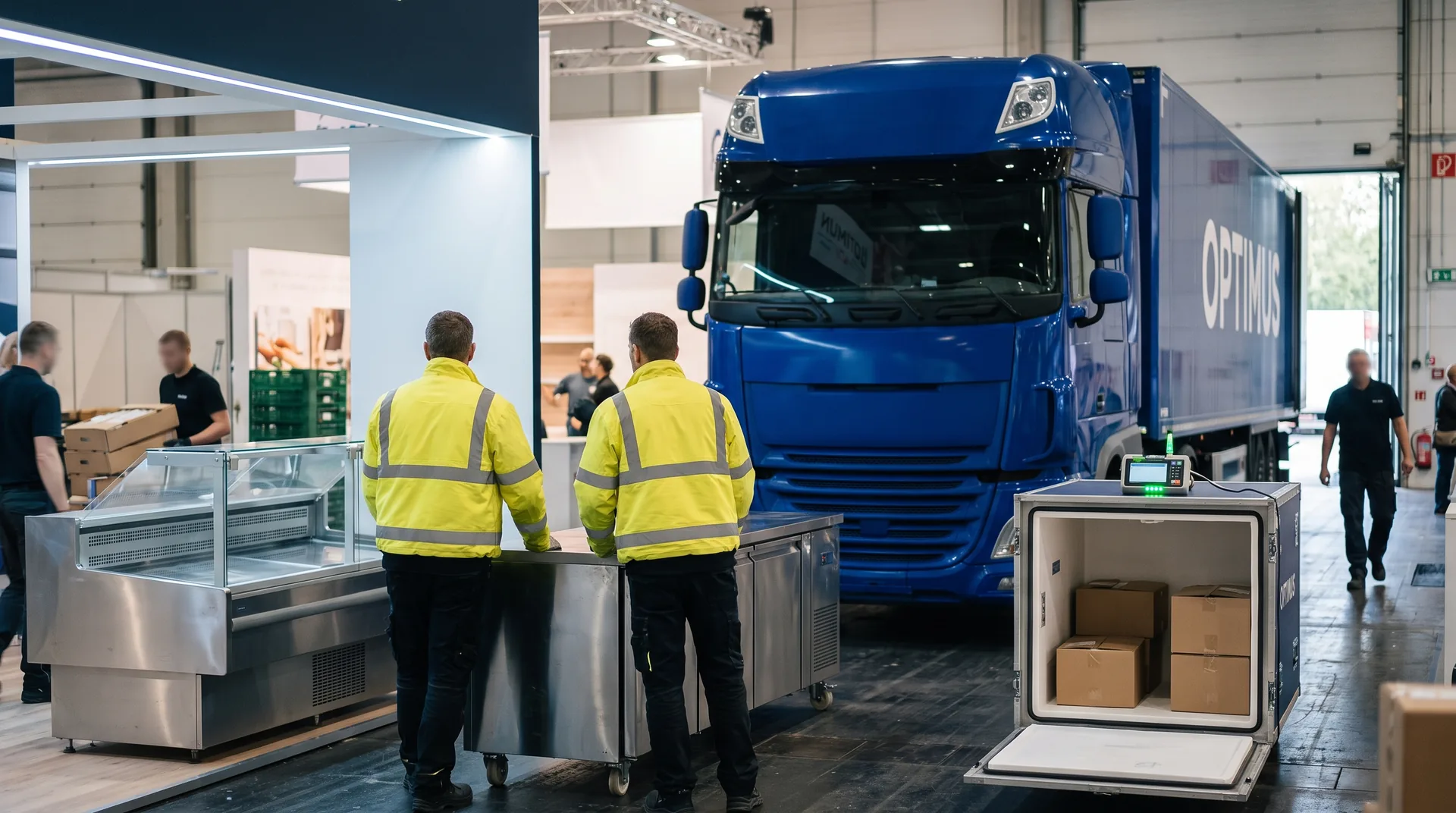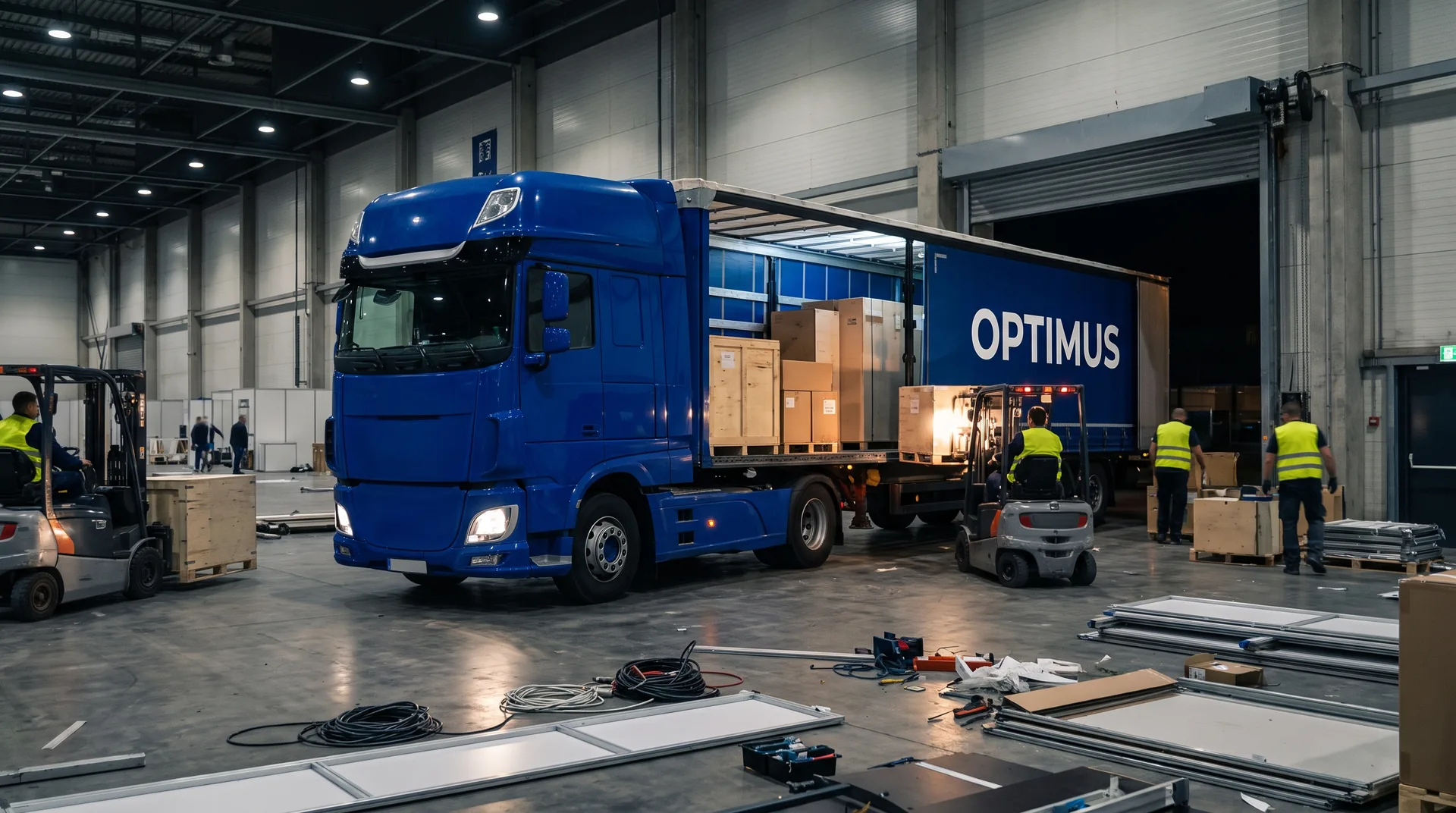
Build-up is spread over several days and divided into stages, while breakdown starts for every exhibitor in the same minute: when the doors close on visitors. The same load that came in during a calm window goes out in a crush, in less time, with every crew working at once and under pressure from the hall clearance deadline. The difference is organisational rather than technical, which is exactly why it can be planned for.
Four reasons the move out takes longer
The first is simultaneity. During build-up exhibitors enter in an order set by the organiser, over several days. At breakdown everyone wants to leave at once, and there are exactly as many unloading points and exits as there were on the way in.
The second is the sequence the hall imposes. Before vehicles can come in, the aisle carpet has to be lifted and the shared areas dismantled. Only then does equipment have anywhere to run. In the first hours after a show closes a great deal happens in the hall, and none of it concerns your stand.
The third is the condition of the load. An exhibit leaving a show is unpacked, often set out, sometimes damaged, and always has to be packed again. That time did not exist on the way in, because the goods arrived ready.
The fourth is people. After four days of a show a crew works more slowly and less carefully than it did at build-up, and that is precisely the moment when an item is most easily lost or badly secured.
Packaging: a problem created three days earlier
The cases and cartons the load arrived in have to sit out the show somewhere, and a hall is not designed for that. If nobody planned their storage, breakdown arrives and there is nothing to pack into. Then either the load travels improvised, which ends in damage, or it waits until the packaging turns up. We cover this in empty crates during UK fairs.
Why the return vehicle is booked with the delivery
Because during show week there are effectively no spare vehicles around the venue. Several hundred exhibitors are looking for the same thing, at the same time, on the same site. A vehicle planned in advance sits in the yard waiting to be called; a vehicle looked for after the show closes arrives when it can. That single decision determines whether breakdown runs to plan. The planning rules for both directions are in the build-up and breakdown calendar and in post-show logistics.
Documents that are easy to forget in the rush
Under temporary admission the goods have to be presented for export and the document properly discharged. In the rush of breakdown that is the first thing to slip, and the consequences surface months later as a claim under the guarantee. The second is the inventory: without comparing the outbound list against the return list, nobody notices two missing items until the next show. The third is a record of the condition of the load at handover, which in a damage case is the only evidence. The consequences of an unclosed document are set out in an undischarged ATA carnet after a UK fair.
What genuinely shortens breakdown
Packing the stand against a list prepared before the show rather than from memory. Storing the packaging somewhere it can be delivered quickly. Naming one person responsible for releasing the load and signing, instead of spreading the decision across the crew. Booking the vehicle together with the delivery. And taking small, valuable equipment out earlier, before the show closes, where the regulations allow it.
It is also worth deciding in advance what happens to the things that do not have to return. Carpet, single-use graphics, surplus print and damaged build elements take space in the trailer and are worth close to nothing. The options are set out in after breakdown: return, storage or disposal, and we carry out disposal with confirmation at the Milton Keynes warehouse.
City venues and open showgrounds: same rule, different effects
At an urban venue the time pressure is greater, because the site is tight and exits lead into street traffic with its own restrictions. On an open showground there is more room, but vehicles stand longer and further away, and after several days of a show the ground is often in worse condition than it was at build-up. In both cases the mechanism is the same: the bottleneck is the number of places where loading can happen at once.
Sources
- HSE: event safety, getting started
- GOV.UK: how to use and discharge your ATA carnet
- ESSA: health and safety in stand construction
Planning the return of exhibits after a show? Book the vehicle together with the delivery through the quotation form and we will arrange where the packaging waits and what time the vehicle presents at breakdown. The scope is on our exhibition logistics page.