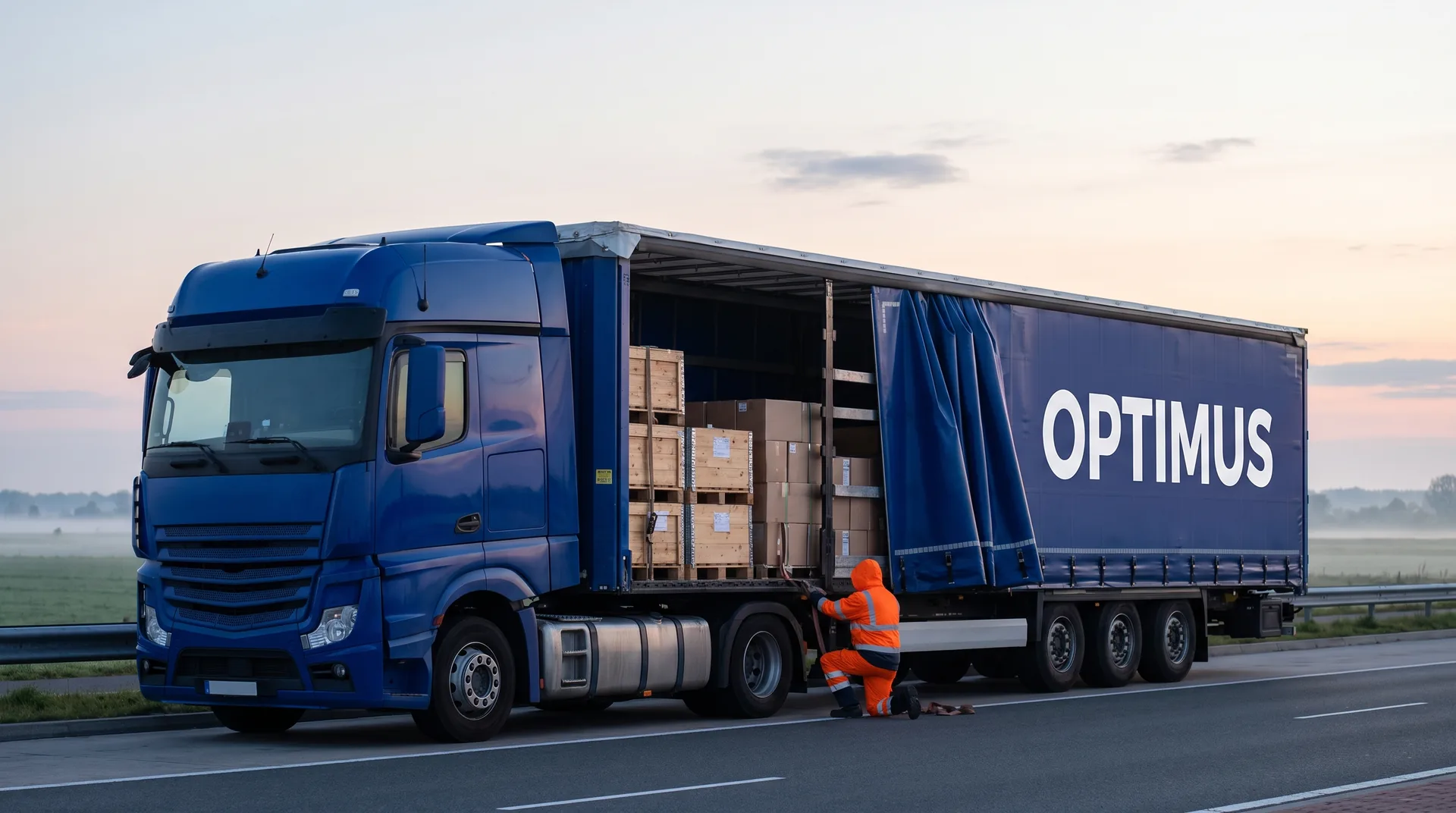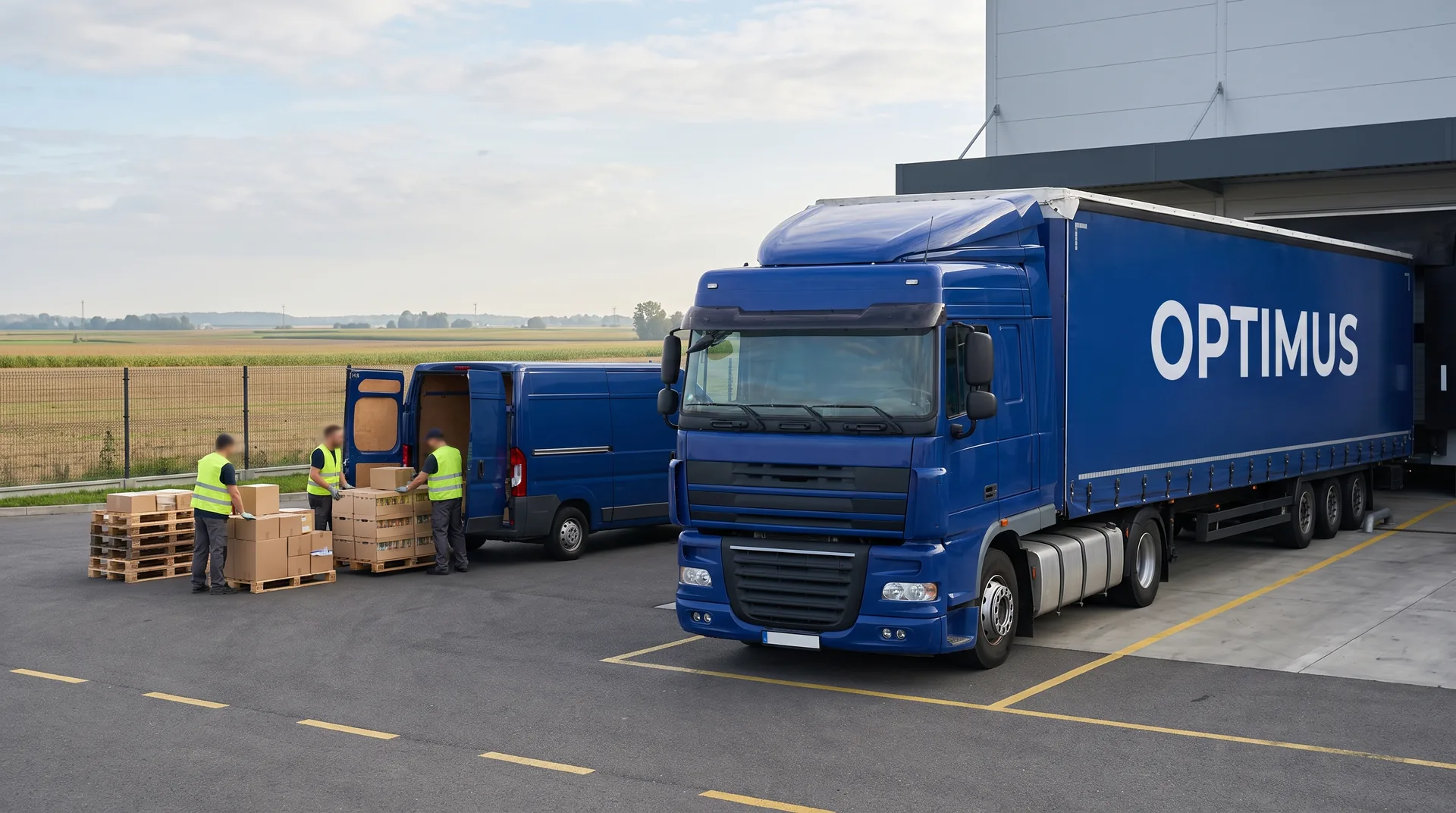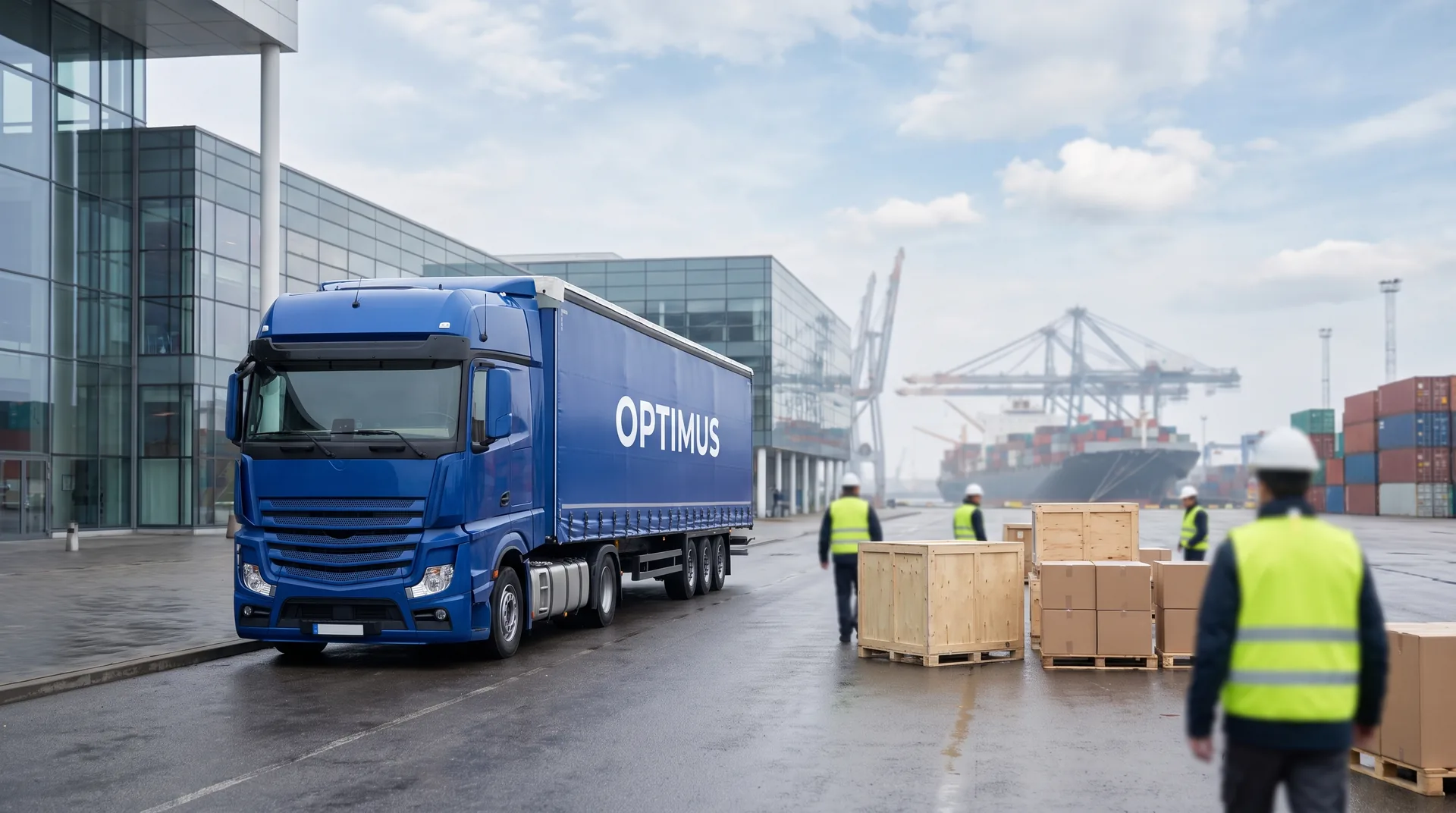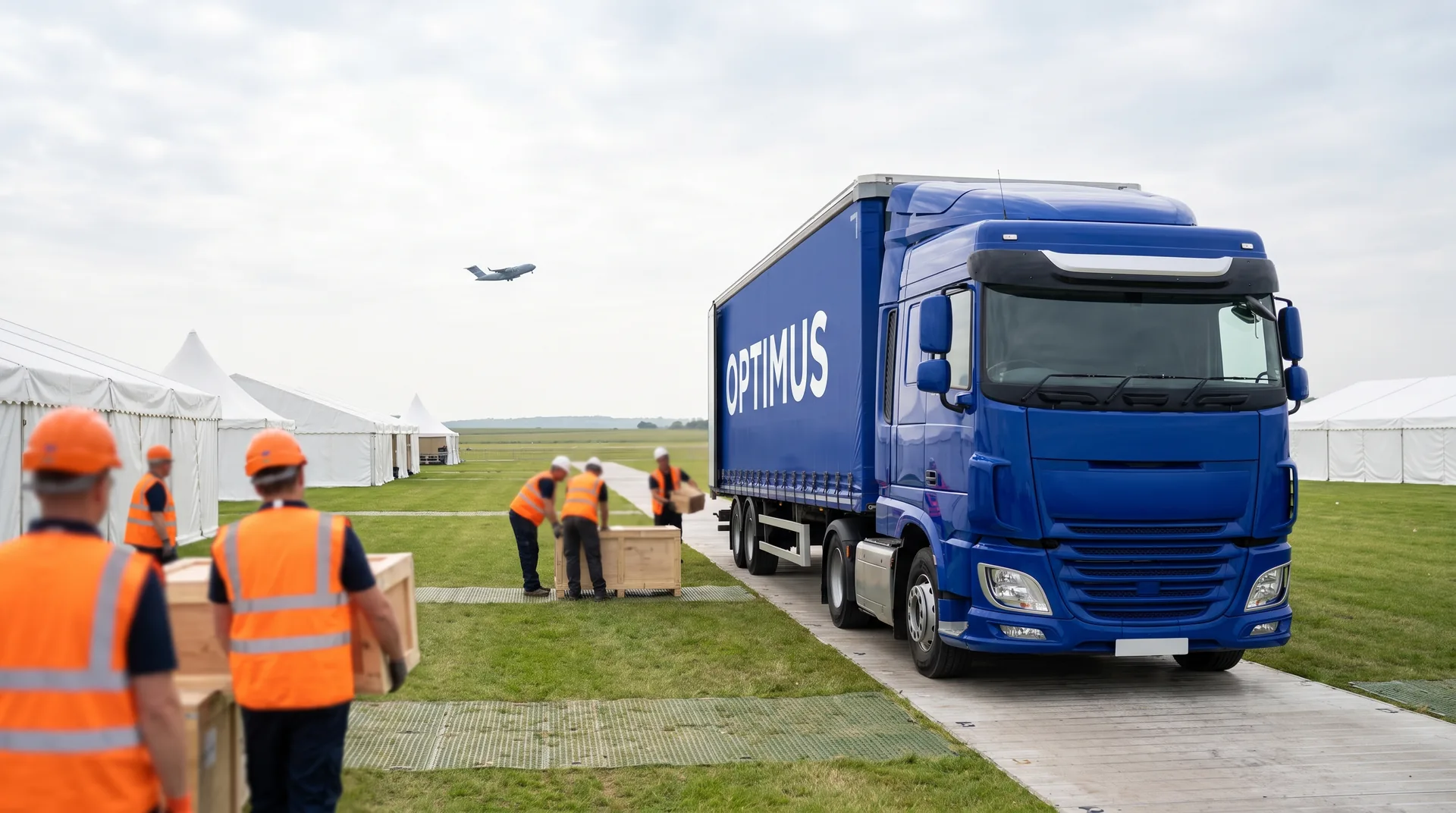
The Royal Highland Centre sits at Ingliston outside Edinburgh, next to the airport, under postcode EH28 8NB. The venue publishes over 18,000 sqm of covered space, 110 acres of ground with a main arena and an outdoor track, and parking for fifteen thousand vehicles. For a carrier the proportion is what counts: most displays stand on open ground rather than inside a hall, and that changes almost everything about planning a delivery.
Where it sits and how you get there
Ingliston is the western edge of the Edinburgh conurbation, right by the airport and on the main westbound routes. From a lorry's point of view that is a far easier location than the city centre: the approach runs on high-capacity roads, there is room to manoeuvre an artic and no shortage of space to wait. Edinburgh's low emission zone covers the city centre rather than the outskirts, but the boundary is always checked on the council map before a multi-drop day is planned; details are in the article on transport to Edinburgh.
The venue and the best known event held on it are looked after by the Royal Highland and Agricultural Society of Scotland. The calendar is far wider than one agricultural show, though: the ground takes concerts, motoring events and outdoor festivals, which means build-up windows get arranged around very different scenarios.
How open ground differs from a hall
In three ways. First the surface: on grass a heavy vehicle leaves ruts and after rain can simply bog down. Organisers of outdoor events usually mark hard-surfaced access roads and require vehicles to stay on them, sometimes with a tractor standing by. Second the absence of docks: the load comes off at ground level, so either the vehicle has a tail lift or there has to be a rough-terrain forklift or a crane on site. Third the weather, because a display standing in the open needs different protection from a stand in a heated hall.
The practical consequence is that on open ground the question "can we drive up to the stand" only makes sense after the rain, not before. So at venues like this we plan unloading with slack and agree a fallback with the exhibitor: unload on hard standing and shuttle to the plot with smaller equipment. The rules for heavy exhibits are gathered in the article on unloading an oversized exhibit.
Exhibits that drive themselves
A venue with an arena and an outdoor track attracts exhibitors whose exhibit moves under its own power: farm machinery, construction plant, vehicles. That is a separate transport category. The load is secured differently from a pallet, internal traffic rules apply once on site, and getting it off the trailer needs ramps and space. We handle comparable jobs in Poland at agricultural shows, which we describe in the article on transporting farm machinery to AGROTECH, and for road plant in the piece on road machinery.
What to settle before arrival
- Whether the stand is inside a hall or on open ground, and the plot or sector number.
- Which gate the transport uses and whether a designated internal route applies.
- What unloading equipment the exhibitor or the venue will have on build-up day.
- Whether the vehicle may stay at the stand or has to move to a marshalling area after unloading.
- A fallback for bad weather and soft ground.
We do not quote build-up hours for a particular edition, because the organiser sets them and they move from year to year. The method for counting the whole schedule backwards from the build-up window is in the article on the build-up and breakdown calendar.
Groupage or a dedicated vehicle
Marquee stands with a modest display, literature and furniture travel comfortably as groupage: the load waits for the next scheduled line departure and arrives with other consignments. Above roughly twelve pallets, about a third of a trailer, a dedicated vehicle usually wins. With machinery and self-propelled exhibits the choice is obvious from the start: that is always a separate movement, often on a trailer chosen to suit the exhibit.
What we do on a delivery to Ingliston
We collect from the exhibitor in Poland or in Czechia, Slovakia, Austria and Hungary, consolidate at our Kielce base, prepare the paperwork with the customs agency we work with regularly and deliver to the nominated gate at an agreed hour. We commit to an hour at the gate, because the order of entry onto the site is set by venue staff. The load is handed over at the point agreed with the exhibitor, and after breakdown we collect the set and either bring it home or hold it for the next show of the season; that option is in the article on one stand, several shows.
Sources
- Royal Highland Centre: venue information and space hire
- RHASS: Royal Highland and Agricultural Society of Scotland
- City of Edinburgh Council: low emission zone
Exhibiting at Ingliston? Send the plot number, build-up window and item list through the quotation form and we will plan the run together with a wet-weather fallback. See also the exhibition logistics page and oversized load transport.