Bringing a heavy exhibit into a hall comes down to four figures: permitted floor loading, clear door height and width, aisle width with turning radius, and the capacity of the handling equipment available on site. All are published by the organiser for the specific hall, because they differ between halls in the same venue.
Where to get the hall parameters
From the show organiser or the venue operator, in writing, before signing the space contract. Not from a marketing brochure and not from a press article about a new hall, because those figures usually describe the newest building and need not describe the one your stand will sit in. Ask for four items: distributed and point floor loading, clear door dimensions, aisle width with turning radius, and the available equipment with its capacity. Targi Kielce publishes a description of its grounds and buildings on its website, and the technical detail for a given show comes from the organiser.
When a machine exceeds the permitted pressure
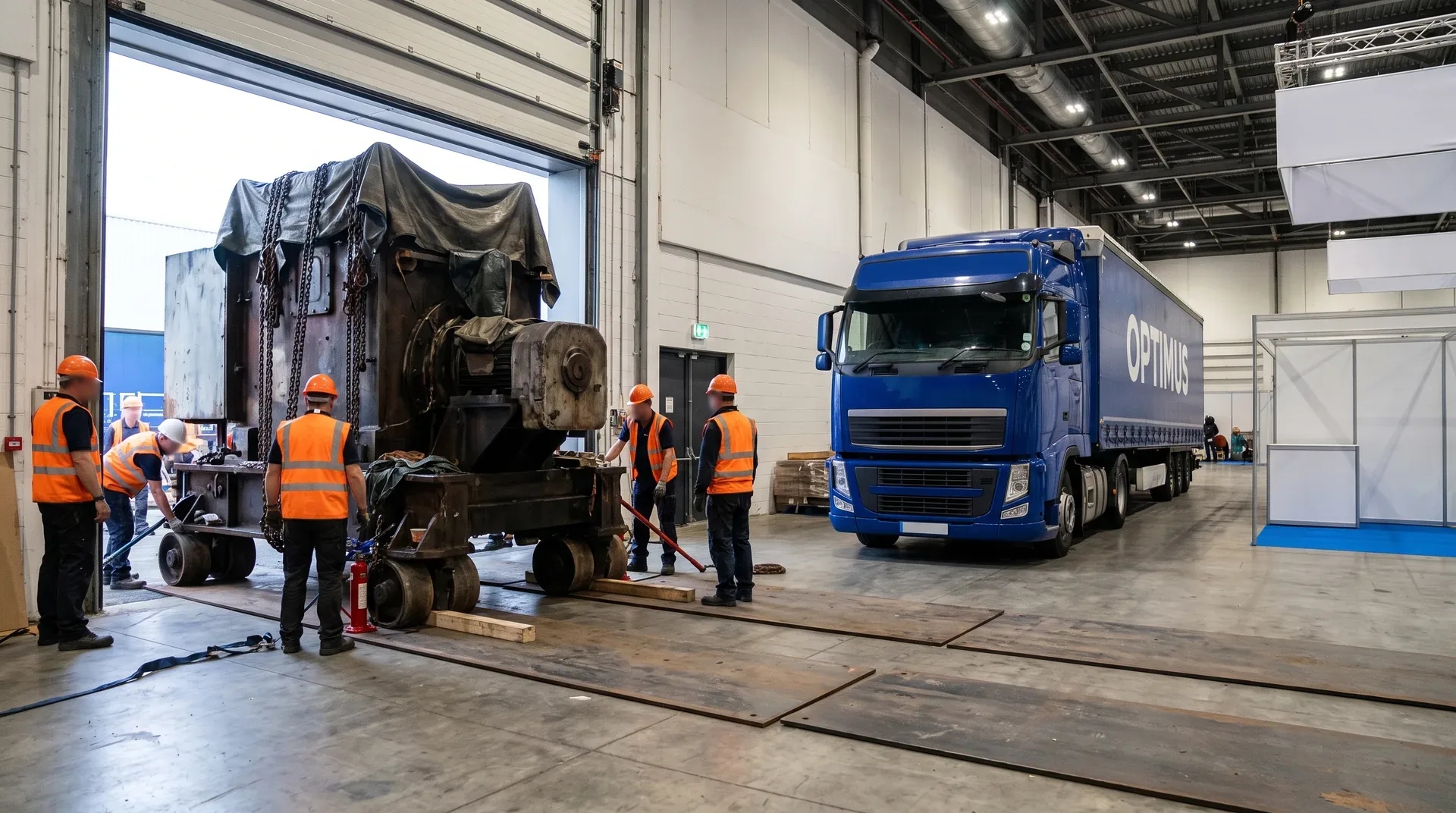
The answer is spreading the load, not reducing the mass. Load-spreading plates, usually steel or composite, go under the machine feet, sized to enlarge the contact area until the pressure falls below the limit. The same technique applies along the route the forklift or skate travels: a loaded forklift wheel is a point load that with a heavy exhibit can exceed the pressure of the machine standing on the stand.
Plates have to be brought, laid and removed, so they are a line in the transport plan, not a detail. Who supplies them, the organiser, the exhibitor or the carrier, is settled before arrival. Securing the exhibit on the trailer follows the general rules described in the article on cargo securing under EN 12195.
The door: height matters more than width
Width can usually be worked around by turning the load or splitting it into modules. Height cannot be worked around at all. So the exhibit is measured in the configuration in which it will actually enter the hall, meaning with the pallet, transport frame or forklift tines underneath. The most common mistake is comparing machine height with door height and ignoring the extra centimetres added by the handling equipment. Where the exhibit is a vehicle, that same figure decides whether a bus enters the hall at all, which we describe in moving a bus and its components to TRANSEXPO.
The second typical mistake is taking nominal door height rather than clear height, meaning after deducting guides, shutters, services and anything hanging over the opening. The difference can be significant and only the organiser can confirm it.
Aisles and turning radius
Even with a sufficient door, a long exhibit may not fit the turn between halls or the gap between neighbouring stands, which on build-up day are already partly built. So with large exhibits you agree not just dimensions but entry sequence: heavy and long items go in first, before the aisles narrow with construction. That sequence is the organiser role to coordinate, not the individual exhibitors.
Who answers for damage to the floor
The principle is that whoever causes damage on site answers for it, but in practice disputes arise because four parties work on one unloading at once. So before bringing in a heavy exhibit, do two things: photograph the floor condition before work starts, and write into the order who operates equipment inside the hall. We break the roles down in the article on responsibilities at a trade fair, and handling exclusivity in the piece on the official fair forwarder.
An outdoor display as the alternative
If a machine will not fit within hall limits, an outdoor stand is often the answer. The door and floor loading disappear; surface, drainage and weather appear instead. We compare both options from a transport point of view in the article on road machinery at AUTOSTRADA-POLSKA, and movements beyond legal limits on the oversized loads page and in the piece on oversized transport to the UK.
Checklist before quoting
Exhibit mass and its distribution across support points. Dimensions in entry configuration, including pallet or frame. Distributed and point floor loading. Clear door dimensions. Aisle width and turning radius. Available equipment and its capacity. Who operates that equipment. Entry sequence agreed with the organiser. Eight items, the first two known to the exhibitor and the rest supplied by the organiser; together they allow the movement to be quoted and planned without surprises on build-up day.
Sources
- Targi Kielce: fairgrounds and exhibition buildings
- Targi Kielce: site entry regulations (PDF, Polish)
Got a heavy exhibit and no certainty it will reach the stand? Send the mass, dimensions and hall number through the quotation form and we will check it with the organiser before you sign. See also the exhibition logistics page.