The CMR Convention never uses the words force majeure. Article 17(2) relieves the carrier of liability where loss, damage or delay was caused by circumstances the carrier could not avoid and whose consequences it could not prevent. The test is stricter than it sounds: a strike or blockade does not excuse automatically, because the carrier must prove it did everything reasonably possible to go around the obstacle and limit its effects. The burden of proof sits with the carrier.
What happens when the route stops?
The Convention provides a procedure, not just an excuse. Where carriage on the agreed terms becomes impossible before arrival at the delivery point, Article 14 obliges the carrier to ask for instructions from the person entitled to dispose of the goods. If instructions cannot be obtained in reasonable time, the carrier must act in the best interests of that person: park safely, tranship, sometimes turn back. The parallel procedure in Article 15 covers obstacles to delivery, for instance a consignee refusing the goods; we describe that scenario separately in our article on what to do when a UK consignee refuses delivery.
Who bears the cost of waiting and rerouting?
Under Article 16(1) CMR the carrier may recover the costs caused by its request for instructions and by carrying them out, unless those costs arose from its own fault. In practice: if the crossing stops because of a strike, the costs of waiting, rerouting through another port or warehousing fall, as a rule, on the cargo side rather than on a carrier who did not cause the obstacle. For the delay itself the carrier is liable only if it fails the Article 17(2) test, and compensation is capped at the amount of the carriage charge. Contracts are sometimes harsher than the Convention, but clauses that contradict CMR are void under its Article 41.
What is the reality of Calais and Dover?
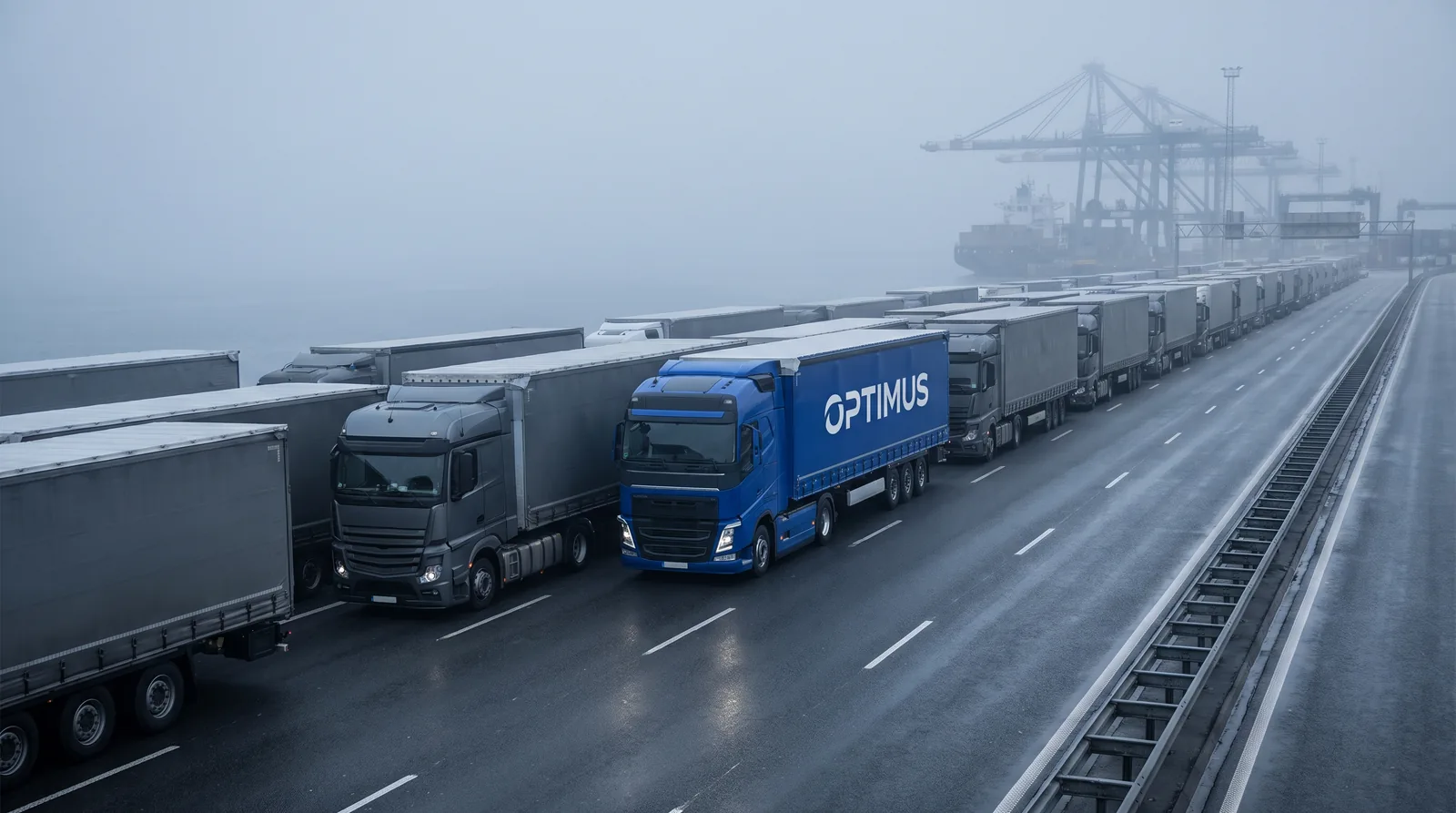
The Channel has its rituals. Strikes by French services and ferry crews come back regularly and are usually announced, storms close the crossing for hours, and queues on the British side can grow in a single afternoon. A professional carrier on this route follows ferry and tunnel operator bulletins and keeps a plan B: another sailing, another port, sometimes the tunnel instead of the ferry. How the crossing itself works is described in our article on the Dunkirk to Dover crossing. Our extra shock absorber is the warehouse in Milton Keynes: when a delivery window is lost to an obstacle, the goods wait with us, not on a trailer outside the consignee's ramp.
What should the communication look like?
- Information at once, not after the fact: the client learns about the obstacle before the delivery deadline passes.
- A written request for instructions, describing the situation and the options.
- Documented evidence of the obstacle: operator bulletins, photos, vehicle position logs. These win the later disputes.
- An agreed new plan: date, route, a warehouse buffer if needed.
With us this communication is run by the person handling your order, who sees the vehicle position and talks directly to the driver; there is no subcontracting chain for messages to crawl through. Why that matters is explained in our article on why we do not buy loads on freight exchanges.
How do you prepare contractually for disruption season?
Part of every force majeure dispute is won at contract stage, before anything happens. Three elements are worth having in the order. A demurrage rate and the moment it starts running: without it, every blockade ends in negotiation under pressure. An agreed decision channel: who on the client's side issues instructions under Articles 14 and 15 CMR and how fast, so the truck does not stand for a day waiting for an e-mail. And for commercially critical deadlines, a special interest in delivery declared on the CMR note, because without it delay compensation will not exceed the carriage charge even with full carrier liability. A well built order does not prevent strikes, but it turns chaos into a procedure with ready answers.
Sources
Your goods have to arrive despite strike season? Write via the contact form: we will plan the transport with a fallback option and a Milton Keynes buffer.