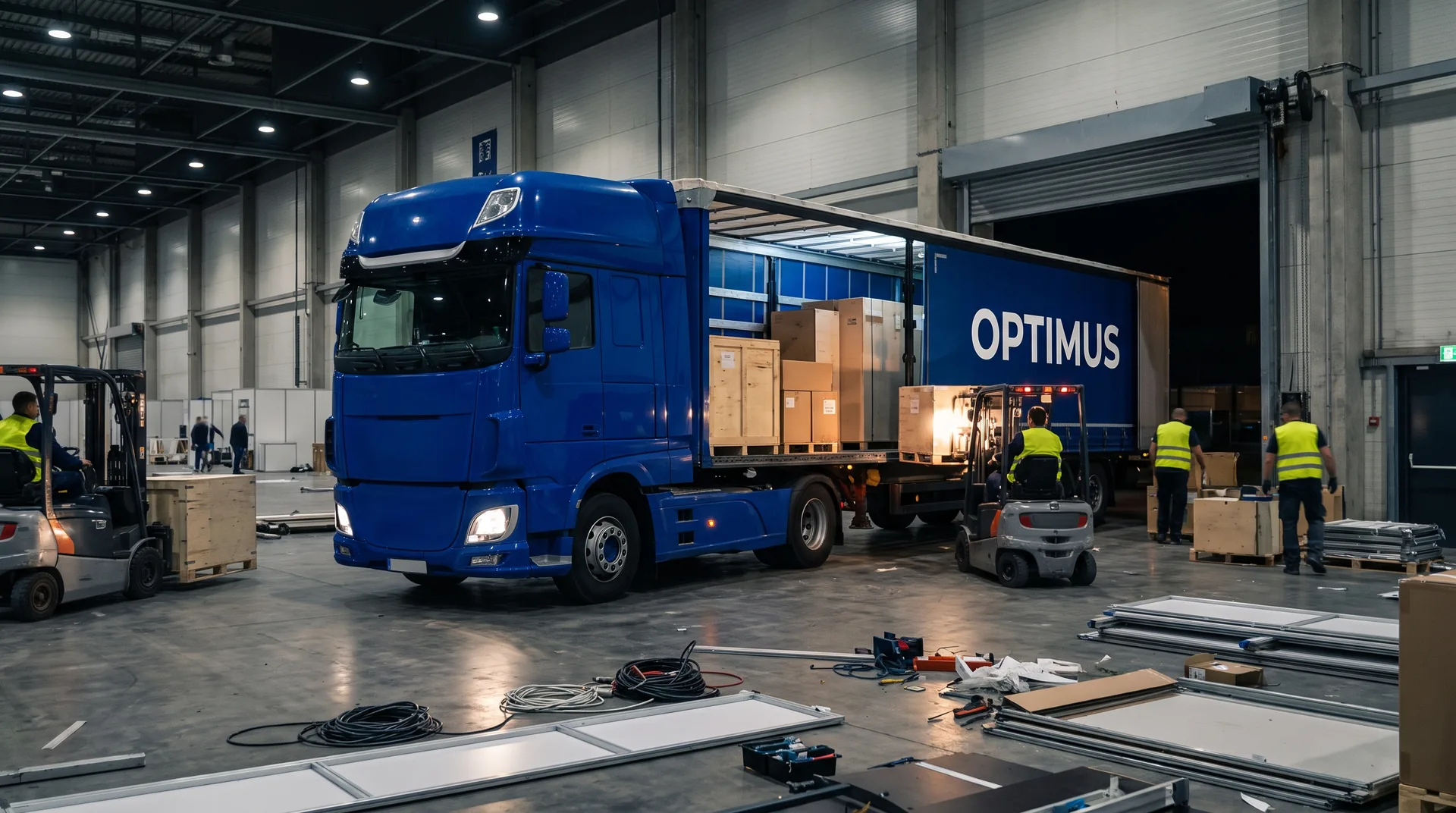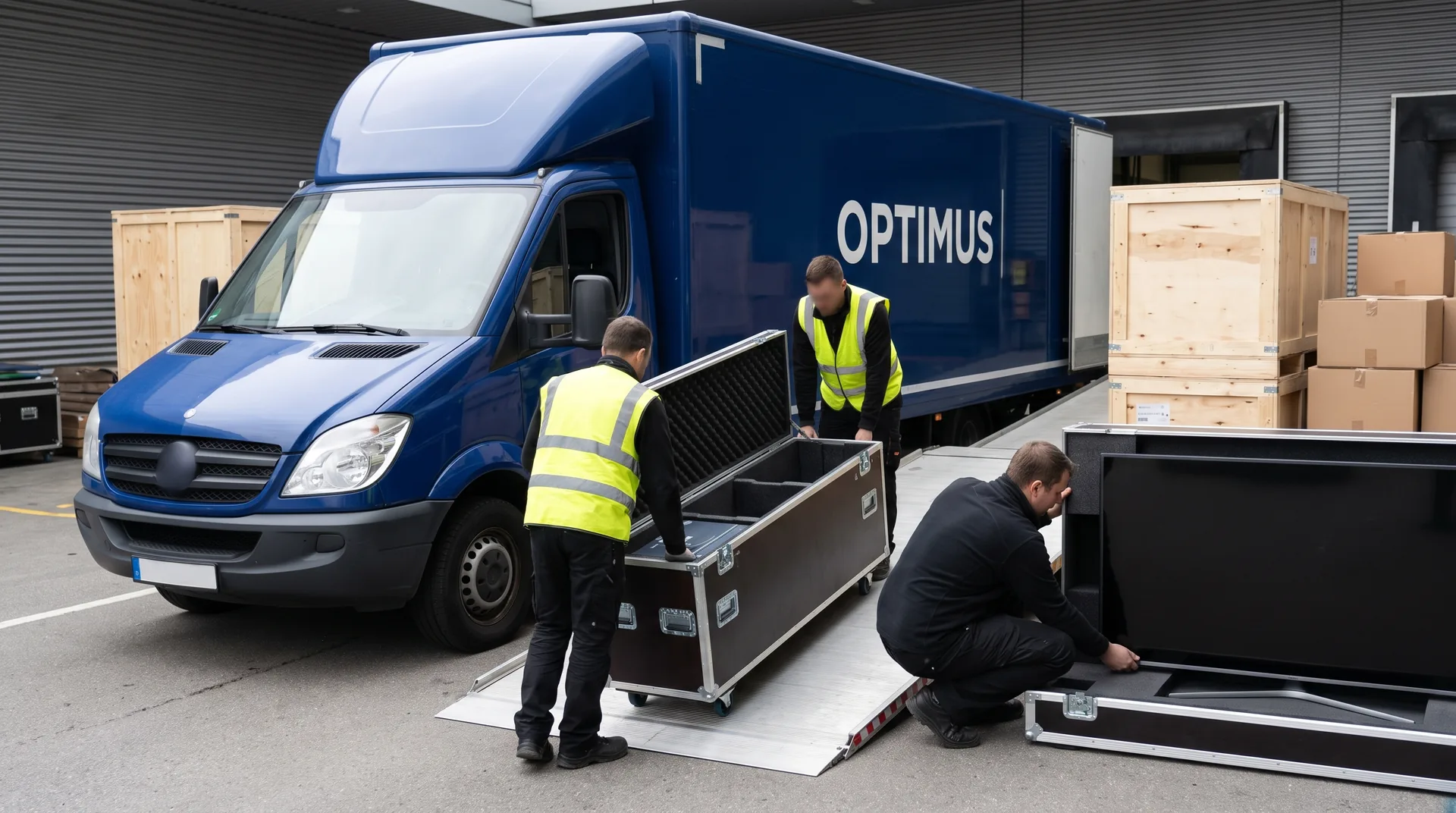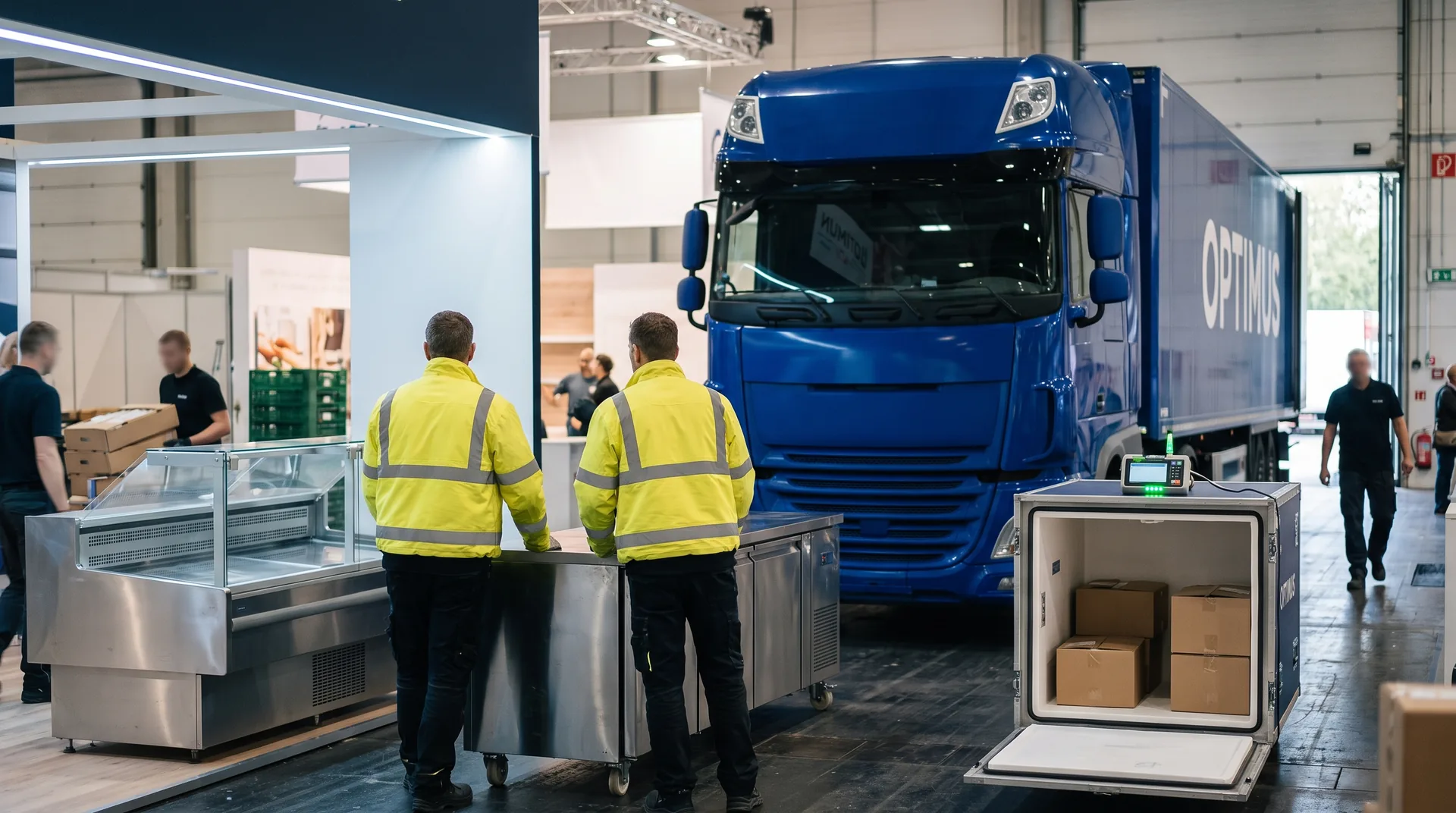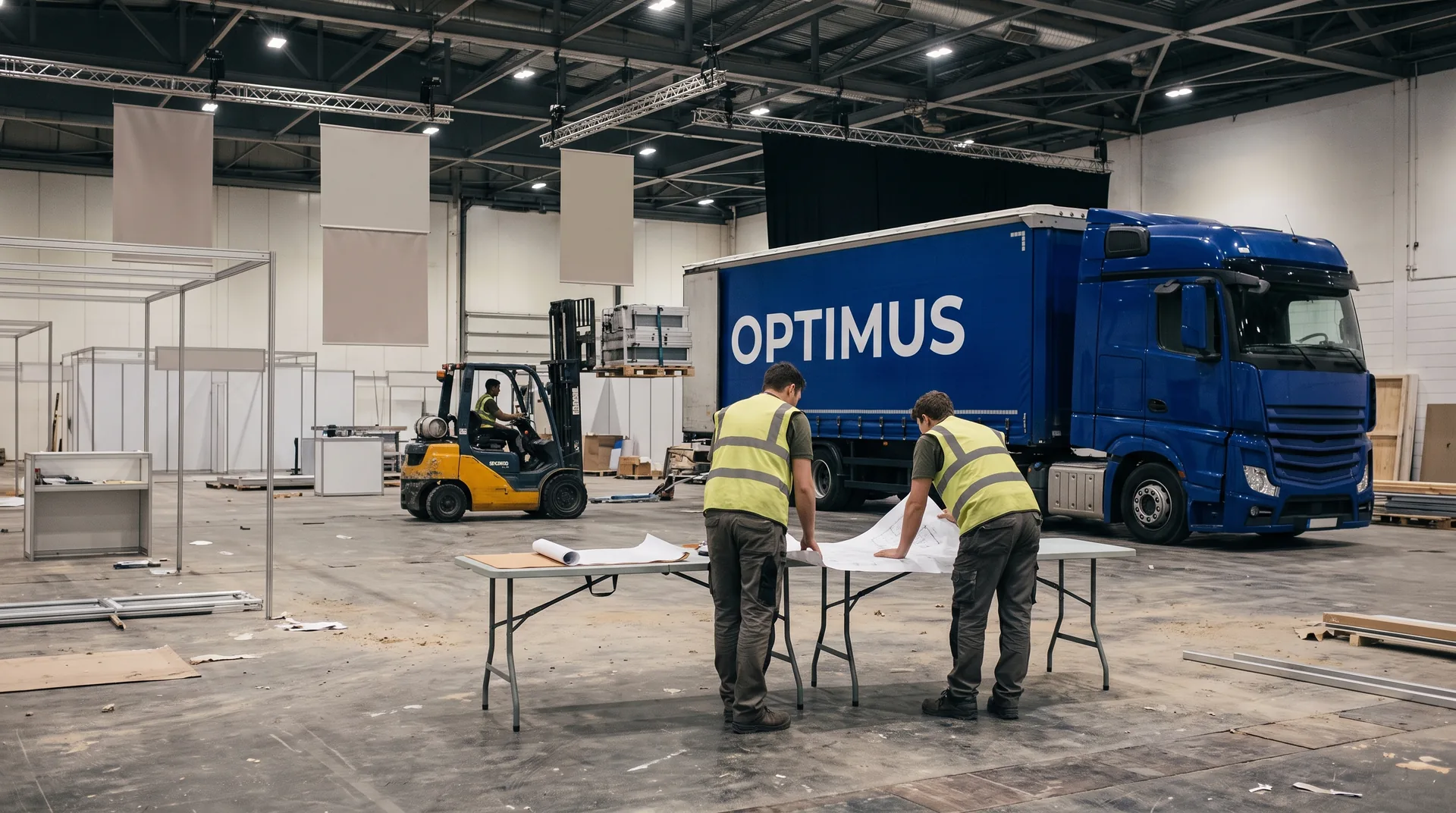
A fair delivery splits into four roles: the organiser sets windows and show rules, the venue operator answers for the site and its infrastructure, the exhibitor for their stand and property, and the carrier for the goods while they are in carriage. Most disputes arise at two joints: who sets the slot and who operates equipment inside the hall.
The organiser: sets the frame, does not do the work
The organiser sets build-up and breakdown windows, access rules, stand construction requirements, permitted stand equipment and how entry documents are issued. They also state whether in-hall freight handling is reserved for an appointed operator. What they do not answer for is your vehicle sitting in traffic or the condition of your exhibit. Changing a build-up window, where possible at all, is theirs to decide, not the carrier. We develop this in the article on the official fair forwarder versus your own carrier.
The venue operator: site, infrastructure, safety
The operator answers for the condition of the grounds, halls, doors, services and aisles, and publishes their technical parameters. That is the source of the data without which a heavy exhibit cannot be planned in: permitted floor loading, clear door dimensions, aisle width. We gather them in the article on floor loading and door clearance. The operator also sets the vehicle access rules published in the site entry regulations.
In many cases the organiser and the operator are the same entity, but not always and not for every question. Separating the roles matters where the damage is to venue infrastructure, for example a floor or a door.
The exhibitor: property, crews, decisions
The exhibitor answers for their own property on site, for the acts of their staff and subcontractors including the stand builder, and for the stand complying with organiser requirements. They decide the declared value of the freight, the scope of insurance and who receives the delivery on site. The most common mistake on this side is assuming the carrier or the organiser will look after the stand when the fitting crew runs half a day late. They will not, because they have neither the standing nor the resources.
The carrier: the goods from take-over to delivery
The carrier answers for the goods during carriage, meaning from taking them over to delivering them. On international runs the limits are set by the CMR convention with its cap calculated from gross weight; we cover it in the article on carrier liability and the 8.33 SDR limit. Outside that period, meaning while the exhibit stands on the stand, carriage cover does not apply and the gap is closed by separate insurance; we break it down in the article on insuring an exhibit at a trade fair.
Delivery is the pivotal moment here. If the carrier hands the freight to an operator at the gate, that is where custody ends and that is where a document with a signature and a photograph should be created. Without it, in a loss nobody can say whose hands the goods were in at the critical moment.
The two joints that generate most disputes
The first is the slot and entry sequence. Those are set by the organiser; the carrier can only declare the vehicle and present it at the appointed time; declaration rules are in the article on vehicle booking and site passes at Targi Kielce. When a slot is lost to a queue at the gate, liability turns on whether the vehicle was properly declared and presented on time. The answer that somebody must be at fault is rarely true; more often the window was too tight from the outset, which we cover in the article on the build-up and breakdown calendar.
The second joint is equipment and people inside the hall. If the venue crew drives the forklift and the exhibit is damaged while being moved, the claim goes to whoever performed the operation, not to the carrier who has already delivered. That is exactly why the moment of delivery must be documented.
Who to call when something goes wrong
A late vehicle: the carrier, who coordinates the arrival and reports the realistic hour. Refused site entry: the organiser, because those are their rules and their documents. Damage in transit: the carrier, with a note on the consignment note and photographs; the procedure is in the article on CMR claims and damage reports. Damage on the stand after delivery: your own insurer and whoever performed the operation. Damage to the floor or infrastructure: the venue operator, with documented condition from before work started.
How to cut the risk of a dispute before the show
Three things, all cheap. Write into the transport order where the carrier work ends: at the gate, at the hall or at the stand. Get the in-hall handling rules and time windows from the organiser in writing. Record the condition of the goods at loading and at delivery. Those three settle most disputes before they arise. Roles within the carriage chain itself are covered in the article on forwarder, carrier and broker liability, and exhibitor support in Kielce in the piece on exhibitor logistics at Targi Kielce.
Sources
Want a clear split of roles on a fair delivery? Send the show name and the scope you expect through the quotation form and we will write it into the order. See also the exhibition logistics page.