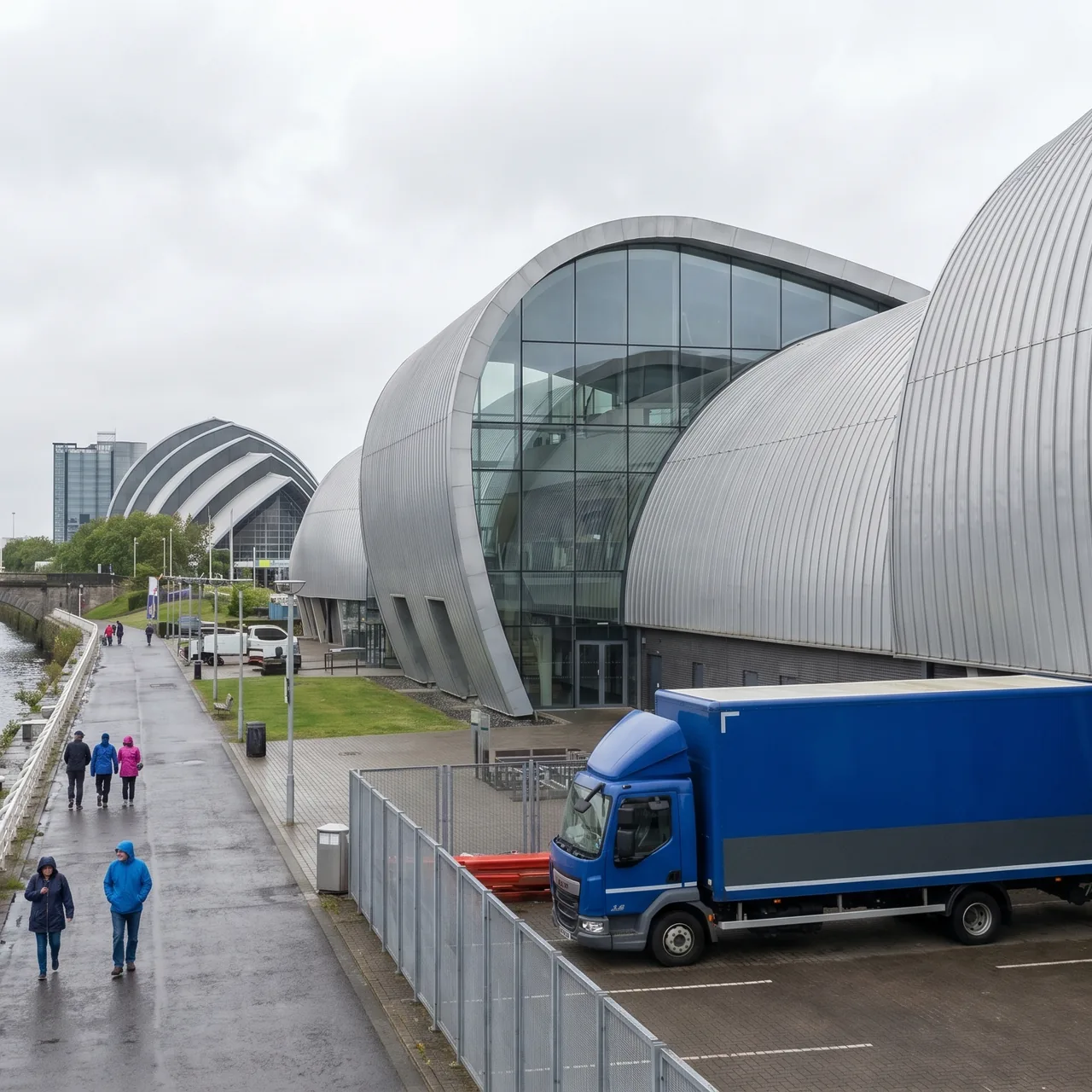
We handle the Scottish Event Campus in Glasgow exactly as we handle any English venue: full post-Brexit clearance with a GMR, and exhibits returning unchanged travelling under an ATA carnet. The difference is logistical rather than fiscal: the run north takes longer, and central Glasgow sits inside a low emission zone.
Customs: Scotland is the UK
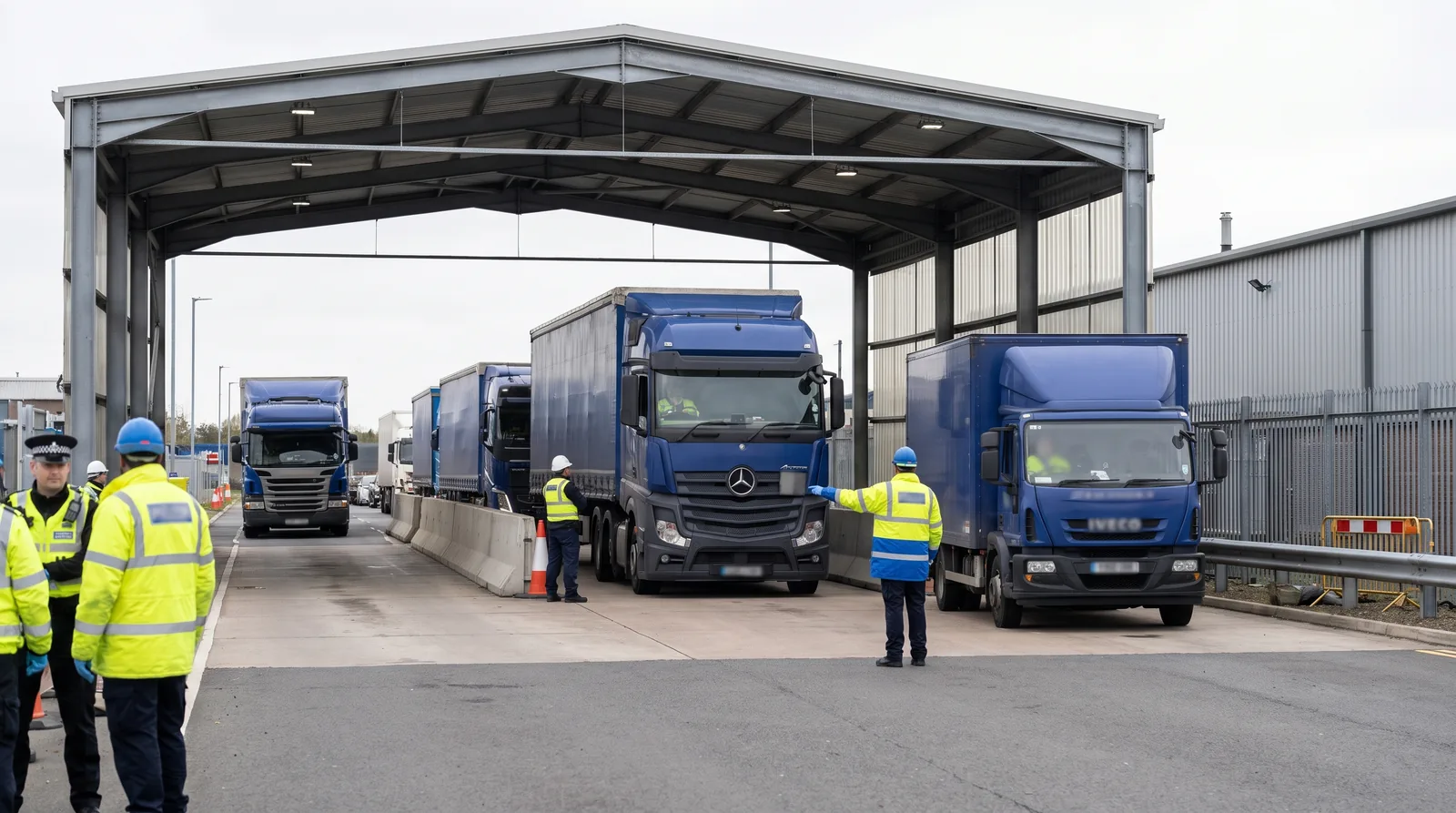
Exhibitors often ask whether a Scottish delivery needs extra formalities. It does not. The same route applies: EU export declaration, safety declaration, UK import declaration and a GMR for the driver to enter the terminal on the continental side. Clearance happens on entry to the country, not at the Scottish border, because no such customs border exists. How the system works is set out in our article on the GMR.
The low emission zone in central Glasgow
The SEC sits close to the city centre, and Glasgow operates a low emission zone covering the centre. It is not a daily charge but a technical requirement on the vehicle: a diesel engine must meet Euro 6, and entering with a non-compliant vehicle brings a penalty. We send only compliant vehicles on this lane, so the exhibitor has nothing to analyse. We write more about the zones in UK clean air zones, and about the city itself in transport to Glasgow.
How long the run takes and how we plan it
Once off the ferry the route to Glasgow runs up the motorway network through western England, so a northern delivery takes noticeably longer than one to London or Birmingham. For groupage we normally plan two to three working days from loading in Poland, and correspondingly less for a dedicated vehicle. In winter we add slack for weather, because the road climbs across the hills of southern Scotland. With a fixed build-up window we despatch a day earlier rather than trusting everything to run to plan. The wider picture is in transport to Scotland.
Build-up windows and site access
The build schedule is set by the organiser of the individual event. An appointment needs the stand number, vehicle and driver details, a description of the load and a note on handling equipment. The campus hosts everything from trade shows to concerts, so schedules can be tight and there is no room for a late arrival. We gather the appointment data before loading, so the driver travels with a complete set of information rather than phoning around at the gate.
The ATA carnet and splitting the load
Stand structure, demonstration equipment and exhibits returning complete travel under an ATA carnet, free of duty and import VAT. Promotional material handed to visitors, samples for consumption and goods sold on site fall outside that procedure and need ordinary commercial clearance. We separate the two at the packing stage, because doing it on site later is awkward. The document itself is covered in what an ATA carnet is.
The return leg and discharging the carnet
Collection from the stand is planned with the delivery, because halls empty fast once an event closes. The driver gets an item list and a contact for the dismantle, and where a carnet is involved we make sure the goods are presented for export. An undischarged carnet means a claim against the guarantor, which we cover in an undischarged ATA carnet after a UK show. How the stand structure itself travels is set out in transport of exhibition stands.
What else travels to events in Glasgow
The campus hosts not only trade shows but conferences, concerts and major sporting events, and each has its own logistics. Conferences bring light, small freight: materials, screens, conference furniture. Staged events bring high-value technical equipment needing flight cases and careful securing. Industrial shows bring machinery whose unloading has to be agreed with the venue in advance, because it needs equipment and a longer stay at the gate. We match a different vehicle and a different securing method to each, and for heavy equipment we consider oversized load transport. Exhibitors from Czechia, Slovakia, Austria and Hungary use consolidation through Poland, which we describe in exhibits from central Europe to UK fairs.
Sources
- Scottish Event Campus: venue information
- Low Emission Zones Scotland: how the zones work
- GOV.UK: Goods Movement Reference (GMR)
Exhibiting at the SEC in Glasgow? Send the stand number, build dates and exhibit list through our quote form and we will arrange delivery, paperwork and the return leg under one job. The full offer is on our exhibition logistics page.