AV equipment for a stand is high-value, low-weight freight, sensitive to vibration, moisture and temperature swings. Three things decide whether it arrives working: proper transport cases instead of factory cartons, acclimatisation after a cold run, and separate insurance, because the standard liability limit calculated from weight means very little for this cargo.
What actually destroys equipment in transit
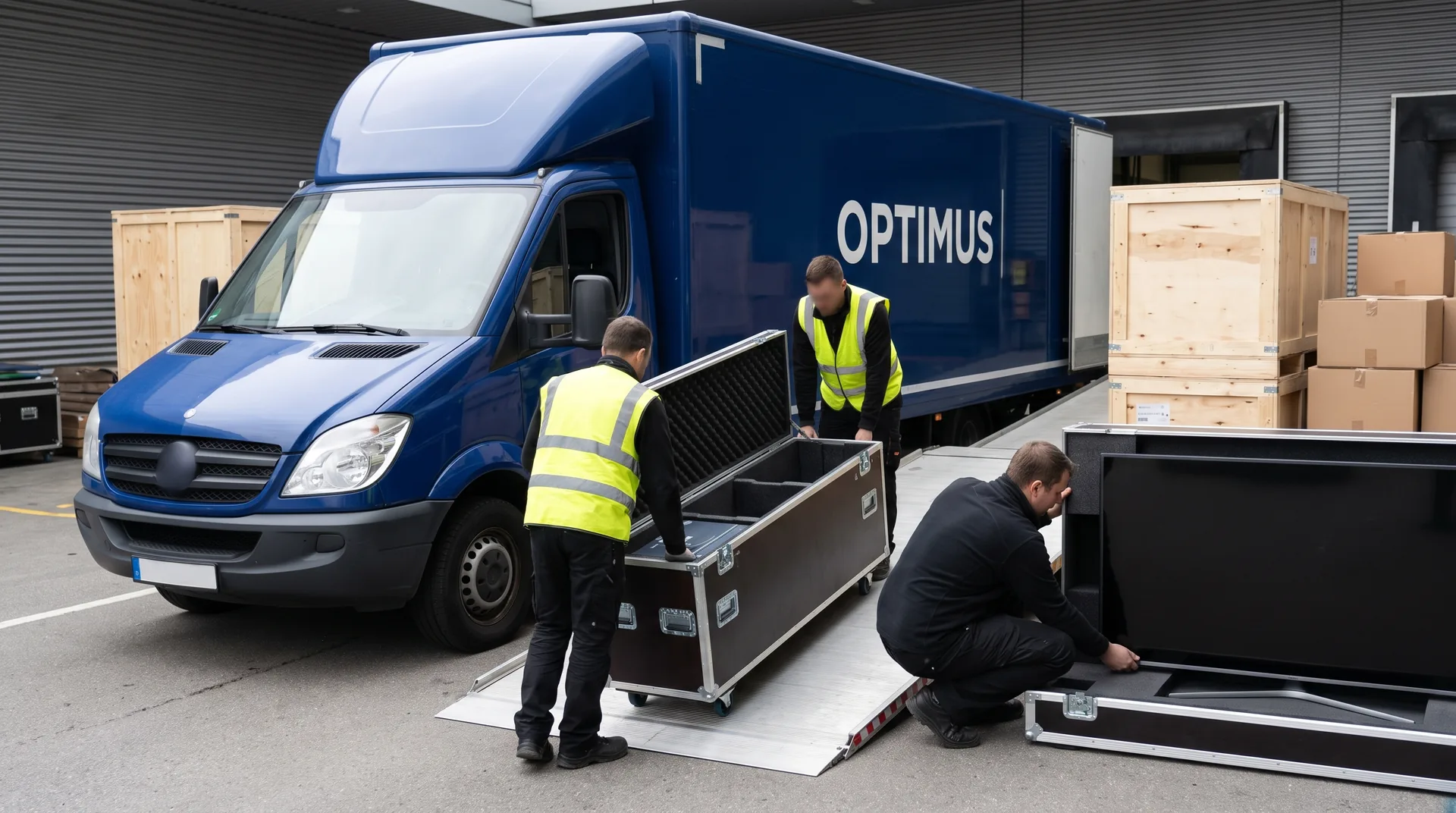
Vibration, impacts during handling and pressure from other consignments. A screen laid flat on a pallet under stretch film will survive one journey, but in a consolidated load something heavier will end up on top of it. So large-format panels travel upright, in a frame or a case, not flat. Equipment with moving parts is locked for transit where the manufacturer provides such a lock.
The second risk is less obvious. Equipment carried in the cold and then brought into a heated hall condenses moisture inside the housing. Switched on immediately after being carried in, it can fail without any impact at all. The answer is acclimatisation before connection, counted in hours where the temperature difference is large. That is one reason AV kit is better delivered early than in the last hour of build-up. We cover moisture and electronics more widely in electronics and appliances transport to the UK.
Value against the liability limit
In international carriage the carrier's compensation is calculated from the gross weight of the missing or damaged goods, up to the limit set by the CMR Convention. On a screen weighing a dozen or so kilograms but worth many times more, that limit covers a fraction of the loss. This is not a fault of any particular carrier, it is how the rule is built. We explain the mechanism in carrier liability and the 8.33 SDR limit, and the cover options in carrier liability versus cargo insurance.
The practical conclusion: on high-value demonstration equipment, insurance that also covers the stay on the stand costs less than the risk. The scope and the moment transport cover ends are set out in exhibit insurance at fairs.
Batteries and power: two separate matters
Equipment containing lithium cells is subject to separate road transport requirements, depending on the cell type, its rating and whether it travels inside the device or loose. This has to be declared with the order rather than discovered at loading, because some configurations require marking and documentation. The rules are collected in lithium battery transport to the UK.
Power on the stand is a different matter and belongs to the exhibitor. The British supply uses a different socket standard from the Polish one, and the stand connection is ordered from the organiser in advance, rated for the equipment. A carrier does not order electricity and does not answer for a device having nowhere to plug in. A similar division of roles applies to a catering display, where the carrier answers for transport conditions and the temperature record rather than for the tasting rules on the stand; we set it out in catering and chilled displays at trade fairs.
The customs side of demonstration equipment
AV kit that returns as a complete set fits the logic of temporary admission: an ATA carnet or a declaration procedure with security. The condition is an itemised list with serial numbers, because that is what customs uses to identify the goods on return. A serial number written down wrongly can block discharge of the document. The consequences are described in an undischarged ATA carnet after a UK fair.
Watch for a frequent scenario: equipment sold or left with a British partner after the show cannot be discharged as a return and needs a separate customs route. We develop that in the ATA carnet and goods sold at the fair.
Theft and the moment of greatest risk
AV kit usually disappears not in transit but on the stand, and at two moments: in the gap between the end of build-up and the opening, and in the first hours of breakdown when the hall is full of unfamiliar crews. Small, expensive items, meaning microphones, laptops, controllers and adapters, are taken off the stand overnight or kept in a lockable store. That is not the carrier's job, but it belongs in the plan, because a loss at that moment falls outside transport cover.
How to prepare the kit for departure
Write a list with serial numbers and replacement values. Pack in cases with internal foam rather than factory cartons. Lock moving parts as the manufacturer instructs. Number the cases to match the list, because the same list will be used at breakdown to check the set is complete. Declare the batteries. And plan delivery with time to spare for acclimatisation before the first power-up.
Sources
- GOV.UK: waste electrical and electronic equipment rules
- GOV.UK: importing goods temporarily
- HSE: event safety, getting started
Taking demonstration equipment to a fair? Send the list with serial numbers and values through the quotation form and we will propose packing, the customs route and a delivery date with room for acclimatisation. The scope is on our exhibition logistics page.