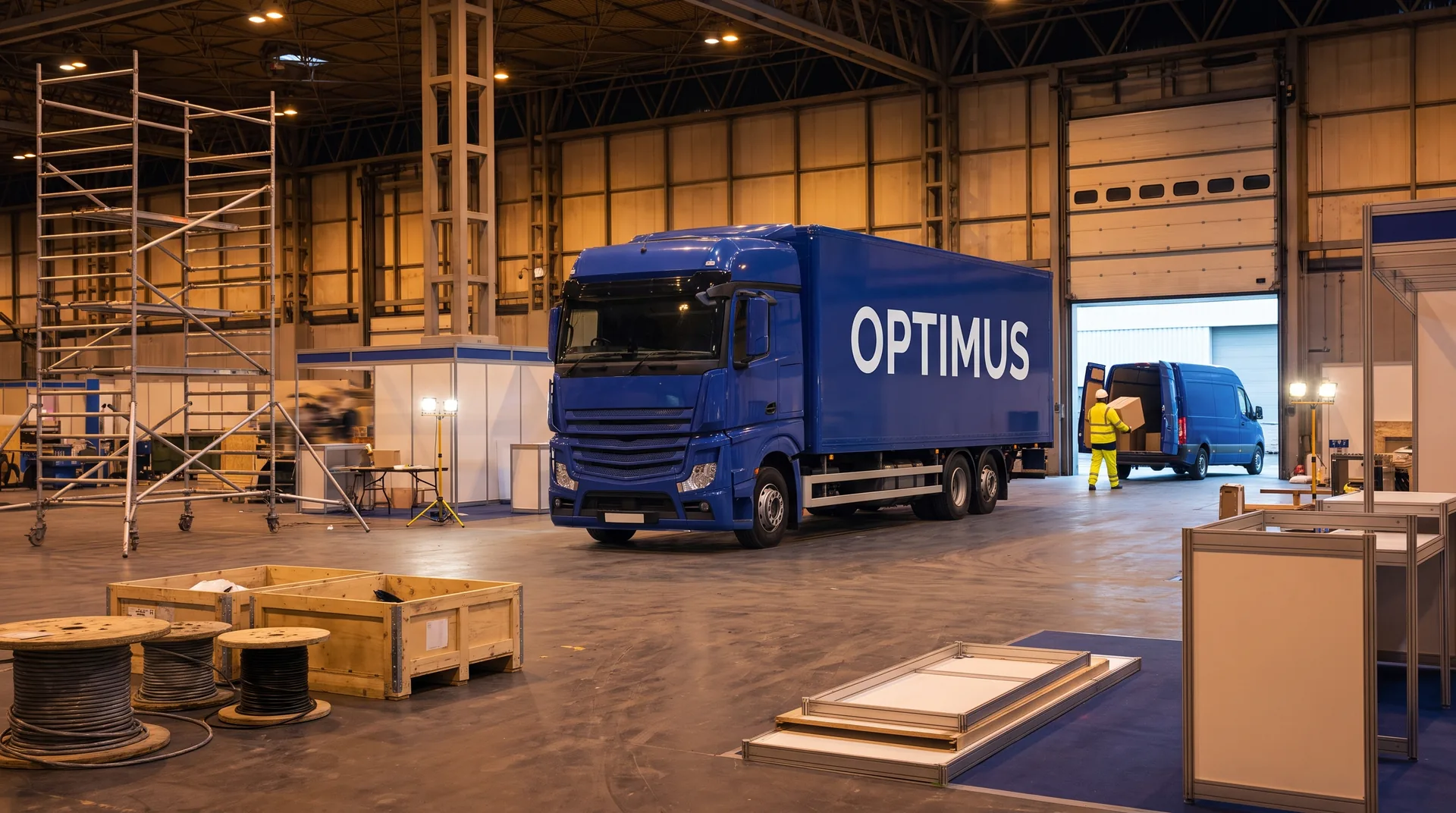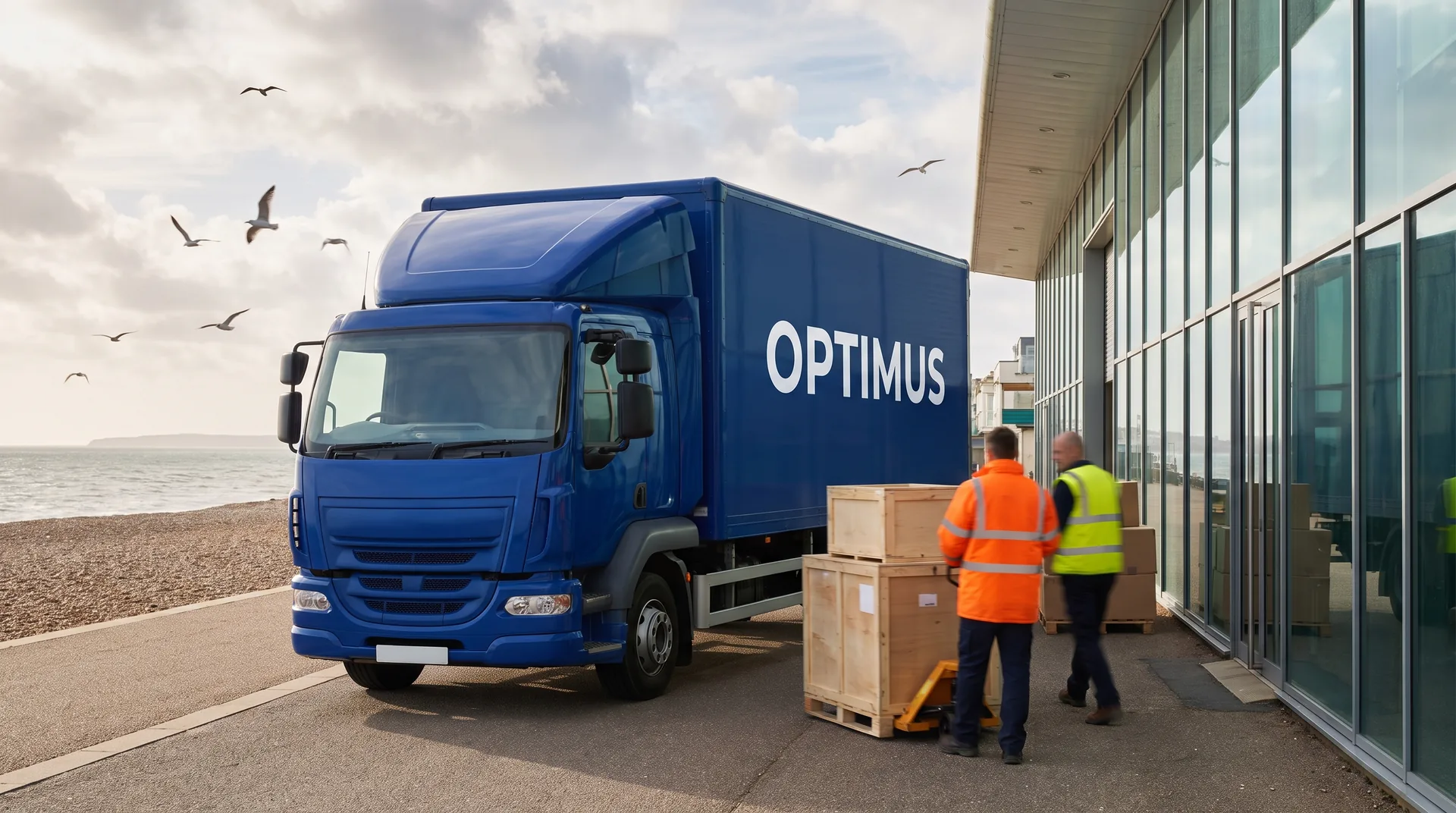
The Brighton Centre stands on Kings Road in Brighton, postcode BN1 2GR, directly on the seafront. It is run by Brighton and Hove City Council. The venue publishes 27 spaces and up to 5,000 sqm of exhibition space, but its main hall, Auditorium 1 at 1,941 sqm, sits on the first floor. The venue has no car park of its own and is open only when an event is taking place.
Where it sits and how you get there
The venue publishes two approaches. From London and the north you leave the M25 at junction 7, take the M23 and then the A23 straight to the seafront. From east or west you take the A27 and leave onto the A23 following the Brighton signs, then the A23 and London Road down to the promenade. Both routes end the same way: in the heart of a seaside city, between the buildings and the beach.
For a carrier the important part is what the venue says about parking: there is none of its own, and larger vehicles are directed to the Madeira Drive coach park. The venue also states that it has two entrances, the front one on Kings Road and a rear one on Russell Road, opposite the Churchill Square car park. It publishes no named goods entrance and no dock, and refers enquiries directly to its conference team.
What the venue does not publish, and why that matters
The Brighton Centre gives no door heights, no floor loading, no mention of a goods lift and no description of how a load reaches the first floor. That is not an oversight: council-run conference venues usually set delivery arrangements event by event, because they differ between a concert, a conference and an exhibition.
The consequence for an exhibitor is practical. At this venue you cannot plan transport from the website and have to start from questions to the organiser. Until you know how the load gets upstairs, you can settle neither the maximum item dimension nor the vehicle type. It is the opposite of an agricultural ground, where the door dimensions are published, as at the Kent Event Centre at Detling. The general division of roles between venue, organiser and carrier is set out in the article on responsibilities at a trade fair.
Delivering in a seaside city
The Brighton Centre shares the profile of other venues embedded in city fabric: a narrow approach, no room to wait and unloading from the road or a lay-by rather than from a yard. That means the unloading window is short and allocated, and once unloaded the vehicle has to clear the space for the next one. We describe the same mechanism at the Bournemouth International Centre, the other large conference venue on the south coast.
One feature is easy to forget when planning from Poland: the venue is open only on event days. There is no reception to take a consignment the day before and no holding area waiting for an exhibitor. A load arriving outside the build-up window has nowhere to stand. So at venues like this we reach for a buffer on the British side more often than elsewhere: the load waits in a warehouse and only moves for the allocated hour, which we describe in the article on a buffer warehouse beside a fairground.
Zones and restrictions
Brighton does not appear on the British list of charging clean air zones, which covers Bath, Birmingham, Bradford, Bristol, Portsmouth, Sheffield and Tyneside. The London LEZ and ULEZ apply across Greater London and do not reach Brighton; the route from the M25 by the M23 and A23 does not enter that zone. The city does operate its own restrictions in the central streets, whose extent the venue does not publish, so the permitted hour and place for unloading are confirmed by the organiser together with the venue management. We cover the British zones more broadly in the article on UK clean air zones.
What to settle before arrival
- The room name and its floor, because Auditorium 1 is on the first floor and the foyer is at ground level.
- The route by which the load reaches the upper floor and its dimensional limits.
- Which entrance takes deliveries: Kings Road or Russell Road.
- The allocated hour and the place the vehicle stands during unloading.
- Where the vehicle goes afterwards, given that the venue has no car park.
- Whether the load can be received early or has to be buffered off site.
What we do at our end
We collect stands and exhibits in Poland, and from exhibitors in Czechia, Slovakia, Austria and Hungary we gather the load through our hub. At the Kielce base, about 4 km from the fairground and open around the clock, we assemble a stand into one consignment before departure. A groupage vehicle waits for the next scheduled line departure. Clearances run in cooperation with the customs agencies we work with regularly on both sides. At city-centre venues we almost always use a cross-dock at our warehouse in Milton Keynes, because it lets the final leg run on a smaller vehicle matched to the street rather than the one that came from Poland. We commit to an hour at the gate rather than an hour of unloading.
Groupage or a dedicated vehicle
At the Brighton Centre the threshold moves towards groupage, and the reason is the city rather than the load. Even a large conference stand is easier to deliver in two smaller vehicles within allocated windows than as one artic with nowhere to stand. The general rule of about twelve pallets, roughly a third of a trailer, applies at venues with a marshalling yard; here access decides. More in the article on choosing between FTL and groupage.
Sources
- Brighton Centre: getting here, entrances and parking
- Brighton Centre: the spaces set out floor by floor
- Brighton Centre: contact for the conference team
- GOV.UK: list of British charging clean air zones
Exhibiting in Brighton? Send the room name, the floor and the dimensions of the largest item through the quotation form and we will settle the route in with the organiser. See also the exhibition logistics page.