Cheffins runs a monthly sale of agricultural and construction machinery from its own saleground at Sutton near Ely in Cambridgeshire. The sale is historically called the Cambridge Machinery Sale, but it does not take place in Cambridge; it is about thirty kilometres to the north. The firm also runs separate vintage machinery auctions and dispersal sales held directly on farms.
The saleground is at Sutton, not Cambridge
Cheffins describes the Sutton site as a purpose-built saleground and states that it is the world’s largest monthly machinery and plant sale, and for the agricultural sales speaks of Europe’s largest agricultural auction with up to three thousand lots. Those are the firm’s own descriptions, not our measurement. What matters to a driver is different: Sutton sits on the flat land of the Fens, east of the A142, in an area of narrow local roads flanked by drainage ditches. A low loader will get there, but the approach route and a turning point are agreed in advance, not worked out by the driver on arrival.
A farm dispersal is a different job
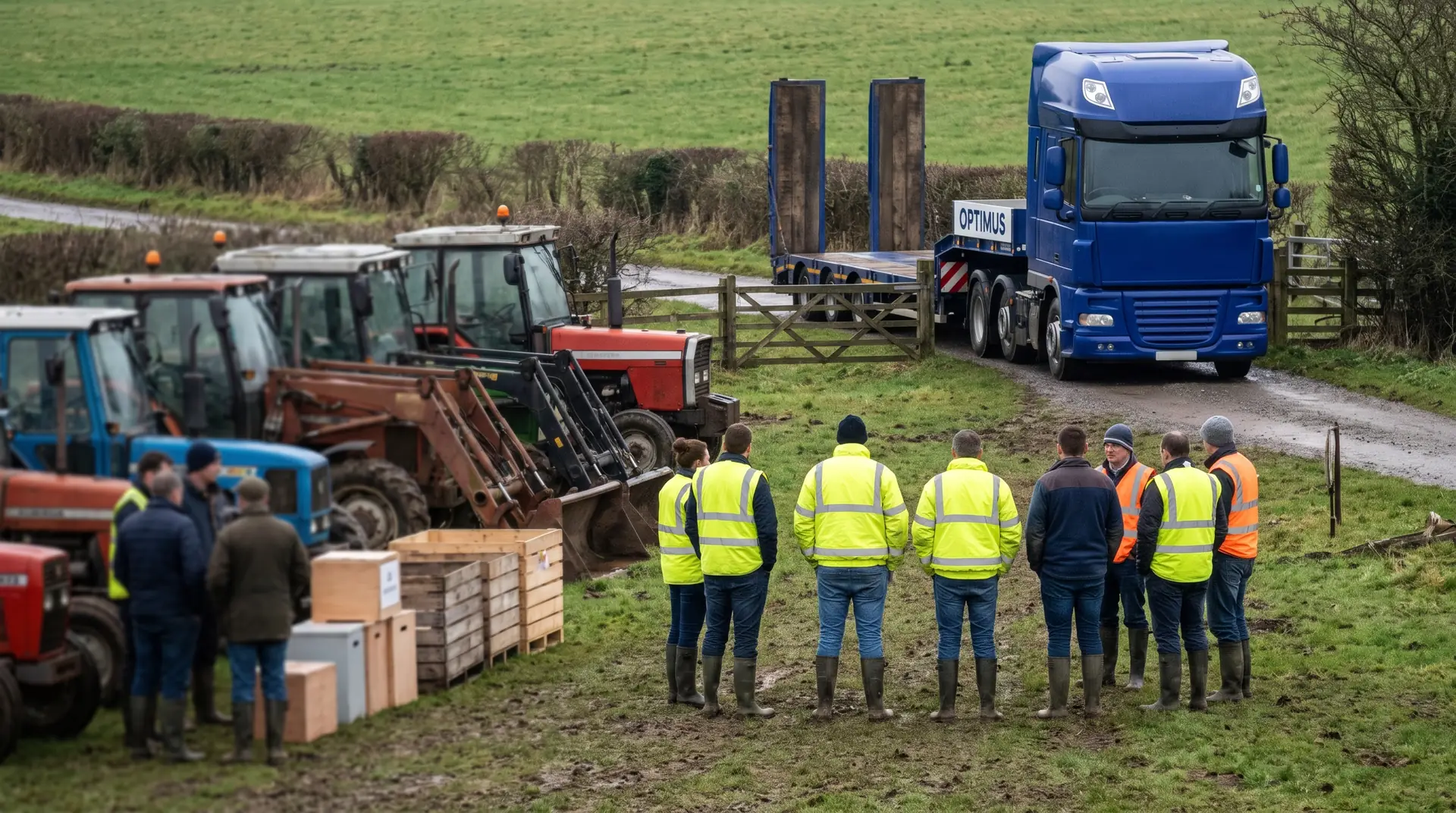
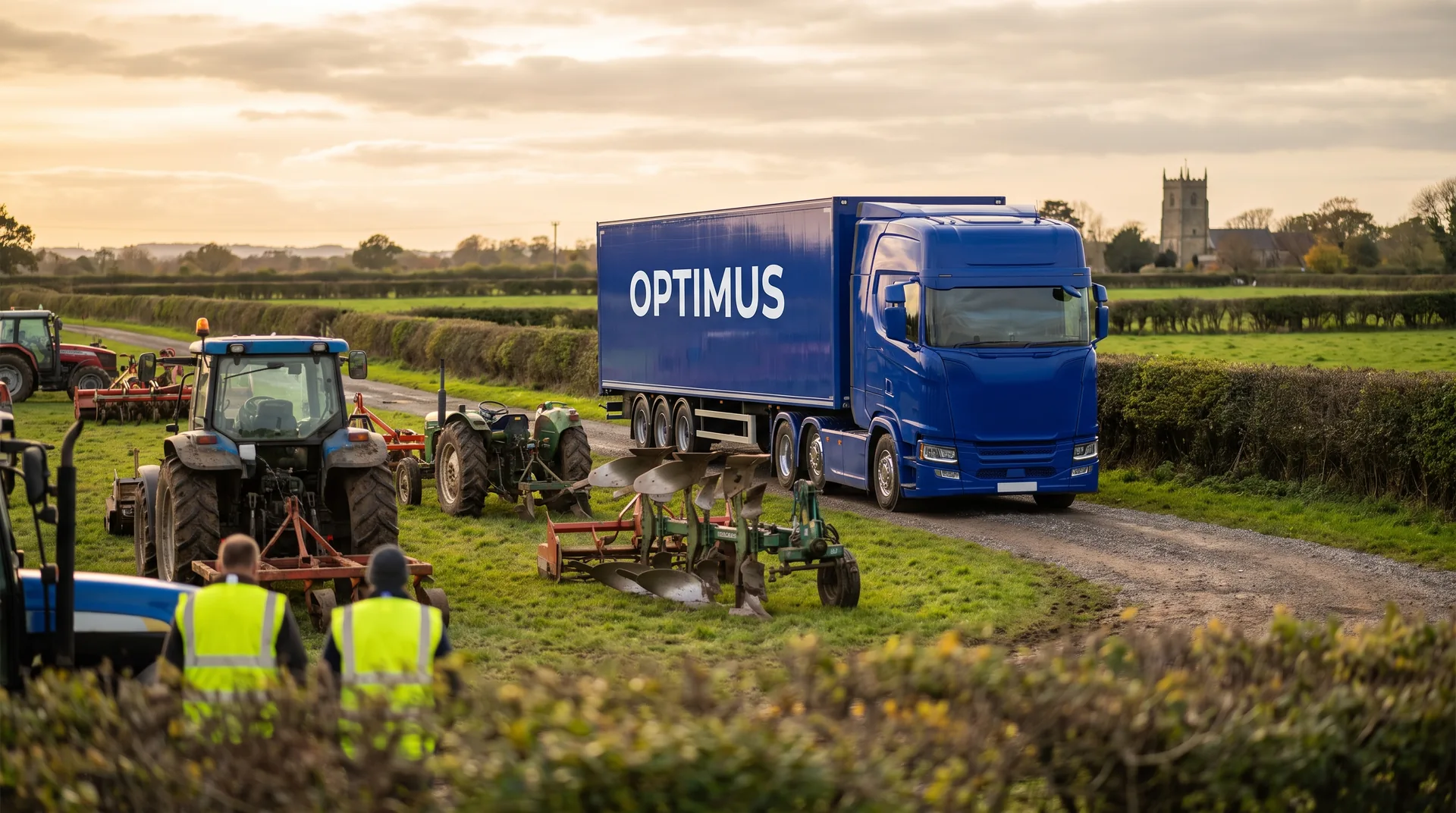
Alongside the saleground, Cheffins runs dispersal sales on farms when a business winds up. The whole fleet then goes under the hammer where it stands. From a collection point of view almost everything changes: the approach is down a farm track, there is no hard standing, no permanent loading crew, and once the sale is over the site is often locked up. So for farm dispersals we ask three things before confirming a date: is there firm ground for an articulated vehicle, who has a loader of sufficient capacity, and until when will anybody be on site to sign the release.
Farm machinery means different clearance
A used machine that has worked in agriculture or forestry and carries a tariff code on the high plant health risk list is subject to a phytosanitary border inspection on entry to the European Union. It needs an original phytosanitary certificate issued in the country of dispatch and must be free from soil and plant debris. The importer registers in the official register of professional operators at the regional plant protection and seed inspectorate and opens a TRACES NT account, and the CHED-PP notification is lodged at least twenty-four hours before arrival at the first point of entry into the Union. The inspection takes place at that first point of entry even if the machine is destined for another member state. New, unused agricultural and forestry machinery is not subject to this inspection. We cover it in more depth under farm machinery auctions in the UK.
Washing the machine is not cosmetic
The requirement to be free of soil and plant debris is a legal requirement, not a matter of appearance. A combine or tractor straight off the field, with earth in the undercarriage and straw in the radiator, is a consignment with a real problem at the border. Washing is arranged on the British side before loading, because once the machine is on a trailer it becomes far harder. The same cleanliness logic applies to timber components, which we cover in our article on ISPM 15.
What we do not quote
The buyer’s premium, payment deadlines, the removal window, storage charges and opening hours all depend on the individual sale. The terms of each auction are published separately and that is what to read before registering. From those terms we need one piece of information to plan a vehicle: by when the machine has to be off the saleground.
East Anglia has one more centre selling machinery straight off farms, with conditions that put export preparation squarely on the buyer: we cover it in our article on Clarke & Simpson at Campsea Ashe.
Sources
- Cheffins: machinery sales at the Sutton saleground near Ely
- Cheffins: calendar of machinery auctions and dispersal sales
- Polish plant health inspectorate: phytosanitary conditions for importing used agricultural and forestry machinery into the EU
Buying at Sutton or at a farm dispersal? Send the site address and the removal date through our contact form and we will price transport and check whether the machine needs a phytosanitary certificate. See also importing used machinery from the UK.