A load counts as contaminated when it has been in contact with a foreign substance, or traces of one, in a way that prevents the receiver accepting it as it stands. Assessment runs layer by layer, because contamination rarely covers a pallet evenly, and the decision is taken separately for each layer.
Four types of contamination and four different outcomes
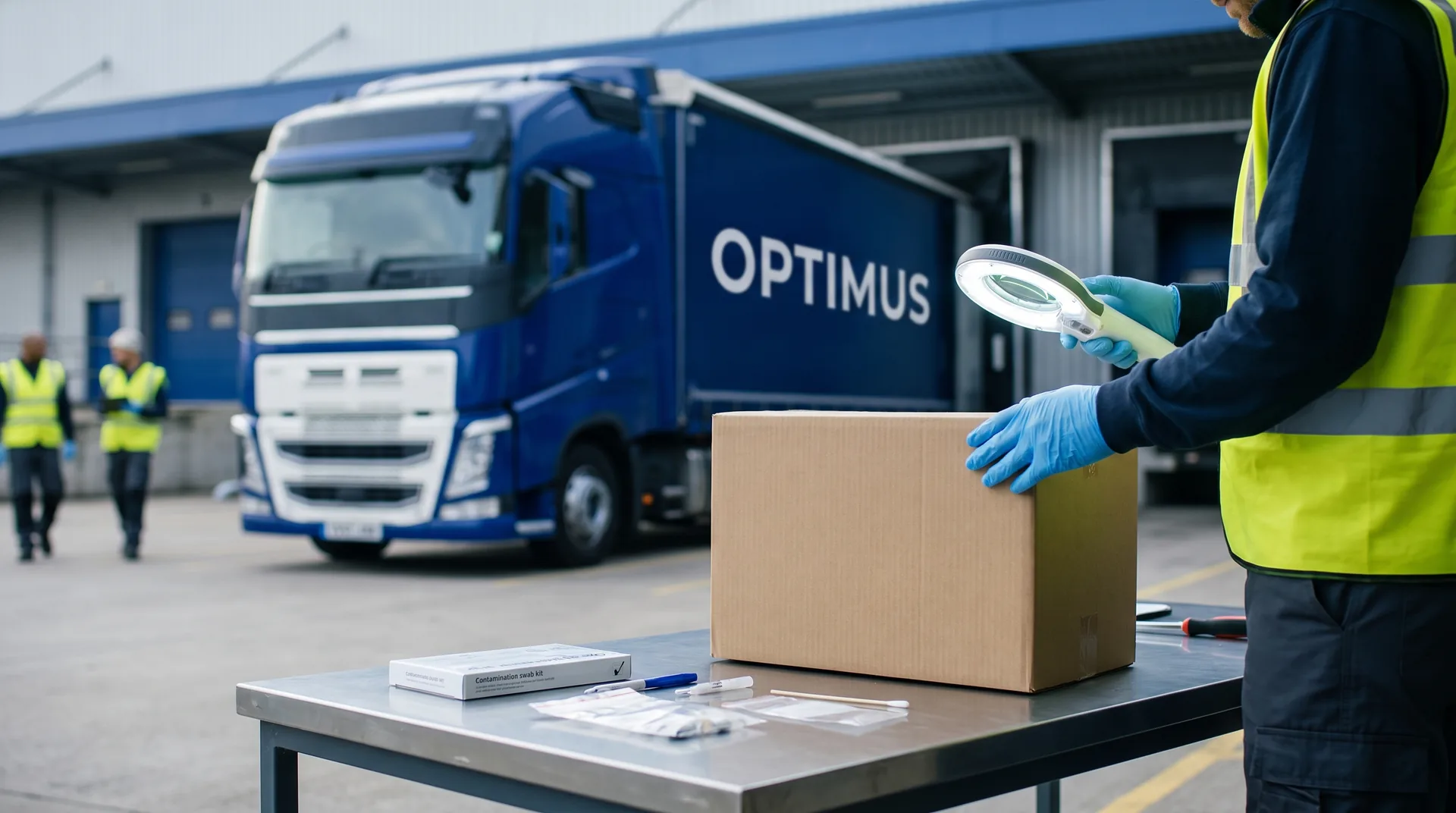
First: spillage from a neighbouring pallet in the same trailer, for example a burst liquid container. Second: contact with a foreign substance during handling or storage, from grease to a chemical agent. Third: signs of pest activity, including droppings and packaging damage. Fourth: contamination of the outer packaging layer without contact with the product, such as dust, mud or residue from a flooded floor. Each leads in a different direction, so the first task of the inspection is establishing which one is in play.
When contamination of the carton disqualifies the product inside
When the substance could pass through the packaging, when the outer is also the primary pack, or when the sales channel does not allow the outer to be replaced. In the remaining cases the product can usually be saved by removing the outer layer, transferring to a clean carrier and re-marking. The line is drawn by the goods owner, as with any other segregation, described in load filtering. The warehouse does not set that line, because it does not know the receiver requirements.
Why assessment goes layer by layer
Because that is how the physics behaves. Spilled liquid runs down and collects at the base, so lower layers suffer most while upper ones may be untouched. Contamination from above, such as a trailer leak, gives the opposite picture. Dust and mud stay on the outer layer on every side but do not reach the middle of the pallet. Judging a whole pallet with one verdict therefore means either discarding good goods or letting through goods that should not pass. We strip layers and classify them separately.
What about goods next to it on the same pallet
We treat them as suspect until checked, but we do not reject them automatically. We check three things: whether the substance had a physical path, whether the neighbouring packaging shows contact marks, and whether the nature of the contamination allows transfer at all. With odours and volatile substances the reach often exceeds the visible traces, so the suspect circle widens. The result is always recorded numerically, so the owner can see how many units were rejected for contact and how many out of caution.
When UV decontamination is used
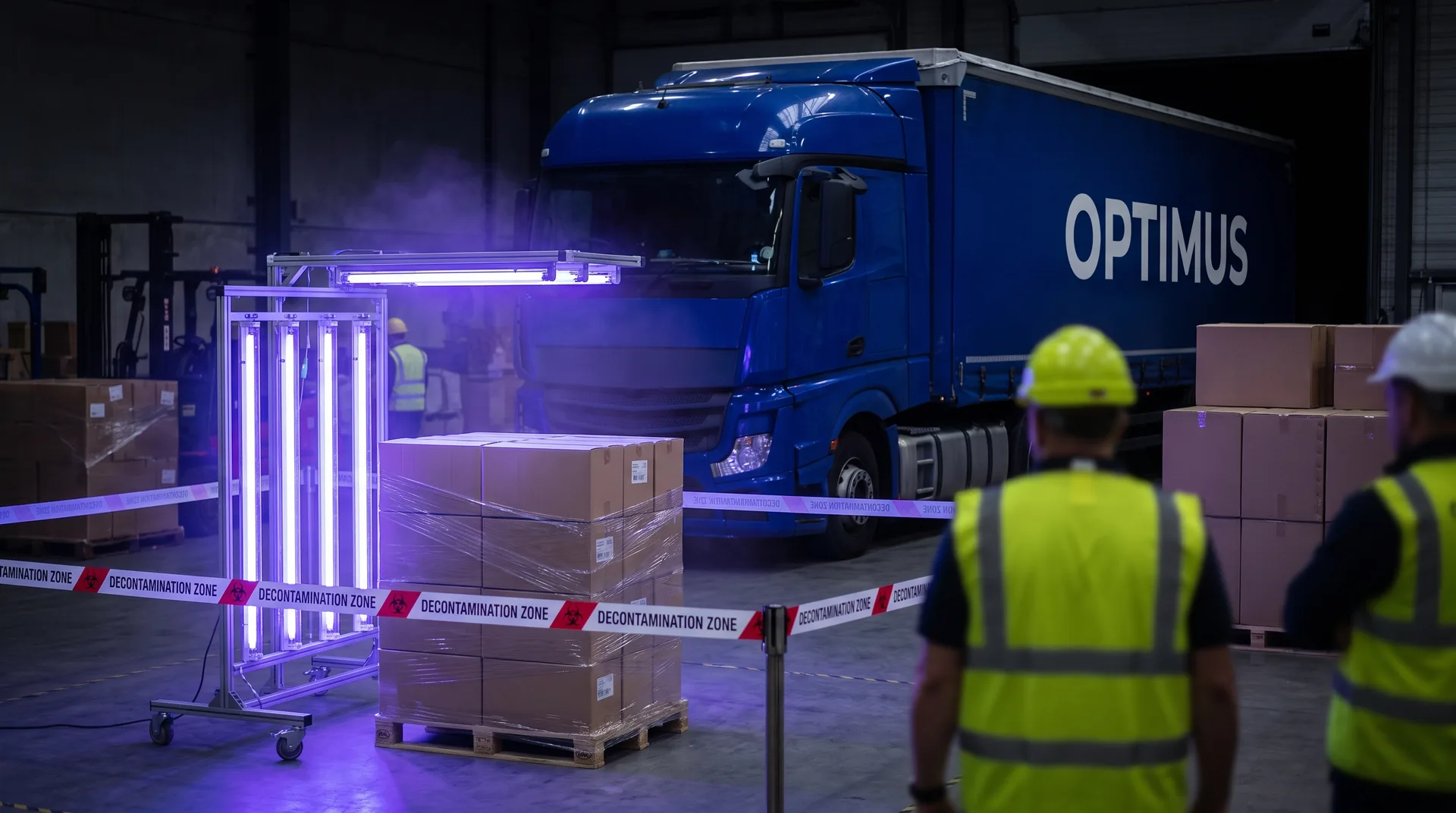
When the problem concerns the surface of the packaging rather than its structure, and when the goods owner decides such treatment is accepted in their channel. The method and its limits are described in UV inspection and decontamination. It is not a universal answer: it does not remove mechanical soiling, does not repair a soaked carton and does not replace a disposal decision where contamination reached the product. We treat it as one tool among several, not as a standard stage.
Contamination and water ingress are different cases
Water is a special case, because it keeps working after the event and changes the state of the goods hour by hour, even when it carries no foreign substance. The wet and toppled scenario is covered separately in wet or toppled cargo recovery. Chemical contamination is often stable and allows a calmer review, but it demands more care with the substance itself and with the waste left after segregation.
Where inspection fits into the wider process
It is part of the same route as any other damage: hold, inspection, documentation, criteria, segregation, decision. The whole sequence is in damaged goods in the warehouse. What is specific to contamination is that the inspection stage runs longer and requires the type of contamination to be settled before any sensible segregation criteria can be written at all.
Have a batch suspected of contamination? Describe it through the quote form or see the cargo inspection page. The facilities in England are on the Milton Keynes warehouse page.