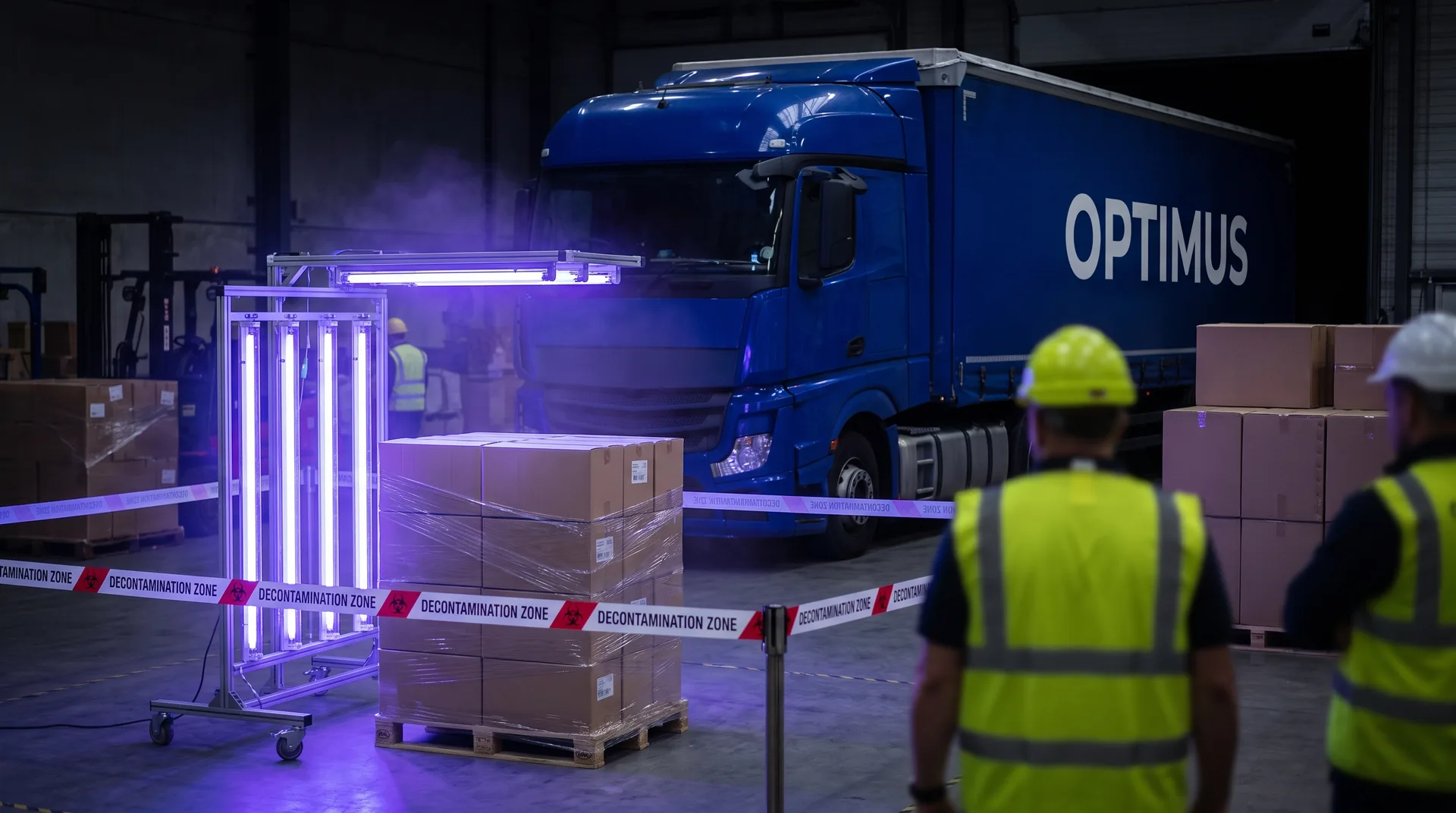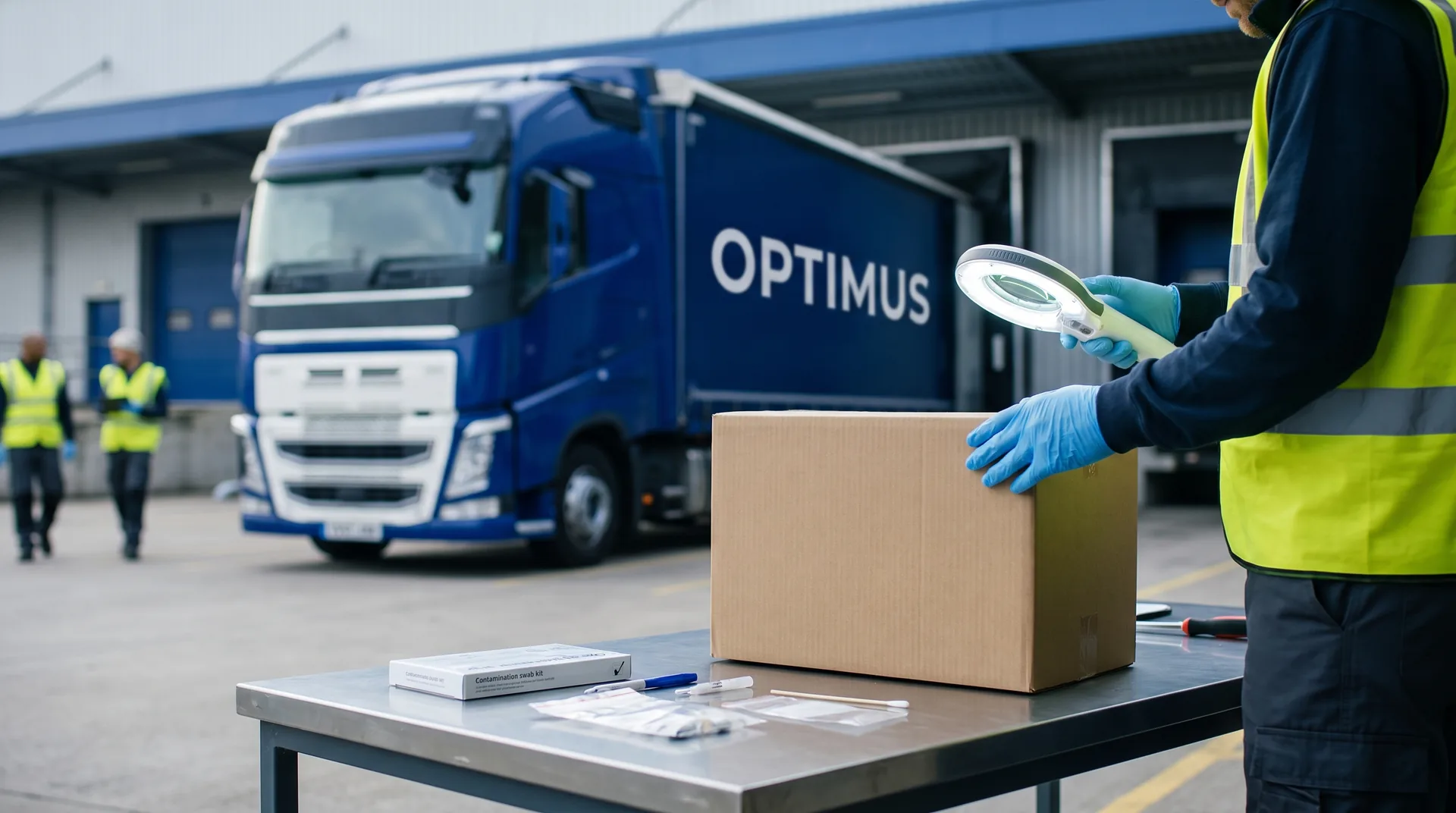
The route has six steps in a fixed order: reporting the damage, holding the goods, inspection with photographic documentation, criteria supplied by the owner, item-by-item filtering, and a decision on repackaging, resale, return or disposal. Changing the order usually costs either the goods or the claim.
Step 1: who finds the damage and when
Most often we do, at receipt, and that is the best moment because the vehicle is still there. The inspection procedure is described in pallet receipt and release. The second typical moment is picking before release, when damage surfaces after months of storage. The third is an external report, for instance from a receiver who refused a delivery. In every case the same rule applies: we notify the goods owner the same day, even when the scale is not yet known.
Step 2: the hold, the cheapest hour in the whole process
A hold costs a few minutes of work and protects everything that follows. Pallets go to a separate area, receive a status blocking release and are not touched until a decision is made. The status mechanics are described in quarantine, hold and release. The most common mistake at this stage is tidying a pallet out of good intentions: somebody gathers up spilled cartons, straightens the film, and an hour later nobody can reconstruct the state as found. Behind it sits the question of cover during that period, because goods received into a warehouse are no longer in carriage; we take it apart in insuring goods in storage rather than in transit.
Step 3: inspection and photographic documentation
Photographs come before any intervention and follow a fixed pattern: the whole pallet from two sides, the label, the damaged area in close-up, and with water ingress also the floor and neighbouring units. A written description follows: what, where, how much, to what extent. The requirements for such documentation are set out in the inspection report for the insurer. Practical rule: take more photographs than seem necessary, because there will be no second chance.
Step 4: criteria from the goods owner
This is where the process most often stalls, and not because of the warehouse. Without criteria there is no way to separate saleable units from write-offs in a manner that later survives a conversation with a receiver and an insurer. We ask for a list of disqualifying conditions, not a general sentence about quality. If the owner does not respond, the hold continues, the goods occupy space and accrue storage cost, so inaction is the most expensive choice available.
Step 5: filtering and the numeric result
We run the review against the supplied criteria, splitting the batch into a saleable and a rejected pool, and finish with a schedule in units plus photographic documentation. The method is described in load filtering, and how the result is calculated in a recovery rate above 92%. The saleable pool usually needs new carriers and fresh securing, because the original pallet rarely survives an incident in a state fit for onward travel.
Step 6: the decision and four possible endings
First: repair the packaging and return to trade in the same sales channel. Second: repackage onto a different carrier and sell through a channel with lighter requirements. Third: return to Poland with the rest of the batch. Fourth: disposal with a destruction confirmation, described in certified disposal of rejected goods. In all four the decision belongs to the goods owner, and the warehouse carries it out and documents it.
May goods be repackaged before the insurer inspects
Not until the insurer releases the goods or waives inspection. This is the most common source of a declined claim and at the same time the most common temptation, because repackaging looks like rescue work. In practice we ask for explicit written consent before starting anything irreversible. If the goods are also losing value by the hour, as with chilled cargo, we agree with the owner whether to save the goods or the documentation first; both routes can be justified, but the choice has to be deliberate.
How long the whole route takes
The steps on our side take as long as the physical work: hold and inspection on the day, filtering depending on batch size. The stage that usually stretches a case into weeks is waiting for criteria and for a decision. That is why for companies using the warehouse regularly we suggest agreeing criteria upfront, when the service starts, rather than at the first damage.
Have a damaged batch in England? Report it through the quote form or see the cargo inspection page. The scope of work is on the Milton Keynes warehouse page.