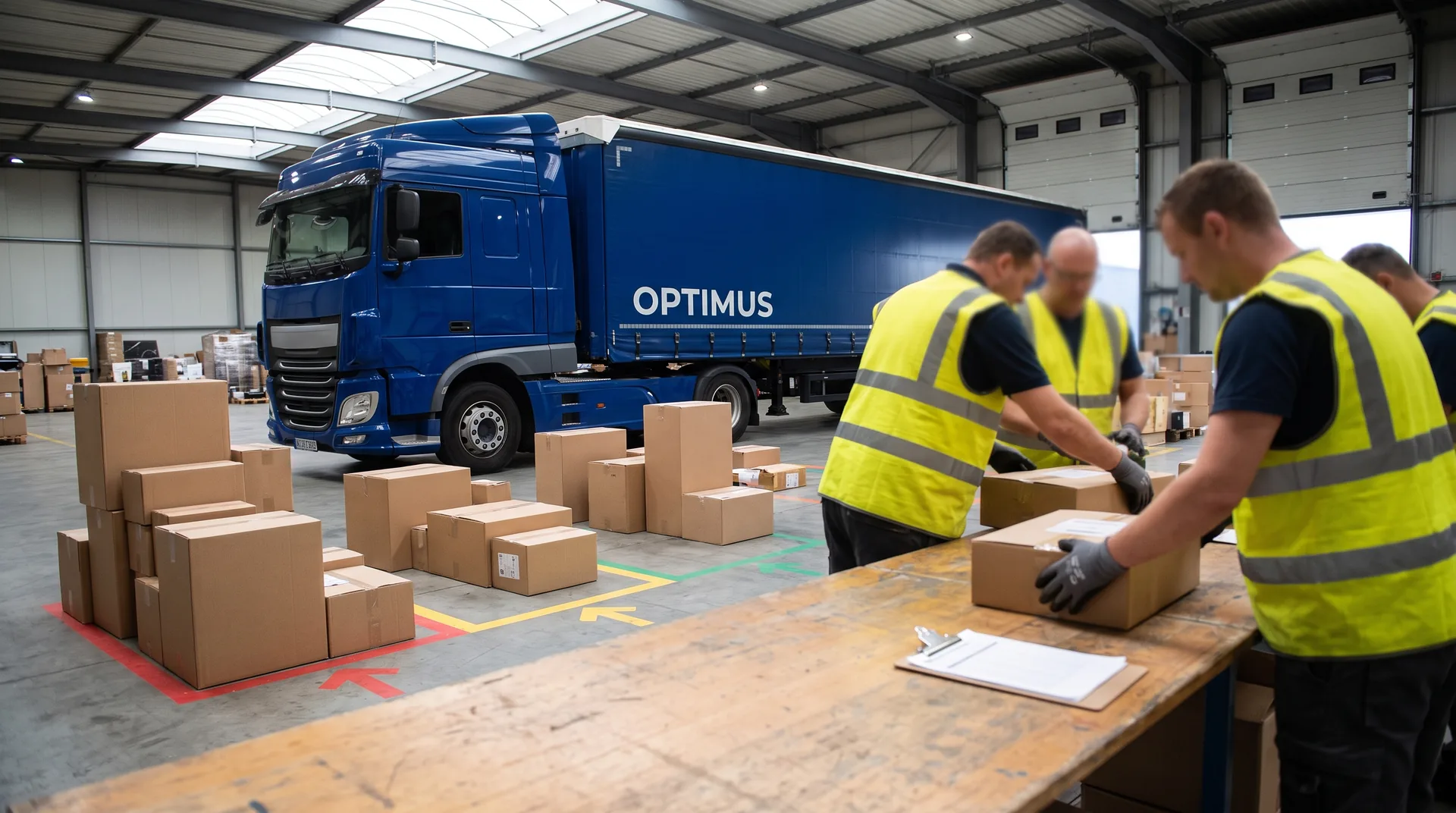
Filtering is an item-by-item review of a load after an incident, producing two recorded pools: units fit for further trade and units that are not. The fitness criteria are set by the goods owner, and the warehouse applies them, documents the outcome with photographs and reports both pools numerically.
When filtering makes sense
It makes sense when an incident affected part of a load rather than all of it. A toppled pallet, water ingress on one side of a trailer, collapsed top layers, handling damage, a delivery rejected because a few pallets looked wrong. In each of those cases writing off the whole batch is the simplest and the most expensive decision. A review usually shows that most units are untouched and the damage sits in a narrow band. That observation is what stands behind the figure described in a recovery rate above 92%. Contact with a foreign substance is a case of its own, where the assessment runs layer by layer and the decision is taken per pallet; we describe it in contaminated freight and how inspection works.
Who sets the criteria
The goods owner and nobody else. It is the only workable arrangement, because only the owner knows what their receiver will accept: a retail chain rejects a creased carton, an industrial wholesaler ignores it, and a clearance channel will take even a replacement outer. We ask for criteria described concretely, ideally as a list of disqualifying conditions rather than a sentence about maintaining quality. Without criteria the review turns into guesswork and ends in an argument about why those particular units landed in the rejected pool.
Does the review cover every unit
That depends on the instruction and must be settled before work starts. A full review covers every unit and produces a result you can build a claim and a resale on. A sample review is faster and cheaper but gives a statistical picture rather than a record. High unit value loads usually get a full review; for low value volume goods a sample with a tightened rule for batches that sampled badly can be reasonable. Duration depends on packaging type and how the goods are palletised.
How both pools are recorded
We keep the two pools separate from the first unit. The saleable pool gets new load units: goods are restacked, stabilised and wrapped again, because after an incident the original pallet rarely survives the onward journey. The rejected pool is physically separated so it cannot re-enter trade by mistake. The numeric schedule is accompanied by photographic documentation to the extent agreed in the instruction. What that documentation must satisfy to be usable in a claim is set out in the inspection report for the insurer.
What happens to the rejected units
Nothing, until the owner decides. Rejected units stand on hold, and the decision usually has three variants: return to Poland together with the saleable pool, sale through a channel with lower requirements, or disposal with a destruction confirmation, described in certified disposal of rejected goods. We dispose of nothing on our own initiative, even where the condition of a unit looks obvious, because to an insurer destroyed evidence can amount to no basis for a claim.
Where filtering fits in the wider process
Filtering is one stage, not the whole handling of an incident. It is preceded by holding the goods and inspecting them, and followed by a decision on each pool. The full spine is described in damaged goods in the warehouse. For loads rejected by UK retail chains the scenario differs slightly, because the clock starts at the refusal; we cover it in rescuing loads rejected by retail chains.
What speeds the review up and what blocks it
Speeds it up: a clear list of criteria, known unit counts per pallet and per carton, permission to open outer packaging, and a decision on the target carrier for the saleable pool. Blocks it: no contact with a decision maker, criteria phrased in general terms, a refusal to open cartons combined with an expectation that contents be assessed, and an instruction to simply do what can be done. In practice a review starts quickly when the owner spends half an hour describing the fitness line before the team stands at the pallet.
Have a batch after an incident and no idea how much survives? Describe it through the quote form or see the cargo inspection page. The scope of work in England is on the Milton Keynes warehouse page.