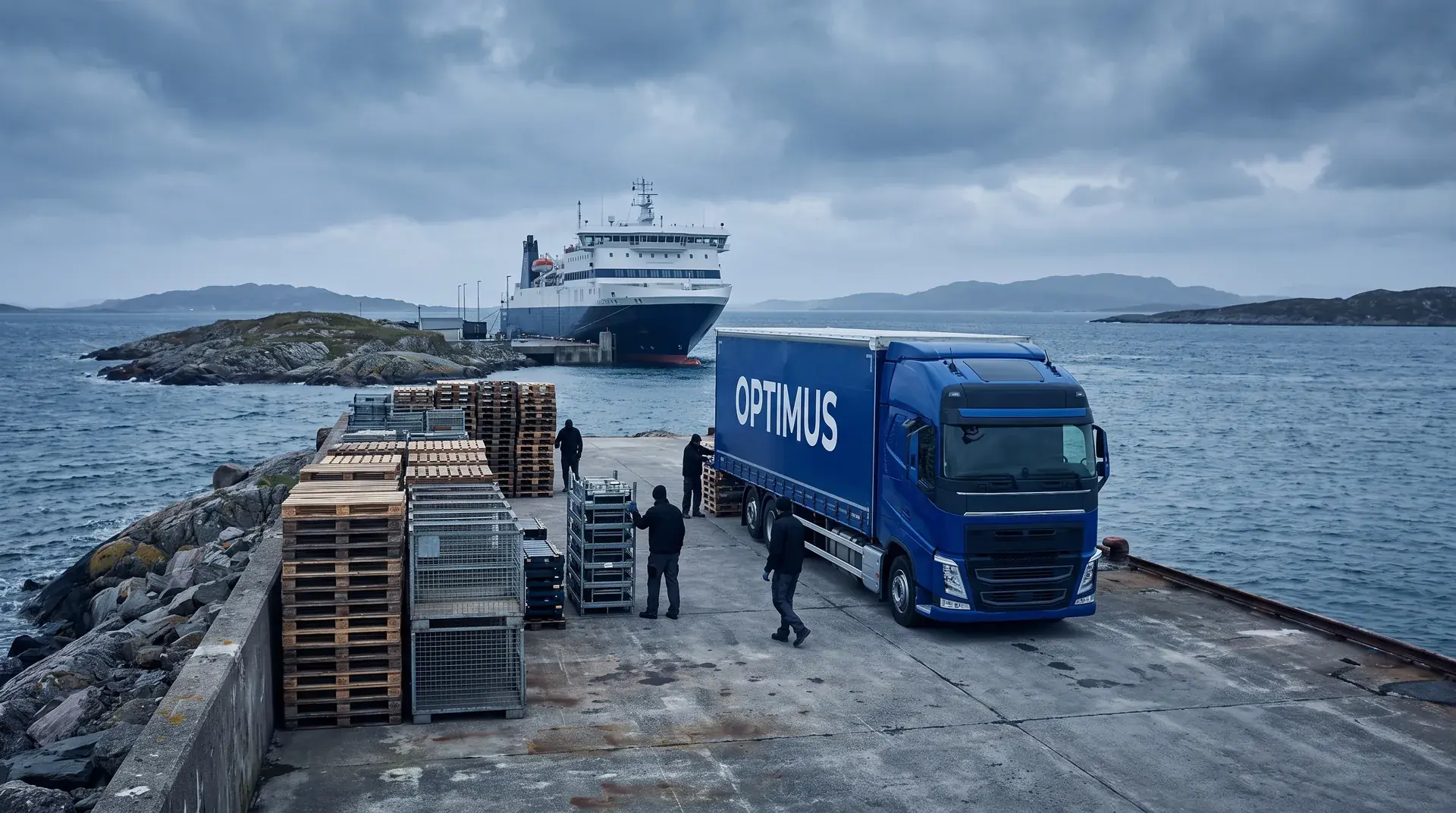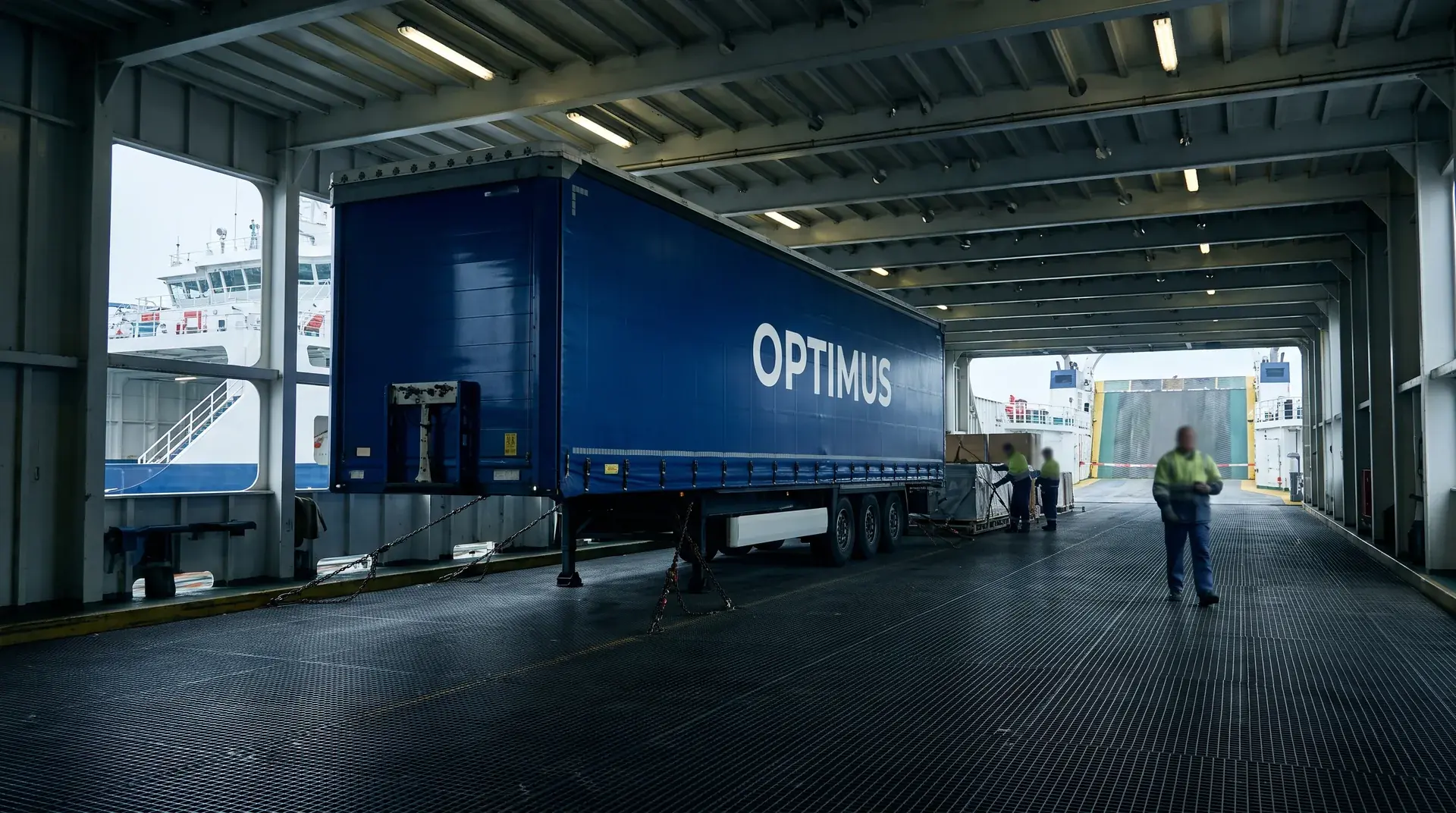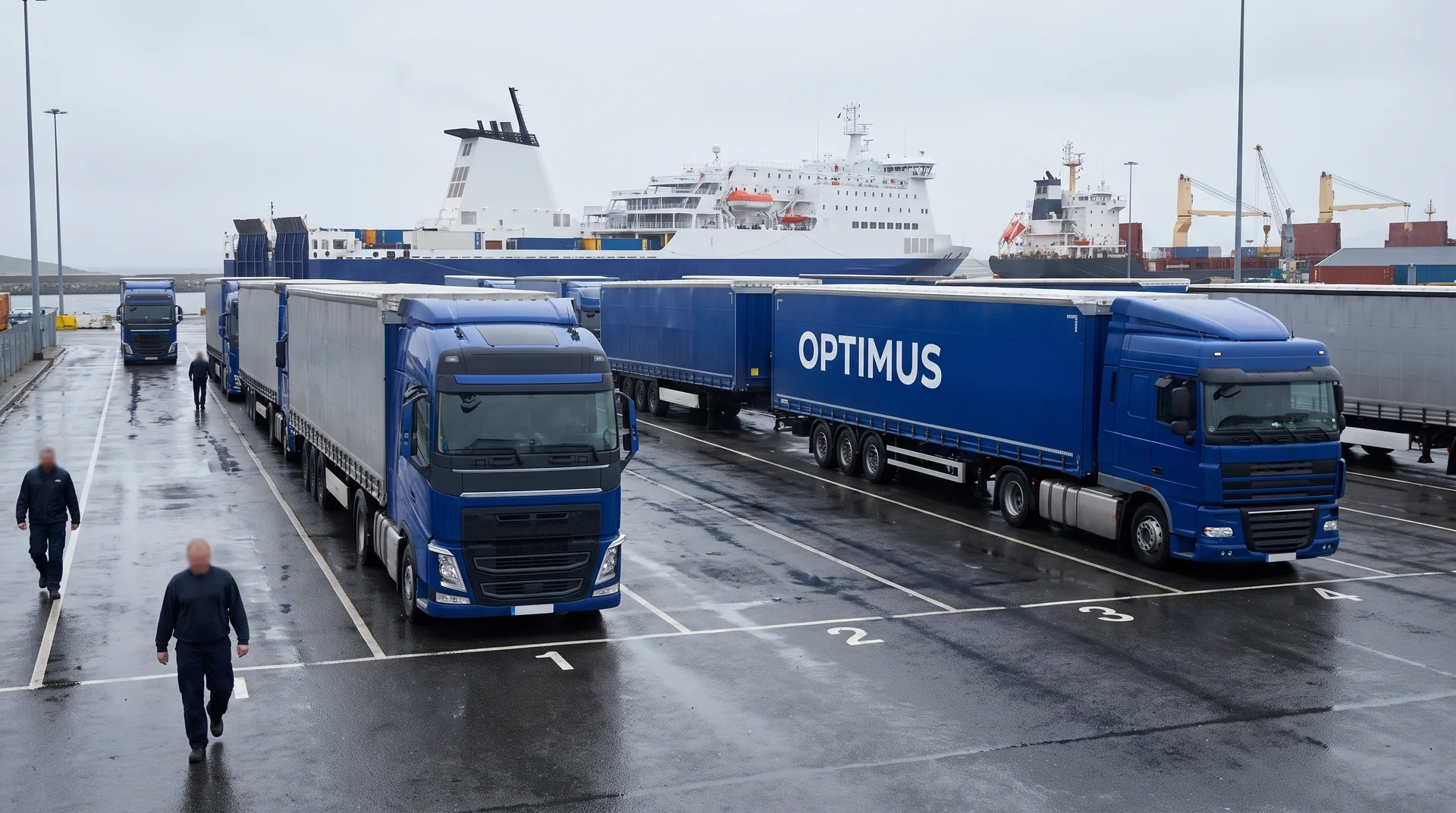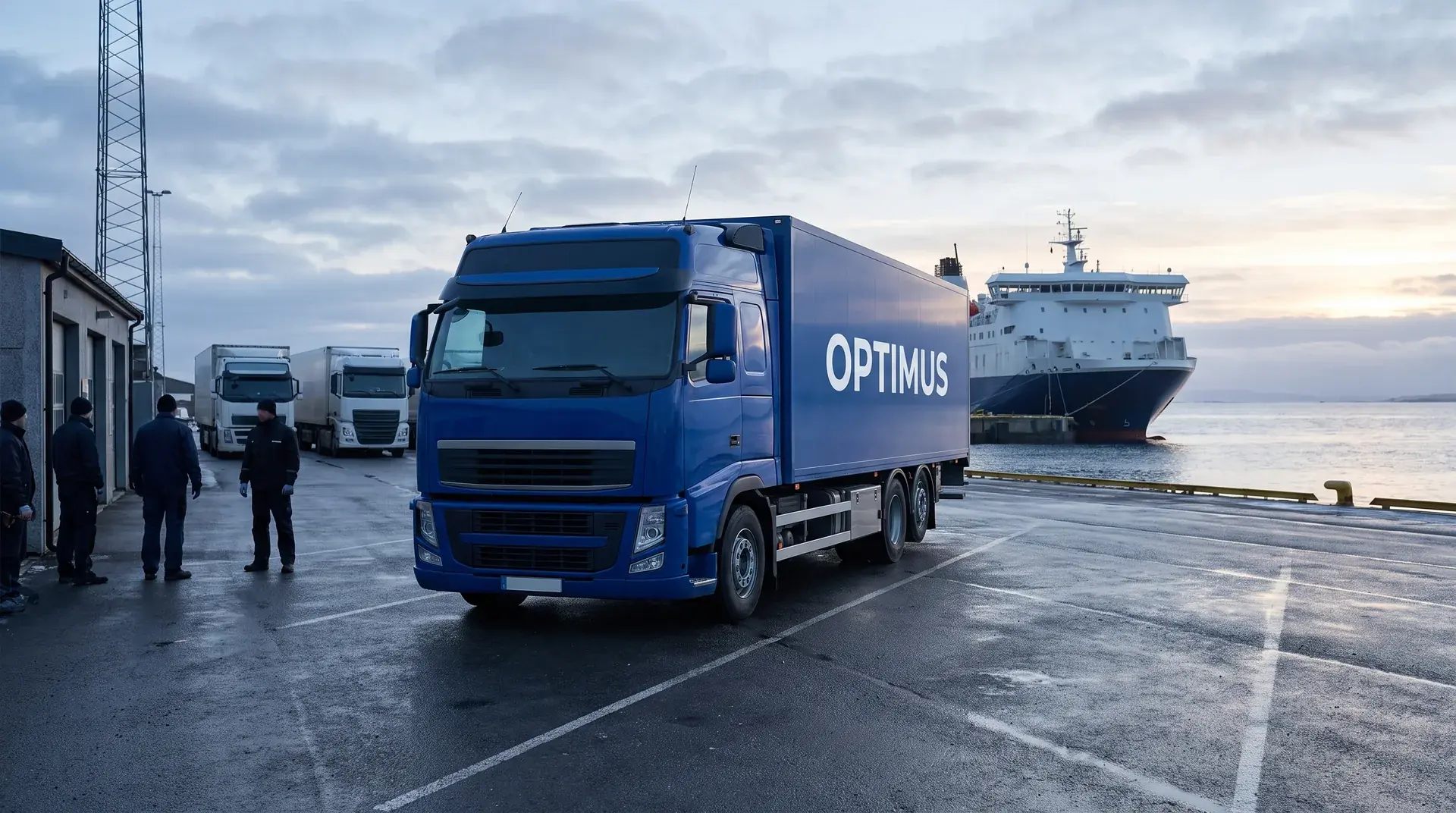
For an island delivery the date is built backwards from an available sailing, not forwards from cargo readiness. Distance is secondary: an address 200 km from the port can have a shorter lead time than one 50 km away, if the first has a daily connection and the second a few sailings a week. Margin cannot be replaced by driving faster.
Why we do not quote one number of days
Because that number would be invented. Sailing frequency differs between routes and changes seasonally, and operator schedules are updated. Saying "add two days" for all islands sounds concrete but leads to disappointment on thinly served routes. Instead of a number we give the method, and a specific date for a specific job after checking sailing availability with the operator.
How we build the date, step by step
- We fix the address and the mainland port, because the port defines the road run.
- We check commercial vehicle space with the operator on real sailings, not on days.
- We count backwards: terminal reporting time, the final road leg, the Channel crossing, clearance and driving time from Poland.
- We add margin for one slip — not because we expect trouble, but because a single slip on this route is expensive.
- Only then do we confirm a date to the client.
That order is the reverse of a land route, and that is the whole point of it.
What actually eats the margin
- Import clearance — a complete document set prepared in advance shortens this stage most.
- Road conditions in Scotland and Cornwall — regional roads, roadworks and winter can stretch a run further than the satnav predicts.
- Weather on the water — cancellations are normal risk; the scenario is described in our text on what happens when a storm cancels a crossing.
- Goods-in hours at the consignee — a narrow island window can push unloading by a day even when the vehicle arrived on time.
- A second crossing — where a delivery needs two sailings in sequence the risk grows non-linearly, as we describe in our text on transport to Mull and Iona.
Winter and season: two different risks
In winter the main risk is weather: shorter windows of good visibility, strong wind, cancellations. In summer the main risk is capacity: tourist traffic fills the decks and heavy vehicle places grow scarce. So margin has to be planned all year, only for different reasons. In practice the worst moments for improvisation are the periods around holidays and long weekends, when both risks overlap.
What happens if the vehicle misses the sailing?
The booking is lost and the cargo waits for the next sailing with space. Our procedure is fixed: we tell the client immediately, secure the cargo in a safe place on the mainland and move the booking. For sensitive goods we decide with the client whether to wait or return the cargo to the warehouse. A buffer on the British side lets us hold goods without holding a vehicle at the quay — that role is played by our Milton Keynes warehouse.
Can an island delivery date be guaranteed?
A booking can be guaranteed, and so can having the goods ready to board. Weather cannot be guaranteed, nor can an operator's decision to cancel. So we phrase commitments precisely: we give a planned date, name the sailing and say what happens if it does not run. For genuinely critical deliveries we suggest shipping ahead and storing on the British side — the only mechanism that really increases date certainty. General transit times on the route are described in our text on how long transport from Poland to the UK takes.
How we communicate the date to the island consignee
An island consignee plans work around a delivery differently from a mainland warehouse: they often have to arrange people for unloading, clear a yard or open premises outside normal hours. So we do not send a bare date but three things at once: the planned sailing, the expected unloading window and the fallback if it slips. If a sailing is cancelled, the consignee learns of it at the same moment as the shipper, not the following day. It sounds like an organisational detail, but on the islands it is the difference between a delivery that works and a vehicle standing at a locked gate.
When it pays to ship early
Some situations admit only one buffer, and that is time rather than a fallback plan: a venue opening, an installation with a crew booked for a specific week, a refurbishment squeezed into a short off-season window. In those cases we suggest shipping ahead and storing the cargo on the British side, then running it to the island at a calm date. That costs less than the risk of an idle installation crew, and it is the only method that genuinely converts an uncertain date into a certain one.
Sources
- CalMac: timetables and route information for western Scotland
- NorthLink Ferries Freight: freight information for the Northern Isles
Planning a delivery with a firm date? Give us the deadline and postcode in the quote form and we will check sailings and propose a realistic date with margin. Island destinations are on the island transport page.