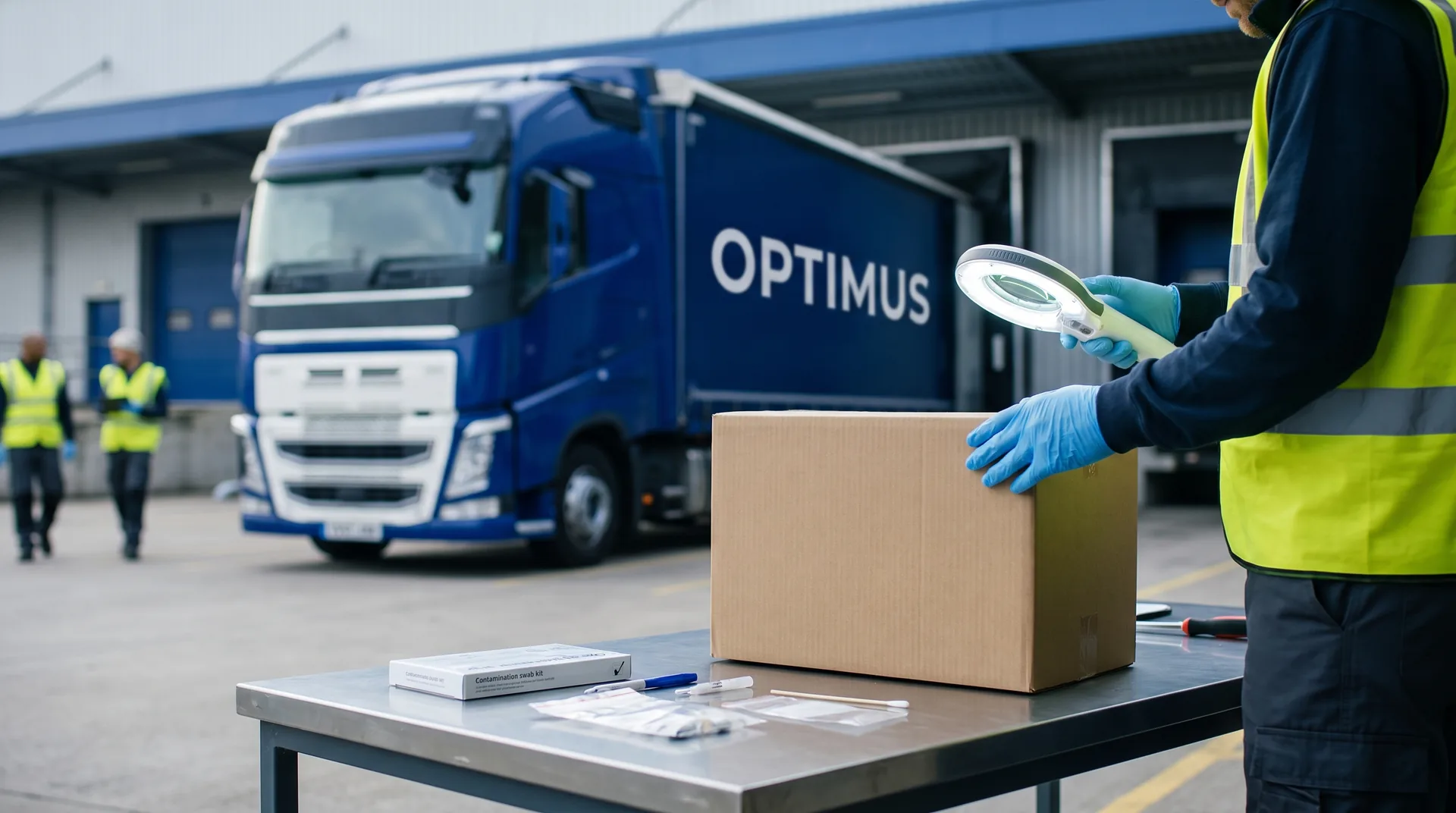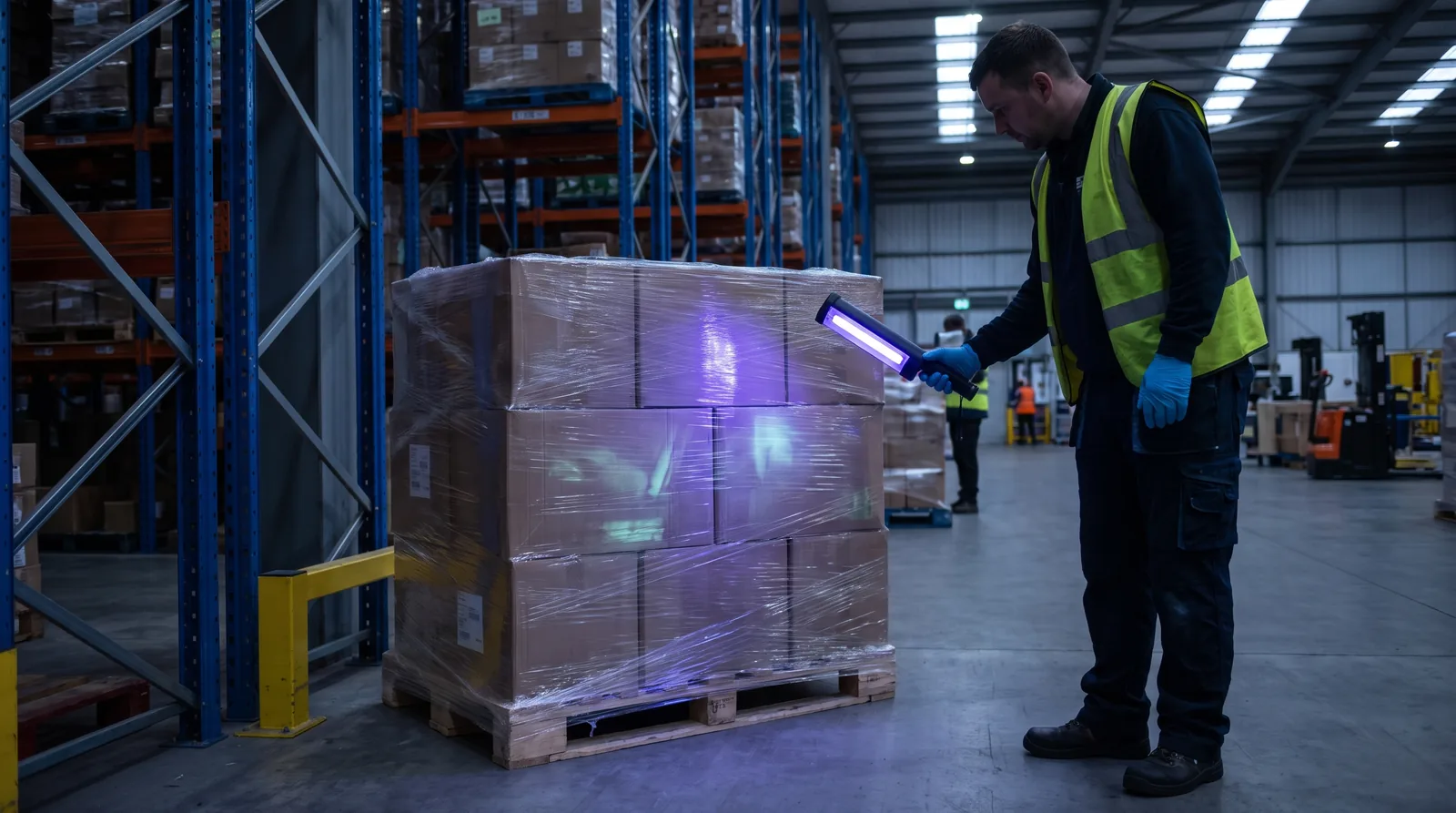
UV inspection is checking a load under an ultraviolet lamp that reveals traces invisible in ordinary light: stains of bodily fluids, spills, some substances. UVC decontamination is exposing a surface to UVC radiation to lower the number of micro-organisms. In our Milton Keynes warehouse we use both, most often after a trailer breach and on hygienically sensitive cargo.
When we use UV inspection and decontamination
- After a trailer breach or suspected contact by unauthorised people with the load, when surfaces and packaging must be checked.
- On food and hygienically sensitive goods, where the cleanliness of contact surfaces and outer packaging matters.
- After an event involving a spill, a leak or contact with an unknown substance.
- When the consignee or insurer requires a documented check before accepting a batch.
A trailer breach is a situation we start from a full cargo inspection after trailer tampering. UV inspection is one tool in such an inspection, not the whole procedure.
What UV shows and what it does not
Honestly: a UV lamp is a screening tool, not a verdict. It reveals traces invisible in ordinary light and helps direct attention to specific spots. It is not a laboratory test, however, and does not identify substances. Fluorescence under UV can indicate both traces that need a response and entirely harmless ones (for example some detergents, optical brighteners in the carton, cleaning-agent residue). We therefore treat UV as a signal for further action: isolating the batch, documentation, a decision on decontamination or withdrawal, and for food a referral to the proper assessment.
UVC decontamination: possibilities and limits
UVC radiation lowers the number of micro-organisms on a surface, but works only where it reaches. Shadowed recesses, the inside of closed packaging and dirty spots (because dirt shields the radiation) stay out of its range. UVC does not replace washing or cleaning, it supplements them. It also removes neither chemical nor physical soiling. On food, decontaminating the surface of outer packaging is not the same as assessing the safety of the foodstuff itself, which the consignee decides in line with its own procedures and the regulations.
Safety when working with UVC
UVC is harmful to the eyes and skin. We carry out the exposure in controlled conditions, without people being exposed to the source, in line with occupational safety rules. This is not something to do yourself on the ramp with an ordinary lamp, but part of a warehouse procedure with proper safeguards.
Inspection documentation
We document every UV inspection and UVC decontamination: the reason, the scope, photos of spots fluorescing under UV, the decisions taken. The consignee receives the batch with a clear description of what was checked, and the sender and insurer a complete file. What such a document for the insurer looks like is covered in the article on the inspection report for the insurer.
Where we do it
We carry out UV inspection and UVC decontamination in our Milton Keynes warehouse, where food and sensitive goods are held in a separate area kept clean for the purpose, within our warehousing and cargo inspection services. For chilled cargo we combine it with temperature control for sensitive cargo.
Sources
- WHO: studies on ultraviolet radiation and its germicidal action
- European Commission: food safety (hygiene and controls)
Does your load need a cleanliness check or decontamination before acceptance in the UK? Describe the situation in the contact form and we will take the goods into the warehouse, run a UV inspection and document it.