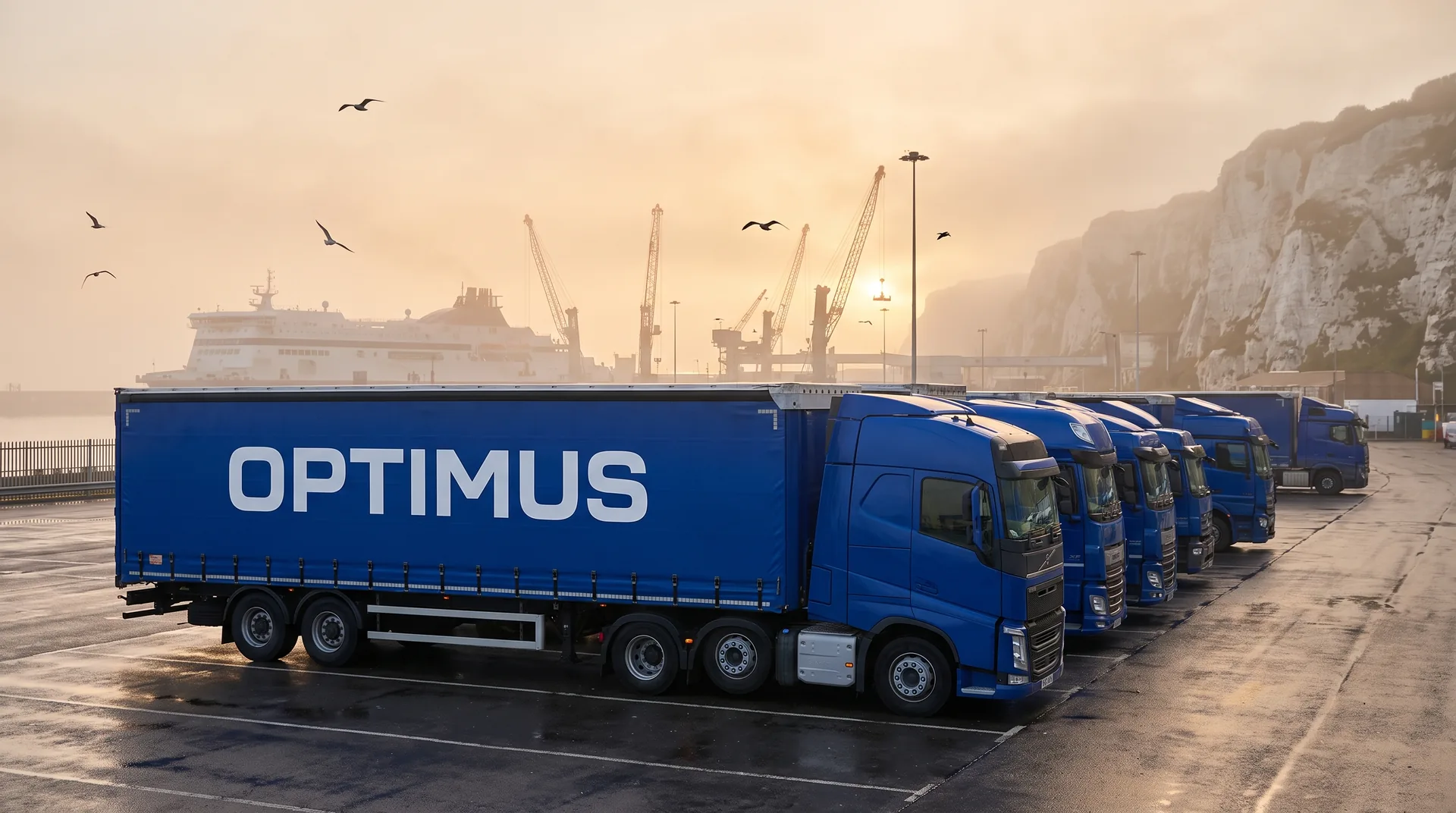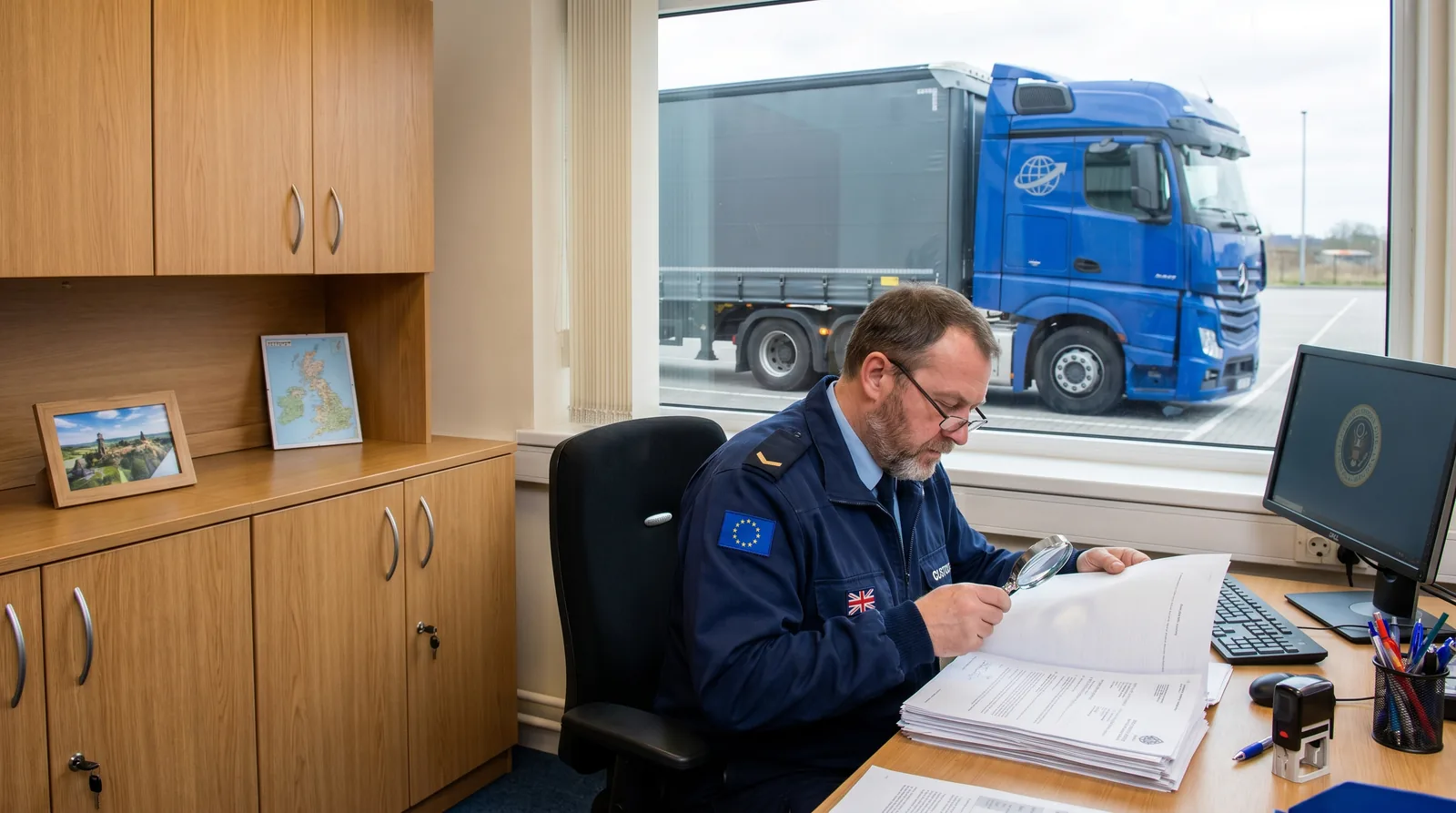
Post-Brexit customs clearance to the UK has four elements: an EU export declaration with an MRN, a safety and security declaration, a UK import declaration and a GMR in the GVMS system. The carrier can only create the GMR once every reference number is in hand. Without it, the driver boards neither the ferry nor the shuttle at pre-lodgement crossings, which is how road traffic from the continent is handled. GVMS does not cover ports running on temporary storage, such as Felixstowe, Southampton or London Gateway.
What Brexit actually changed for UK haulage
Until the end of 2020 a pallet from Kielce to Birmingham travelled like a pallet to Poznan: no declarations, no border, no questions about tariff codes. Since 2021 every movement from the EU to the United Kingdom is an export on one side and an import on the other. The change is not in the driving, because the route and running time look much the same, but in the paperwork layer. That layer decides whether the vehicle boards at its booked slot or is turned away at the gate. The practical conclusion for a shipper is simple: documents must be ready before the truck backs onto the loading bay, not while it is heading west.
Step one: the cargo data
Everything starts with the commercial invoice and the packing list. You need an exact goods description (not "parts", but what the thing actually is), a CN or HS tariff code, quantity, net and gross weight, value, currency, Incoterms, shipper and consignee details and EORI numbers for both sides. The tariff code drives the duty rate and decides whether the goods face additional controls. How to find it is covered in our article on CN and HS tariff codes, and the identifier used in UK trade in the piece on the EORI number.
Step two: the EU export declaration
The exporter lodges an export declaration in the customs system, receives the accompanying document and an MRN. That number travels with the goods and underpins everything that follows. Once the goods leave the customs territory of the Union, the office of exit confirms departure, which is what allows the zero-rating of VAT on export. We break the whole sequence down in the article on EU export clearance step by step. Where the goods meet the rules of origin under the EU-UK trade agreement, a statement on origin on the invoice avoids duty on the British side; the conditions are set out in rules of origin and zero tariff.
Step three: the British side
The UK import is declared by the importer or by a customs agent acting on their behalf. That requires a GB EORI number, classification under the UK tariff and a decision on how import VAT will be handled. Businesses registered for UK VAT usually choose deferred accounting, described in our article on postponed VAT accounting. Who pays duty and tax follows from the Incoterms agreed in the contract, not from who books the transport. The procedure itself is covered in GB import clearance.
Step four: the GMR and the crossing
With declaration references from both sides in hand, we create the GMR and attach the vehicle registration and a specific sailing to it. The system validates completeness, and at the port gate the driver shows that one number and nothing else. If a declaration is incomplete or belongs to a different vehicle, the GMR fails validation. More on the number itself and the split of duties is in GMR: what it is and who prepares it.
Who is responsible for what
- Shipper: invoice, packing list, tariff code, EORI, statement on origin, warning about restricted goods.
- Customs agent: EU export and UK import declarations, MRN references.
- Carrier: the GMR, the crossing booking, vehicle-related declarations, delivering a complete file to the border.
- UK importer: settling duty and VAT, plus any import licences or authorisations.
Five mistakes that stop a truck
- A vague goods description; a control officer has nothing to classify against.
- A missing or inactive EORI on either side, which usually surfaces on loading day.
- Packing-list weights that differ from reality; the weighbridge near the port finds out.
- Changing the vehicle after the GMR was built, without updating the registration.
- Goods needing a certificate or licence the shipper never mentioned.
How we run it
At OPTIMUS TRANSPORT clearance is part of the transport order, not a separate errand for the client to arrange elsewhere. We gather documents before loading, pass them to the agent, track the reference numbers and build the GMR against a specific sailing. The client keeps one point of contact for the whole job, from collection in Poland to unloading in England, Scotland or Wales. The full scope is on the customs clearance page, and the route itself on transport to the United Kingdom.
Sources
- GOV.UK: import goods into the UK step by step
- GOV.UK: Goods Vehicle Movement Service (GVMS)
- European Commission: the export procedure
Planning a first or a next shipment to the UK and want clearance handled by the carrier? Describe the cargo through the quote form and we will come back with the document checklist and a departure date.