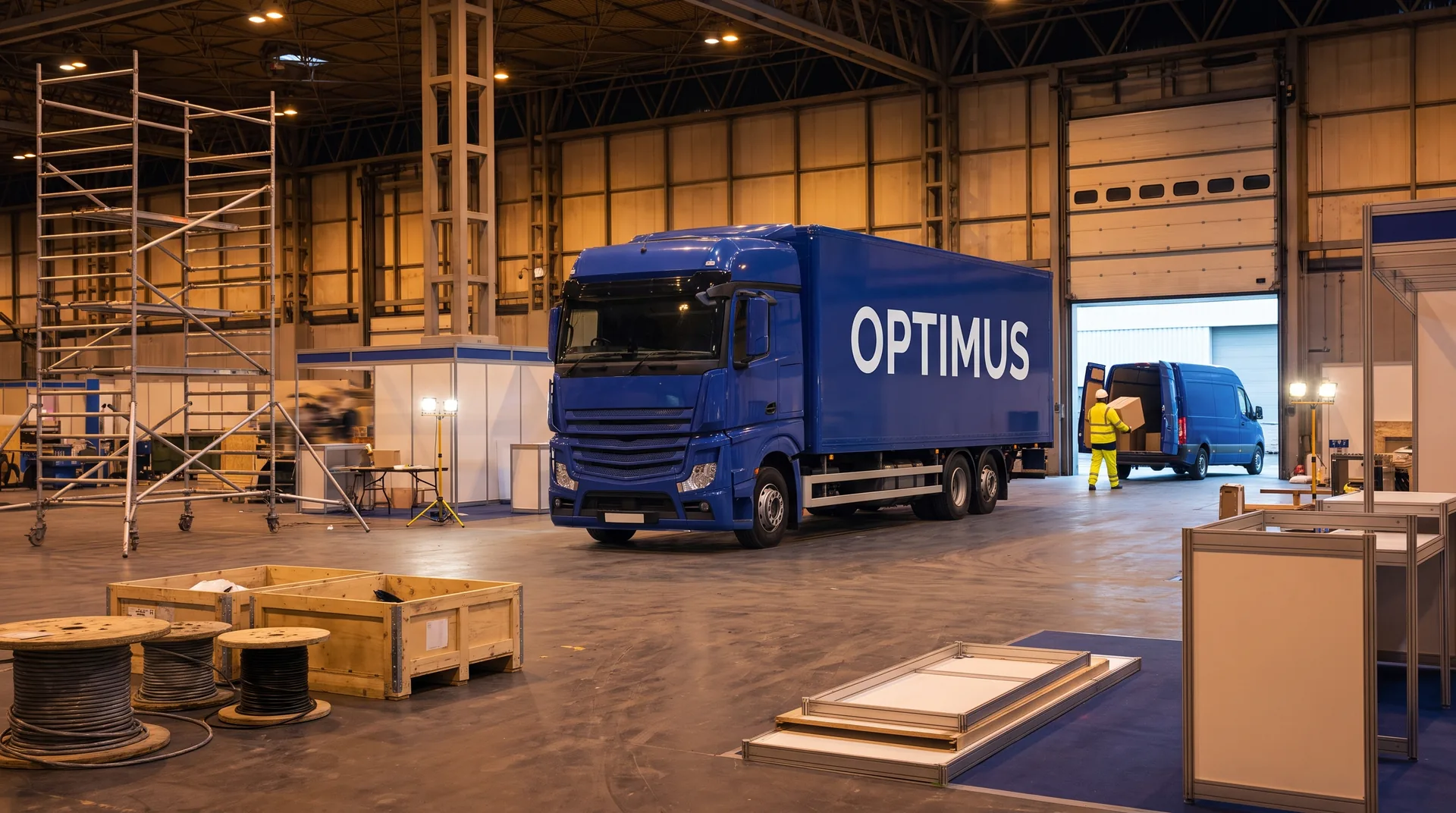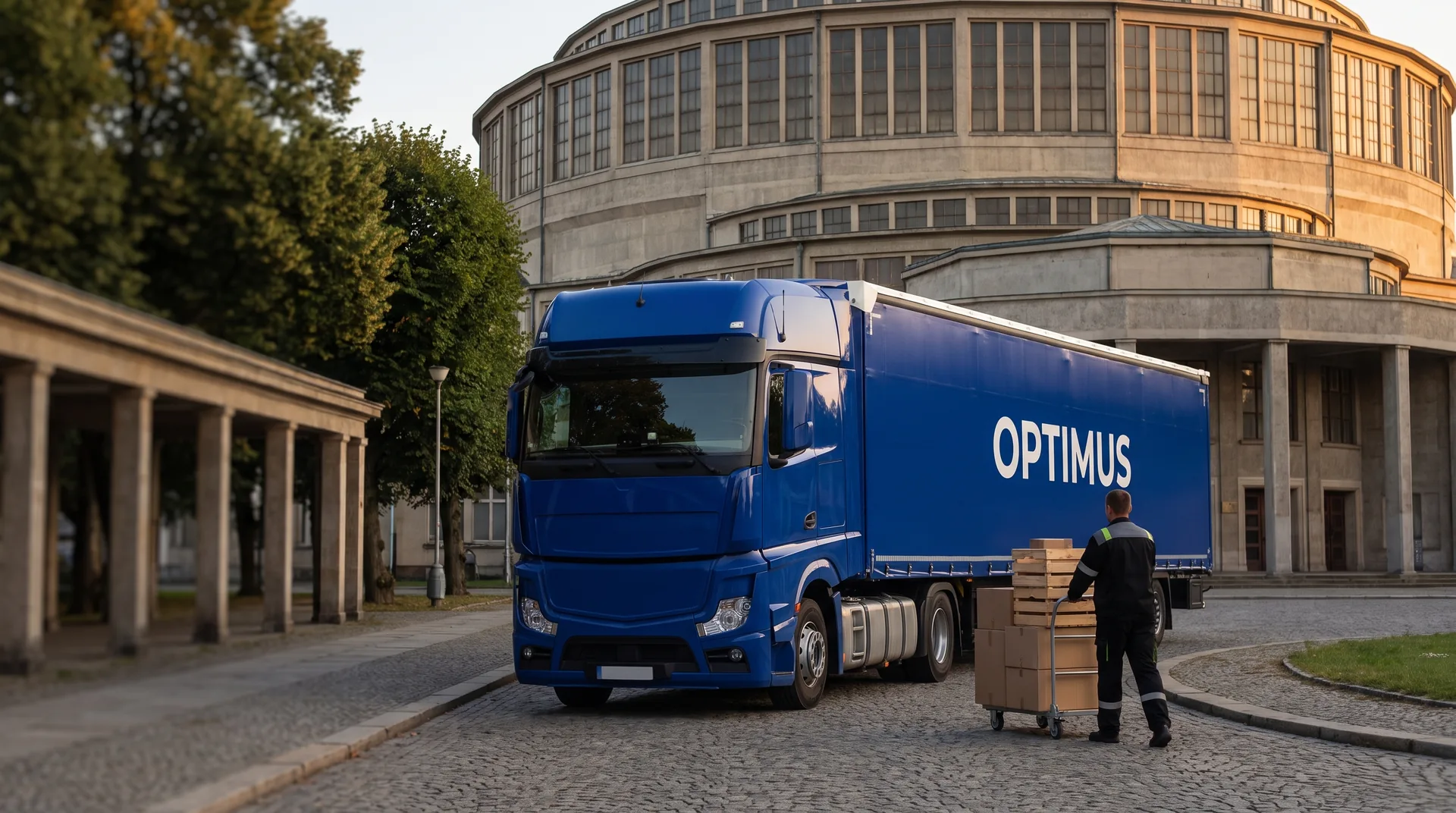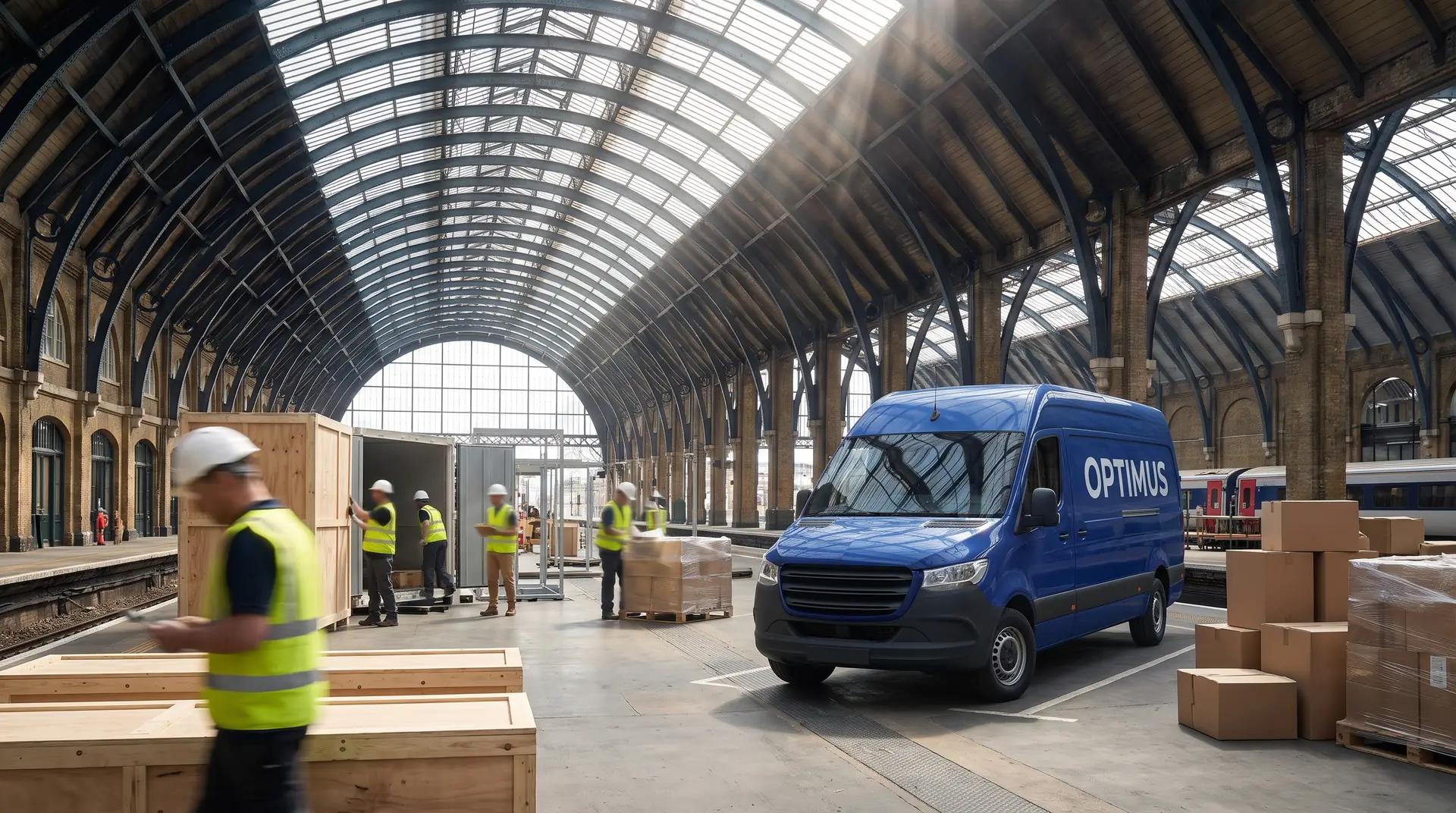
Manchester Central is a former railway train shed with a distinctive wide-span arched roof, listed and wedged into the dense centre of Manchester. Deliveries are not made at the front but up a ramp off Albion Street at the rear of the building. The most important news for a carrier is positive: there is no clean air zone charge anywhere in Greater Manchester. We carry stands and exhibits here from Poland.
What is different about a venue built from a station
Manchester Central was not built as an exhibition hall. It is a railway station building from the second half of the nineteenth century, known for years as GMEX, with an arched structure and no intermediate supports. The roof span gives a pillar-free interior, which helps when planning stands, but the whole thing sits in a block where a concert hall, several hotels and an underground car park directly beneath the venue stand within one street. The approach streets are narrow and serve city traffic, not freight.
The consequence is that at this venue there is little point asking whether an articulated unit will fit. The sensible question is which vehicle we can bring up the ramp and how long it will spend in the queue. Both answers come from the organiser in the exhibitor materials, because the venue itself publishes no technical manual for freight traffic on its own pages.
The Albion Street ramp
Exhibitor materials for events at this venue describe the delivery route consistently: vehicles come up a ramp off Albion Street at the rear of the building, where a barrier and traffic office at the top register the vehicle, which is then directed to the loading bay through a second barrier as space becomes available. Those materials also give a separate navigation postcode for the ramp itself, different from the venue address, plus a separate address for labelling consignments.
Two caveats, without which that account would be dishonest. First, these are materials from organisers of particular events rather than a general venue instruction, so the details are confirmed in the manual for your own show. Second, we found no published height or weight limit for that ramp. The absence of a published limit does not mean there is none: it means it must be confirmed before sending a tall combination, because a ramp into a listed building in a dense city centre is not a place to establish it by trial.
Getting there: four different ways into the city
The venue publishes approach routes and they are unusually detailed. From the south you leave the M6 at junction 19, then take the A556 to the M56 and the A5103. From the north you leave the M6 at junction 21a, then the M62 to junction 12 and the M602 towards Salford. From Liverpool, the M62 to junction 12 and then the M602. From Leeds, the M62 to junction 18, then the M60 orbital westbound to junction 17 and the A56. The M60 is the city orbital. We cover the region more fully in the article on transport to Manchester and northern England.
Clean air zone: Manchester does not have one
This is where we most often meet out-of-date knowledge. Greater Manchester once prepared a charging clean air zone, but the direction to introduce it was withdrawn in February 2022, and a non-charging, investment-led plan was subsequently approved. The official regional information states plainly that there are no clean air charges to drive anywhere in Greater Manchester, and Manchester does not appear on the government list of charging zones, which covers Bath, Birmingham, Bradford, Bristol, Portsmouth, Sheffield and Tyneside. A carrier therefore pays nothing on that account here, but checks other cities on the route separately; we gather the rules in the article on UK clean air zones.
What to settle before arrival
To the show organiser: stand number, the navigation postcode for the ramp, how the vehicle is registered at the top of the ramp, the permitted vehicle height and weight on the ramp, how queueing is expected to work, who supplies the forklift, and where the vehicle goes after unloading, because in a city centre it does not stay in the yard. We do not quote hours or dates, because the organiser sets them separately for each edition. The backwards planning method is in the article on the build-up and breakdown calendar, and the venue itself and the customs path in the separate piece on transport to Manchester Central.
What we do at our end
We collect the load in Poland, and from exhibitors in Czechia, Slovakia, Austria and Hungary we gather it through our hub. The Kielce base sits about 4 km from the fairground, a few minutes away, and works around the clock. A groupage vehicle waits for the next scheduled line departure. For a venue in a dense city centre we split the route into two stages: a large vehicle from Poland to our warehouse in Milton Keynes, then a final run in a vehicle matched to the ramp. That gives two transhipments across the route and lets us commit to an hour at the gate, though nobody but the venue controls the time spent in the barrier queue. On site we deliver to the handover point and the venue equipment takes over.
Groupage or a dedicated vehicle
The threshold runs at roughly a third of a trailer, about twelve pallets, but in a dense city centre the deciding factor is which vehicle can climb the ramp rather than how much cargo there is. At this venue, more often than elsewhere, splitting into two smaller runs from the buffer beats one large vehicle sitting in a queue. We break the arithmetic down in the article on choosing between FTL and groupage.
Sources
- Manchester Central: venue information and approach routes
- Clean Air Greater Manchester: no clean air charges anywhere in Greater Manchester
- GOV.UK: list of British charging clean air zones
Exhibiting at Manchester Central? Send the stand number and item list through the quotation form and we will match the vehicle to the ramp and set up the run from the buffer. See also the exhibition logistics page.