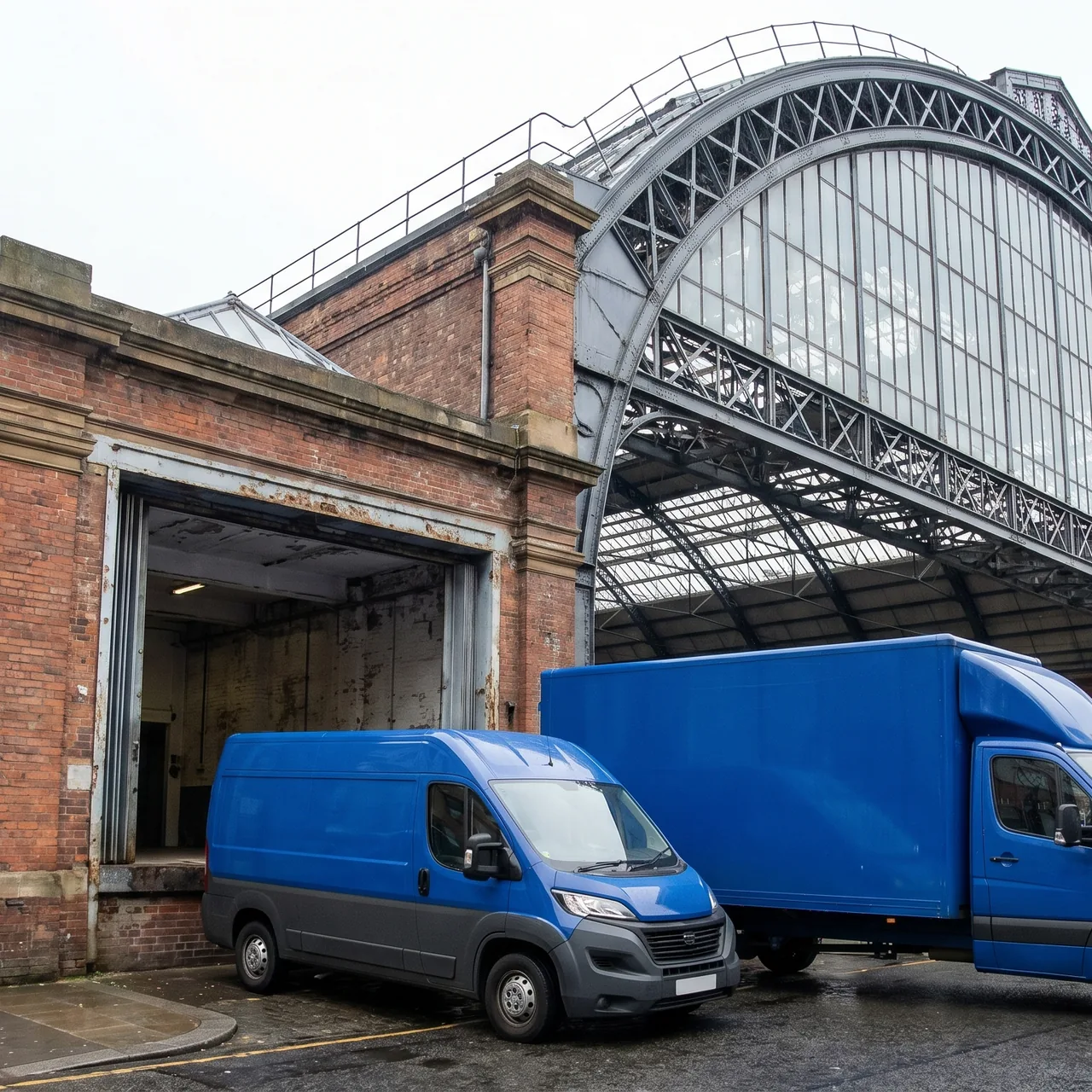
Manchester Central, formerly GMEX, is an exhibition and conference venue in the heart of Manchester. A city-centre location means limited manoeuvring space, tight entry windows and an approach route that has to be agreed with the organiser. Add post-Brexit clearance, and an ATA carnet where exhibits return intact.
What a city-centre delivery really means
The difference between an out-of-town hall and a city-centre one is larger than a map suggests. At a motorway-side venue a vehicle can wait, turn around and come back. In central Manchester every such manoeuvre is a problem: there is nowhere to stand, city traffic is unforgiving, and delivery windows are short because every other exhibitor is arriving at the same time. So for Manchester Central we settle the entry plan before the route plan: first we know at what hour and by which approach the vehicle enters, then we choose the vehicle and the departure time from Poland.
Choosing the vehicle for the venue, not for the load
At city-centre shows the vehicle size is often limited by the unloading point rather than by the volume of goods. It can make more sense to bring the load in on an articulated vehicle to a buffer point outside the city and shuttle it in with a smaller truck inside the build-up window than to fight for trailer access at a designated minute. That variant costs more operationally but removes the risk of losing the window, which in practice means a day of delay. We take the decision after reading the venue regulations and checking the real situation on the ground.
Registration and gate paperwork
- Vehicle and driver registered in the organiser's system, usually with the plate number.
- Stand number and exhibitor name, without which site staff will not admit the vehicle.
- Confirmation of the build-up window, in many cases down to an hourly band.
- Transport and customs documents available to the driver in a form that can be shown at the gate.
Post-Brexit clearance and the ATA carnet
A load from Poland to the United Kingdom crosses a customs border whether it is heading to a trade fair or a warehouse. An export declaration, data for the GB import entry and a GMR for the crossing are all required. For exhibits that return unchanged after the event an ATA carnet applies: temporary admission without duty or import tax. Discharging a carnet requires taking out exactly what came in, so any item sold or left behind has to be handled separately. Details in the ATA carnet step by step and in the ATA carnet and goods sold at the fair.
Manchester as a point on the delivery map
Manchester Central is rarely the only destination of a trip. The north-west of England is a dense industrial and warehousing region, so a vehicle heading to a show often serves other addresses along the way and picks up a return load after breakdown. We describe the region in transport from Poland to Manchester and northern England. If the same trip covers another venue, it is worth aligning the schedules: nearby Harrogate Convention Centre often runs events close in date to those in Manchester.
After the show closes
Breakdown in a city centre follows the same constraints as build-up, only with more time pressure, because the hall must be empty by a stated hour. We present the vehicle in the departure window rather than when the crew finishes packing, so the packing schedule is agreed in advance. Items that do not travel back to Poland immediately can be stored and sent later, which we cover in post-show logistics and the return of exhibits.
Access, booking-in and the handover point at this venue are covered separately: Manchester Central: the Albion Street ramp.
Sources
Planning to exhibit at Manchester Central? Send the organiser's regulations, your item list and the build-up date through the quote form and we will prepare the entry and document plan. Other venues and the full scope are described on the exhibition logistics page.