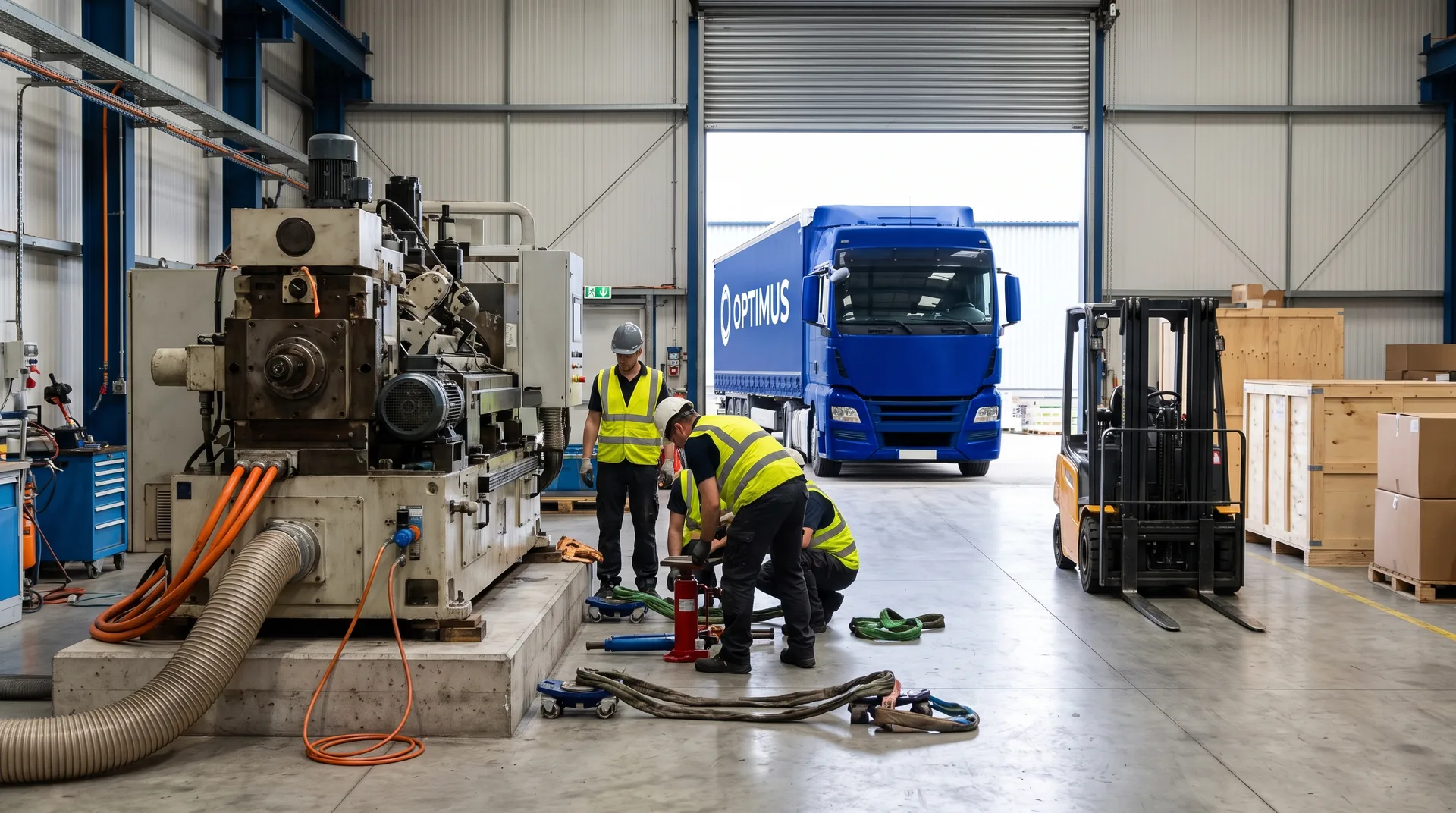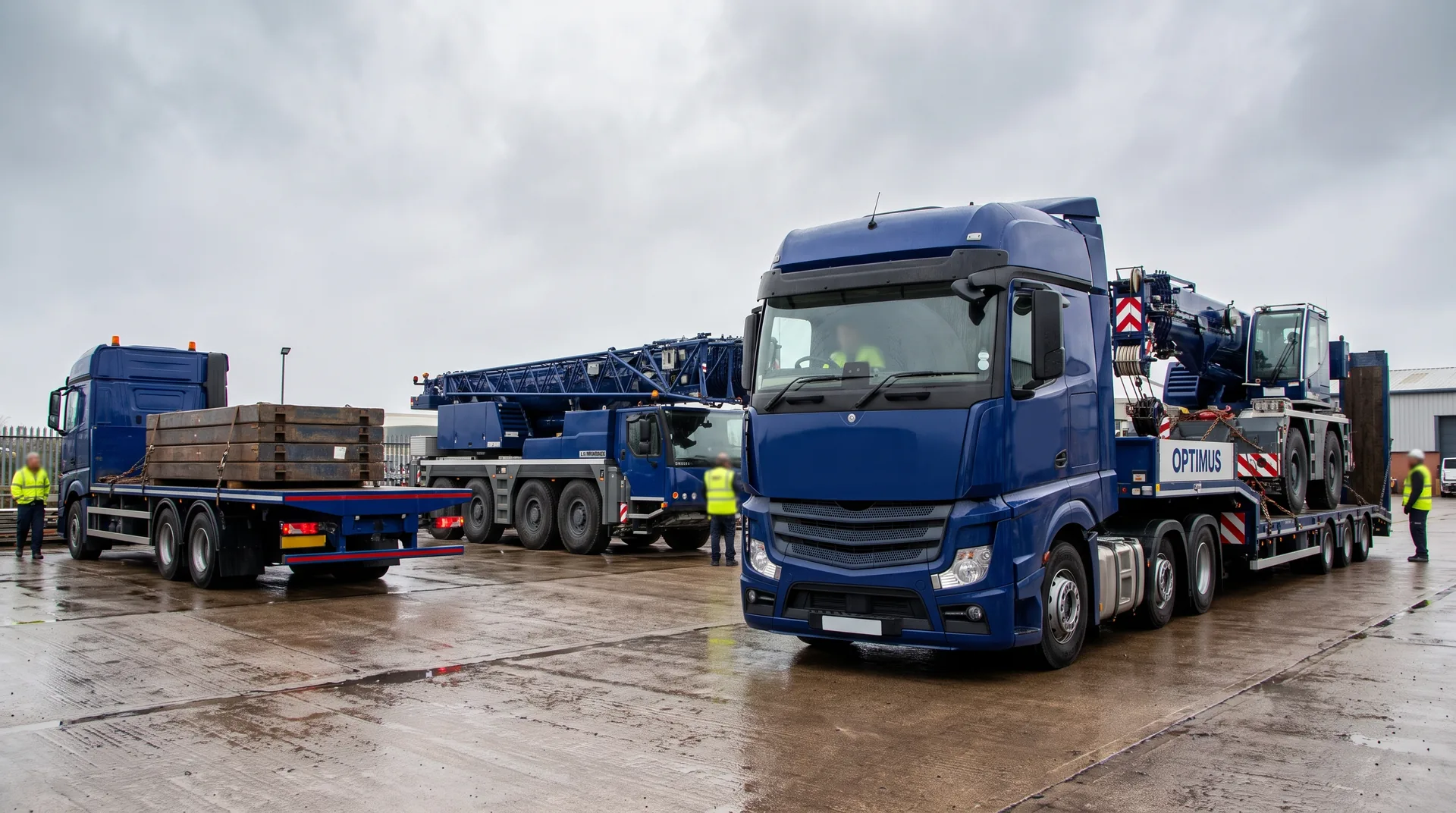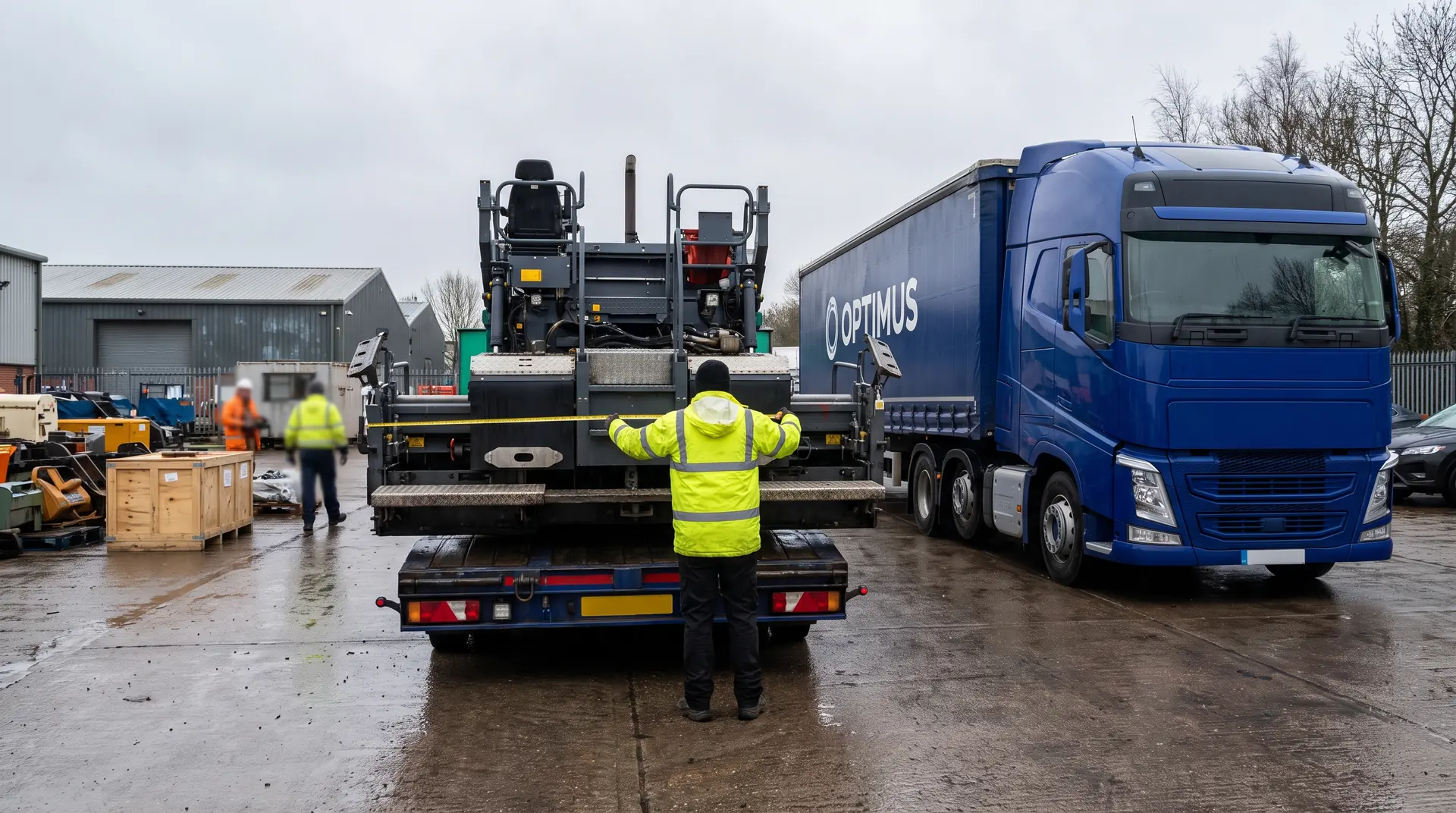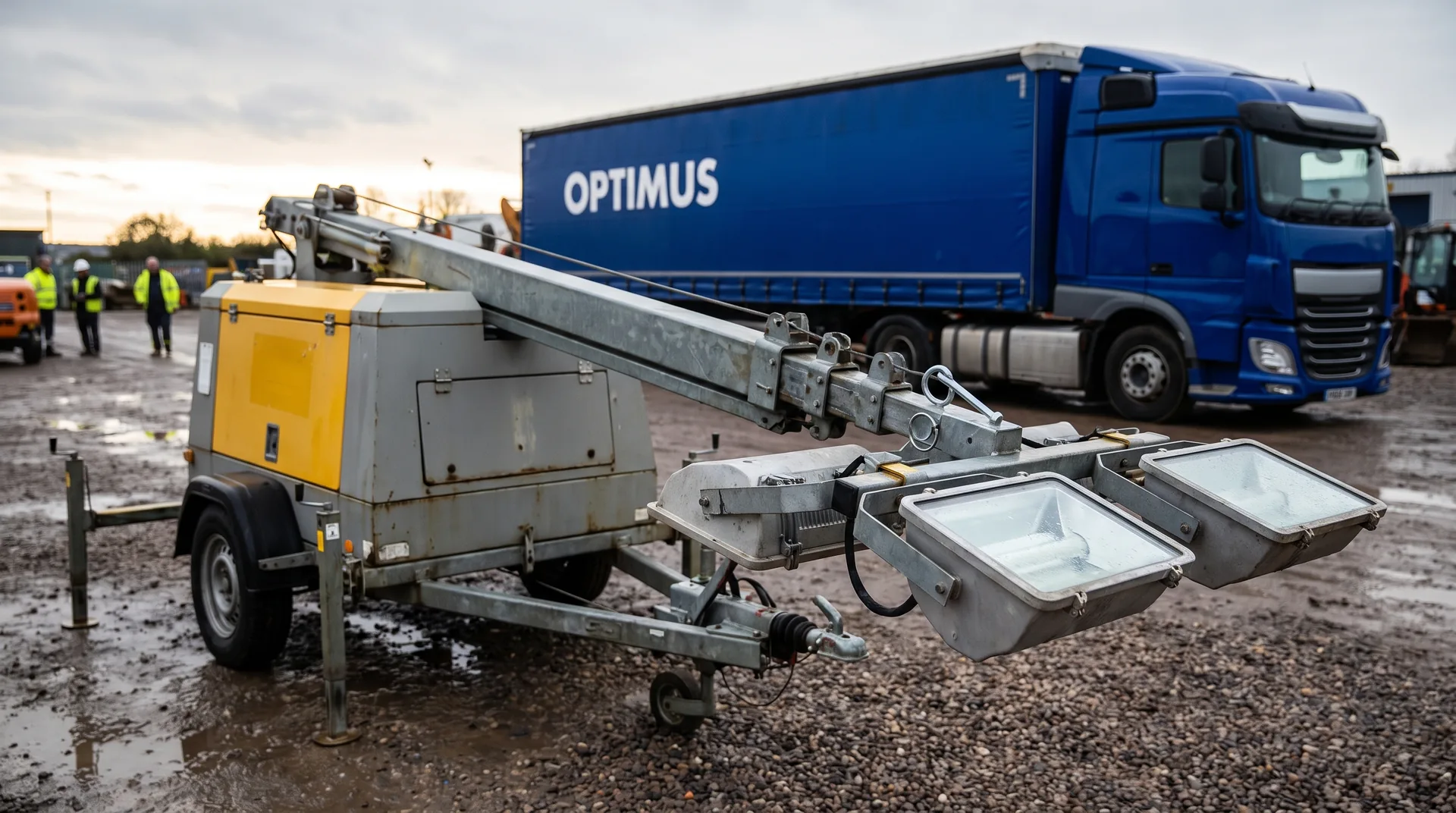
With the mast telescoped down, a lighting tower is low and light compared with the rest of the plant standing in the yard, so it travels well alongside other goods rather than needing a dedicated vehicle. One condition has no exception: the mast must be locked mechanically, by pin, catch or collar, and not merely lowered and switched off at the panel. A lowered mast can creep open over rough road.
What is standing on that chassis
A lighting tower is four assemblies on one single-axle chassis: a telescopic mast, a head carrying the floodlights, a diesel generator set, and a frame with folding outriggers and a drawbar. The catalogue entry usually names the manufacturer, the mast type and the generator output; the rest you only see in the yard. For haulage only the travelling configuration counts: mast seated, head turned along the frame, outriggers retracted and secured. Datasheet dimensions describe the machine rigged for work and have nothing to do with what goes onto the trailer.
The centre of gravity sits high above the single axle, so a tower left loose on the deck reacts to every lane change. We therefore treat it as plant lashed hard to the floor, not as a trailer parked on its jockey wheel. Mobile generators and compressors from UK auctions behave in much the same way, except there is no several metres of mast above the frame.
Mast, head and ram
The mast is a set of sections nesting one inside another. On manual versions a winch and cable hold them; on powered versions a hydraulic or electric ram fed by the generator does the work. Once the engine is shut down, pressure bleeds away and over a few hours standing the mast can settle lower than it was left. In the yard that looks harmless. On the road it means slack lashings, because the load changed shape underneath them.
So before loading we check three things: that the sections are seated fully, that the locking pin enters without being forced, and that the floodlight head is latched in its travelling position rather than hanging sideways on its pivot. A head turned across the frame is not only extra width, it is a lever arm that tears out lamp mountings under braking.
Outriggers, drawbar and jockey wheel
Folding stabiliser legs cause more trouble at loading than anything else on the machine. Some slide out telescopically, some swing on a hinge, and on older units one leg is often seized halfway by corrosion. A leg that will not retract fully changes the width of the load and either has to be freed on the spot or pushes the machine into a different category of movement. Every leg is retracted, secured with its pin or clip, and additionally strapped so vibration cannot shake it out.
The drawbar and jockey wheel stay on the machine but need deliberate positioning. The jockey wheel is wound up and clamped, the drawbar is supported so it does not project beyond the outline, and where the design allows it is folded for travel. Site soil likes to sit on the outrigger feet and under the frame, so we brush it off while still in the UK; this is not ground-working equipment, but the washing rules for used machinery are covered separately in the piece on UK farm machinery auctions and what entering the EU requires.
Fuel, batteries and LED heads
The tower carries its own fuel tank, and draining it before travel is the buyer's job. The auction yard does not do it for you and does not record it on the release note. We empty the tank at collection, tighten the cap and secure the breather. The starting battery is disconnected and the terminal insulated, because a generator sitting on a trailer has no reason to start anything.
Newer units use LED heads and a battery bank that lets them run without the engine, sometimes in a hybrid arrangement where the engine only tops the cells up. Those towers are quieter and sell more readily, but they carry a far larger set of cells. We then check the cell type and how the bank is fixed inside its locker, because a battery block working loose inside a closed enclosure is a problem nobody sees for the whole journey.
Towed in the yard, carried across the crossing
Around the auction site the tower is shunted on its coupling, hitched behind a tractor or a yard vehicle. That is convenient and it is usually how release happens. Across the crossing and onward through the continent, though, the tower travels as cargo: winched or driven onto the trailer, set on the deck, chocked at the wheel and lashed down through the frame points the manufacturer specifies. Lashings are crossed fore and aft, and tension is rechecked after the first stop because the trailer tyres settle. How the machine gets onto the vehicle in the first place is covered in loading a machine at the auction yard by trailer, ramp, crane or recovery truck, and the choice of strapping is set out in cargo securing to EN 12195.
Several units from one hire fleet sale
Plant hire companies replace fleets in batches, so a single sale can put several towers of the same type on the ground. Such a batch is worth watching: the machines share a service history and the movement is organised once. Several telescoped towers take up less deck than first impressions suggest and sit comfortably in a shared load with other goods from the same disposal. The shared vehicle waits for the next scheduled line departure, and there are two transhipments en route, at the Milton Keynes warehouse and at the Kielce base. Only when a batch grows beyond roughly twelve pallets of space do we start discussing a dedicated vehicle for that collection alone.
- machines from one lot are collected in a single visit, without repeating the trip to the yard;
- small ancillary items from the same sale ride alongside, much like site fencing and formwork moved as groupage;
- clearances are handled in cooperation with established customs agencies on both sides.
What to check before you bid
Three things decide whether the purchase makes sense. First, whether the floodlights are complete: a missing fitting or a cracked lens on an older type can be harder to source than an engine part. Second, the condition of the ram and mast guides, because a weeping rod or a worn guide means the mast will not stay seated, and that is a haulage matter directly. Third, the generator paperwork, including a legible nameplate and serial number on the frame. Without them clearance turns into an evidence exercise better completed early, as set out in documents for a machine bought at auction.
It is also worth establishing whether the machine came from a hire fleet or from an insolvency disposal. Insolvency stock is often more complete but has frequently stood unattended for weeks, so expect dead batteries and seized legs. Those lots appear regularly at the sales described in John Pye Auctions and equipment from insolvency disposals.
Sources
- GOV.UK: securing loads on HGVs and goods vehicles
- HSE: safety during loading and unloading work
- GOV.UK: exporting goods from the United Kingdom
Send us the lot number and the yard location and we will set the collection terms for the tower before the sale closes — use the haulage quote form or contact the operations team, and we will line the border declarations up through customs clearance on the Poland to United Kingdom route.