Groupage and part loads move your freight from Poland to the UK on a shared trailer, so you pay for the space you use instead of a whole truck. You are billed by loading metres or chargeable weight, whichever is higher. In exchange you accept extra handling and a longer, less certain transit than a dedicated run. Below groupage is cheaper; above roughly a third of a trailer, about a dozen pallets, a dedicated vehicle often wins.
You have three pallets, not a full truck
Most first imports from Poland do not fill a curtainsider. A UK buyer orders a few pallets of parts, furniture components, packaging or food-grade goods, and the supplier quotes ex-works. The question is no longer "which haulier", it is "how do I move less than a truckload across the Channel without paying for a truckload". That is exactly what groupage answers, and it is a different service from moving one pallet, which we cover in single pallet transport to the UK, and from a general European overview in groupage and LTL across Europe. This article stays on the Poland-to-UK lane and on your seat as the buyer.
The stake is simple. Choose the wrong mode and you either overpay by hiring a whole vehicle for three pallets, or you underpay in cash and pay instead in delayed, damaged or contaminated goods that arrive when your production line has already stopped waiting.
How consolidation and transhipment actually work
A groupage consignment rarely travels the whole way on the truck it started on. The typical chain looks like this:
- Collection. Your pallets are picked up at the Polish supplier, often on a local vehicle, and taken to a consolidation hub.
- Consolidation. At the hub the pallets wait for the next scheduled line departure to the UK and for other freight riding the same run. Departures follow a fixed timetable rather than the fill level of the trailer, but the wait for that date plus the hub handling is the single biggest reason groupage is slower than a dedicated run.
- Line haul and the Channel. The full trailer crosses to the UK by ferry or the tunnel, clearing customs on both sides. Since Brexit every consignment needs an export and an import declaration; there is no more free movement of goods.
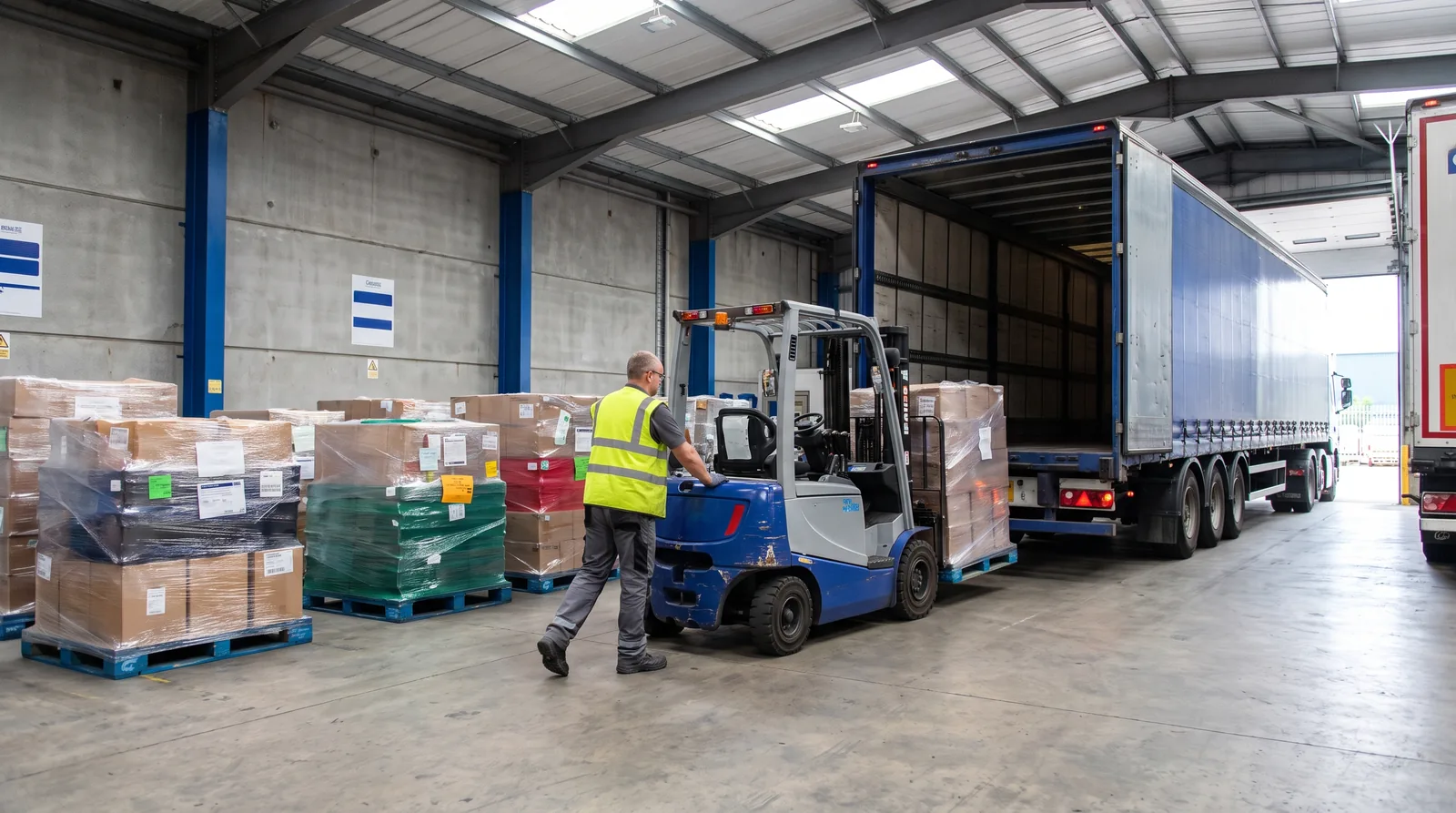
- Deconsolidation. At a UK hub the trailer is unloaded and your pallets are separated from everyone else's.
- Final delivery. A local vehicle runs the last leg to your door.
Each transhipment is a point where a pallet can be crushed, mislabelled, misrouted or left behind because the outbound trailer filled up first. More handling means more risk. That is the hidden cost sitting behind the attractive per-pallet price.
Transit time: groupage against a dedicated run
A dedicated vehicle drives from the Polish loading point to your UK address with your freight and nobody else's. Its transit is essentially driving hours plus the crossing plus customs. Groupage adds the wait for the next scheduled departure and the consolidation handling at both ends and the deconsolidation handling, so the same lane that a dedicated truck covers in a couple of days can take noticeably longer as a part load, and the arrival date is a window rather than a promise. If your goods feed a fixed production slot, an exhibition build or a retail delivery booking, that uncertainty is the real cost, not the freight rate.
What you actually pay for: loading metres and weight
Groupage is not priced per pallet as a flat number. Carriers price the space and the weight your freight denies to everyone else on the trailer, and they charge whichever is greater.
The mechanics of LDM and the standard weight-to-LDM conversions are set out in loading metres in freight pricing; the full cost breakdown of a Poland-to-UK move sits in what you pay for on a Poland-to-UK rate. For the buyer, four things drive the number:
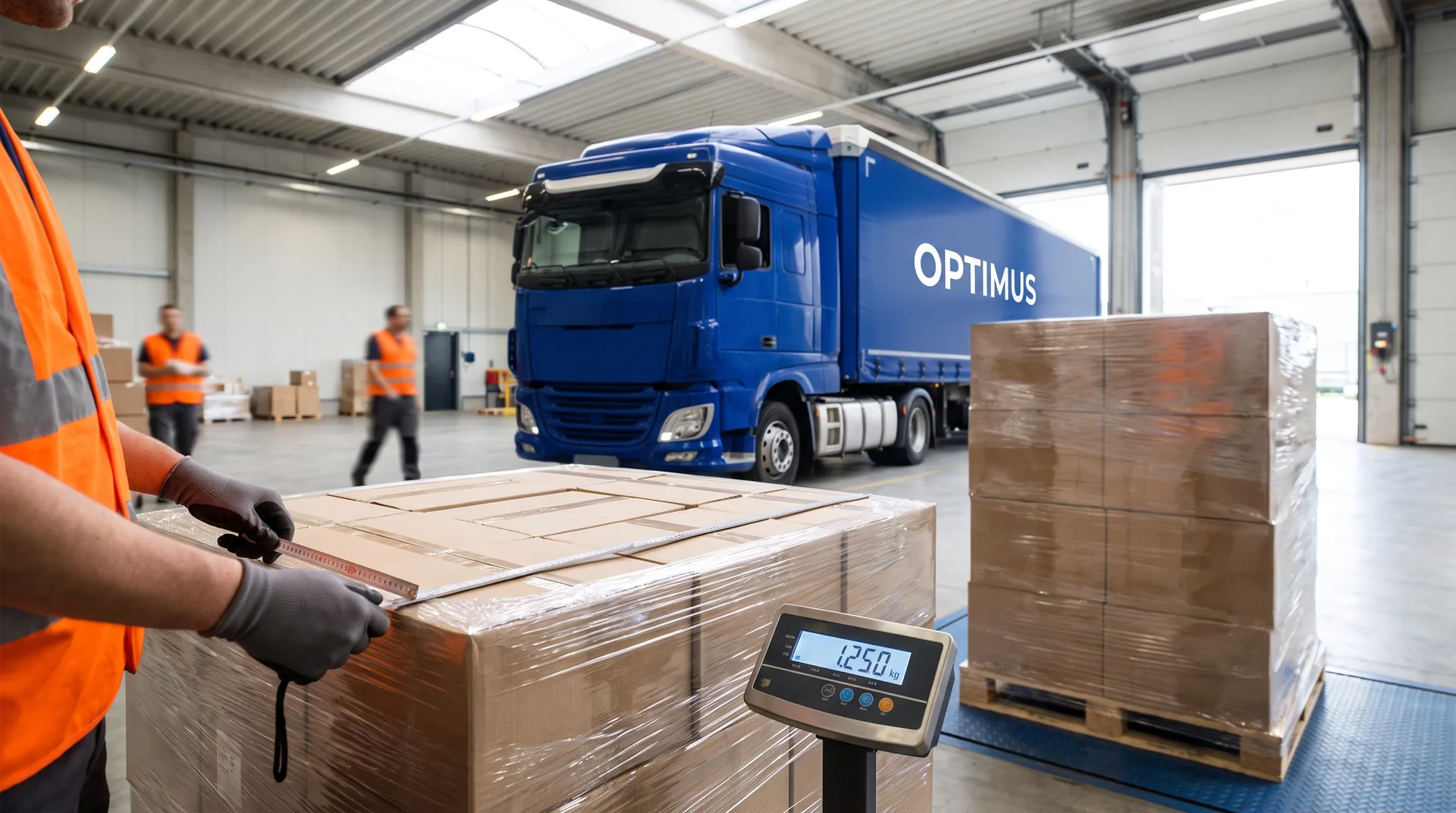
- Chargeable weight. Carriers apply a conversion, commonly around 1,850 kg per loading metre, and bill you on whichever is higher, the actual weight or the volumetric equivalent. Light, bulky freight pays for the metres; dense freight pays for the kilos.
- Stackability. A pallet you allow to be stacked uses one footprint; a pallet marked "do not stack" reserves the airspace above it and is charged for it. Non-stackable freight is one of the biggest silent multipliers on a groupage invoice.
- Footprint and overhang. Standard, shrink-wrapped, in-gauge pallets price cleanly. Overhanging or oddly shaped freight blocks neighbours and costs more.
- Customs and Channel surcharges. Each consignment carries its share of the export and import declarations and any crossing-related charges. On a small part load these fixed costs weigh more per pallet than on a big one.
The risk of what travels next to you
On a dedicated truck your freight is the only freight. On groupage it shares a sealed trailer with consignments you never see. A strong-smelling load next to food-grade goods, a leaking drum, an incorrectly declared dangerous good, or simply a heavy pallet stacked on top of yours: these are neighbour risks, and they are specific to shared transport. We deal with them in detail in what travels next to your pallet, and with the rules for hazardous goods in the mix in ADR classes in groupage. For a UK buyer importing food-contact or sensitive goods, the questions to ask a forwarder are: how is my pallet segregated, is it wrapped and labelled to survive multiple transhipments, and what happens if a neighbouring consignment contaminates the trailer.
When paying for a dedicated vehicle pays off
Groupage stops being the cheaper choice sooner than most buyers expect. As a rule of thumb, once your freight occupies more than roughly a third of a trailer, about a dozen pallets, or once the value of on-time, undamaged delivery exceeds the freight saving, a dedicated run wins. The full economics are in dedicated transport or part load and the volume threshold in FTL or LTL: when to use full loads.
| Factor | Groupage / part load | Dedicated vehicle |
|---|---|---|
| Freight cost for a few pallets | Lower, you pay for space used | Higher, you pay for the whole truck |
| Transit time | Longer, includes the wait for the next scheduled departure | Shorter, direct point to point |
| Arrival certainty | A window, depends on other cargo | A slot you can plan around |
| Handling and transhipments | Usually two: a Polish hub and a UK cross-dock, higher damage risk | Usually none between load and delivery |
| Neighbour risk | Present, shared trailer | None, sole use |
| Best fit | Small volume, flexible timing | Larger volume, deadlines, sensitive or high-value goods |
How we run this
As a road haulier we run both groupage and dedicated traffic between Poland and the United Kingdom, with warehouse hubs in Kielce, Legnica and Milton Keynes for consolidation, deconsolidation and UK final-mile delivery. We measure your consignment honestly in loading metres and chargeable weight, tell you when a part load is the right call and when a dedicated vehicle actually costs you less, and we handle the export and import customs that every UK-bound consignment now needs. See more on the export to the UK and transport risks pages, or bring us a specific consignment through the contact form.