In groupage to the United Kingdom there is no single universal limit for pallet weight or height. The thresholds follow from the trailer type, the unloading method at the consignee, stacking options and axle load distribution. Give us the real dimensions and weight and we will confirm at booking whether the shipment fits standard groupage.
Why do we not publish a single maximum height?
Because the UK flow uses different vehicles: standard trailers, megas, curtainsiders and smaller vehicles for feeder and distribution legs. Each has a different internal height, and the same pallet may fit easily in one and drop out of the load in another. Then comes the last leg: if unloading happens without a ramp, off a tail lift, the height and weight of a single piece must sit within the capability of the equipment. Trailer selection is covered in the article tautliner, mega or curtainsider. Rather than publishing a number true only for part of the fleet, we check your parameters against a specific departure.
What really drives the permitted height
- the internal height of the trailer serving the flow,
- stacking: a pallet nothing may be placed on takes a full column of space,
- the securing method: tall, narrow cargo needs bracing or a frame, otherwise it cannot be safely restrained,
- unloading at the consignee: a ramp and forklift allow more than a tail lift and a pallet truck,
- possible repacking at the hub: sometimes lowering the load onto two pallets costs less than hunting for a vehicle to fit one tall one.
Weight: when mass counts and when occupied space does
A shipment is charged by whatever runs out first: space or permitted payload. A light but uncoverable pallet blocks loading metres, and those decide the quote. A heavy pallet on a small footprint takes little room but eats payload and limits what else can be added, so it counts by mass. The same logic applies at every groupage carrier and is not a way to inflate a price, only a reflection of what the shipment actually consumes. We break the loading metre calculation down in how many pallets to the UK and how to count LDM.
Heavy pallets and axle loads
With mass concentrated on a small area a second limit appears that shippers rarely think about: the axle load distribution of the vehicle combination. A truck may have payload to spare and still not accept a particular pallet in a particular place, because putting it there would upset the weight distribution. That is why we plan heavy consignments earlier than light ones and why we ask for real weights rather than rough guesses. Securing and load distribution rules are covered in the article on cargo securing under EN 12195.
When does a pallet lose the option of stacking?
When its structure or contents will not take weight from above: goods in cartons of low rigidity, cargo overhanging the pallet footprint, an uneven or unstable top layer, film wrapped carelessly, no top board. A non-stackable pallet is not a problem in itself - we simply need to know before loading, because it takes a different amount of space than a stackable one. A shipper who does not declare it risks the load ending up at the bottom of the stack against expectations. How to prepare a pallet so it survives groupage and transhipment is covered in the guide how to secure a pallet for export.
Is there a lower limit: minimum weight and size?
Formally no: we carry groupage from a single pallet, and very light shipments have their place on board too. In practice what counts is not weight but shape: a small irregular piece without a pallet can be harder to stow than a full-size EUR pallet, because it cannot be safely placed in a stack. In such cases we usually suggest palletisation, described in the article on non-palletised groupage. The differences between carriers are gathered in EUR versus industrial pallet.
What to do when the load exceeds the standard
Do not drop the shipment, declare the parameters before booking. We then have several ways out: a different trailer type, splitting the load onto two lower pallets at our hub, booking the shipment as non-stackable with the matching space charge, or - for genuinely large dimensions - carriage outside groupage, described on the oversized loads page. The worst option is silence: a pallet taller or heavier than declared drops out of the load on the spot, costing the shipper time and taking space nobody can resell.
What to include in the booking
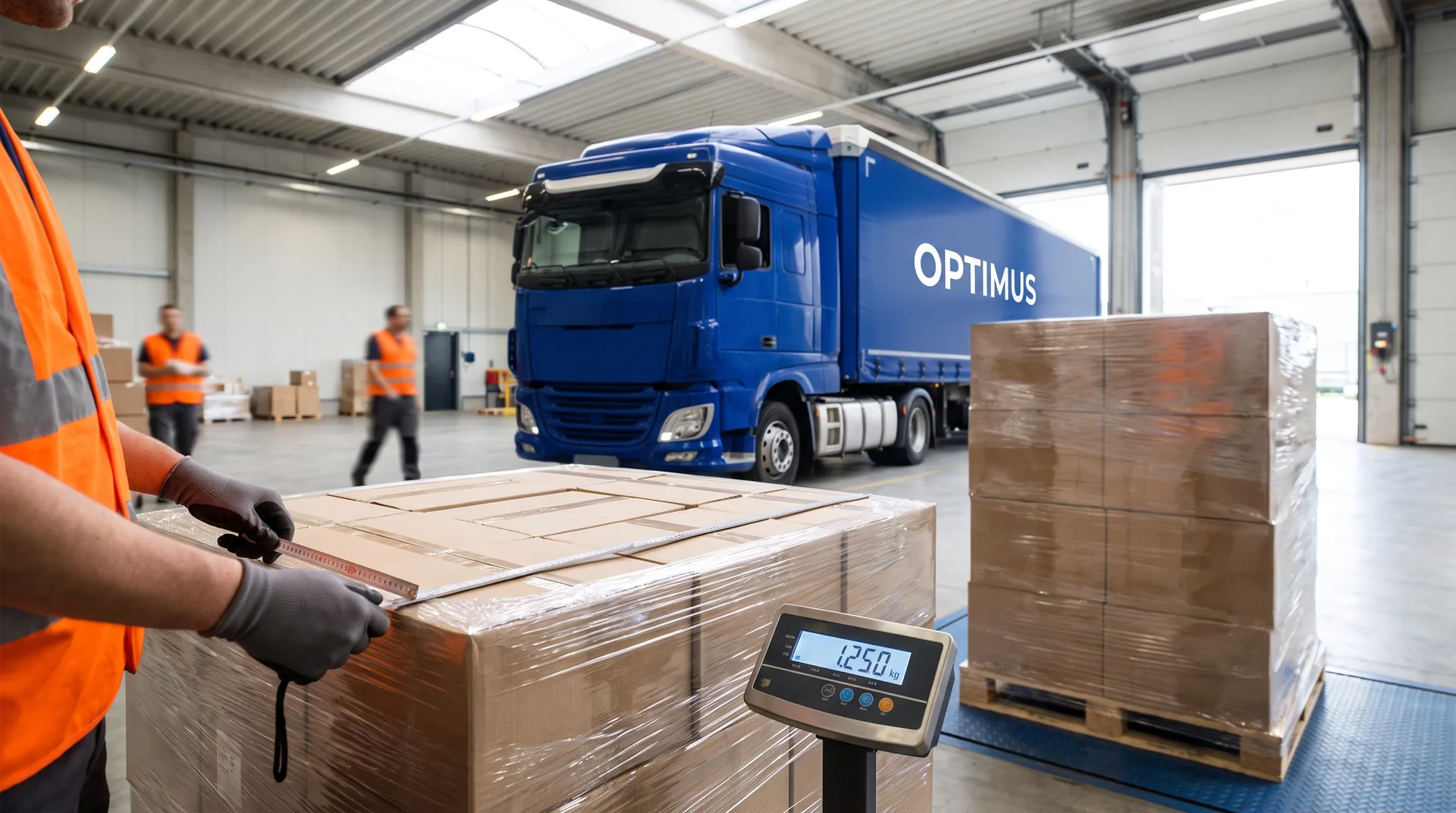
For every pallet: length, width, height including the pallet itself, gross weight, whether it can be stacked and whether the load overhangs. For heavy cargo add how the mass spreads over the surface. If unloading happens without a ramp, flag it straight away, because it decides the vehicle. Those details take three lines in a message and settle whether the quote will be binding or merely indicative. How many pallets fit a trailer in various layouts is shown in how many pallets fit on a trailer.
Have an unusual pallet and no idea whether it fits groupage? Send the dimensions through the quote form and we will confirm before booking. The whole model is described on the groupage LTL page.