Carrier own weight counts towards gross vehicle weight exactly as goods do. EPAL puts the euro pallet at around 25 kg dry, so on a full vehicle the carriers alone are hundreds of kilogrammes taken out of payload. On dense loads it is precisely pallet tare that decides whether one vehicle goes or two.
Simple arithmetic worth doing once
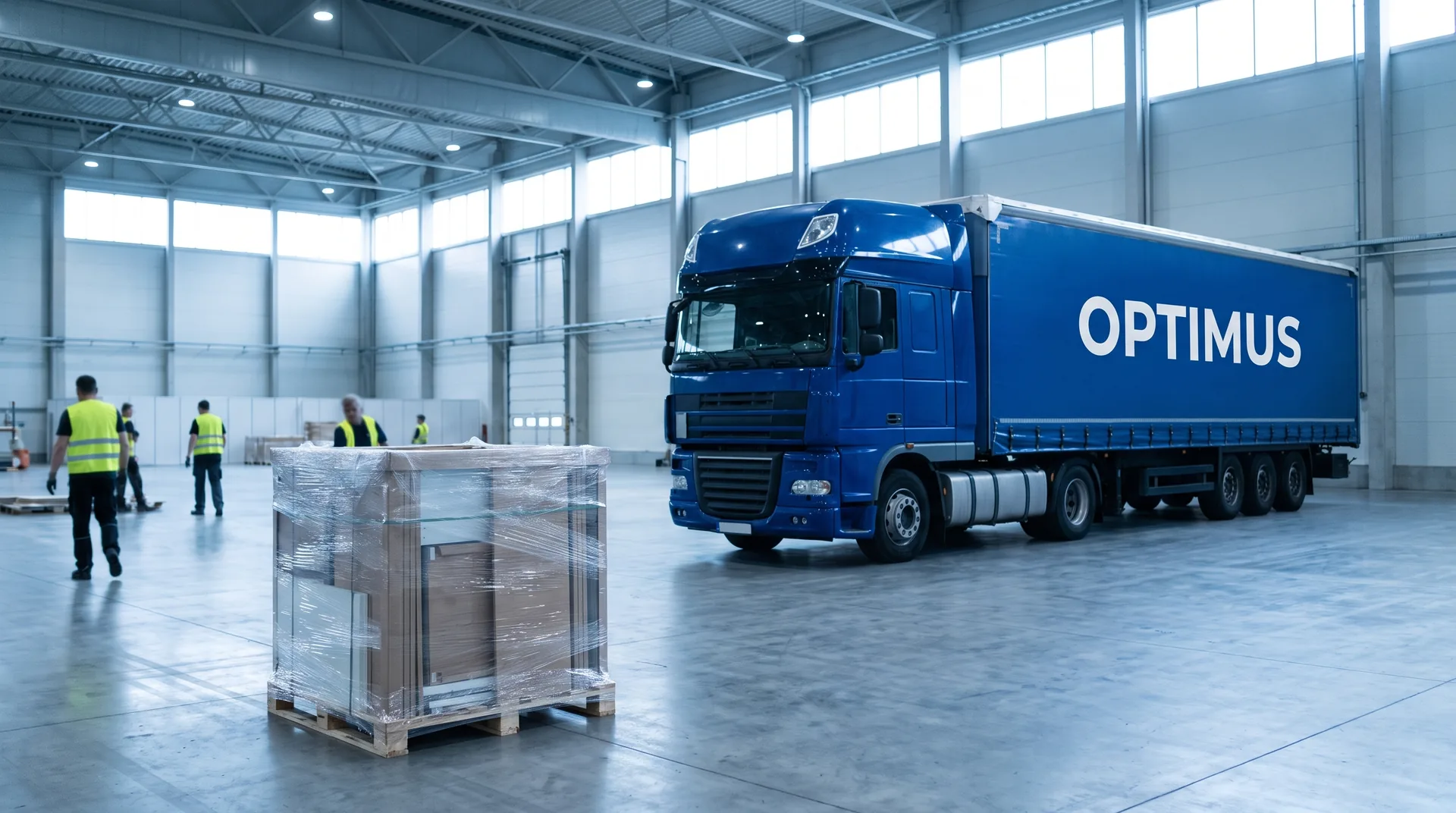
Take the number of carriers on the vehicle and multiply by unit mass. EPAL puts the euro pallet at around 25 kg; with thirty-three euro pallets floor-loaded in a 13.6 m trailer, the carriers alone come to roughly 825 kg. With double stacking the count rises and tare rises with it. Then add interlayers, corner boards and film — trivial individually, another few dozen kilogrammes together.
This is not an academic exercise. On dense loads — liquids, metal products, building materials, batteries — mass is the limit, not volume, and then every 800 kg taken by carriers is genuinely less product on the vehicle. How many units physically fit a trailer is calculated in how many pallets fit on a trailer, and the space metric in groupage in how many pallets go to the UK and how to count LDM.
Why a damp pallet wrecks the calculation
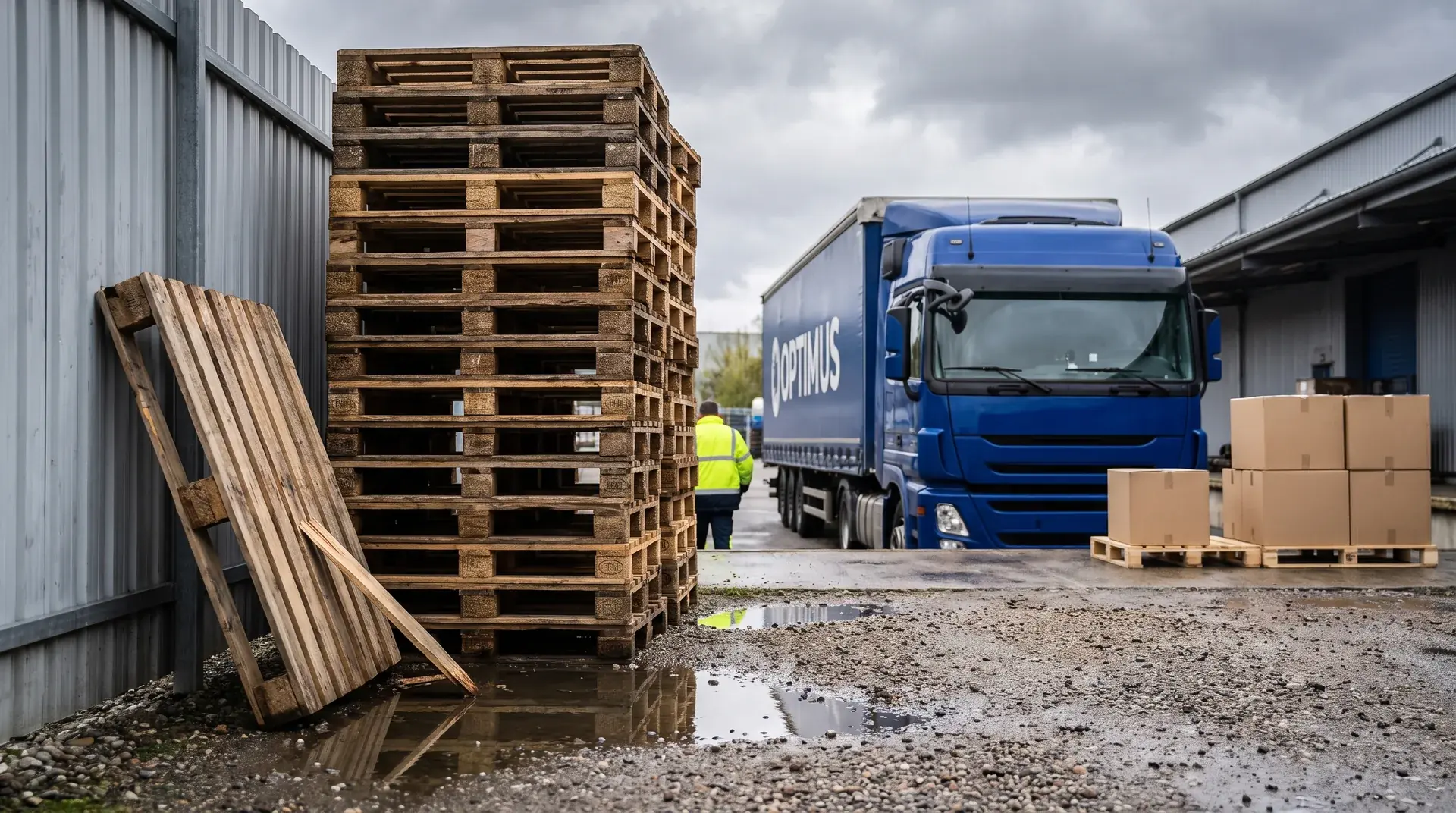
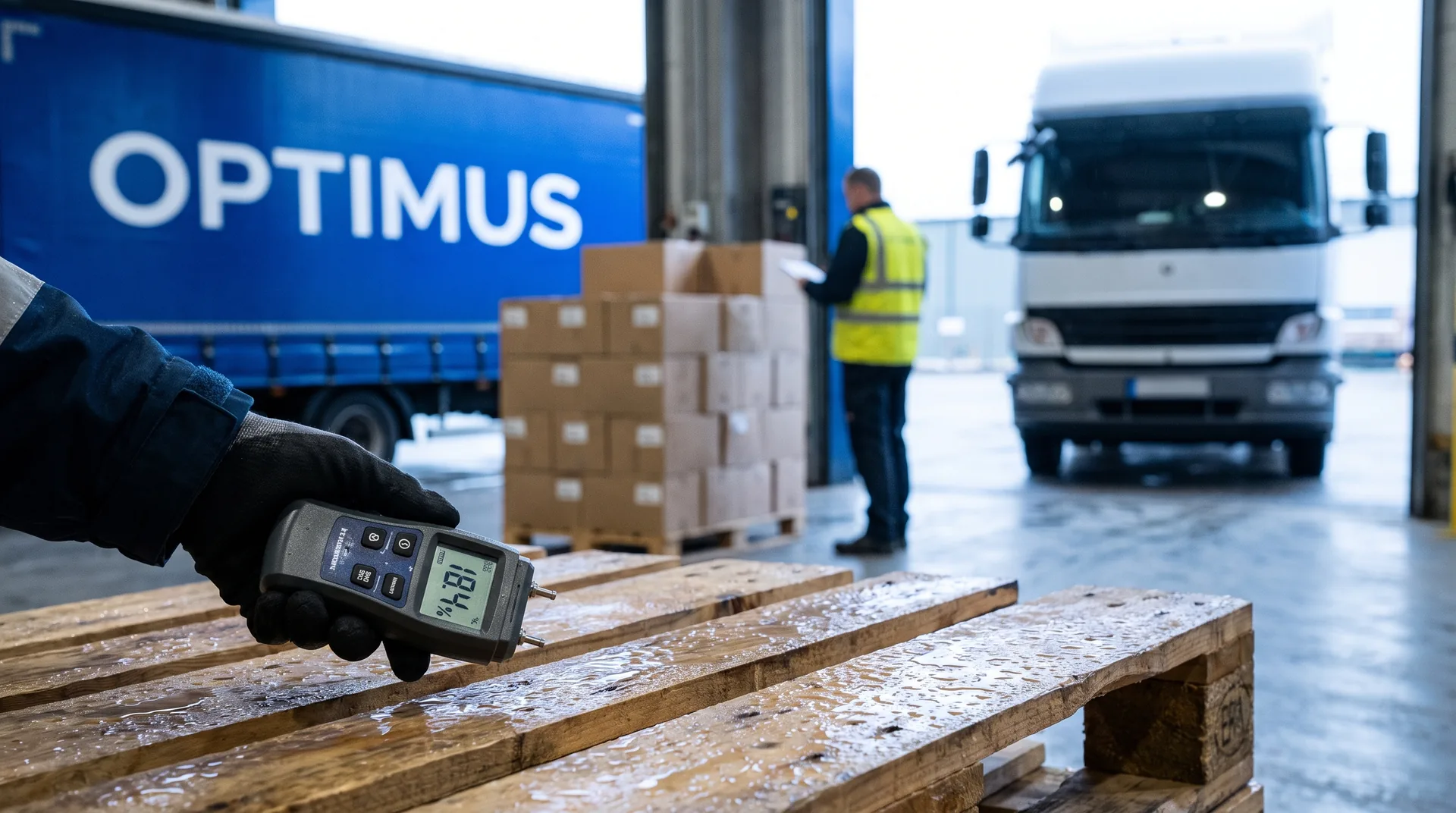
Timber absorbs water. A pallet that stood outside in the rain weighs noticeably more than the same unit after a week in a dry hall — exactly how much depends on species, construction and exposure time, so we quote no multiplier here that cannot be verified. The principle is enough: if the load sits close to the mass limit and the pallets came off an outdoor yard, add margin. A plastic carrier has constant mass, and on mass-limited loads that is often a stronger argument than hygiene — the comparison is in plastic and metal pallets on UK exports.
Tare and the declared weight on documents
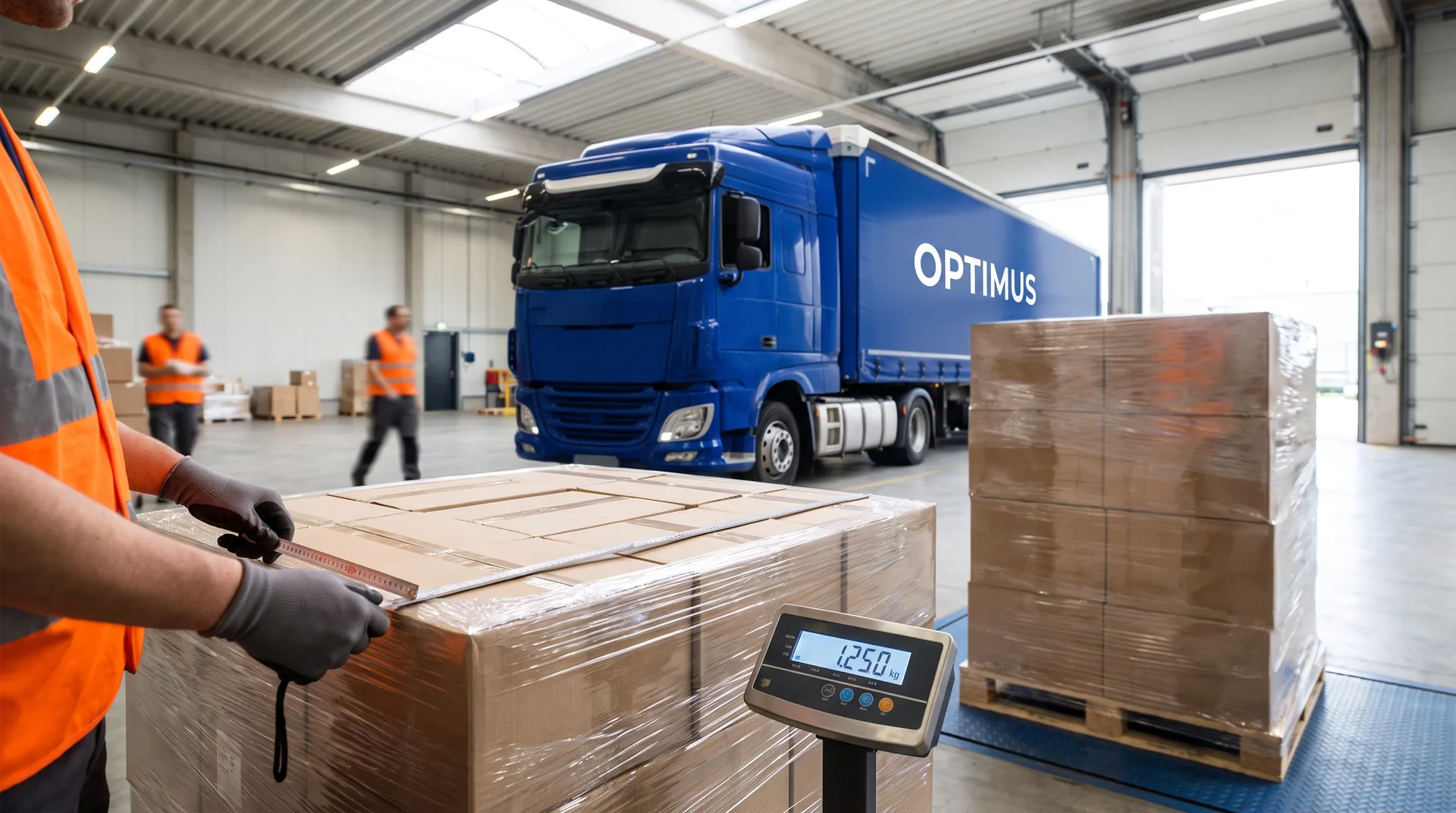
The weight on a consignment note should be gross: goods plus packaging plus carriers. Shippers frequently quote net weight from a sales system, because that is the figure to hand. The difference surfaces on the weighbridge, and by then it is the driver's problem, not the sales desk's. The consequences on the British side — a check, an overloaded axle, a prohibition — are covered in misdeclared weight and axle overload. The hub measurement mechanism itself is in weighing and measuring pallets before departure.
Distribution, not just the total
Carrier tare also acts on axle loads, in a less obvious way. Pallets sit evenly along the trailer, so they do not shift the centre of gravity in themselves — but they consume the reserve normally used to offset uneven product distribution. A vehicle loaded heavy at the front and light at the rear is sensitive to every extra kilogramme; at full carrier tare the room for manoeuvre goes to zero. How the arrangement changes when a load is rebuilt is covered in pallet re-stow and load rearrangement.
When tare forces a second vehicle
The situation runs like this: the load fits by volume, but adding carrier tare pushes mass past the permitted limit. You then have four moves. One: reduce the number of carriers by building taller units — if the consignee will take a taller pallet. Two: move part of the load onto a lighter carrier or a slip-sheet, if the consignee has the equipment. Three: split the shipment and send part as LTL groupage rather than adding a second vehicle. Four: accept two vehicles, but decide it deliberately rather than after weighing.
Returning pallets are cargo too
Empty carriers heading back to Poland have mass and take space — they are not a "free" back load. When planning a return it is worth calculating how much payload remains for goods once a stack of pallets takes part of the space. Settlement rules for units in circulation are in pallet exchange and pallet notes and losing carrier units.
What to give at quotation so there are no surprises
Three figures instead of one: net product weight, carrier count and type, gross unit weight after wrapping. If the pallets came from an outdoor yard and may have got wet, say so plainly — we will build in margin at planning rather than discovering it on a weighbridge. On dense loads it is also worth giving the unit dimensions, because at a mass limit it often turns out that building lower units and using trailer height differently pays.
Sources
- EPAL: euro pallet own weight approx. 25 kg, dimensions 1200×800×144 mm
- DVSA / GOV.UK: loading duties, load mass and distribution
Got a load close to the mass limit? Give net weight, carrier count and dimensions in the quote form and we will work the tare out with you. The lane is described on our transport to the United Kingdom page.