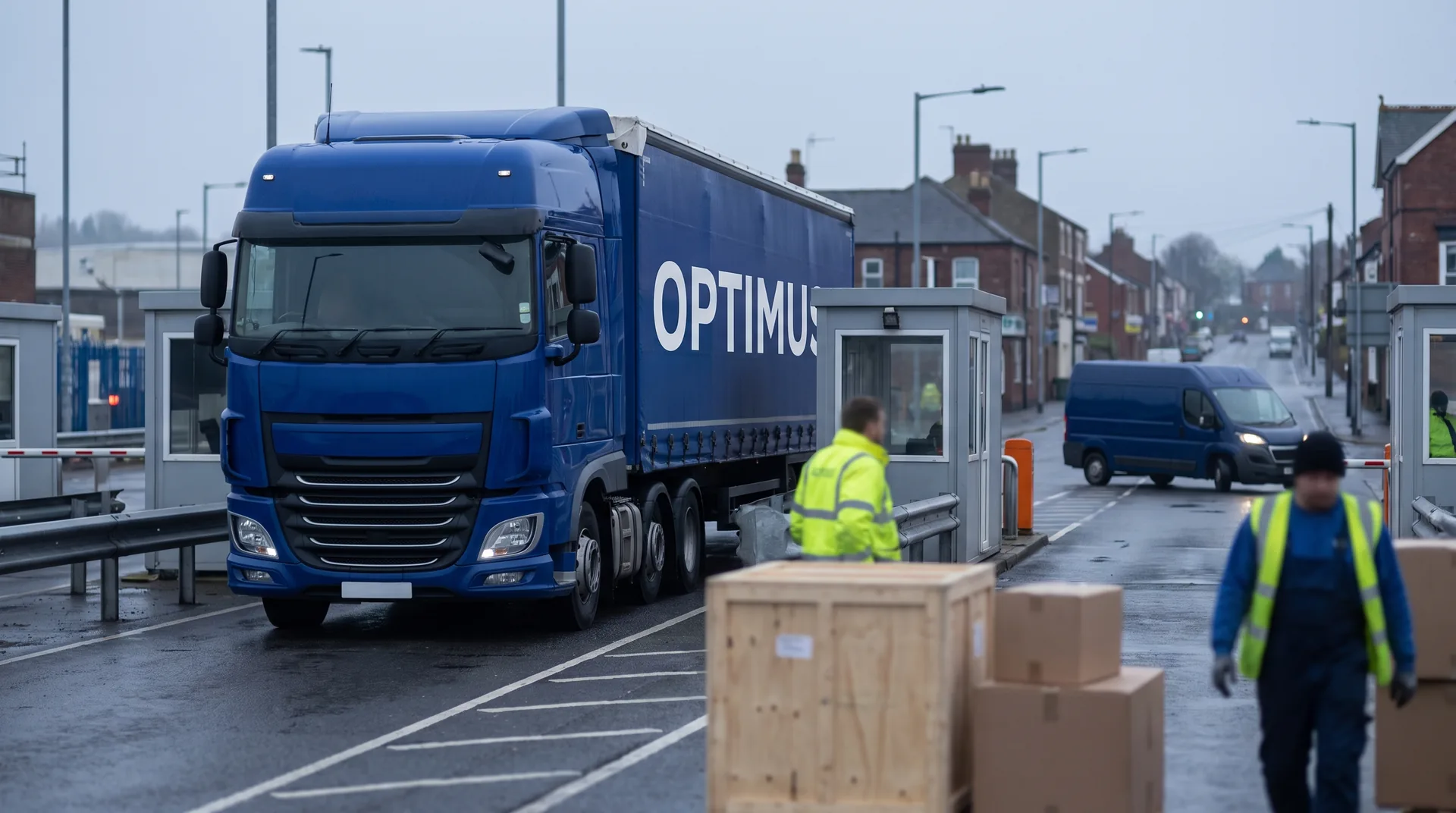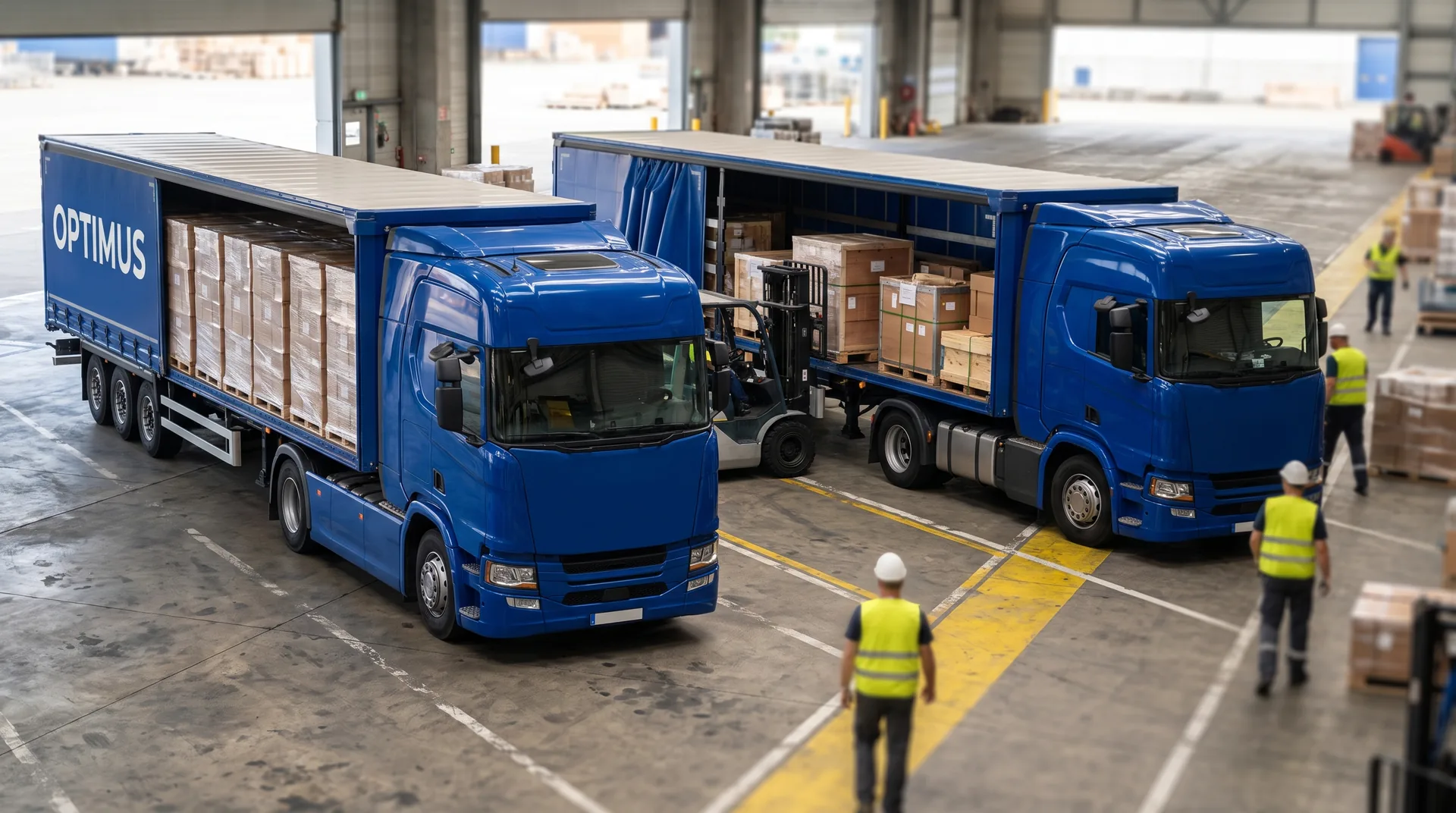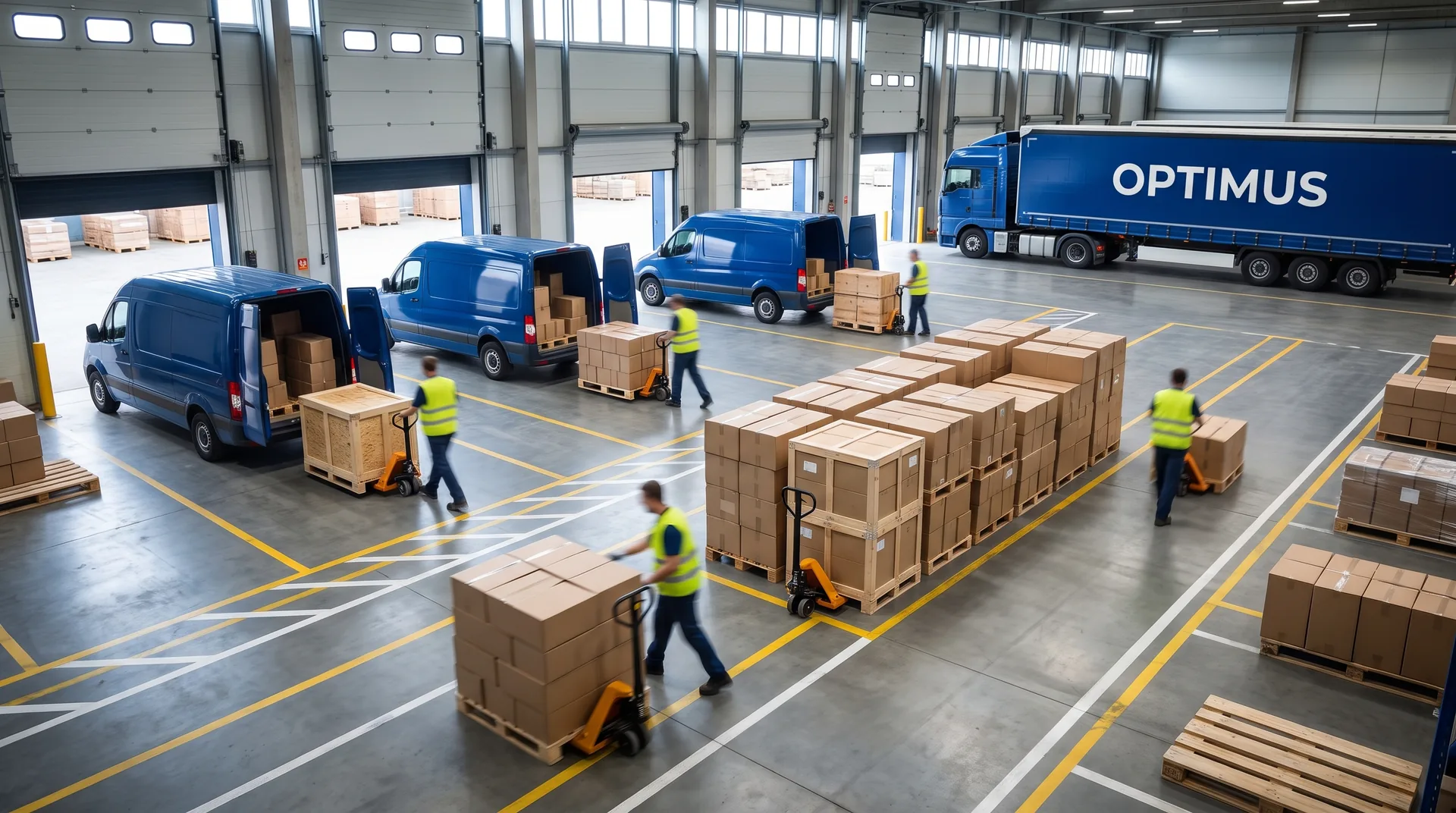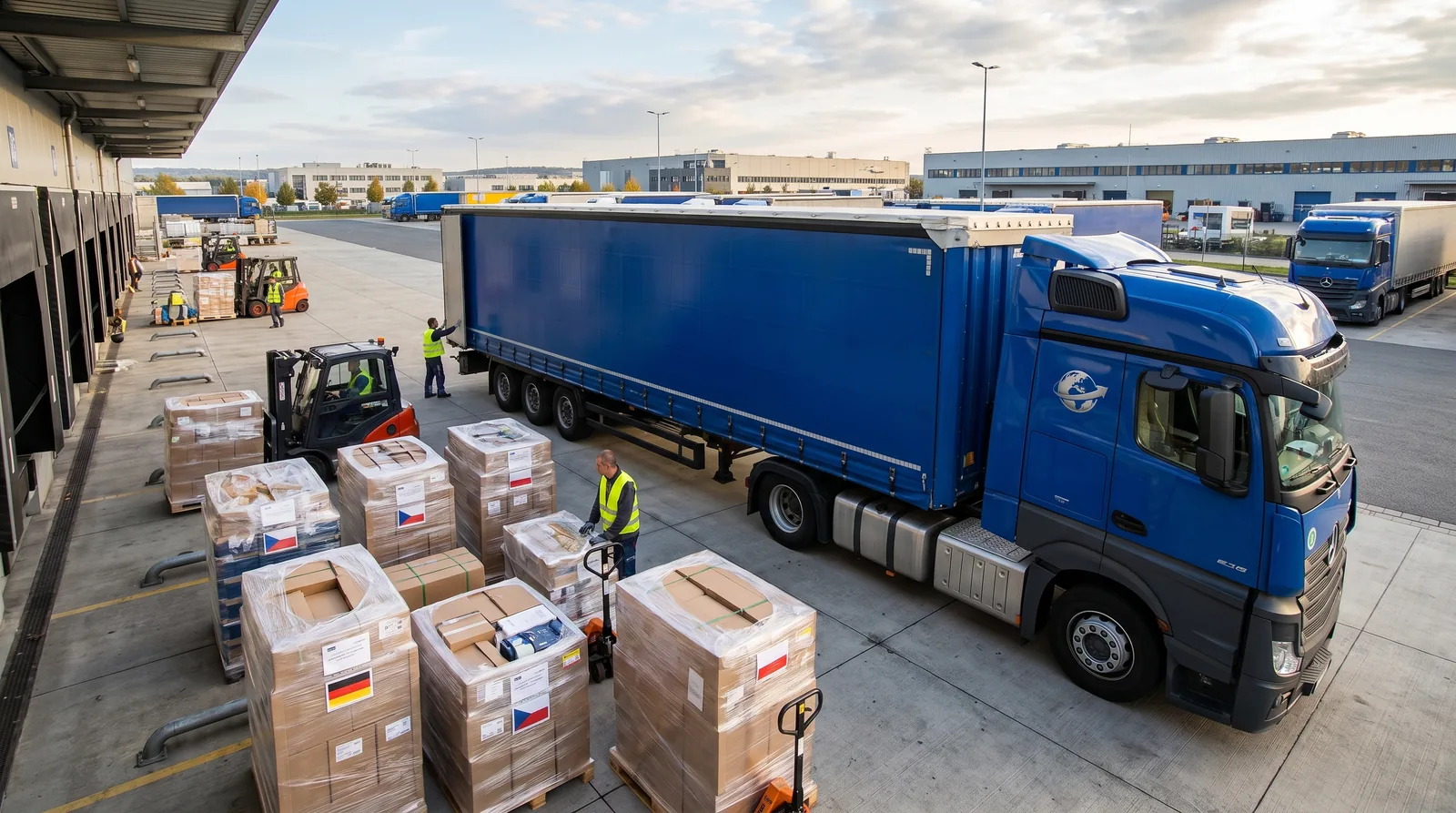
Consolidation from Czechia, Slovakia, Austria and Hungary to the UK means collecting smaller consignments at shippers in those countries, combining them into one vehicle at a Polish hub and sending them to Britain in a single movement. One carrier owns collection, transhipment, customs and delivery, so the shipper keeps one contact and one line of responsibility.
Why Central Europe reaches Britain through Poland
A manufacturer in Brno, Zilina, Linz or Gyor sending five pallets to England has three options: book a full truck and pay for air, hand the goods to a pallet network with several transhipments along the way, or join a consolidation. The third route wins when the consignment is too large for a pallet courier and too small for a dedicated vehicle. Poland sits on the natural corridor from Central Europe westward, and our line-haul vehicles pass through it anyway on their way to the Channel. Adding pallets from Czechia or Austria does not lengthen the route; it fills space that is already travelling.
What the shipment journey looks like
- Collection at the shipper in Czechia, Slovakia, Austria or Hungary, by a delivery vehicle or a line-haul unit.
- Delivery to the Polish hub and transhipment: pallet condition check, measuring, weighing and, where needed, repacking and re-wrapping.
- Loading onto the line-haul vehicle together with Polish cargo heading the same way.
- Export clearance and the UK import declaration prepared before the vehicle reaches the port, plus the GMR for the crossing.
- Delivery to a UK address, or through our Milton Keynes warehouse where the receiver only accepts goods in set windows.
What happens to a pallet at the hub
Transhipment is the moment when preparation problems surface: overhang beyond the pallet footprint, loose wrap, missing labels, mixed consignments on one pallet. We fix all of it on the spot before the goods move on, because a repair in Poland costs less than a rejection at an English loading bay. That stage is described in cross-docking at the hub, and the preparation rules in how to secure a pallet for export.
Documents: who is the exporter
With cargo from several countries, the decisive question is who acts as exporter and where the export declaration is lodged. That follows from who sells the goods and on what Incoterms. The practical conclusion: agree the delivery terms before the first loading, not on the day the vehicle departs. Market-specific detail is in Czechia and Slovakia to the UK and Austria and Hungary to the UK. The question of how many consignment notes to raise is settled in one CMR or several.
Transit time and predictability
Consolidated groupage normally runs longer than a dedicated vehicle, because collection to the hub and transhipment are added. In exchange the shipper gets regularity: fixed collection days and fixed line-haul departures instead of waiting until a full load accumulates. For urgent consignments the alternative is express transport with no transhipment, and for larger volumes a dedicated FTL vehicle running straight from shipper to receiver. The break-even runs at roughly a third of a trailer, about twelve pallets, and what happens above it on the Czech lane is covered in FTL from Czechia to the UK.
Who this model suits best
- Manufacturers sending anything from one to a dozen or more pallets, regularly, to fixed UK receivers.
- Distributors topping up British stock in batches rather than full loads.
- Companies with suppliers in both Poland and Central Europe who want one carrier for everything.
- Exhibitors sending stands and exhibits from several countries to one show in England.
The return leg
Consolidation works the other way too: we collect in the United Kingdom and distribute across Central Europe on the same network. The vehicle does not run home empty, and a Czech or Hungarian shipper keeps one partner for both directions. Imports in that direction are covered in import from the UK to CZ, SK, AT and HU.
Have cargo in Czechia, Slovakia, Austria or Hungary bound for the United Kingdom? Send the collection point, pallet count and date through the quote form and we will add it to the next consolidation. The whole model is described on the consolidation via Poland page.