A hydraulic breaker and the rest of the excavator attachments are the most obliging cargo in the whole auction machinery category: they go on a pallet or a transport frame, travel in groupage and need no permits. The difficulty is on paper. An attachment has a different tariff heading from the machine it fits, and in a package purchase that is easy to forget.
Why this travels in groupage
An attachment is heavy but small, so it does not use up deck space, only payload. That is exactly the cargo profile groupage exists for: the buyer pays for the space taken and for the weight, not for a whole run. The consolidated vehicle waits for the next scheduled line departure, so the timing is counted in days. The boundary where a load stops being groupage runs at roughly a third of the trailer, about twelve pallets; a single breaker on a base is far below that. We describe the groupage model under small plant groupage from UK auctions.
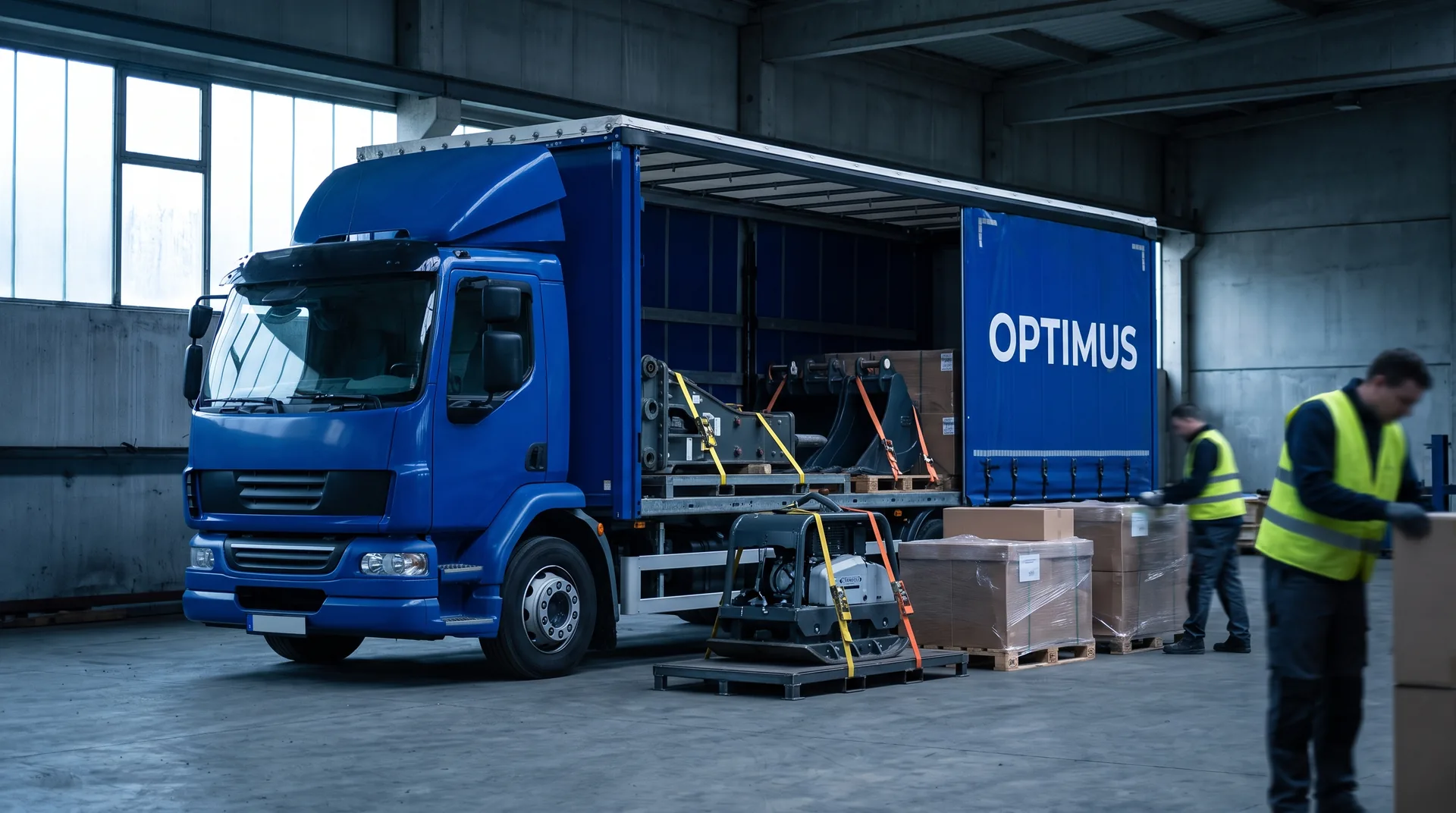
The caveat concerns concentrated weight. A breaker stood on an ordinary pallet punches through it or crushes the deck, so heavy attachments go on a frame, a stillage or a heavy pallet with bearers spreading the load. That has to be agreed with the yard before collection, because an auction yard releases attachments exactly as they stand.
Packing and timber
- Heavy attachments lie flat on bearers, with sharp parts facing inboard.
- Breaker points, bucket teeth and shear blades are covered, because in groupage the neighbouring load is within reach of any movement.
- Quick couplers and hydraulic ports are capped. An open line loses oil for the whole journey.
- Loose items such as pins, bushes and seal kits go in a closed container and are described, because they belong on the declaration too.
- Wooden pallets, stillages and bearers used for carriage fall under the requirements for wood packaging material; the rules and markings are set out in our piece on the ISPM 15 standard.
A separate tariff heading
The commonest error after a package sale looks like this: the buyer declares the excavator and treats the breaker and the set of buckets as its equipment. Formally they are separate goods with their own description, quantity and apportioned value, and the classification of an attachment does not follow the machine it fits. The code is confirmed in the tariff in force on the day of declaration, from the description of the specific item. Customs value rests on the price actually paid, apportioned in a way the auction documents can justify; we cover that in the piece on the customs value of a used auction machine, and the full document set in the article on documents for a machine bought at auction. Declarations are filed by the regular customs agencies we work with on both sides of the Channel.
Lashing a heavy, small load
An attachment carries a lot of weight on a small footprint, so it behaves differently from a pallet of goods: it does not topple, it slides. A mechanical block, that is chocking and bearing against a headboard or other loads, matters more here than the number of straps, and lashings are hooked through the points provided in the frame or through a transport eye where the maker fitted one. How forces are calculated is collected in the article on cargo securing under EN 12195.
Cleanliness and oil residue
An attachment taken off a working machine is oily and muddy, and in groupage it travels beside someone else goods. Washing and drying it before packing is the condition for getting it onto a shared trailer at all. If the attachment has worked on agricultural or forestry ground, the phytosanitary conditions may apply on entry into the Union, with a notification in TRACES NT, a CHED-PP certificate and the importer entered in the register kept by the Polish plant health service; we describe the procedure under farm machinery auctions in the UK.
Sources
- European Commission: calculation of customs duties and the tariff
- IPPC: ISPM standards, including ISPM 15 for wood packaging
- GOV.UK: securing loads on HGVs and goods vehicles
Bought attachments at auction and want them on the next departure? Send the weight, dimensions and yard address through the quote form. See also groupage LTL and customs clearance. See also: a road roller from a UK auction.