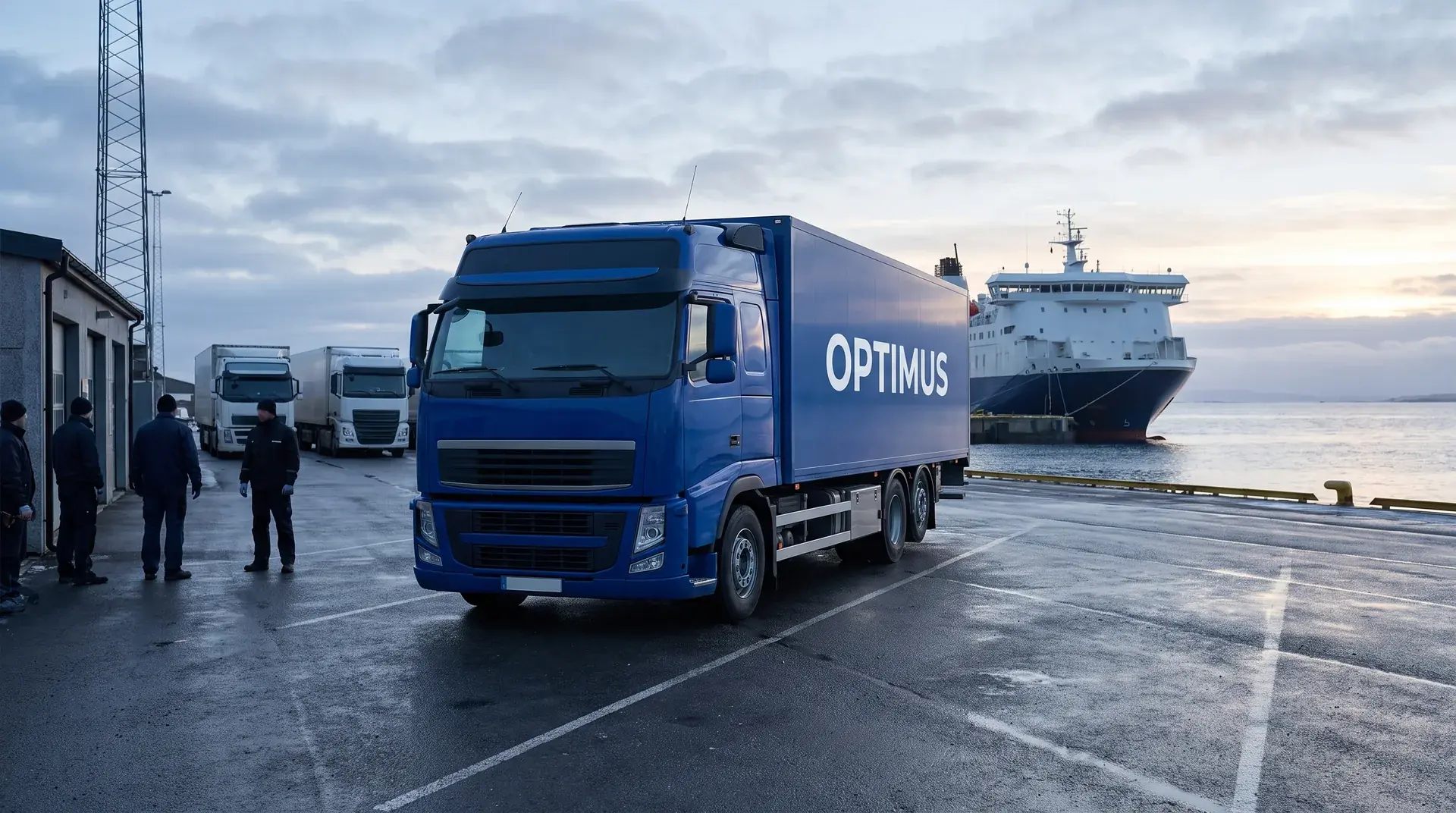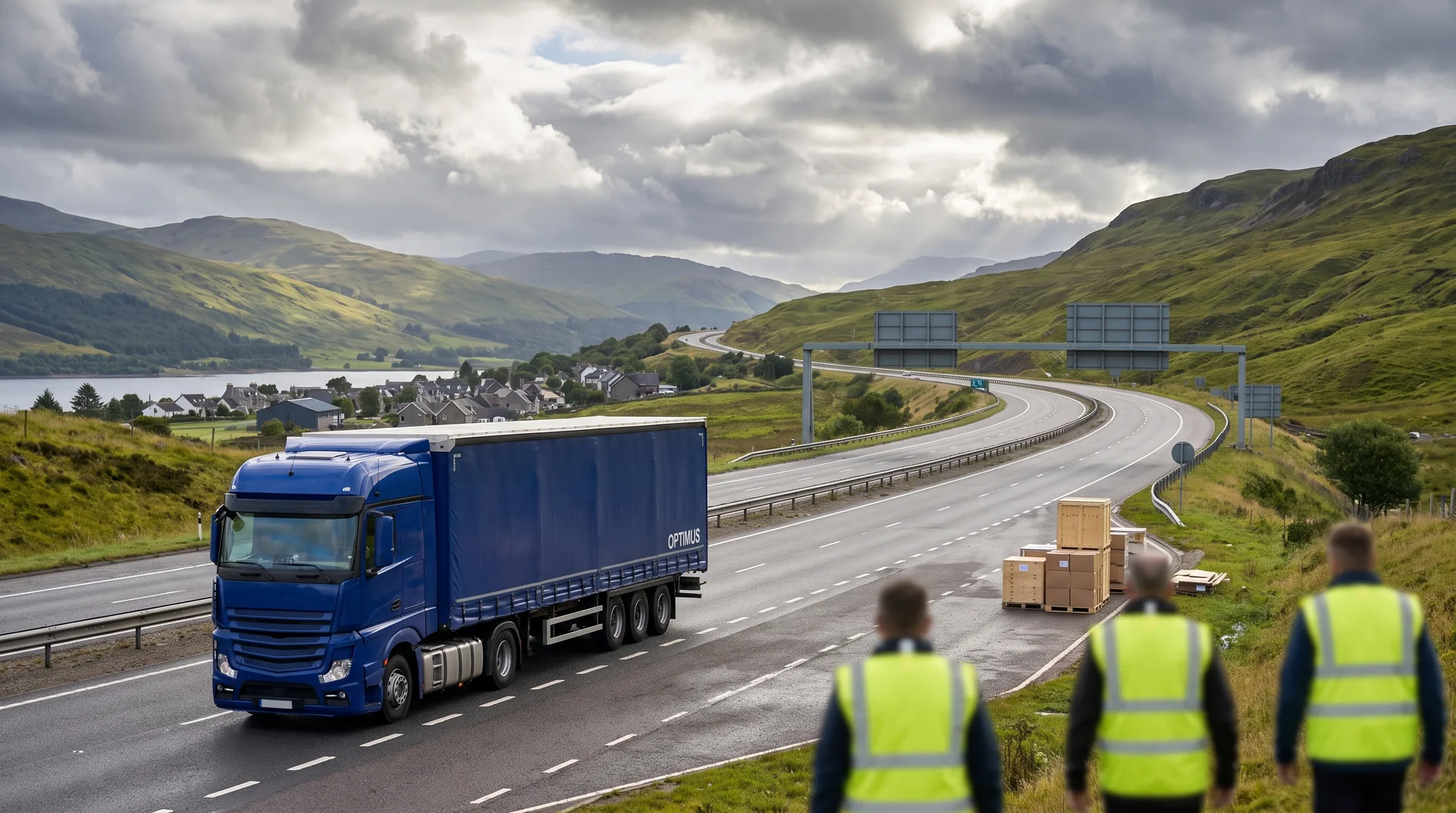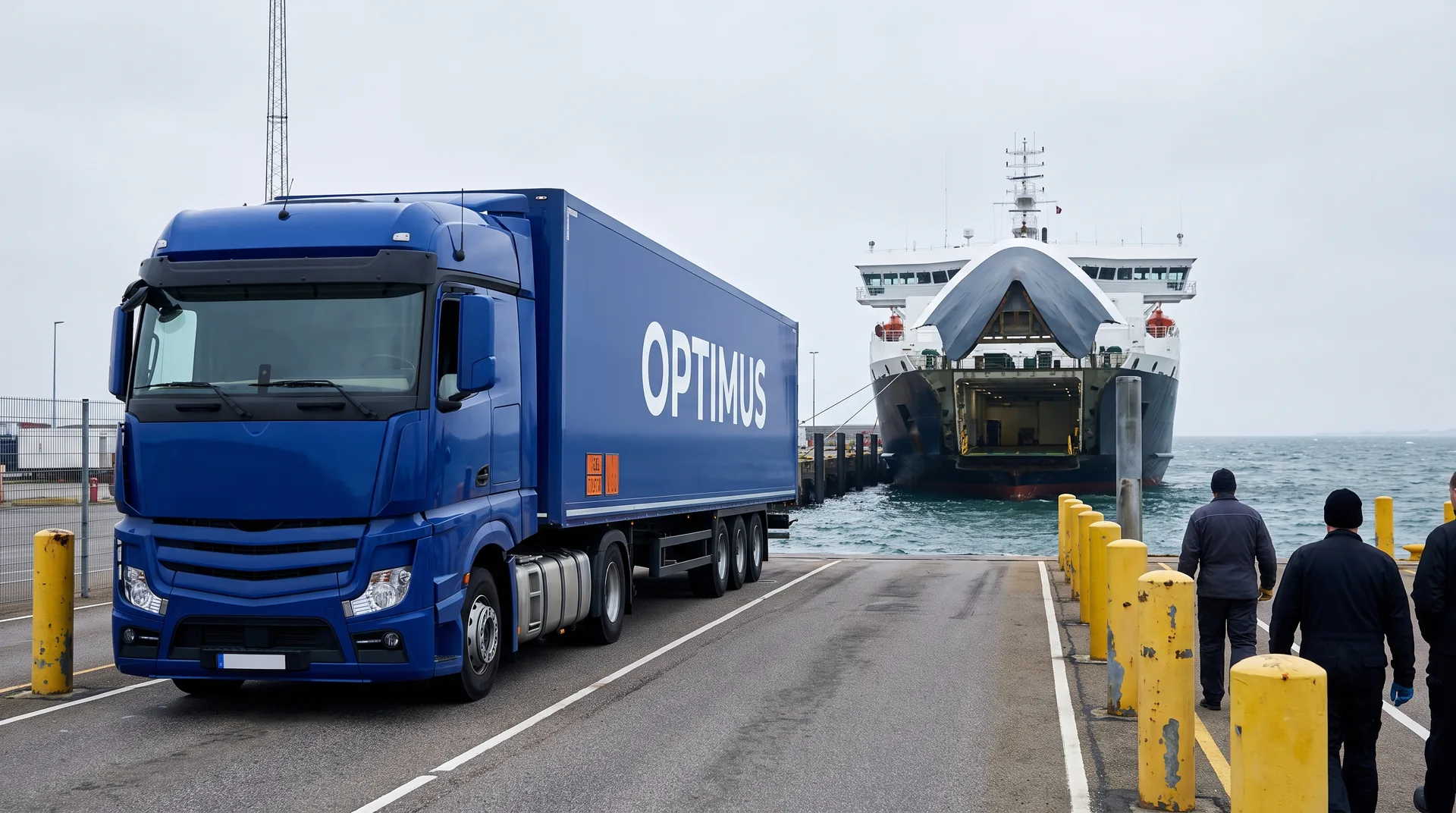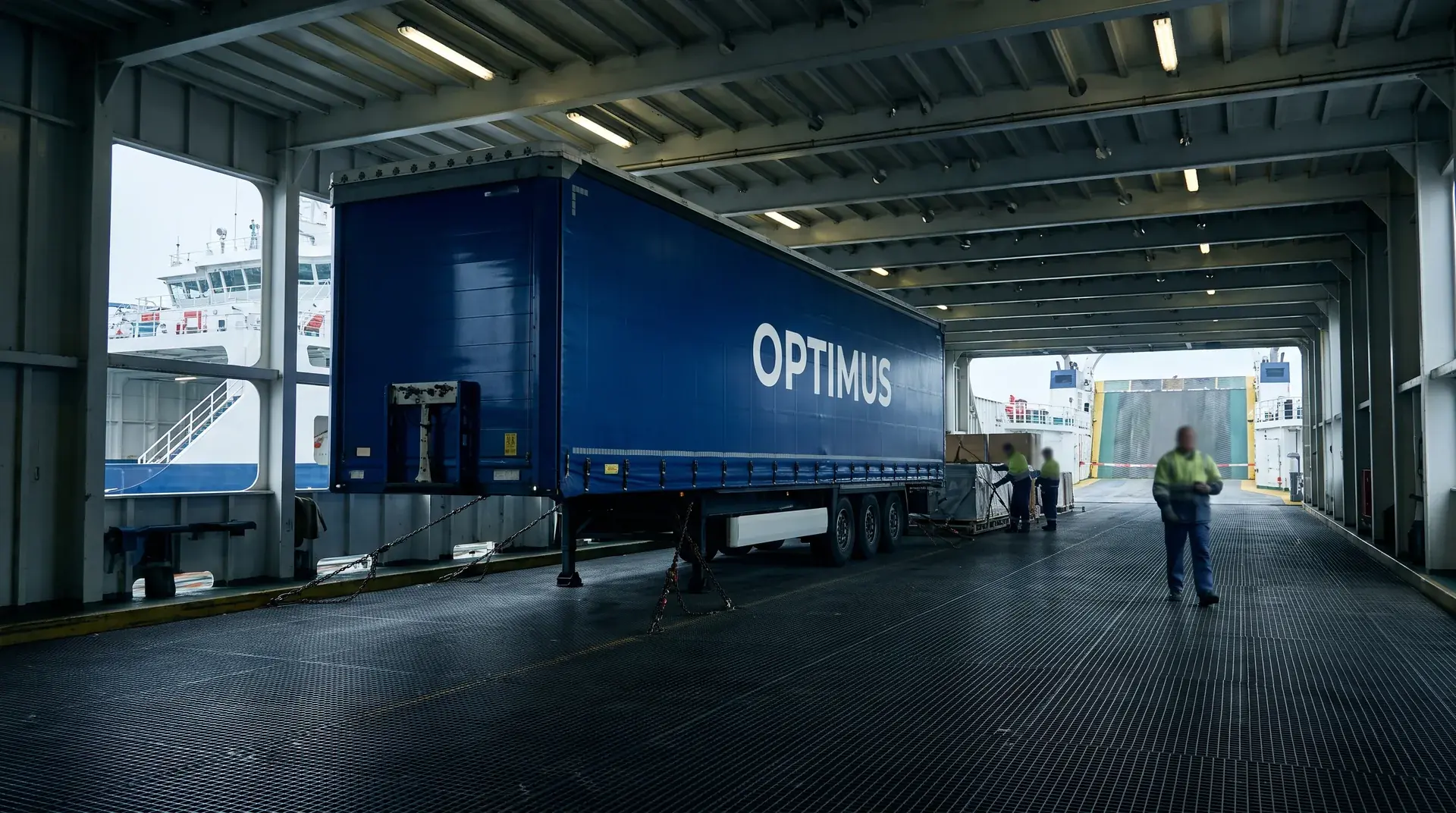
Unaccompanied carriage means the trailer boards alone while the tractor unit and driver stay on the departure side. On the far side another tractor collects it. On island routes, particularly long sailings, the arrangement can be cheaper and makes better use of driver time — but it changes how the cargo is supervised.
Where is the benefit?
In three things at once. First, the tractor and driver do not spend many hours at sea but return to work on the continent — a real saving of a resource that is usually scarce. Second, the cost of carrying a trailer alone can be lower than carrying a full unit with a driver. Third, splitting the legs simplifies driver hours accounting, because the driver does not spend a day at sea; the rules are described in our texts on drivers' hours and on driver hours on the Poland-UK route.
Who collects the trailer on the far side?
That is settled before booking, not after. Collection must be organised: either by our partner on the island side or by the consignee, if they have their own tractor unit. Without an agreed collection the trailer stands at the terminal generating demurrage while the cargo never reaches its destination. So on unaccompanied jobs we always state in the confirmation who collects, when and on what terms.
Who is responsible for the cargo when the trailer sails alone?
This is the central question and there is no universal answer. The scope of responsibility depends on the terms of the job, on who acts as carrier on each leg, and on the insurance conditions. Our practice is to settle the scope of cover with the client and the insurer before accepting an unaccompanied job, and to record what was agreed. The general framework of carrier liability is described in our text on carrier liability under CMR, and the differences between policies in our article on carrier liability versus cargo insurance. Without confirmed cover we do not propose this format for high-value cargo.
When unaccompanied carriage makes no sense
- Where the cargo needs constant supervision or monitored temperature control in transit.
- Where the delivery has a fixed window at the consignee and trailer collection on the island side is not organised.
- Where the sailing is short — then the saving is illusory and the complication real.
- Where the load is ADR and requires the driver's presence under the arrangements for that route.
In those cases accompanied carriage is the better answer, even if it looks dearer on paper.
Securing the cargo for the sailing
With no driver aboard, securing must be complete before the trailer is closed, because nobody will adjust it en route. That means solid lashing, filling voids, checking weight distribution and photographing the loading. As the vessel moves in a seaway, poorly secured cargo shifts differently than it would on the road — a real cause of damage that can be eliminated at loading. The rules are described in our text on securing a pallet for export.
On which island routes is it available?
The format is well established on the Isle of Man route, where the operator explicitly accepts unaccompanied cargo. On other routes availability depends on the operator and the specific sailing; we check it at booking, just as we check size parameters. The detail is in our articles on the Isle of Man freight crossing and on NorthLink Ferries freight. On the long Shetland sailings the question comes up especially often — context is in our text on transport to Shetland.
What changes in the transport documents
In unaccompanied carriage the cargo passes through more hands than in ordinary road transport, and every handover should leave a trace. In practice that means three things. First, the transport document must describe the actual route and the actual parties performing each leg, not a simplified version for the issuer's convenience. Second, cargo condition and seals are documented when the trailer is closed and again when it is taken over on the far side — photographs and seal numbers are the only hard evidence once a dispute arises. Third, the job states plainly who has custody of the cargo at the terminal before and after the sailing, because that is the leg most often left out of the description. We settle this before accepting the job, so it does not emerge afterwards that nobody is responsible for a trailer standing in a yard.
When to combine both formats
Some jobs are best served by a mixed arrangement: urgent, sensitive cargo travels with a driver while bulk or less time-critical goods sail in an unaccompanied trailer. That split makes sense for large volumes where part of the consignment has a hard deadline and part does not. It does require the cargo to be separated in advance, and therefore a decision taken at the planning stage in Poland. We resolve it with the client at the quoting stage, because only then is the real cost of urgency visible for each part.
Sources
- Isle of Man Steam Packet: commercial and freight (unaccompanied cargo)
- NorthLink Ferries Freight: freight service and carriage rules
Wondering whether to send a trailer without a driver? Describe the cargo and date in the quote form and we will compare both options together with the scope of cover. Island destinations are on the island transport page.