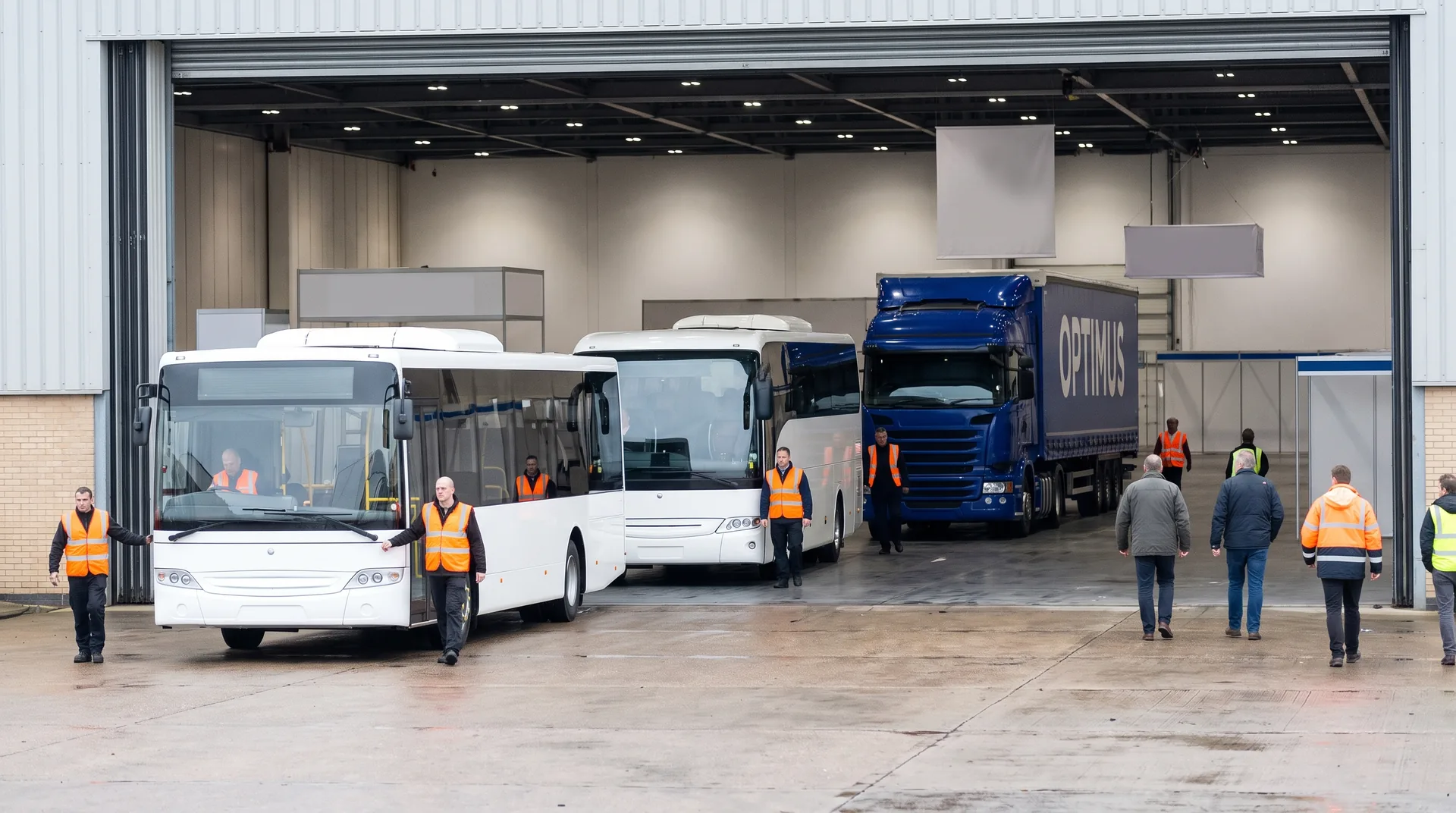
E-bikes travel to KIELCE BIKE-EXPO as mixed cargo: the frame and hardware are ordinary groupage, while the lithium-ion battery falls under dangerous goods rules. Whether the full ADR regime applies is decided by cell energy and battery condition, not by the fact that it is fitted to a bicycle.
Is an e-bike battery dangerous goods?
Formally yes: lithium-ion cells sit in class 9. In practice two things decide what carriage looks like. The first is battery energy, because special provision 188 exempts batteries within defined limits from the full regime, provided they are correctly packed and protected. The second is condition: a new, functional battery is treated differently from a damaged, defective or returned one. That second category needs its own packaging and its own declaration, and is never an item to slip quietly into a consolidated load.
The UN number and battery ratings come from the product sheet and the transport documentation supplied by the maker. Those decide the classification, not a visual assessment. Classification basics are gathered in the article on ADR classes 1 to 9.
Battery in the bike or packed separately?
For carriage purposes this matters, because a complete bike and a loose battery fall under different ADR entries. Since the ADR 2025 edition, fully mandatory from 1 July 2025 after the transitional period, a vehicle powered by a lithium ion battery, an e-bike or e-scooter included, has its own entry, UN 3556. A battery travelling on its own is UN 3480, and a battery packed with equipment or installed in it is UN 3481. The number that applies to your goods is on the product sheet, so do not guess it on the ramp. Removing the battery and packing it separately has three practical advantages: it is easier to protect against short circuit, easier to count at loading and easier to document at delivery. It has one drawback: bikes without batteries have to be made up on the stand, which with dozens of units costs the fitting crew time.
So the choice depends on scale. With a handful of demonstration units it is simpler to carry complete bikes; with a larger batch it usually pays to separate. We settle it with the exhibitor before loading, because it affects packing and paperwork alike.
How bicycles are packed for a fair
A bike in its factory carton is safe but bulky and has to be assembled on the stand. A bike on a transport stand arrives ready to place but needs its own structure and more careful lashing. The third option, most common on larger displays, is palletisation: bikes set alternately on a framed pallet, interleaved where they touch and wrapped. How many fit on a pallet depends on the type and handlebar height, so we quote figures after seeing the specification, not from a table.
The parts most at risk are the derailleur, the brake discs and the paint on the frame tubes. The derailleur gets a guard, the discs get spacers, and frame-to-frame contact points get foam. It looks fussy, but a bike with a bent derailleur is not fit to display, and repairing it on the stand costs time inside the build-up window.
Charging batteries on the stand
That is a question for the organiser, not the carrier, and the answer varies by show and hall. Many venues restrict lithium-ion charging inside halls, designate separate areas for it or require notification. The rules for entering and staying on the Targi Kielce site are published by the organiser in the site entry regulations and in the participant regulations for each show, and those are what to read before arrival. From our side one thing matters: if batteries are to be charged on the stand, they must arrive in a state that makes that safe, meaning without mechanical damage to the casing.
Damaged and returned batteries
After a show an exhibitor often returns not only with exhibits but with batteries collected from dealers: warranty returns, drop-damaged units, cracked casings. That is a separate carriage category with tightened packaging and carriage conditions, and some cases rule out ordinary road movement altogether. Such items are declared before loading, not after. Carrying dangerous goods within consolidated freight is covered in the article on ADR in groupage LTL, and delivery on the ADR transport page.
A mixed display: bikes, accessories and materials
A bicycle stand is rarely bikes alone. Clothing, helmets, parts, racks, screens and printed matter travel with them, meaning bulky, light cargo. Such a set consolidates well: the whole lot goes as groupage LTL or on one smaller vehicle rather than splitting into several shipments. If the display is genuinely small, compare it with the option described in the article on a small stand and a single pallet. Entry formalities are gathered in the piece on vehicle booking and site passes at Targi Kielce.
Sources
- UNECE: the ADR agreement, text and special provisions
- Targi Kielce: organiser event calendar
- Targi Kielce: site entry regulations (PDF, Polish)
Moving bikes and batteries to a Kielce fair or to a UK customer? Send the unit count, battery type and capacity through the quotation form and we will prepare a carriage plan with the right packaging and documents. See also exhibition logistics and the United Kingdom direction page.