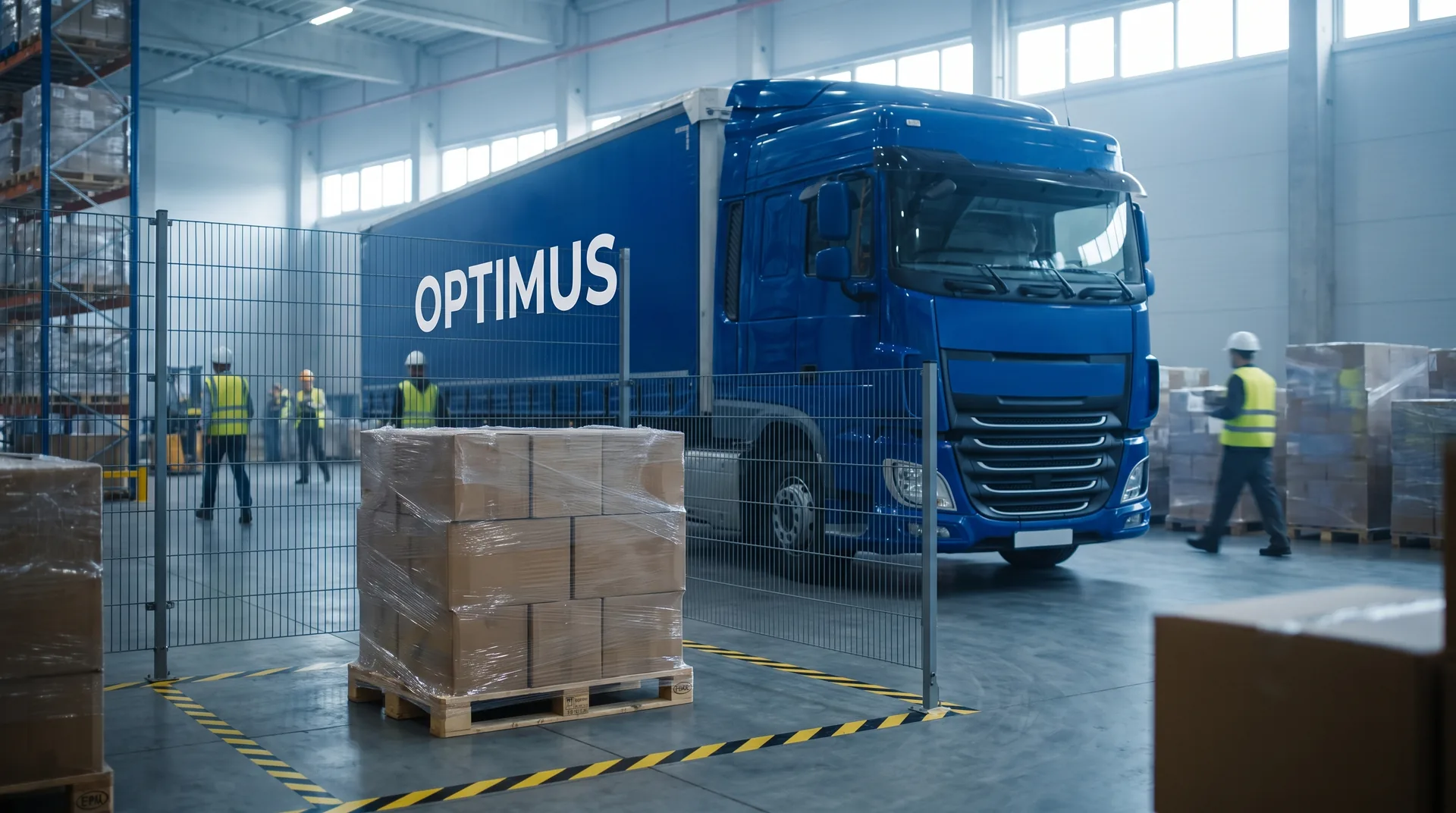
Above 92% is the share of units that return to trade after a review in the Milton Keynes warehouse, measured against the units submitted for review. We count units, not pallets and not value. It is a historic result across handled cases, not a forecast for an individual consignment.
Why we publish the figure with a definition at all
Because without a definition it is useless. Recovery rates get quoted in this industry in ways nobody can verify: sometimes on pallets, sometimes on value, sometimes including cases where the damage was nominal. We state our own counting method so a reader can compare it with somebody else offer, and so it is clear what we are not promising. A number without a definition is a slogan; a number with one is an argument you can test on your first case.
What we count: units, not pallets and not value
The unit is the measure hardest to bend. Pallets inflate the result, because one surviving layer makes the whole pallet count as saved. Value distorts the other way, since two units of an expensive product can outweigh two thousand cheap ones, and nobody knows the selling price except the owner. A unit is unambiguous: either the item meets the criteria or it does not. How the two pools are kept is described in load filtering.
What the figure does not include
It excludes loads never submitted for review, because the owner opted straight for disposal. It excludes cases where goods returned to Poland without selection. It excludes loads where damage was established on paper only. In other words the denominator is narrower than all incidents, and that is the more honest direction: we count where we actually did the work and hold the record of it.
Does 92% apply to my consignment
No. It is an aggregate result, not a prediction for a single event. The spread between cases is wide and follows physics rather than diligence: a toppled pallet of goods in rigid cartons will land close to a hundred percent, while the same pallet after prolonged water contact can land far lower. That is why we do not quote an expected percentage when a case is reported. What we do quote is what can genuinely be forecast: the scope of the review, how it will be documented and when the result will be ready.
What decides how much can be saved
Four things, in this order. First the nature of the event: mechanical damage is usually local, while moisture and contamination travel. Second the packaging: an outer carton protects its contents, stretch film on its own barely does. Third the reaction time, because damp and temperature keep working until something stops them. Fourth the sharpness of the criteria supplied by the owner: the narrower the definition of a saleable unit, the lower the result, and that is pure arithmetic rather than a judgement on the goods.
Will I get the figure for my own case
Yes, and it is the only figure that matters to you. After the review we hand over a schedule of both pools in units, with photographic documentation to the agreed extent. That schedule doubles as material for the insurer, as described in the inspection report for the insurer. Individual cases land above 92% and below it; the published figure does not change what the review shows.
How to read similar numbers elsewhere
Ask three questions: what is in the numerator, what is in the denominator, and who set the criteria. If the answer to any of them is that it depends, the number carries no information. If the criteria were set by the contractor rather than the goods owner, the rate mostly measures the leniency of the contractor. The same measure applied to a whole incident-handling process gives a different picture from one applied to the review alone, so it is worth asking where in the process the number is produced. The whole process is described in damaged goods in the warehouse.
What use is the figure to somebody with a loss right now
One use: judging whether a review is worth ordering at all, before deciding to write a batch off. If historically most units return to trade, the cost of a review is almost always lower than the value of the goods it saves. That is where the usefulness of the rate ends. Everything that happens afterwards rests on the numbers from your own case rather than on our statistics.
Have a case for review? Describe it through the quote form or see the cargo inspection page. The facilities in England are on the Milton Keynes warehouse page.