The loading method is chosen on three things: whether the machine moves under its own power, what ground clearance and mass it has, and what is actually standing in the yard. A working excavator climbs the ramps onto a low loader, one that does not run comes aboard on a winch or by crane, and low equipment without drive is usually simplest to take on a recovery truck with a tilting bed.
Four routes onto the deck
- Under its own power up the ramps. The quickest option, needing a working machine, firm level ground in front of the trailer and someone qualified to operate it. The driver answers for the vehicle, not the machine, so who starts it is written into the order.
- Winch. For machines that do not run, have no keys or have a seized drive. Slower, needing room behind the trailer and supervision, but requiring nothing from the yard.
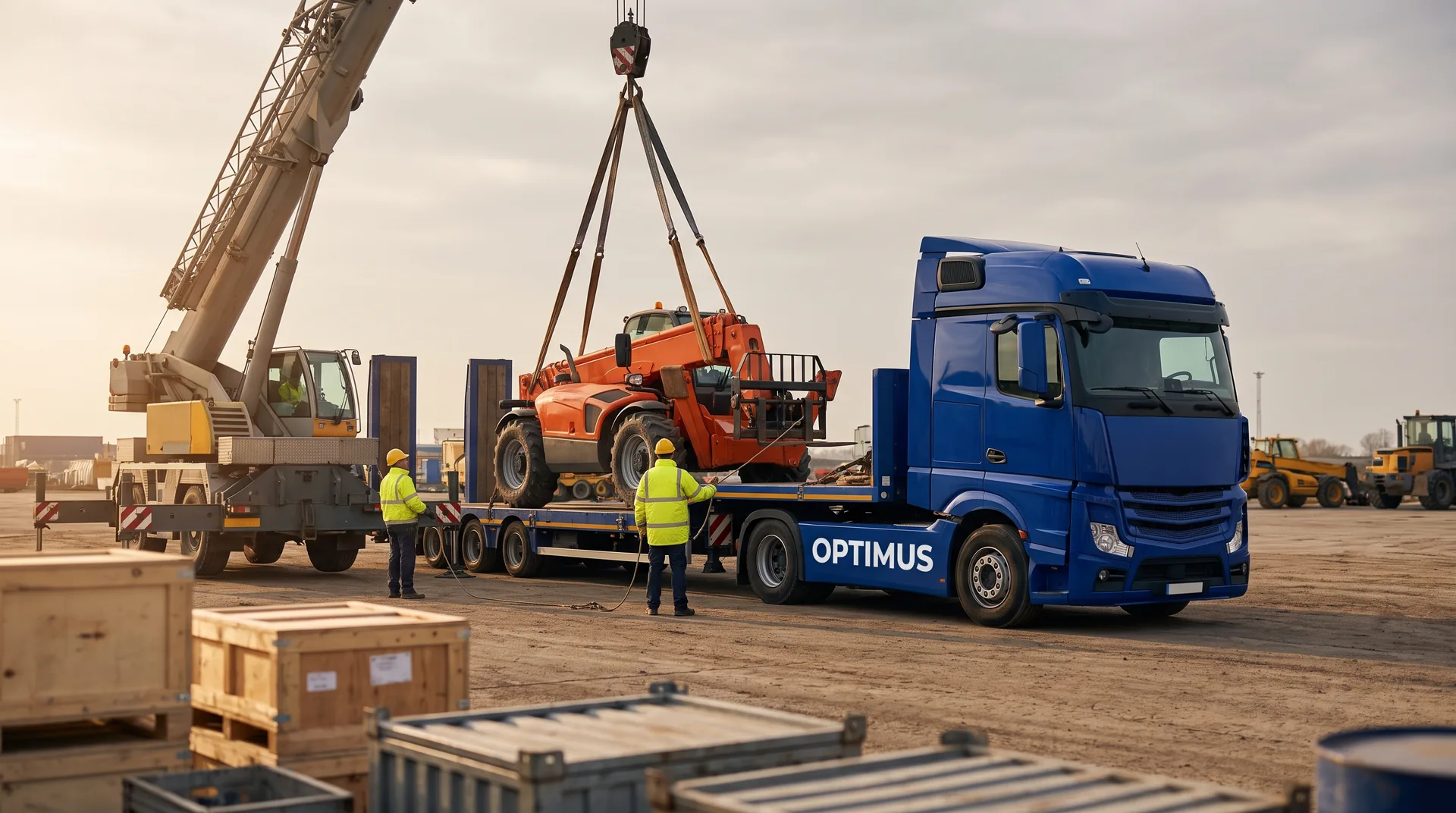
- Crane or lorry-mounted crane. For equipment that will not roll up ramps: generators, containers, skid-mounted machines. Mass, reach and the presence of lifting points decide.
- Recovery truck with tilting bed and winch. For light, low equipment and for vehicles. The bed comes down to ground level, so the ramp angle is gentler than on a trailer.
Ramp angle and ground clearance
The most common mishap in loading concerns neither mass nor dimensions but geometry. A machine with low clearance and a long overhang, a forklift, a roller or a low wheeled generator, can ground its underside on the edge of the deck before its wheels even reach the trailer. Anything that reduces the angle helps: longer ramps, backing on, plates laid under the foot of the ramps, using the natural fall of the yard or an existing dock. Forcing it does not help and ends with something torn off underneath. So we ask about ground clearance and about the look of the yard before dispatching a combination.
The other side of the same issue is what the ramps rest on. A ramp bearing on soft ground settles under load and changes the angle mid-climb, which is exactly when there is no way to back out. Auction yards vary, so spreader plates travel with the ramps.
Low loader, flatbed or recovery truck
A low loader brings the machine down and exists for that: it lets tall equipment stay within the clearance while offering ramps rated for heavy masses. A plain flatbed or curtainsider is enough for low, light equipment loaded by forklift or crane, and has the advantage that something else can travel alongside. A recovery truck answers a different question: not height, but how to get aboard something that does not drive and is too light to justify a crane. Differences between trailer types are collected in our article on trailer types for the UK route, and the consequences of exceeding the clearance in our piece on oversized transport to the UK.
What the yard provides and what we bring
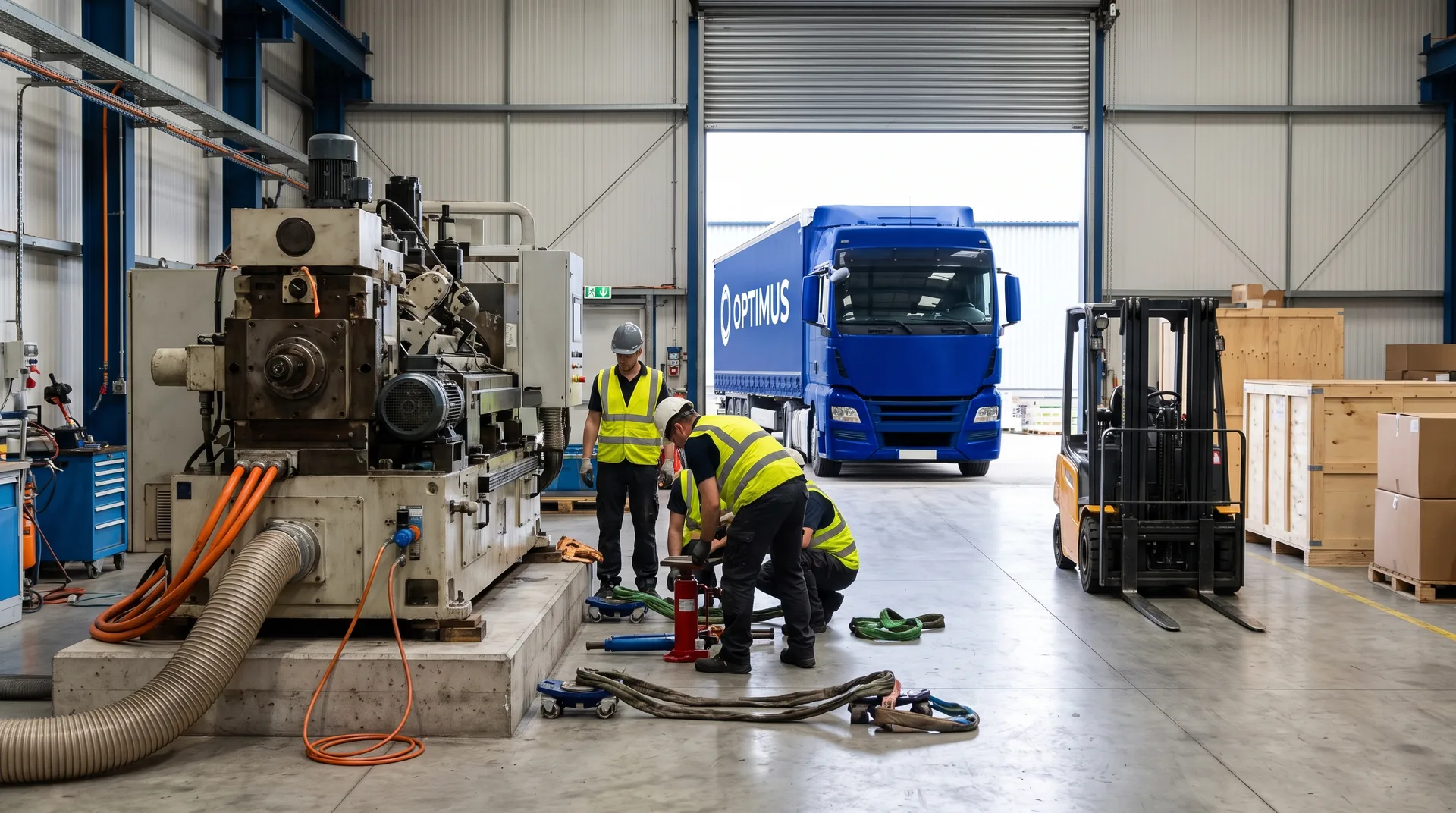
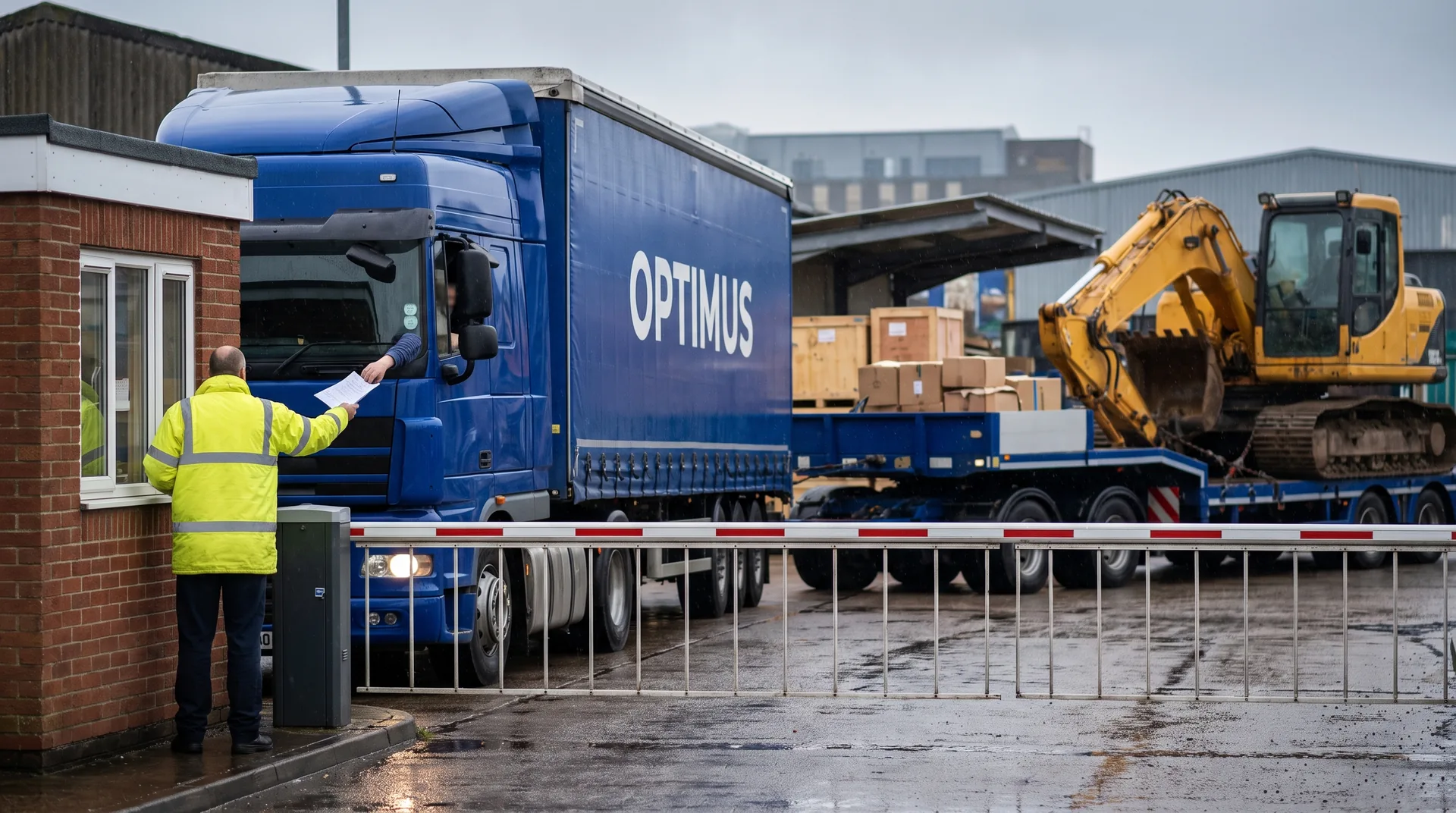
Auction yards differ enormously. Some have forklifts, loading shovels and staff who will help; others release equipment where it stands and expect the buyer to arrive with a solution. We always ask, because the answer decides whether a trailer with ramps is enough or a crane has to be ordered on site. On our side the facilities are our own: the cross-dock base in Kielce has a dock, a lorry-mounted crane and forklifts rated up to five tonnes, while the warehouse in Milton Keynes handles receipt, release and cross-dock. That means unloading stays predictable even where the final consignee has nothing to lift the machine off the vehicle with.
Lifting: points, slings and responsibility
- We lift only from the points the manufacturer specifies. An eye welded on by a previous owner is not a lifting point but an unknown.
- Choosing slings and sling angles belongs to the person directing the lift, and it is they who answer for how the load is rigged, not the driver.
- The centre of gravity of a machine is rarely in the middle of its outline. A trial lift of a few centimetres shows whether the load hangs level before it is over the trailer.
- With enclosed equipment we lift by the frame, never by the panelling.
After loading: position and securing
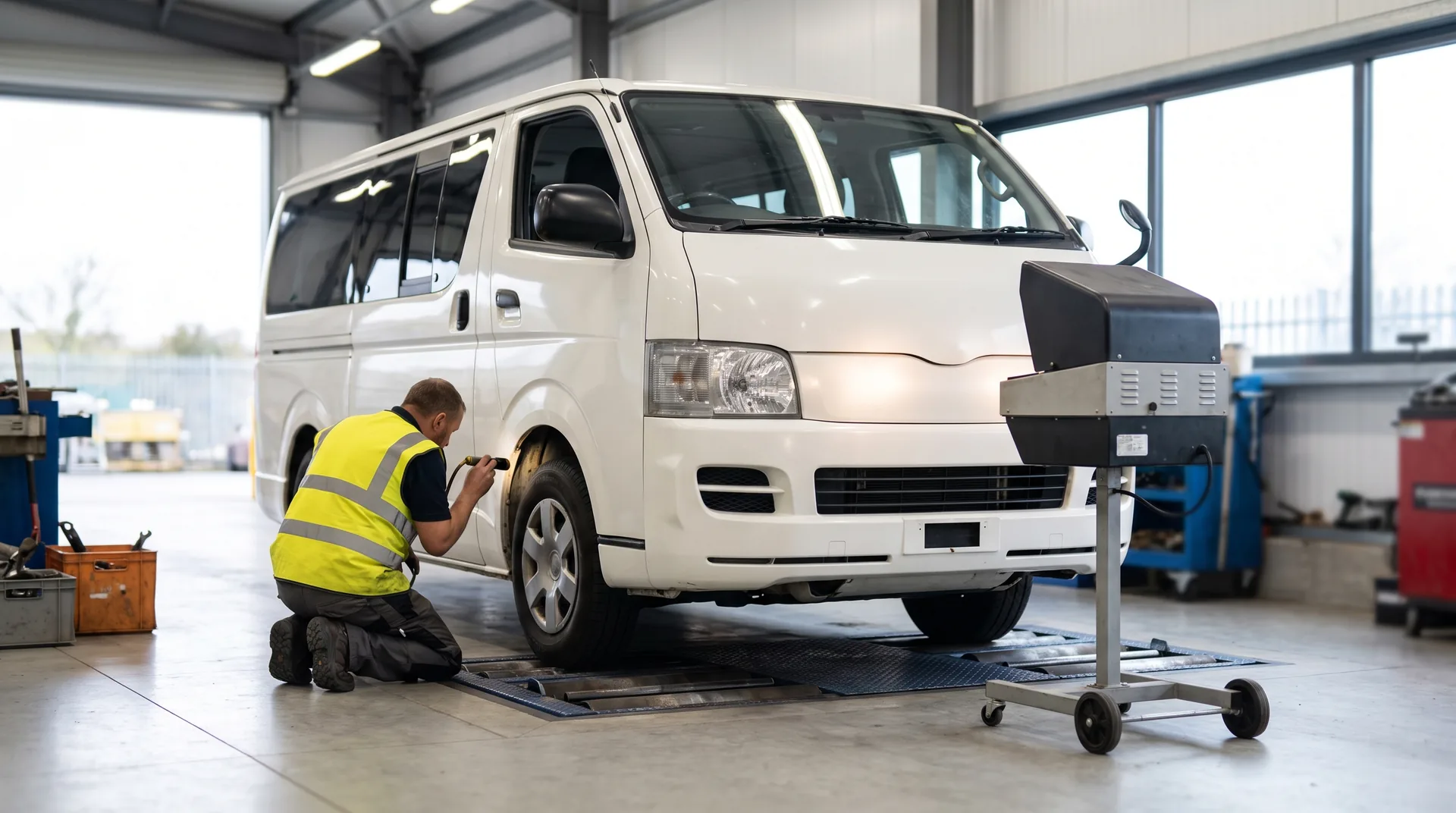
A machine set on the deck has to produce axle loads within the limits for the combination, so its position is decided before it comes down, not afterwards. Attachments are lowered and supported, mechanical locks are engaged where the manufacturer provided them, wheels and tracks are chocked, and straps go into the marked lashing points. Tension is checked after the first few kilometres. How forces and lashings are calculated is set out in our article on cargo securing under EN 12195, and the condition of the machine before it comes aboard is recorded as described in our piece on inspection before collection.
Loading looks entirely different when the machine stands not on a yard but in the vendor production hall. We describe that scenario in our article on machinery sold in situ.
Sources
- GOV.UK: securing loads on HGVs and goods vehicles
- HSE: health and safety in transport and warehousing
- GDDKiA: abnormal transport, permit categories and deadlines
Not sure what to collect the machine with? Send photographs of the equipment and the yard through the quote form and we will pick the loading method and the combination. See also oversized loads and warehousing.