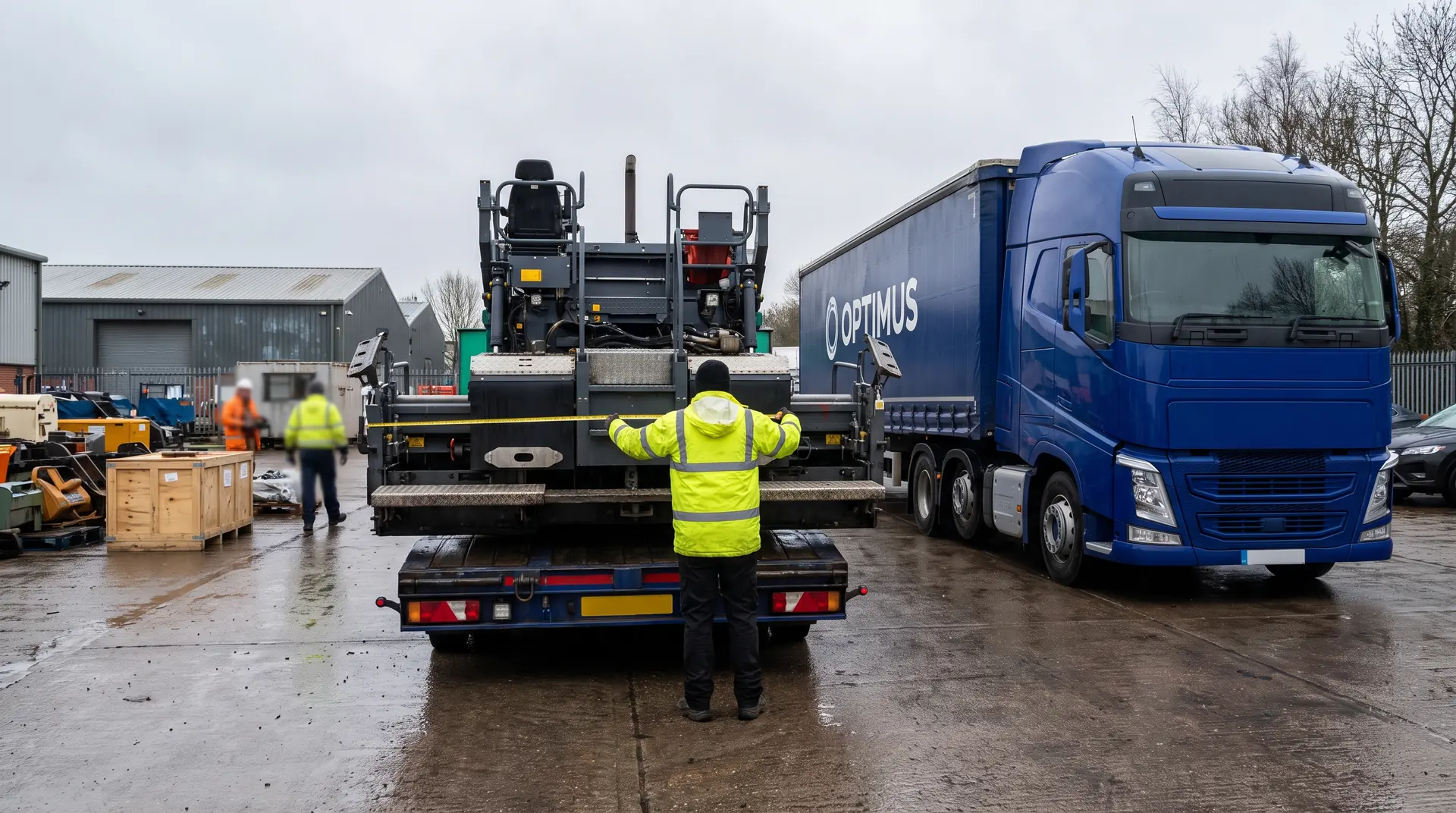
On a paver the catalogue dimension is misleading, because the working screed extends telescopically beyond the outline of the machine. The load is as wide as the screed at the moment of loading, not as wide as the body. Retracting the screed to the transport position and locking it mechanically is therefore the first job on the yard, before measuring and before climbing onto the trailer.
Screed: retract, lock, measure
An extending screed exists so the machine can lay wider than it is. In transport the same feature works against carriage. Retracting to the basic position is done from the machine panel, but that does not close the matter: bolt-on extensions, side plates, tamper bars and guards stay fitted and still project. Some of them can be removed and carried separately on the same deck, and that is sometimes the difference between a normal movement and a permit application. After retracting and removing we measure the machine with a tape, in the state it will be released in.
A mechanical lock on the screed is mandatory. The hydraulic system of a standing machine loses pressure, and a screed that extends en route changes the width of the load without the driver knowing. Makers provide pins or clamps for this and describe them in the manual.
Push rollers, hopper and conveyor
- A hopper with folding side walls is lowered and locked; raised walls are one of the highest points of the machine.
- The conveyor and spreading augers are cleared of mix residue, because dried material comes off en route in sheets.
- Push rollers for feeding from a lorry are raised and secured, because in the working position they project in front of the machine.
- The screed heating is switched off, and gas bottles, where the machine has gas heating, are removed and carried under the rules for that kind of goods.
- The operator platform and the canopy, if they fold, go to the transport position, because the canopy is often the highest element.
Tracks or wheels on the deck
Tracked pavers climb slowly and need plates to spread the load, because a rubber track under this weight bears on the deck and the ramps at points. Wheeled versions run small smooth tyres that slip on a wet deck more than their size suggests and need chocking on every side. In both cases the machine has low clearance and a long overhang, so the approach angle is a real problem here; the options and ways of reducing it are described in the piece on loading a machine at the auction yard.
Lashing
Lashings go into the points the maker specifies, not into the screed frame or the hopper structure, which are working parts rather than load bearing ones. Chocks go under tracks and wheels, and the axle loading of the vehicle is settled before the machine comes down onto the deck: a paver carries its weight towards the rear, at the screed and the drive, so placing it by eye overloads one axle. Removed screed extensions get their own set of lashings, laid flat and supported. The rules for calculating forces are collected in the article on cargo securing under EN 12195, and permit categories for exceeding the limits are published by GDDKiA; the British side runs its own notification regime, described under oversized transport to the UK.
Fuel, oils and mix residue
A machine off a road job arrives with mix residue in the hopper, on the augers and on the screed. That material has to be removed before loading, because in warmth it softens and dirties the deck, and in cold it breaks off in lumps along the route. The fuel level is agreed with the yard before collection, because fuel type, tank construction and contents decide whether the movement falls under dangerous goods rules; gas bottles for screed heating are treated separately as goods with their own carriage requirements. The battery is disconnected, the terminals protected, and keys and remotes travel with the paperwork.
Documents and clearance
Screed extensions and attachments carried separately are additional lines on the loading list and on the customs declaration, with their own description and apportioned value. On a machine bought at auction the customs value rests on the price actually paid; how it is established is described in the piece on the customs value of a used auction machine, and the full document set in the article on documents for a machine bought at auction. Declarations are filed by the regular customs agencies we work with on both sides of the Channel.
Sources
- GDDKiA: permits for abnormal vehicle movements
- GOV.UK: moving dangerous goods
- GOV.UK: securing loads on HGVs and goods vehicles
Buying a surfacing machine and want its transport dimension? Send the model, basic screed width and yard address through the quote form. See also oversized loads and customs clearance. Related topic: a dewatering pump from a UK auction.